
Middle East war rattles Thailand as Iranian forces attack a Thai vessel. Government weighs 10pm petrol station closures, burns ฿1bn daily on fuel subsidies. Small stations shut, diesel hoarding rises and fertiliser shortages threaten farms as tourism fears mount.
The Thai government faces an emergency as the war in the Middle East intensifies. It is already spending ฿1 billion a day subsidising oil and energy costs and is preparing to order petrol stations nationwide to close at 10pm. Meanwhile, independent petrol stations across Thailand are already shutting down. At the same time, a severe fertiliser shortage is emerging, with agricultural supplies close to running out within days. With work-from-home measures already ordered, the Ministry of Commerce and the Ministry of Foreign Affairs are monitoring the situation hour by hour. What they are now seeing does not look good.
Government House faced mounting pressure on Wednesday as the Middle East war began disrupting Thailand’s economy. Officials were already grappling with tightening fuel supplies and agricultural shortages.
Then, shortly after midday, new security news arrived. Iranian Revolutionary Guard naval forces had attacked the Thai commercial vessel MAYUREE NAREE. Consequently, alarm spread quickly through several ministries monitoring the conflict. The report highlighted the growing risk to shipping lanes in the region.
Moreover, it reinforced concerns about Thailand’s dependence on Middle Eastern energy routes.
Middle East war hits Thailand as Thai vessel attacked and government braces for energy supply shock
At the same time, the war itself continued to intensify. The United States and Israel expanded bombing operations this week. Meanwhile, Iranian forces broadened attacks on commercial shipping across the Gulf of Hormuz and nearby Gulf states.
As a result, one of the world’s most critical oil corridors faces escalating tension. For Thailand, the consequences are immediate. The country depends heavily on imported energy supplies. Moreover, roughly half of its crude oil shipments originate from the Middle East.
Therefore, any prolonged disruption could quickly affect domestic fuel availability. Consequently, officials inside Government House began reviewing emergency measures earlier this week.
Authorities insist that current fuel reserves remain manageable. However, contingency planning has accelerated across several ministries. For example, officials have begun considering night closures for petrol stations. Under the proposal, stations would close nationwide at 10pm.
Government reviews emergency plan to shut petrol stations nationwide at 10pm if conflict disrupts fuel
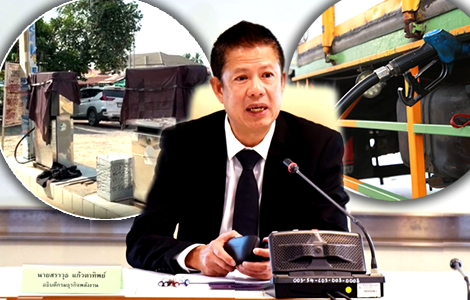
However, authorities stress the measure remains a worst-case scenario. Therefore, it will not be implemented unless the conflict severely affects reserves. Sarawut Kaewtathip, director-general of the Department of Energy Business, confirmed the current assessment. “The present situation is not that critical and is still controllable,” he said. Nevertheless, the department continues preparing operational plans.
Meanwhile, the Ministry of Interior has instructed provincial governors to begin urgent surveys. Specifically, governors must assess fuel demand within their provinces. Local energy officials have also been ordered to monitor supply levels closely.
Consequently, the government hopes to allocate fuel resources more efficiently. Officials want to prevent local shortages from spreading across the economy. In addition, provincial commerce officers have joined monitoring teams. Together, they are tracking deliveries, inventories and daily consumption patterns. As a result, authorities expect to detect supply problems earlier.
Reports of tightening supplies have already appeared in several provinces. Therefore, officials are also watching for panic buying. Some areas have reported early signs of fuel hoarding.
Consequently, the government has begun urging the public to remain calm. “People should not panic or build up stocks,” Sarawut said. Meanwhile, the Ministry of Energy is coordinating with major fuel traders. Suppliers have been asked to redirect deliveries where stocks run low. As a result, rapid shipments are being arranged to stabilise local supply chains. Officials say the aim is to minimise disruption for consumers and businesses.
Work from home orders and energy-saving measures as government moves to cut fuel demand
At the same time, the government has begun reducing national fuel consumption. Prime Minister Anutin Charnvirakul has ordered some civil servants to work from home. Similarly, several state agencies have adopted remote work arrangements.
For instance, the Bank of Thailand has implemented work-from-home policies for selected staff. Meanwhile, some military administrative units have also shifted to remote operations. These steps aim to reduce commuting and transport fuel demand. In addition, the government has introduced broader energy-saving measures.
Civil servants have been instructed to use stairwells instead of elevators where possible. Furthermore, offices must strictly limit air-conditioning usage. Meanwhile, most overseas travel by government employees has been cancelled.
Consequently, these steps are expected to cut energy consumption across public institutions. At the same time, the government has moved to protect domestic fuel supplies. Authorities have suspended most oil exports temporarily. Moreover, officials have increased the ratio of biofuel blends in domestic petrol. This adjustment aims to reduce crude oil demand.
Oil fuel fund burns over one billion baht daily as Thailand subsidises diesel to shield consumers
Nevertheless, global energy prices continue rising sharply. Consequently, the government is spending heavily to stabilise domestic fuel prices. The state-run Oil Fuel Fund now carries the financial burden of diesel subsidies.
Acting Energy Minister Auttapol Rerkpiboon provided an update on Wednesday. According to him, the fund is losing more than one billion baht each day. Therefore, the cost of maintaining price controls is climbing rapidly. Cabinet documents released Tuesday estimate losses could reach 10 billion baht by March 18.
Despite the growing deficit, the government intends to maintain subsidies for now. However, officials acknowledge that the situation requires constant review. “The government will reassess the situation, taking into account the fund’s position and global prices,” Auttapol said.
Consequently, policy adjustments remain possible if losses continue rising. For example, diesel prices could gradually increase. Alternatively, the government could expand the borrowing limit of the Oil Fuel Fund. In that case, the Ministry of Finance would act as guarantor.
Government weighs raising diesel prices or borrowing more as oil subsidy losses rapidly mount
Officials note that the fund previously endured even larger losses. During the early phase of the Russia-Ukraine war, the fund accumulated debts of up to 120 billion baht. Eventually, however, the balance returned to surplus. Before the latest crisis began, the fund held roughly two billion baht in reserve.
At present, however, it is financing several major subsidies. Gasohol 95 and 91 receive support of 5.38 baht per litre. Meanwhile, E20 is subsidised at 7.22 baht per litre. E85 receives support of 2.28 baht per litre. Diesel receives the largest subsidy at 12.73 baht per litre.
Meanwhile, premium fuels still contribute revenue to the fund. Premium diesel contributes 1.50 baht per litre. Gasoline contributes 1.13 baht per litre. These contributions partially offset subsidy costs. Nevertheless, rising global prices continue to squeeze the system. Consequently, other fuel costs are already increasing. Household budgets, therefore, face growing pressure.
Fuel hoarding fears rise as rural demand surges and small petrol stations shut across provinces
At the same time, authorities remain concerned about fuel hoarding in rural areas. Reports suggest some farmers have begun storing fuel for agricultural use. Similarly, businesses in several provinces are building precautionary stocks.
Consequently, local fuel demand has surged in some districts. Officials warn that hoarding could create unnecessary shortages. Commerce Minister Suphajee Suthumpun addressed the issue on Wednesday. “There’s no need to panic,” she told reporters. Nevertheless, the ministry continues monitoring supply chains closely. “If the situation drags on, we’ll roll out additional measures,” she added.
While authorities attempt to stabilise supply, smaller petrol stations face immediate pressure. Independent stations lack the support mechanisms available to larger chains. Consequently, they must buy fuel at higher wholesale prices. In several provinces, the situation has forced temporary closures. Roi Et province provides one clear example. Reports indicate that numerous small stations there have stopped operating this week.
Wholesale diesel prices have risen sharply for these operators. Some owners report purchase costs between 38 and 39 baht per litre. However, the government maintains a regulated retail diesel price.
Therefore, small stations cannot legally charge the true cost of fuel. As a result, operating losses quickly accumulate. Consequently, several owners have decided to suspend operations.
Small petrol stations close in Roi Et as wholesale diesel prices exceed the government retail cap
Reporters observed one such closure in Ban Nathom village in Selaphum district. A small petrol station there covered its diesel and gasoline pumps with cloth. The covering signalled clearly that fuel sales had stopped.
Owner Phuean Sonsawat explained the situation to reporters. Normally, small stations purchase fuel from larger operators. However, several large stations recently ran out of stock. Consequently, they could not supply smaller retailers.
Buying fuel independently would push costs above the government price cap. Wholesale diesel could reach at least 30 baht per litre. However, the official retail price remains fixed at 29.94 baht per litre. Therefore, selling fuel would create immediate losses. As a result, the station temporarily halted sales.
Other owners face similar pressure. Charee Namboonlue operates the Chai Charee petrol station in Khwao subdistrict. He reported diesel costs of 33 to 34 baht per litre before March 8. Consequently, he sold diesel at roughly 36 baht per litre. However, wholesale prices rose again this week. By Wednesday morning, they had reached around 39 baht per litre. Therefore, operating margins disappeared completely.
Fuel demand rises nationwide as police seize 26,800 litres of diesel near the Thai-Myanmar border
Charee said he may eventually close his station. However, he is waiting to see how customers react. He worries that customers will accuse small stations of charging excessive prices. Meanwhile, larger stations continue selling at stabilised rates. Consequently, independent operators face increasing financial strain.
At the same time, fuel demand is climbing in several provinces. Residents are buying additional petrol for cars and motorcycles. Farmers are storing diesel for tractors and irrigation pumps. Meanwhile, transport businesses are also increasing fuel purchases. Consequently, local supply chains are under pressure.
Authorities have also begun investigating suspicious fuel storage activities. On Wednesday, police seized a large diesel stockpile near the Myanmar border. Officers confiscated an oil truck and 26,800 litres of diesel and biodiesel. The fuel was stored in barrels at a container shop and warehouse. The property lies along Mae Sot-Phop Phra Road in Tak province. Specifically, it sits in the Mahawan subdistrict of Mae Sot district.
Urea fertiliser shortages deepen in Buriram as shipments are disrupted by the Middle East conflict
The compound stands about five kilometres from the Thai-Myanmar border. Consequently, authorities considered the storage suspicious during the current fuel crisis. Police therefore impounded both the truck and fuel barrels. Investigators are continuing to examine the case.
Meanwhile, agriculture faces another emerging supply problem. Retailers report tightening stocks of urea fertiliser. In some districts, supplies may last less than a week. One affected area is the Nang Rong district in Buriram province. Surveys of fertiliser shops there show rapidly declining inventories.
Major suppliers have warned retailers about delivery disruptions. These disruptions stem partly from transportation problems linked to the Middle East war. Several fertiliser-producing countries in the region export to Thailand. Consequently, delays in shipping are affecting local distributors.
Rujiphas Limkhosit, a large fertiliser wholesaler in Nang Rong, described the situation. He inspected his warehouse with reporters this week. Some brands had fewer than ten bags remaining in stock. Therefore, shelves are emptying quickly.
Fertiliser prices set to rise as shortages threaten farmers ahead of Thailand’s main rice season
Rujiphas said suppliers cannot currently deliver new shipments. Transportation problems have slowed distribution from manufacturing plants. As a result, fertiliser retailers expect the next delivery to arrive at higher prices. The increase could reach about 50 baht per bag. Consequently, both farmers and retailers will face higher costs.
At present, however, the impact remains limited by the agricultural calendar. Thailand is currently in the dry-season rice planting period. Therefore, fertiliser demand remains relatively low. However, the situation may worsen later in the year. The main rice planting season begins in May. At that time, farmers require far larger fertiliser volumes.
If shortages continue until then, agriculture could face serious disruption. Retailers also fear losing customers if specific brands remain unavailable. Farmers often prefer familiar fertiliser products. Consequently, they may shift to other suppliers if shortages persist.
Meanwhile, the war’s economic effects are spreading beyond agriculture and energy. Tourism officials are already expressing concern about visitor numbers. Long-haul tourism could decline significantly if the conflict continues. Some forecasts warn of a potential 50 per cent reduction in long-haul arrivals.
Tourism, transport and manufacturing face growing disruption as Thailand braces for a wider impact
Such a drop would affect airlines, hotels and travel companies. Moreover, it would hit local businesses that depend on international visitors. Tourism remains one of Thailand’s largest economic sectors. Therefore, a decline would ripple across multiple industries.
At the same time, rising fuel costs are affecting transport companies. Manufacturers are also facing uncertain energy supplies. Meanwhile, agriculture must deal with both fertiliser shortages and higher diesel costs.
Thai vessel evacuated in the Strait of Hormuz after coming under fire and suffering engine room damage
Anutin urged to press ahead with new government as US Iran war throws up new challenges for Thailand
Fears Thailand may lose 600k visitors from Europe and the Middle East as Iran war decimates tourism
Consequently, several pillars of the economy now face simultaneous pressure.
Government agencies continue monitoring the situation hour by hour. Energy officials track national fuel inventories daily. Commerce authorities analyse price movements across supply chains. Meanwhile, provincial administrations report shortages directly to central ministries.
For now, officials insist that the situation remains under control. Nevertheless, contingency plans are expanding across the government. Authorities are preparing additional measures if the war continues.
Join the Thai News forum, follow Thai Examiner on Facebook here
Receive all our stories as they come out on Telegram here
Follow Thai Examiner here
Further reading:
US Ambassador Seán O’ Neill briefed Prime Minister Anutin Charnvirakul at Government House on War
Visa waivers, discounted hotel stays and 2,000 baht a person per day for stranded tourists announced
Liquidity crisis or shortage of cash on the ground is shrinking Thailand’s economic growth prospects
Thai Minsters engage with US trade chief Jamieson Greer in Paris at global OECD ministerial meeting