Thailand’s visa shake-up backfires ahead of high season! Emirates flags missed flights by Mexican tourists, while Uzbek agents send bookings to Vietnam. Minister Surasak seeks a reversal as arrivals fall 4.12% and Vietnam’s visitor numbers jump 14.5%.
Thailand is losing tourists to Vietnam as a visa crackdown backfires, leaving passengers unable to board flights and travel agents cancelling Thai holidays. Emirates has reportedly complained after Mexican passengers missed flights, while Uzbek operators are switching bookings to Vietnam. Tourism and Sports Minister Surasak Phancharoenworakul is scrambling to restore 15-day visa-free entry for Mexico, Colombia and Uzbekistan. However, his proposals face a 9 November hearing, with no immediate relief. Meanwhile, Thailand’s foreign arrivals have plunged 4.12%, while Vietnam has surged 14.5%, including a staggering 55% rise in European visitors. The crisis comes ahead of Thailand’s vital winter tourism high season.
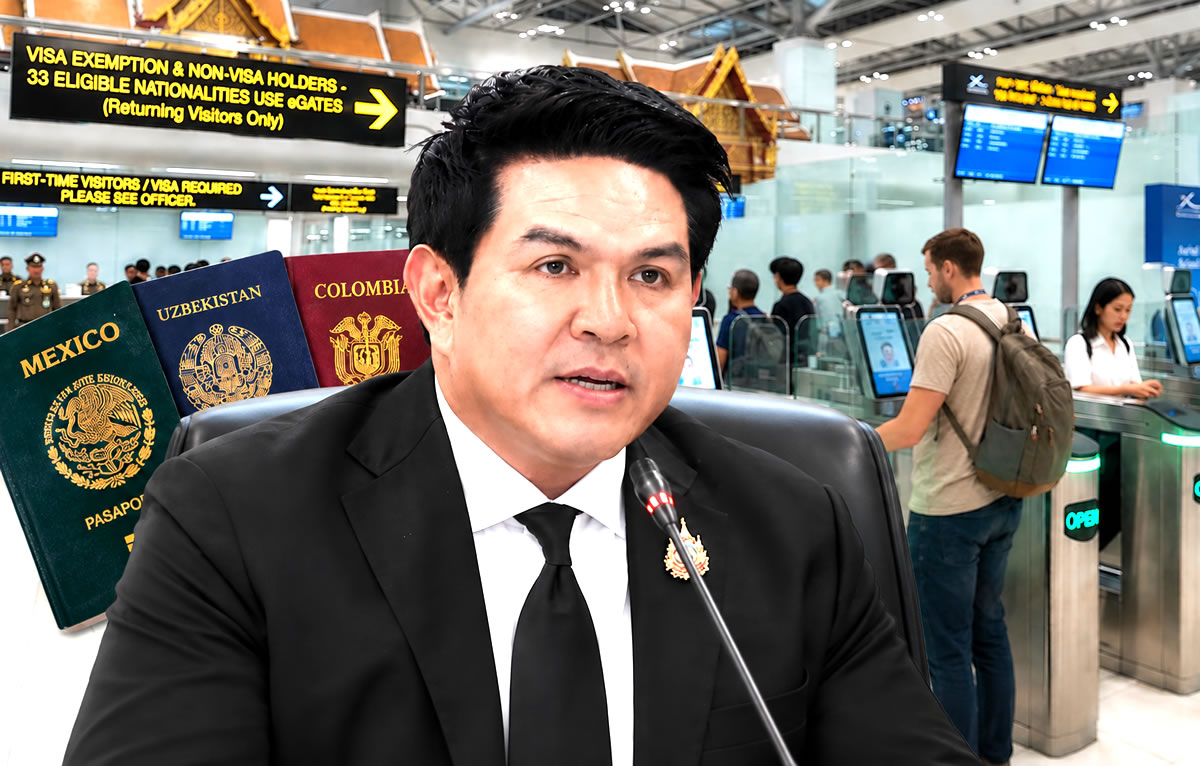
Thailand is losing tourist business to Vietnam as visa delays leave passengers stranded and overseas travel agents cancelling holiday packages. Tourism and Sports Minister Surasak Phancharoenworakul is seeking fresh entry exemptions for Mexico, Colombia and Uzbekistan.
However, his proposals will not reach the Visa Policy Committee until 9 November. The intervention follows complaints from Emirates and reports of cancelled bookings. Meanwhile, foreign arrivals have fallen 4.12% this year, while Vietnam has seen strong growth.
The dispute follows Thailand’s sweeping visa overhaul on 15 September. The changes removed existing entry privileges from several smaller tourism markets. As a result, travellers previously exempt from advance visa requirements must now obtain approval before departure. The resulting delays have affected airline bookings and overseas tour operators. Some agencies have reportedly responded by transferring customers to Vietnam.
Mexican passengers miss flights as visa delays hit airlines and Uzbek tour operators switch to Vietnam
Emirates has raised concerns with the Tourism Authority of Thailand over Mexican passengers missing scheduled flights. Industry reports indicate between 20 and 30 passengers failed to board some affected services.
Their visas had reportedly not been issued before departure. Separately, other accounts described passenger attendance falling by 20–30% on certain flights. The precise routes and passenger totals were not consistently identified.
The problems have surfaced during Thailand’s approaching winter tourism season. International travel companies are arranging flights, accommodation and holiday packages for the final quarter. Yet uncertainty over visa approvals has complicated those arrangements.
In Uzbekistan, some agents have reportedly cancelled Thai packages and substituted Vietnam. Tourism officials have acknowledged the disruption involving applications handled through Thailand’s embassy in Moscow.
The wider figures underline the pressure facing Thailand’s tourism industry. Official statistics released on 19 October recorded 24,423,680 foreign arrivals between 1 January and 17 October. That represented a 4.12% annual decline.
Thailand loses tourism revenue as September visa overhaul strips entry privileges from smaller markets
Tourism receipts reached approximately ฿1.19 trillion. By comparison, Vietnam received 17.68 million international visitors during January–September, up 14.5%. European arrivals increased 55%, while arrivals from the Americas rose 20%.
Thailand’s visa overhaul was approved by the Cabinet in May. Subsequently, the revised regulations appeared in the Royal Gazette on 31 August. They took effect on 15 September. The government abolished the previous 60-day visa-exemption scheme covering 93 countries and territories. It also reorganised shorter exemptions and reduced the nationalities eligible for visas on arrival.
According to the Ministry of Foreign Affairs, the review considered national security, economic interests and reciprocal entry arrangements. Officials also cited overlapping privileges and the availability of electronic visas.
The ministry maintained that the changes would simplify procedures and reduce confusion. Nevertheless, their implementation introduced new requirements for visitors from several established tourism markets.
Mexican passport holders previously enjoyed visa-free entry for up to 60 days. From 15 September, they were required to obtain visas before travelling. Similar changes affected Guatemala and Cuba. Colombia also lost its previous exemption. On another front, Uzbekistan lost both its 60-day exemption and its 15-day visa-on-arrival entitlement.
New electronic visa requirements disrupt high-season bookings and leave travellers awaiting approval
The changes coincided with preparations for Thailand’s high season. Previously, eligible visitors could book flights and accommodation without securing advance visa approval. Under the revised arrangements, they must complete electronic applications before departure.
However, submitting an application online does not automatically authorise travel. The relevant Thai embassy or consulate must still examine the documents and approve the request.
Applicants must provide personal details, upload supporting documents and pay the relevant fee. Afterwards, they must wait for their visas to be issued. Consequently, passengers can hold confirmed tickets and hotel reservations without permission to board their flights. The distinction has become central to complaints from airlines and travel agents.
The Royal Thai Embassy in Mexico City advises that processing normally takes five to ten working days. That period applies to applications containing complete and satisfactory documentation. Even so, the embassy recommends applying at least one month before arrival. Incorrect information or missing documents can result in cancellation. Applicants may then have to submit fresh applications, with additional delays.
Mexican name rules add fresh visa obstacles as embassy staff work overtime to clear applications
The requirements concerning personal names are particularly relevant to Mexican citizens. Many use two given names and two family names. Accordingly, the embassy has published detailed instructions explaining how those names must appear in applications. Errors cannot necessarily be corrected after submission. Instead, an incorrect application may be cancelled, requiring the traveller to begin again.
These procedures have become significant as reports emerge of passengers missing flights. Tourists may have completed their bookings and paid for accommodation before receiving visa approval.
In some cases, applications remain pending when scheduled departure dates arrive. Industry sources have described the disruption as processing delays rather than widespread visa refusals. Nonetheless, the outcome can be the same for passengers unable to travel.
On 5 October, the Royal Thai Embassy in Mexico City issued an announcement addressing pressure on its visa operations. Staff had been working continuously, including outside normal office hours.
They had also prioritised applications from travellers whose departures were approaching. However, the embassy announced a different processing arrangement from 15 October.
Mexico embassy ends departure-date priority as Emirates reports passengers missing scheduled flights
Under the revised procedure, applications would be handled strictly in the order received. The embassy said the change would ensure fairness and accelerate processing. Accordingly, passengers with imminent departures would no longer receive the previously described priority treatment. The announcement also warned that incorrect or incomplete applications could be cancelled immediately. Visa fees would remain non-refundable.
The statement came less than three weeks after the new requirements took effect. By that stage, embassy staff had already been working additional hours to process applications.
Despite those efforts, the mission introduced a system based strictly on submission order. Passengers with confirmed flights therefore had no assurance that approval would arrive before departure.
The commercial consequences were reported on 27 October. Emirates had reportedly complained to the Tourism Authority of Thailand about Mexican passengers failing to board scheduled services. According to industry accounts, between 20 and 30 passengers were absent from some affected flights. Their visas had not arrived in time. Other reports described passenger attendance falling by 20–30% on certain services.
Airlines face empty seats and cancelled bookings as overseas agents divert Thai holidays to Vietnam
Those figures concern reported disruption on affected flights, not a verified decline across all Latin American arrivals. Nevertheless, they indicate difficulties affecting airline operations and holiday bookings.
Empty seats can result when passengers holding reservations cannot travel. Furthermore, last-minute cancellations complicate airline scheduling, passenger handling and commercial arrangements.
The consequences also extend to individual travellers. International tickets, hotel deposits and connecting services may already have been purchased. Yet a pending visa application can prevent the journey from proceeding. Travel agents face similar difficulties when customers cannot obtain approval before departure. In response, some operators have reportedly cancelled Thai packages and offered Vietnam instead.
The reported changes affect a business built around advance arrangements. Overseas agencies negotiate airline allocations, hotel accommodation and other services months before customers travel. Subsequently, they market those packages and accept reservations. Delays in securing entry documents disrupt that process. In particular, Uzbekistan has emerged as a market where agents have redirected business to Vietnam.
Uzbek tourists lose two entry privileges as visa delays prompt travel agents to abandon Thai packages
Until 15 September, Uzbek passport holders enjoyed two routes into Thailand without advance visa approval. They could enter under the 60-day exemption or obtain a 15-day visa upon arrival. Both arrangements were withdrawn. Consequently, Uzbek travellers must now secure approved electronic visas before departure.
Applications are handled through arrangements involving the Royal Thai Embassy in Moscow. The embassy recommends allowing at least 14 working days for processing. Applicants are also advised to wait until approval before travelling.
The changes have altered the procedures used by Uzbekistan’s outbound tourism industry. Previously, agents could arrange Thai holidays without awaiting individual advance approvals.
Tourism Authority of Thailand Deputy Governor Chiravadee Khunsub has highlighted the difficulties. She oversees international marketing across Europe, the Americas, the Middle East and Africa. According to reports on 27 October, she identified problems involving the Thai embassy in Russia. Some Uzbek travel agents had consequently cancelled Thai holiday packages and substituted Vietnam.
Uzbek travel agents switch business to Vietnam while Belarus retains its 15-day visa-on-arrival facility
The cancellations represent a reported transfer of tourism business following Thailand’s visa changes. Unlike broader comparisons of national arrival figures, the accounts identify a specific change in tour operators’ arrangements. They also involve a market where visitors previously enjoyed two separate entry privileges. Both were removed under the September regulations.
Belarus, however, retained a different arrangement. The Royal Thai Embassy in Moscow confirmed that Belarusian passport holders could continue obtaining 15-day visas on arrival. The facility remains available at designated Thai immigration checkpoints. Applicants must meet the relevant conditions and pay ฿2,000.
Unlike Uzbek visitors, Belarusian tourists do not require advance electronic visas for qualifying short stays. They must still apply for entry permission upon arrival. The arrangement is therefore different from visa-free entry. Notably, the available reports contain no confirmed evidence of comparable Belarusian processing delays or cancelled packages.
The distinction places Belarus and Uzbekistan under different entry arrangements despite their shared consular connection with Moscow. Uzbekistan lost both its exemption and visa-on-arrival entitlement. Belarus retained the shorter visa-on-arrival facility. Surasak’s proposed changes would address Uzbekistan’s position without altering the existing Belarusian arrangement.
Minister seeks 15-day visa exemptions for three countries but approval and implementation remain pending
The minister has acknowledged persistent visa-processing problems affecting Mexico and other Latin American markets. His ministry now intends to seek fresh exemptions through the Visa Policy Committee. The proposals cover Mexico, Colombia and Uzbekistan. Under the plan, eligible visitors could enter Thailand without advance visas for stays of up to 15 days.
Surasak said national security and economic considerations must be assessed before approval. At the same time, he indicated that exemptions should extend to suitable countries presenting limited security risks.
The proposed 15-day period reflects the typical duration of visits from the affected markets. However, the changes remain subject to government procedures.
Crucially, the proposal concerns visa exemptions rather than visas issued upon arrival. Under an exemption, eligible tourists can travel without obtaining a visa beforehand. They must still satisfy the applicable immigration conditions. By contrast, visa-on-arrival arrangements require applications at designated checkpoints, with possible documentation and fees.
The proposed changes would therefore remove the advance approval requirement for qualifying visitors from the three countries. However, the Visa Policy Committee must first consider the measures on 9 November. Further government approval and formal regulatory changes may follow. No implementation date has been announced.
No immediate visa relief announced as Thailand reports falling arrivals despite weekly tourism gains
The earlier overhaul demonstrates the timetable involved. Although Cabinet approval came in May, the revised regulations were not published until 31 August. They subsequently took effect on 15 September. In the current case, no confirmed timetable exists beyond the committee meeting. Affected travellers must therefore continue using the existing visa system.
Surasak has not announced an immediate fast-track procedure for applications already awaiting approval. Nor do the available reports confirm additional consular staff or guaranteed processing periods. Accordingly, passengers with approaching departures remain subject to existing arrangements. Airlines and tour operators must continue planning around uncertain approval dates.
The dispute comes amid a wider decline in Thailand’s tourism performance. Foreign arrivals reached 24,423,680 between 1 January and 17 October, down 4.12%. Receipts totalled approximately ฿1.19 trillion. The figures were released by Surasak on 19 October, alongside the latest weekly arrival statistics.
China remained Thailand’s largest source market, with 4.14 million visitors. Malaysia followed with 3.10 million, while India contributed 1.84 million. Russia accounted for 1.33 million and South Korea approximately 896,000. During 11–17 October, total arrivals increased 0.83% compared with the previous week. Long-haul arrivals rose 10.55%.
Kasikorn forecasts falling tourism revenue as Vietnam records sharp growth from Europe and the Americas
Despite that weekly improvement, annual visitor numbers remained lower. Kasikorn Research Centre forecasts 31.36 million foreign arrivals for 2026, a decline of 4.9%. It also expects international tourism revenue to fall 3.2% to approximately ฿1.54 trillion. Average spending per visitor is forecast at around ฿49,000, up 2%.
The research centre has identified several pressures on Thailand’s tourism industry. These include regional competition, changing travel preferences and international aviation disruptions. It has also highlighted weaker demand from several Asian markets and reduced flight schedules. In contrast, Vietnam, Malaysia and Indonesia have continued attracting growing numbers of international visitors.
Vietnam’s expansion has been particularly strong among long-haul travellers. Official statistics recorded 17,680,714 international arrivals during January–September 2026, up 14.5%. European arrivals increased 55%, while visitors from the Americas rose 20%. Arrivals from Oceania also increased 21%.
Among European markets, Vietnam recorded growth from Britain, France, Germany, Poland, Sweden and Switzerland. Additionally, Russian arrivals exceeded one million during the first nine months. The expansion has broadened Vietnam’s international tourism market while Thailand faces declining overall arrivals.
Vietnam expands luxury tourism and longer visa access as Thai entry restrictions disrupt foreign travel
Vietnamese tourism authorities have credited favourable visa arrangements, improved international air connections and expanded accommodation capacity. The country has also developed luxury resorts, hotels, restaurants and other tourism facilities. Alongside those investments, lower accommodation, dining and transport costs have strengthened its appeal.
The growth places Vietnam in direct competition with Thailand for affluent Western and other international visitors. Its tourism offering increasingly combines developed accommodation with comparatively lower prices. Furthermore, Vietnam’s electronic visa system permits stays of up to 90 days, including multiple-entry arrangements. Selected nationalities also benefit from extended visa-free entry.
Thailand’s September changes moved several smaller markets towards advance visa requirements. Mexico and Uzbekistan illustrate the immediate differences. Visitors who previously enjoyed simplified entry must now obtain approval before travelling. In Uzbekistan, tour operators have reportedly responded by switching packages to Vietnam.
The reported Mexican passenger problems demonstrate another consequence. Airlines can accept reservations without passengers having secured the documents needed for departure. Subsequently, processing delays can prevent customers from travelling. The complaints involving Emirates show how immigration procedures can affect international airline operations.
Thailand faces winter high-season uncertainty as visa reform stalls and tourism business moves to Vietnam
The timing adds pressure ahead of Thailand’s winter high season. Hotels, airlines and tour operators depend on reservations made well before departure. However, the current application requirements remain in force until formally changed. The proposed exemptions offer no confirmed immediate relief to passengers already awaiting approval.
There is also a difference between the proposed 15-day exemption and Vietnam’s 90-day electronic visa. The Thai proposal would remove advance applications for qualifying short visits. Vietnam’s system permits considerably longer stays, although applicants must obtain electronic visas where required. These arrangements form part of the competition for long-haul travellers.
Vietnam is taking Thailand’s quality tourists in huge numbers while Bangkok flails about with crackdowns
Bank of Thailand boss calls for a lower valued baht for an economy that is presently failing to perform
For now, the Tourism Ministry is preparing to restore simplified entry arrangements for selected nationalities. Those privileges were withdrawn only weeks earlier. The September overhaul was intended to reorganise immigration procedures and remove overlapping facilities. Instead, its implementation has coincided with airline complaints, missed flights and reports of holiday business moving to Vietnam.
Thailand’s international arrivals remain more than 4% below last year’s level. Vietnam, meanwhile, continues recording strong growth across European and other overseas markets. The contrast comes as Thailand’s government prepares another adjustment to its visa policy.
Surasak’s proposals will reach the Visa Policy Committee on 9 November. Until any exemptions are approved and implemented, Mexican, Colombian and Uzbek visitors remain subject to advance visa requirements. Airlines and overseas tour operators must continue working within those rules during the approaching high season.
Join the Thai News forum, follow Thai Examiner on Facebook here
Follow Thai Examiner on Google here
Receive all our stories as they come out on Telegram here
Follow Thai Examiner here
Further reading:
Thailand’s once mighty tourism industry is failing but now faces further damage from overvalued baht
Rate cut anticipated as outgoing Bank of Thailand governor attends last Monetary Policy Committee
Last minute tweaks in Bangkok as deal is finalised with U.S. However, Thailand may not match Vietnam