Four unlicensed KTV clubs serving Chinese customers face a midnight crackdown in Rayong. Suspected prostitution, drugs and illegal workers emerge. Claims of ฿10,000–฿30,000 monthly payoffs bring anti-corruption investigators and a police shake-up.
A midnight crackdown on four Chinese-oriented KTV venues in Rayong has opened a major corruption investigation. Deputy Interior Minister Polpeera Suwannachawi led Saturday’s raids, uncovering suspected prostitution, illegal foreign workers, drug use and four unlicensed establishments. However, claims of monthly protection payments of ฿10,000–฿30,000 to government agencies have raised the stakes. By Saturday evening, the local police chief had been removed from command. Meanwhile, anti-corruption investigators launched a 60-day inquiry into suspected payments and official misconduct. Investigators are also probing possible Chinese investment through nominees, seeking to identify the financiers behind the neon.

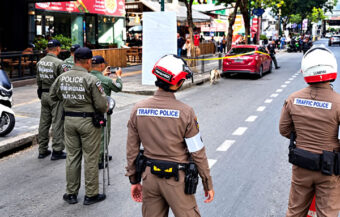
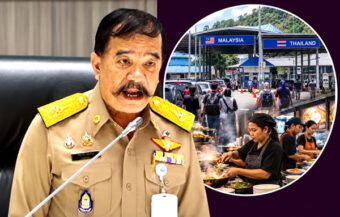
A major Interior Ministry crackdown on Chinese-oriented entertainment venues in Rayong has triggered a widening corruption investigation. Deputy Interior Minister Polpeera Suwannachawi personally led raids on four KTV establishments early Saturday, October 17.
Officers uncovered suspected prostitution, illegal foreign workers, drug use and businesses operating without entertainment licences. More seriously, investigators obtained information about regular protection payments to government officials. By Saturday evening, the local police chief had been removed from operational duties.
Meanwhile, anti-corruption investigators were examining suspected payments of ฿10,000 to ฿30,000 monthly. The investigation also extends to suspected Chinese investment through Thai nominees.
Interior Ministry raids four Chinese-oriented KTV venues in Rayong after suspected prostitution findings
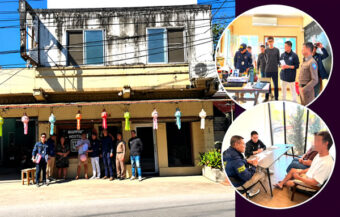
The raids began at approximately 12.30 am in Pluak Daeng district, one of Rayong’s major industrial centres. They followed intelligence gathered jointly by the Department of Provincial Administration and provincial officials.
Four establishments were targeted: Qing Ren KTV, Xing Wei KTV, World Party KTV and Grand Hyatt KTV. All operated in the Pluak Daeng area and catered heavily to Chinese customers. Notably, one account suggested Chinese nationals represented approximately 99% of their clientele. However, that figure remains a reported estimate rather than a verified customer record.
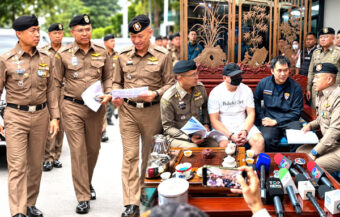
Polpeera led senior Interior Ministry officials, provincial administrators and Volunteer Defence Corps personnel during the operation. Deputy Permanent Secretary Anupong Suksamanit and Department of Provincial Administration Deputy Director-General Ronarong Thipsiri also participated.
The operation was named Operation Secret Room. Previously, investigators had gathered intelligence about private karaoke rooms, female attendants, expensive alcohol and substantial entertainment charges. Crucially, officials had obtained preliminary evidence of suspected prostitution at two establishments. They also received information about Vietnamese women providing services on the premises.
Four Rayong karaoke businesses lack entertainment licences as deputy minister orders wider inquiries
Initial licensing checks revealed that none of the four establishments reportedly possessed the required entertainment venue licence. Such businesses are regulated under Thailand’s Entertainment Places Act of 1966.
Furthermore, investigators reported alcohol sales outside permitted hours. Consequently, the establishments faced potential proceedings involving licensing violations, alcohol regulations and other suspected offences.
The precise charges will depend on evidence gathered against each operator. For now, officials are examining the individual circumstances surrounding all four businesses.
In response, Polpeera ordered investigators to widen their inquiries beyond the premises themselves. He wanted the registered operators, managers, recruiters, financiers and ultimate beneficiaries identified.
In addition, he instructed officials to examine everyone involved in operating the businesses. Those responsible for financing or profiting from unlawful activities would also face investigation. Anyone arrested, together with seized evidence, was to be handed over to police investigators. Criminal proceedings would follow wherever sufficient evidence supported charges.
Foreign women face employment checks and drug tests as investigators examine large KTV workforces
The operation exposed a substantial foreign workforce, including women from Laos, Vietnam and other neighbouring countries. Initial reports identified ten Lao women without the required employment permissions.
Separately, five women tested positive for narcotics during the operation. However, subsequent accounts suggested wider drug-related findings. One Saturday report indicated approximately ten positive tests, compared with the earlier figure of five. Another account stated that 15 people had been arrested and transferred to police. Nevertheless, the available information does not establish the precise charges against each individual.
The raids also raised questions about the size of the establishments. Some reports suggested individual venues employed more than 100 female attendants. However, those figures have not been established through verified employment records.
Investigators must determine how many women worked at each location. The businesses operated under the KTV format, particularly popular among Chinese-speaking customers. KTV stands for Karaoke Television and describes a distinctive private-room entertainment business.
Inside Thailand’s private KTV rooms where hostesses, alcohol and entertainment attract Chinese customers
Unlike conventional karaoke bars, these establishments generally provide enclosed rooms for private groups. Customers hire individual spaces rather than singing before a public audience. Typically, rooms contain televisions, microphones, sound systems, sofas and tables.
Guests can also order alcohol, food and additional entertainment services. Some KTV establishments operate as ordinary karaoke businesses without female attendants. They provide private singing facilities, refreshments and entertainment for groups of customers.
However, another category employs hostesses to accompany customers during private drinking and singing sessions. These women may serve drinks, sing, converse with guests and provide companionship.
Customers can sometimes select attendants to join their groups. Charges may include room rental, alcohol, hostess time and additional service fees. Moreover, some establishments operate commission arrangements linked to alcohol sales. Such arrangements encourage attendants to generate spending on drinks and entertainment.
A further category combines private karaoke entertainment with commercial sexual services. These arrangements may involve activities inside private rooms or agreements made elsewhere.
Prostitution evidence at Rayong venues prompts separate immigration inquiries into foreign workers
Nevertheless, employing hostesses does not automatically establish prostitution. Investigators must determine what services were provided and whether criminal offences occurred. This distinction is central to the Rayong investigation.
Officials reported preliminary evidence of prostitution at two establishments, not all four. Similarly, the presence of Vietnamese women providing services does not establish that every foreign hostess was involved in prostitution.
Thailand’s Prevention and Suppression of Prostitution Act governs prostitution-related offences. Separately, immigration and employment legislation regulates foreign workers. As a result, KTV operators can face investigations under several laws simultaneously.
These include entertainment licensing, immigration, employment, alcohol sales and prostitution-related provisions. Meanwhile, Immigration Bureau Commissioner Police Lieutenant General Noppasin Poolsawat ordered a separate investigation into foreign workers and customers.
Immigration officers subsequently identified ten foreign women suspected of working illegally. They included three Lao nationals, six Burmese nationals and one stateless woman. Importantly, these findings came from a different stage of the investigation.
Immigration figures require reconciliation as officials investigate suspected Chinese nominee investment
They cannot automatically be added to the earlier group of ten Lao women. The available reports do not establish whether the groups overlap. Therefore, investigators must reconcile the figures before confirming the total number of illegal workers.
Officers must also establish the women’s immigration status and employment arrangements. In parallel, they are examining who recruited and managed the foreign workforce.
The investigation extends to whether any women experienced coercion or restrictions on their movement. However, no confirmed finding of trafficking emerged from Saturday’s available reports. At the same time, the Interior Ministry is examining a separate issue involving Chinese investment and business ownership.
Local Thai media reported on Saturday that Department of Provincial Administration Deputy Director-General Ronarong Thipsiri had identified suspected Chinese nominee investment. The inquiry concerns whether Thai nationals were registered as shareholders or business operators on behalf of Chinese financiers.
Such arrangements can breach Thailand’s Foreign Business Act when used to circumvent restrictions on foreign participation in designated businesses. However, Chinese investment is not automatically unlawful. Investigators must establish the actual ownership arrangements and whether applicable restrictions were breached.
Investigators trace Chinese-linked financing while examining suspected payments to government agencies
Accordingly, officials are examining who supplied the capital, who managed the establishments and who received their profits. Company registration documents will be important, alongside shareholder records and financing arrangements. Investigators must also identify who exercised effective control over each business.
Pluak Daeng provides a significant commercial setting for the investigation. The district lies within Rayong’s major industrial area, where international manufacturers, suppliers and contractors operate. These include businesses connected to Chinese investment and industrial activity.
The establishments’ concentration on Chinese customers is therefore commercially significant. However, their clientele does not establish who owns or finances them. The suspected nominee arrangements remain a separate matter requiring documentary evidence.
Polpeera has ordered investigators to identify the businesses’ ultimate beneficiaries. Yet the investigation’s most immediate consequences have emerged from suspected payments to government officials. Those allegations now extend beyond the entertainment establishments and into local enforcement agencies.
During the raids, Polpeera reportedly questioned an individual claiming to manage one establishment. The conversation concerned money supposedly paid to government agencies. Monthly figures ranging from ฿10,000 to ฿30,000 emerged during the discussion. There were also references to intermediaries coordinating the payments.
Separately, Thai PBS reported claims that a venue manager had paid several government agencies at those monthly rates. The information has become a central part of the widening corruption inquiry.
Reported monthly protection payments and agency lists become central evidence in Rayong corruption probe
The allegations suggest payments were arranged to secure assistance or prevent enforcement. However, investigators have not established that the reported transactions occurred. Furthermore, reports referred to a written list identifying monthly payments to different agencies.
The document has become an important potential lead. Investigators must establish whether the list is genuine. They must also determine who prepared it, whether payments occurred and who ultimately received the money.
Crucially, the existence of payment claims does not establish that individual officials accepted bribes. No recipients had been conclusively identified by Saturday evening. Even so, the allegations have triggered an investigation extending beyond the entertainment businesses themselves.
The reported payment arrangements involve more than the police. Several government agencies responsible for licensing, inspection or enforcement have been mentioned. Consequently, investigators are examining whether officials neglected their duties or improperly assisted the establishments.
Unlicensed KTV operations face scrutiny as Rayong police chief is removed from command for six months
The absence of entertainment licences at all four venues has become another important issue. Officials must determine how long the businesses operated without the required permissions. They must also establish whether inspections or complaints were previously recorded.
Additionally, investigators will examine any earlier warnings or enforcement action. Such records could establish what government agencies knew about the establishments. The inquiry will also examine whether officials performed their statutory responsibilities.
By Saturday evening, the investigation had already produced an immediate response within Rayong’s police command. Rayong Provincial Police Commander Police Major General Pramot Ngampradit ordered the removal of Pluak Daeng Police Station chief Police Colonel Nawin Sinthurat.
The officer was transferred from his normal operational responsibilities to the Rayong Provincial Police Operations Centre. Under the order, Colonel Nawin must report for special assignments rather than continue commanding the local police station.
Police Order 275/2569 took effect on Saturday, October 17. It specifies a six-month period extending until April 17, 2027. The transfer was issued under Section 68 of the National Police Act 2022.
The order cited public concern and potential damage to the police force’s reputation. It also referred to questions about officers’ performance of their duties. However, the transfer is an administrative measure pending investigation. It does not constitute a criminal conviction or establish that Colonel Nawin accepted payments.
Anti-corruption investigators examine cash payments and possible failures by officials to enforce the law
No formal finding of corruption against the officer had been announced on Saturday. Nevertheless, his removal followed the raids and the emergence of suspected protection payments.
The investigation now includes the conduct of public officials. On another front, the Public Sector Anti-Corruption Commission moved quickly to examine the allegations. By approximately 2 pm Saturday, the PACC had begun coordinating with the Department of Provincial Administration.
PACC Region 2 Director Anongnat Cheewananthakul was assigned to coordinate the anti-corruption investigation. The commission is examining claims that several government agencies received regular payments from entertainment businesses. Investigators want to determine whether money was paid in return for assistance, favourable treatment or failures to enforce regulations.
Particular attention is being directed towards reports of cash collections and deliveries. Officials intend to question establishment managers and others familiar with the arrangements.
As part of this, investigators will examine communications, documents and witness testimony. These could help establish whether payments were arranged or completed. Cash transactions present particular difficulties because they may leave limited banking records.
PACC launches 60-day fact-finding inquiry as Interior Ministry pursues operators and financiers
Consequently, investigators must establish the circumstances surrounding each reported payment. The inquiry will also consider whether public officials neglected statutory duties. Separately, it will examine any evidence of abuse of official positions.
The PACC has an initial 60-day fact-finding framework. If sufficient evidence emerges, the matter could proceed to formal investigation and prosecution.
However, the commission had not established criminal wrongdoing by any individual government official as of Saturday. Polpeera has ordered action against officials implicated by evidence, regardless of rank or agency. He instructed investigators to report any established misconduct to the relevant superiors. Disciplinary proceedings would follow where justified.
Furthermore, officials found to have committed criminal offences would face prosecution under applicable laws. The deputy minister also directed investigators to examine every level of the businesses’ operations.
This includes the people who recruited workers, managed the premises and arranged financing. Those who ultimately benefited financially are also under examination. Accordingly, the investigation extends from employees and venue managers to those controlling the businesses.
Multiple agencies investigate KTV ownership, foreign workers and suspected monthly protection payments
The investigation now has several distinct branches. Police are examining prostitution-related allegations, narcotics findings and possible licensing offences. Immigration officers are investigating the employment and status of foreign women.
Meanwhile, Interior Ministry officials are tracing the establishments’ ownership and financing. The PACC is examining suspected protection payments involving government agencies. Each inquiry concerns different potential offences and requires separate evidence.
The reported Chinese nominee investment has introduced another legal issue. Investigators must establish whether Thai shareholders were genuine investors or acting for foreign financiers.
Moreover, the ownership investigation must identify who exercised actual control over the establishments. Registered company details alone may not establish the full financial arrangements. Officials are therefore seeking evidence of capital contributions, management control and profit distribution.
The reported monthly payment list remains another important focus. Investigators must authenticate the document and identify any individuals responsible for arranging transactions. They must also determine whether the payments were recurring.
The reported figures of ฿10,000 to ฿30,000 concern monthly amounts rather than one-off charges. However, the available information does not establish whether these amounts applied to individual agencies, separate establishments or particular arrangements. Accordingly, the total value of any suspected protection system remains unknown.
Four unlicensed venues, foreign workers and suspected prostitution remain at centre of Rayong probe
The authorities must also establish how the four businesses operated without entertainment licences. Their inspection histories and any previous enforcement action remain under examination.
In the meantime, the investigation into the foreign workforce must determine the precise number of women involved. The differing accounts of Lao, Burmese, Vietnamese and stateless women require clarification. So do the reports of arrests and positive narcotics tests.
The prostitution investigation remains limited by the available evidence. Officials identified preliminary findings at two establishments, rather than establishing offences across all four. Any prosecution will require evidence linking particular individuals to specific unlawful activities.
Nonetheless, by Saturday night, the operation had already produced significant developments. Four Chinese-oriented KTV establishments had been raided in Pluak Daeng. Preliminary checks indicated that none held the required entertainment licence.
Investigators had uncovered suspected prostitution at two venues, illegal foreign employment and drug-related findings. In addition, reports of monthly payments to government agencies had triggered a separate corruption investigation. The local police chief had been removed from operational command. Meanwhile, anti-corruption officials were examining reported payment records and the conduct of public officials.
Chinese nominee investment and official payment claims remain unresolved as investigators trace records
Suspected Chinese nominee investment added another dimension. Interior Ministry investigators are now tracing the capital, operators and ultimate beneficiaries of the businesses.
However, no final findings have established unlawful Chinese ownership or identified government officials as recipients of protection money. The next stage will focus on documentary evidence, witness testimony and the businesses’ financial arrangements.
Brit’s Thai wife and lawyer force Chiang Mai karaoke bar to cough up 150 thousand baht after scam trap
Owner of prostitution den fronting as Karaoke bar arrested Friday and charged by Chacheongsao Police
Investigators must establish who controlled the establishments, who recruited their workers and how the businesses operated without licences. They must also determine whether protection payments were made and whether officials failed to enforce the law.
For now, the Rayong raids have developed into a multi-agency investigation involving entertainment licensing, foreign employment, suspected prostitution and corruption. The central allegations concern regular payments to government agencies and possible Chinese nominee ownership. Both remain under investigation. The PACC’s 60-day inquiry will determine whether the reported evidence supports further proceedings.
Join the Thai News forum, follow Thai Examiner on Facebook here
Follow Thai Examiner on Google here
Receive all our stories as they come out on Telegram here
Follow Thai Examiner here
Further reading:
Mysterious death of young British man after Bangkok Karaoke bar incident early on Monday morning
UK Tik Toker tells fans from her Bangkok prison hell hole her videos were all a pack of lies, a joke
Immigration boss warns that a new crackdown on foreigners flouting Thai laws has begun