Bangkok cocaine sting leads police from a dealer to a Nigerian supplier mixing drugs with chalk and baking soda. Big Nop’s crackdown nets three arrests, 103 grammes of cocaine and financial movements topping ฿2 million. Two dealers face drug charges.
An intensive Bangkok cocaine crackdown ordered by Immigration Bureau chief Police Lieutenant General Noppasin Poolsawat, known as Big Nop, has netted three Nigerians and exposed a suspected drug supply operation. Undercover officers trapped a 42-year-old dealer before tracking his supplier to an apartment containing cocaine worth over ฿400,000. Shockingly, police found blackboard chalk and baking soda allegedly used to dilute the drugs and boost profits. Investigators also uncovered financial movements exceeding ฿2 million, while a separate restaurant raid exposed a Nigerian overstayer. In total, police seized 103 grammes of cocaine. Two men face narcotics charges, while questions remain over the network’s suppliers, customers and financial transactions.
Thai immigration police have smashed a suspected Nigerian cocaine supply operation in Bangkok after Immigration Bureau chief Police Lieutenant General Noppasin Poolsawat, known as Big Nop, ordered a crackdown.
Three Nigerians were arrested following an undercover drug purchase, a restaurant inspection and an apartment raid. Police seized approximately 103 grammes of cocaine, including a haul worth more than ฿400,000.
Investigators also uncovered financial movements exceeding ฿2 million. Most strikingly, officers discovered a suspected supplier mixing cocaine with blackboard chalk and baking soda to boost profits.
Big Nop directs Bangkok cocaine crackdown as immigration officers targeted a Nigerian drug network
The Immigration Bureau announced the operation on Saturday, October 17. It followed intelligence gathering into foreign nationals suspected of trafficking drugs in Bangkok.
Crucially, officers traced an undercover cocaine purchase to a suspected supplier operating from an apartment. The investigation involved immigration police, specialist narcotics officers and the Office of the Narcotics Control Board (ONCB).
The operation was directed by Police Lieutenant General Noppasin Poolsawat, Commissioner of the Immigration Bureau. Known as Big Nop, he ordered senior officers to pursue suspected foreign criminal networks. Consequently, Immigration Division 1 investigators joined specialist narcotics teams to identify suspects, conduct surveillance and make arrests.
Police Major General Thanit Thaiwatcharamas, Deputy Commissioner of the Immigration Bureau, helped oversee the investigation. Other senior officers included Police Major General Cherngron Rimpadee and Police Major General Kongchat Liangsomsap, commander of Immigration Division 1. In addition, Police Major General Phanop Warathanachakun, a senior special investigations officer assisting the bureau, participated.
Undercover police arrange cocaine purchase after identifying Nigerian suspected of supplying buyers
The operation also involved Police Colonel Pholsit Sutthi-arj, superintendent of the Immigration Division 1 investigation unit.
Meanwhile, Police Lieutenant Colonel Sutheerath Theerasawat helped lead the operational team. He worked alongside Police Lieutenant Colonels Taweesap Chaiyapoom and Suriyo Chaiyod, both investigation inspectors.
The first breakthrough came when investigators identified a 42-year-old Nigerian suspected of regularly selling cocaine to foreign customers. The man, identified only as Mr F, had attracted attention during intelligence gathering. Police believed he was supplying cocaine to groups of foreigners in Bangkok. Rather than arrest him immediately, officers arranged an undercover purchase to obtain direct evidence.
An undercover officer contacted Mr F and placed an order for cocaine. The suspect agreed to deliver the drugs to a designated location. At approximately 7.10 pm, he arrived at the meeting point in a sedan. He then handed over four small black plastic packets containing approximately 2.4 grammes of cocaine.
Marked banknotes expose Nigerian cocaine dealer as police follow his car and arrest him in Bangkok
The transaction was completed using banknotes prepared for the police operation. However, investigators did not immediately reveal themselves. Instead, they followed the suspect’s vehicle as it travelled towards Prasert Manukit Road. Officers maintained surveillance while waiting for an opportunity to intercept him.
When Mr F stepped out of the car, he spotted plain-clothes police nearby. He immediately attempted to flee. Officers identified themselves, moved in and arrested him. A subsequent search uncovered the marked banknotes used during the undercover cocaine purchase.
The recovered money linked Mr F directly to the controlled transaction. According to police, he admitted receiving the cash from selling cocaine to the undercover officer. Investigators subsequently charged him with selling a Category 2 narcotic without authorisation for commercial distribution. Yet the arrest soon produced information leading to a considerably larger cocaine seizure.
In parallel, another immigration team targeted a restaurant in Bangkok’s Nawamin area. The establishment was reportedly frequented by African nationals. Police intelligence had identified it as a meeting place potentially associated with drug trafficking and fraud. Officers entered the premises to inspect those present and check their immigration status.
Restaurant immigration raid exposes Nigerian overstayer after customers scatter as officers arrive
Their arrival triggered a sudden scramble. Several people attempted to flee when they saw immigration officers entering the restaurant. Police intercepted individuals and began checking passports, identification documents and immigration records. The inspection subsequently exposed a Nigerian national who had remained in Thailand beyond his permitted stay.
The man was identified as Mr C, aged 21. Immigration records confirmed that his permission to remain in the kingdom had expired. Notably, a separate account placed his overstay at 894 days. That represented almost two and a half years living in Thailand without valid immigration permission.
Police arrested the Nigerian for remaining in the kingdom after his immigration permission expired. However, the available account did not establish his involvement in cocaine trafficking. No narcotics charge was reported against him. His arrest arose from immigration checks conducted during the wider operation.
The restaurant was reportedly situated around Ram Inthra–Nawamin Road in Khlong Kum, Bueng Kum district. Investigators had identified the establishment during their examination of suspected foreign criminal activity. Nevertheless, the reported result was an immigration arrest rather than a drug seizure.
Police trace suspected cocaine supplier to Bangkok apartment after questioning arrested Nigerian dealer
Back at the cocaine investigation, questioning of Mr F had opened another line of inquiry. The 42-year-old reportedly identified another Nigerian as the source of his cocaine. According to investigators, he said the supplier lived in a nearby apartment building. Police immediately expanded their operation to locate the man.
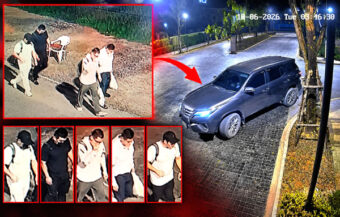
Officers travelled to the address with the arrested suspect and placed the building under surveillance. They watched the premises while checking information obtained during questioning. Subsequently, investigators spotted a foreign man coming down from the second floor. They approached him and demanded identification.
The man was identified as a 43-year-old Nigerian, also referred to as Mr C in the police account. However, he could not produce a passport or evidence of lawful entry into Thailand. Further checks indicated that he had entered and remained in the kingdom without permission.
More importantly, investigators suspected that his apartment contained cocaine and equipment connected with drug distribution. The information supplied by Mr F had led officers directly to the building. Police therefore moved to search the suspect’s accommodation.
Warrantless apartment search uncovers cocaine worth over ฿400,000 and packaging for drugs
Officers said they feared evidence might disappear if they delayed the search. In particular, they believed narcotics or associated equipment could be moved or destroyed. As a result, investigators entered the room without first obtaining a warrant, citing the risk of losing evidence.
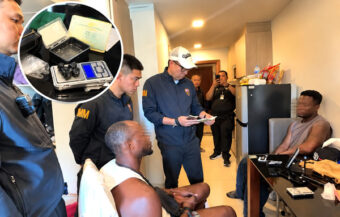
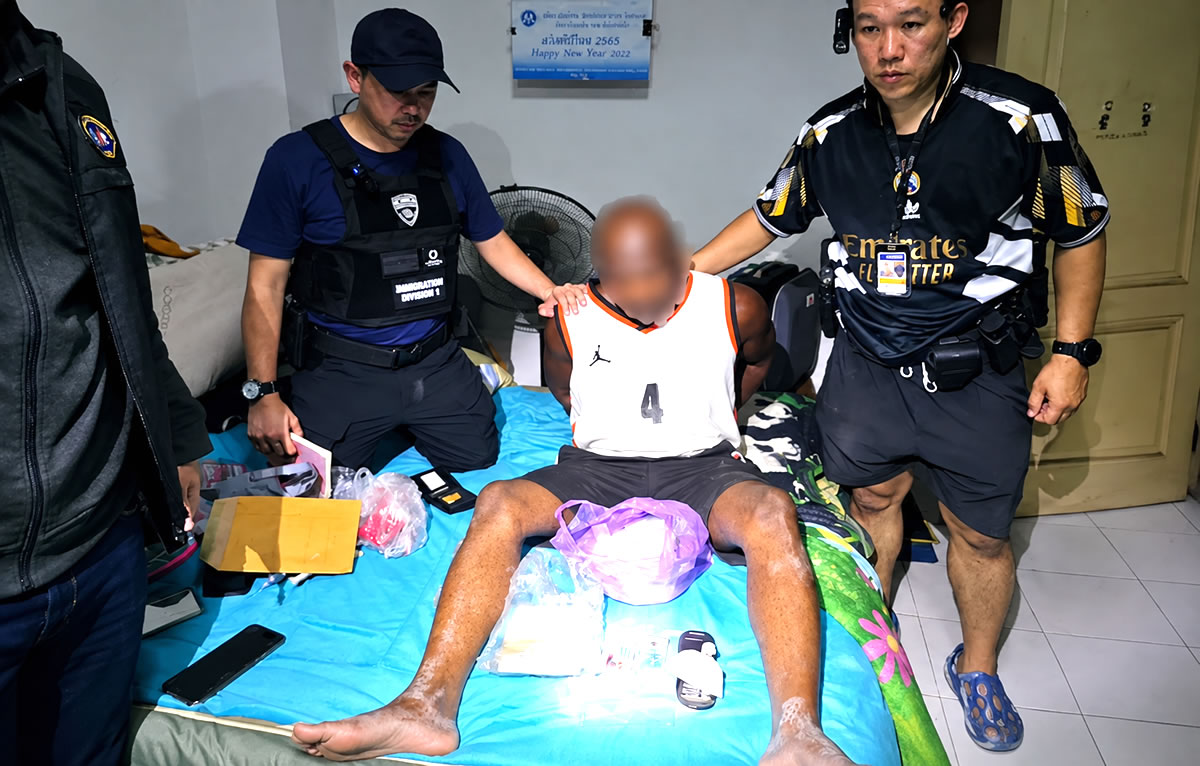
The search uncovered the largest cocaine haul of the operation. Inside the apartment, police discovered approximately 101 grammes of the drug. Investigators valued the cocaine at more than ฿400,000. The quantity dwarfed the 2.4 grammes recovered during the earlier undercover purchase.
Alongside the cocaine, officers found numerous plastic bags apparently intended for drug packaging. A digital scale was also recovered. Investigators identified it as equipment used to weigh cocaine before distribution. Yet the search produced another significant discovery.
Police found a blender, measuring cups, blackboard chalk and baking soda inside the accommodation. The combination of substances and equipment prompted further questioning. According to the police account, the 43-year-old admitted purchasing the chalk and baking soda to mix with cocaine.
Suspect admits mixing cocaine with blackboard chalk and baking soda to increase quantities and profits
He reportedly explained that the substances increased the quantity of material available for sale. By adding cheaper ingredients, he could increase the amount distributed to customers. The suspect admitted that the purpose was to increase profits. Police subsequently seized the materials as evidence connected with drug preparation.
The discovery gave investigators evidence of suspected cocaine processing inside the apartment. Officers had already recovered packaging materials and equipment for weighing the drugs. Now they had also found substances reportedly used to dilute the cocaine before distribution.
However, police did not disclose how much chalk or baking soda had been purchased. Nor did investigators establish how much mixed cocaine had already been sold. The statement also did not identify customers who might have received drugs prepared at the apartment.
The 43-year-old was charged with possessing a Category 2 narcotic with intent to sell without authorisation. Additionally, he faces charges relating to entering and remaining in Thailand illegally. Police identified him as the suspected supplier of the cocaine sold by Mr F.
That connection emerged from questioning following the first arrest. Investigators then followed the information to the apartment and recovered the larger quantity of cocaine. Thus, the operation moved from an undercover purchase to the arrest of a suspected upstream supplier.
The apartment raid also produced evidence extending beyond simple possession. Officers recovered drugs, packaging materials, weighing equipment and substances reportedly used to increase saleable quantities. Taken together, the discoveries formed the basis of the suspected possession-for-sale case.
On another front, investigators uncovered financial movements exceeding ฿2 million during the operation. The Immigration Bureau included the amount in its announcement concerning the suspected network. However, the statement provided no detailed breakdown of the transactions.
Police did not specify whether the figure represented cocaine sales, bank transfers or other financial activity. Equally, investigators did not disclose the period covered by the reported movements. The accounts or individuals connected with the transactions were not identified.
Police examine ฿2 million financial movements as three Nigerians face separate drug and visa charges
The financial findings therefore remain a separate aspect of the investigation. No detailed evidence was published linking the entire ฿2 million to confirmed cocaine sales. Investigators have also not identified additional suspects through those reported movements.
Overall, police announced three Nigerian arrests following the coordinated operation. Two men face cocaine charges, while the third was arrested for an immigration overstay. The detailed police account recorded approximately 103 grammes of cocaine seized.
That total included approximately 2.4 grammes from the undercover purchase and another 101 grammes from the apartment. Some accounts have cited a higher quantity. Nevertheless, the detailed operational statement supports approximately 103 grammes, pending clarification of the differing figures.
The suspects face separate charges arising from their reported activities. Mr F, aged 42, was charged with selling cocaine without authorisation. The 43-year-old apartment occupant faces cocaine possession with intent to sell and immigration charges. Separately, the 21-year-old restaurant suspect faces an overstay charge.
Big Nop credits intelligence-led operation but police have yet to identify cocaine source or customers
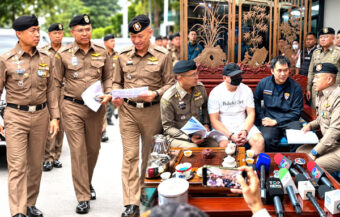
The Immigration Bureau described the operation as an intelligence-led investigation involving several specialist agencies. Officers had initially identified a suspected dealer through surveillance and intelligence gathering. An undercover purchase then provided evidence for his arrest. Subsequent questioning led investigators to the suspected supplier.
The separate restaurant inspection also exposed an immigration violation. In this way, the coordinated operation produced arrests involving both narcotics and immigration offences. Police credited cooperation between Immigration Division 1, specialist narcotics units and the ONCB.
The Narcotics Suppression Bureau and its international narcotics investigation unit participated in the operation. Immigration Bureau narcotics investigators also worked alongside the arresting officers. The coordinated investigation followed instructions from Big Nop to pursue foreign nationals suspected of criminal activity.
Despite the arrests, the police statement did not establish where the cocaine originally entered Thailand. Nor did it identify how the 43-year-old suspect obtained his supply. Investigators also did not disclose the number of customers believed to have purchased drugs from the men.
There was no confirmed information about distribution beyond Bangkok. Similarly, police did not identify additional suppliers connected with the apartment seizure. The reported ฿2 million in financial movements also remained unexplained in the published statement.
Immigration Bureau seeks public reports as suspects face proceedings and financial questions remain
The Immigration Bureau announced the operation on October 17. However, the statement did not establish that all three arrests occurred that day. It presented the results of the coordinated investigation and the charges brought against the suspects.
Following the arrests, the bureau issued a warning concerning drug trafficking and immigration violations. It said providing shelter or assistance to people unlawfully residing in Thailand could also constitute an offence. Landlords, accommodation providers and business operators were asked to cooperate with investigators.
The bureau requested reports of suspected drug distribution and possible immigration offences. In particular, it referred to unusual movements into and out of accommodation premises. Information supplied by members of the public would be examined by police.
Two Nigerians arrested for cocaine possession in Pattaya as police launch a crackdown on illicit drugs
Nigerian drug Kingpin and overlord for international Nigerian mafia arrested in a dramatic night raid in Bangkok
The three Nigerians were transferred for further legal proceedings. The announcement did not disclose any court appearances or applications for continued custody. Meanwhile, investigators have yet to explain the reported financial movements or identify the original source of the cocaine.
The inquiry also remains open concerning the suspected supplier’s customers and any additional distributors. Police have not announced further arrests linked to the seized drugs. The next stage of the investigation concerns the cocaine’s source, its distribution and the unexplained financial transactions.
Join the Thai News forum, follow Thai Examiner on Facebook here
Follow Thai Examiner on Google here
Receive all our stories as they come out on Telegram here
Follow Thai Examiner here
Further reading:
Money Laundering Office seizes assets with money trail linked to South African financier Ben Smith
Kla Tham MP dismisses unproven scam centre claims about Deputy Prime Minister Thamanat Prompow
People’s Party warns Anutin of a No Confidence move over cabinet links to Cambodian scam networks
United States, South Korea and United Kingdom act against Cambodian scam industry with Thai tie-ins
Ben Smith affair & allegations of links to Cambodian scam centres continues to rage in parliament
Defiant Rangsiman Rome warns he’s not just fighting a defamation case but for the future of Thailand