Anutin puts thousands of suspected foreign land nominees on notice as Thailand probes ฿14.01 billion in property. Governors face a December deadline, illegal holdings risk compulsory sale, and Thai-foreign couples face tougher financial checks on land deals.
Prime Minister Anutin Charnvirakul has ordered a nationwide crackdown on illegal foreign land ownership, with ฿14 billion in property facing forced sales. The operation targets 2,360 plots and 13,088 suspected parties, with provincial governors ordered to complete priority investigations by December. Meanwhile, Thai spouses of foreigners face tougher checks on property purchase funds, while land deals exceeding ฿2 million face closer scrutiny. Investigators must also uncover the real financiers behind nominee companies and prevent illegally held land from passing to replacement nominees. Anutin has warned influential figures that they face prosecution, with deportation, money laundering investigations and other legal action also in prospect. The orders follow major raids on luxury properties and months of investigations into foreign-linked businesses across Thailand.
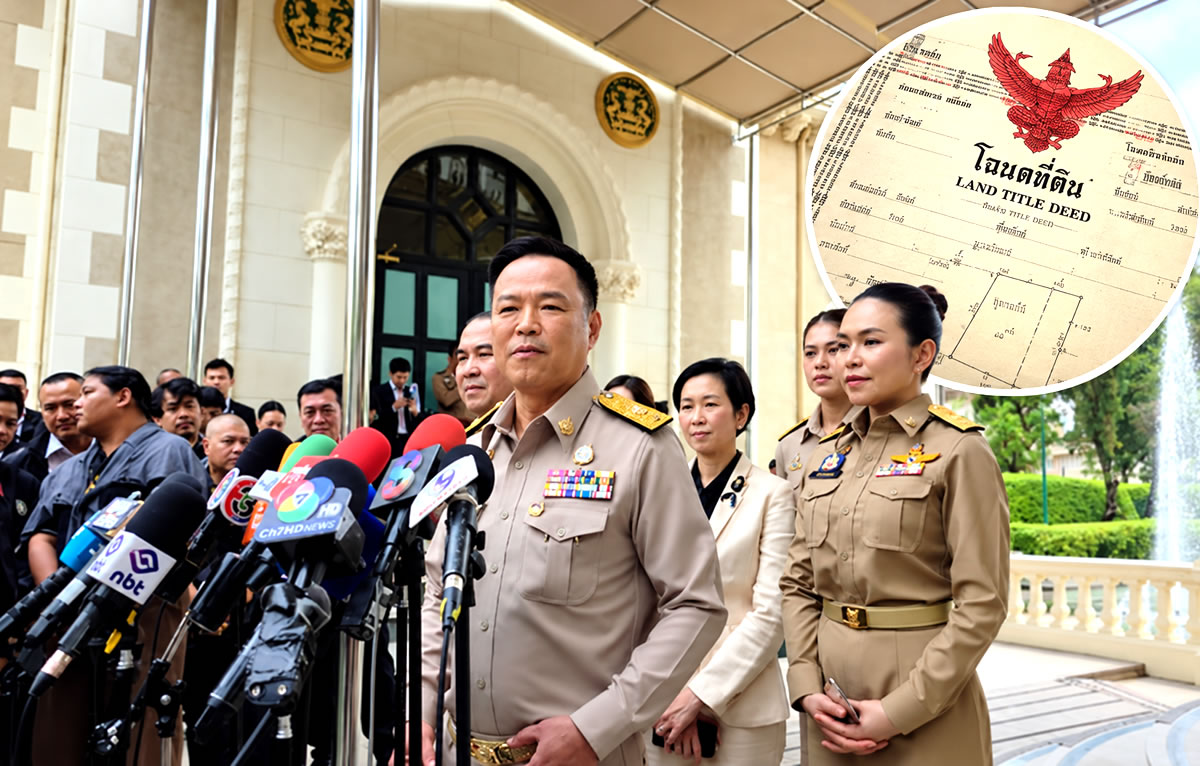
Prime Minister Anutin Charnvirakul on Monday ordered a nationwide crackdown on illegal foreign land ownership, targeting property worth ฿14.01 billion. Provincial governors have until December to complete priority investigations, with compulsory land sales and prosecutions to follow.
Meanwhile, Thai nationals married to foreigners face tighter checks on the money used to purchase land. The campaign covers 5,467 rai and thousands of suspected nominee arrangements. Anutin also warned influential figures behind illegal property deals that their connections would offer no protection.
Crucially, the government is demanding completed investigations and enforcement, not simply the identification of suspicious properties.
Anutin launches nationwide land crackdown with forced sales and tighter checks on foreign nominees
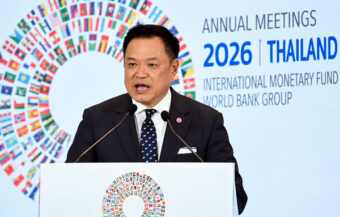
The Prime Minister, who also serves as Interior Minister, launched the campaign at Government House in Bangkok on October 19. The event began at 10 am in the Santi Maitri Building, with provincial governors joining by video conference.
Senior Department of Lands officials and representatives of other government agencies also attended. Anutin demanded action against foreigners suspected of controlling Thai land through unlawful nominees. In particular, he ordered investigators to establish the real owners and financial beneficiaries behind suspicious transactions.
The crackdown has two immediate objectives. First, officials must investigate existing holdings and enforce compulsory disposals where violations are established.
Second, land offices must strengthen checks on new purchases, including transactions involving foreign spouses and companies. Separately, investigators must monitor subsequent buyers of illegally held land. This is intended to prevent properties passing between successive Thai nominees while the same foreigners retain control.
Land department identifies 13,088 suspicious parties and ฿14.01 billion in property facing scrutiny
Department of Lands Director-General Somchai Leelanoi disclosed the scale of the preliminary findings. Investigators have identified 13,088 parties associated with suspicious land ownership arrangements.
Of these, 1,550 were companies suspected of involving illegal foreign shareholdings. Another 11,538 were suspected of holding land on behalf of foreigners. In addition, officials identified 2,360 plots associated with 1,397 suspected nominee landholders. Together, those properties cover approximately 5,467 rai, equivalent to 875 hectares or 8.75 square kilometres.
The combined estimated value of the targeted land is ฿14.01 billion, approximately $420 million. However, these figures do not represent completed confiscations or compulsory sales. Investigators must still establish violations and pursue the required legal procedures.
Nor has the government announced that every suspected nominee has committed an offence. Nevertheless, Anutin has ordered officials to move cases towards legal decisions rather than leave investigations unresolved.
The Prime Minister delivered a direct warning to influential individuals suspected of directing unlawful property transactions. He told provincial governors that powerful connections must not obstruct enforcement. “Those behind this are mostly ‘somebody’. They are not ordinary people but influential ones. However, no influence is greater than that of the government,” Anutin declared. Furthermore, he pledged government support for officials pursuing investigations, including those involving influential suspects.
Investigators ordered to uncover the real financial backers and beneficiaries behind land ownership
Anutin also demanded that investigators establish the individuals actually controlling suspicious landholdings. Registered title deeds and company shareholder lists must not be treated as conclusive evidence of genuine ownership.
Instead, officials must examine who provides the capital, makes decisions and receives financial benefits. This requires inquiries into financial arrangements, company records and relationships between registered Thai owners and foreign beneficiaries.
“This investigation must not stop at merely the names of title deed holders or company shareholders; it must dig deeper to identify the true controlling figures, behind-the-scenes decision-makers, and ultimate beneficial owners,” he said.
The instruction places beneficial ownership at the centre of the nationwide operation. Accordingly, investigators must identify individuals directing transactions behind registered shareholders and title deed holders. They must also examine whether subsequent changes in ownership conceal prohibited foreign control.
Provincial governors given December deadline as government prepares compulsory sales of illegal land
The December deadline gives provincial governors approximately ten weeks to complete priority investigations. Each province must identify suspicious landholdings, establish responsibility for individual cases and coordinate with other agencies.
Meanwhile, the Department of Lands will work with police and financial investigators to examine ownership structures and supporting documents. Anutin wants clear procedures, accountable officers and completed findings before the deadline.
However, the December target does not require every prosecution, appeal or compulsory sale to finish within that period. The immediate instruction concerns priority investigations and decisions on appropriate enforcement.
Subsequent legal proceedings must follow the applicable procedures. Even so, governors must establish which suspected holdings violate Thai ownership restrictions. Their findings will determine the cases proceeding towards compulsory disposal and further legal action.
Forced land sales are central to the campaign. Thai legislation already provides mechanisms requiring disposal of land unlawfully acquired or held for foreigners. Therefore, Anutin is directing officials to enforce existing provisions rather than creating an entirely new confiscation power.
Once violations are established, the relevant procedures can lead to compulsory sales. Associated civil and criminal proceedings may also continue against those involved.
Officials must scrutinise new buyers to stop illegally held land passing between successive nominees
Notably, the government wants officials to examine the purchasers of land sold through enforcement action. A transfer to another Thai nominee would not resolve unlawful foreign control. Consequently, investigators must establish whether replacement buyers are genuinely independent.
They must also examine the financial arrangements behind subsequent purchases. The instruction targets cases where registered ownership changes but the original foreign beneficiary retains effective control.
The measures extend beyond the original acquisition of property. Officials must examine changes in shareholders, financing and company control after registration. A company may initially acquire land under one ownership structure before its arrangements subsequently change.
In such cases, later transactions may become relevant where they create unlawful foreign control. Investigators are therefore being instructed to review the history of suspicious holdings, not merely the original title documents.
On another front, the government is tightening scrutiny of land purchases involving Thai nationals married to foreigners. This directly affects transactions involving mixed-nationality households.
Thai spouses of foreigners must prove genuine ownership of funds used to purchase land in Thailand
Department of Lands Director-General Somchai Leelanoi said Thai spouses must demonstrate that purchase funds genuinely belong to them. The requirement places greater emphasis on the financial evidence supporting transactions registered in the Thai partner’s name.
Thai citizens remain legally entitled to own land after marrying foreign nationals. However, Thai law prohibits foreigners from circumventing ownership restrictions through Thai nominees. As a result, officials must establish whether the Thai spouse genuinely owns the property and the purchase money.
A registered title deed alone may not settle questions about the underlying arrangement. Instead, investigators may examine financial records and supporting declarations where transactions raise concerns.
The Department of Lands already requires declarations concerning funds used by Thai nationals married to foreigners. Monday’s announcement, however, places greater emphasis on verifying those declarations.
A signed statement may therefore be examined alongside evidence establishing the money’s ownership. In particular, officials may seek to determine whether funds genuinely belong to the Thai purchaser. The focus remains on arrangements concealing prohibited foreign ownership, rather than marriage to a foreign national itself.
Questions remain over family transfers as higher-value property deals face new background checks
The tighter scrutiny raises practical questions about money transferred between spouses. These include joint savings, bank deposits, family funds and transfers intended for property purchases.
However, the government has not published comprehensive new instructions covering every category of transfer. Nor has it announced that money originally supplied by a foreign spouse automatically establishes illegal nominee ownership. The legal questions concern genuine ownership and whether the arrangement conceals prohibited foreign control.
Similarly, Monday’s announcement does not prohibit Thai citizens with foreign spouses from purchasing land. Their existing legal rights remain intact. Nevertheless, officials are being instructed to examine the actual financing behind suspicious transactions. This creates closer verification of property purchases involving mixed-nationality couples. The Department of Lands has not yet clarified the evidence required for every financial arrangement.
In parallel, officials are strengthening background checks on higher-value land purchases. Somchai said transactions involving purchase prices exceeding ฿2 million would attract additional examination. The same applies where a property’s assessed value exceeds ฿5 million. Importantly, the thresholds operate independently. A transaction need not exceed both figures before additional checks apply.
Land offices to check company financing and existing property holdings before and after registration
Land officials may examine purchasers’ backgrounds, financing and supporting ownership documents. For companies, inquiries may also cover shareholders, capital contributions and financial arrangements.
These checks are intended to identify suspicious nominee structures before registration. At the same time, investigators are examining existing landholdings where unlawful foreign control is suspected. The campaign therefore covers both new transactions and properties already registered.
Some financial checks and spousal declarations existed before Monday’s announcement. Consequently, the latest orders should not be confused with an entirely new prohibition on foreign-linked transactions. Instead, the government is demanding more systematic enforcement of existing ownership restrictions. The additional emphasis concerns funding verification, beneficial ownership and subsequent changes in company control.
The measures are particularly relevant to companies established with Thai-majority shareholdings. Such companies are not automatically illegal simply because foreigners hold minority interests.
Thai company shareholders face scrutiny over genuine control as immigration penalties are considered
However, Thai shareholders must be genuine participants rather than nominees for prohibited foreign beneficiaries. Investigators must therefore establish who supplies the capital and exercises effective control. They must also identify the individuals receiving financial benefits from land and associated businesses.
Further scrutiny will apply to changes in company structures after land registration. These include shareholder transfers and transactions that may alter the actual ownership position. A company initially operating lawfully may subsequently enter arrangements requiring investigation.
Accordingly, officials must examine the financial and commercial substance of suspicious structures. The registered percentage of Thai ownership will not necessarily resolve questions about who controls the property.
The Prime Minister has also connected the land campaign with wider enforcement against foreigners involved in unlawful activities. He referred to immigration proceedings, deportation and investigations into money laundering and tax evasion. In addition, Anutin mentioned possible revocation of Thai citizenship where legal grounds exist.
However, these measures involve separate legal requirements and procedures. A suspected nominee transaction does not automatically establish grounds for deportation or citizenship revocation.
Financial investigations may bring tax and immigration cases as Anutin warns unlawful land nominees
Financial investigations may nevertheless identify evidence relevant to other offences. For example, records examined during land inquiries could require separate money laundering or tax investigations. Immigration action may also follow where the applicable legal conditions are satisfied.
Anutin said the government had prepared procedures to pursue appropriate cases. He instructed officials to identify the individuals directing unlawful arrangements rather than concentrating solely on registered nominees.
“We will take serious action against nominees who hold land on behalf of foreigners,” the Prime Minister declared. “Land is an important national resource. Ownership must be legal and fair and must not create opportunities for illegal exploitation.” He said unlawful arrangements affected the fair use of national resources, national security and confidence in government enforcement.
At the same time, Anutin stressed that Thailand remained open to legitimate foreign investment. “Meanwhile, the government confirms that Thailand is ready to welcome foreign investors who act honestly and transparently, comply with Thai law and respect the rights of Thais,” he added. The Prime Minister’s instructions therefore distinguish lawful investment from arrangements violating Thai land ownership restrictions.
Koh Samui and Koh Phangan villa investigations form backdrop to Anutin’s new nationwide land orders
Monday’s announcement follows months of investigations into foreign-linked property ownership across Thailand. Tourist destinations have featured prominently, particularly Koh Samui and Koh Phangan.
Investigators have examined suspected nominee companies, villa developments, rental businesses and long-term lease arrangements. These inquiries have concentrated on ownership structures, financing and the individuals controlling foreign-linked residential properties.
Earlier this year, Anutin personally visited Koh Phangan during an investigation into a suspected illegal villa development. He travelled through Koh Samui as part of the inspection. The visit focused on property ownership arrangements and financing behind foreign-linked developments. It also preceded the nationwide enforcement orders announced on Monday.
Separately, investigations on Koh Samui have identified large numbers of companies requiring examination. In August, officials identified 138 companies requiring urgent land enforcement action on the island. Another 2,579 suspected nominee companies were under investigation.
These inquiries involved suspected foreign-linked ownership structures and related property businesses. However, the figures concern earlier investigations and cannot automatically be added to Monday’s national totals.
Hua Hin investigations and earlier ฿85 billion company probe show scale of foreign nominee inquiries
The campaign has also reached Hua Hin, where police investigated foreign-linked residential property arrangements. Other inquiries have examined property development companies and related commercial activities.
In each case, investigators have focused on ownership structures, financial arrangements and suspected nominee participation. However, the available information does not establish that every earlier case forms part of the latest enforcement programme.
Earlier national investigations covered approximately 11,000 foreign-linked companies. These inquiries involved property and other assets valued at about ฿85 billion. Investigators examined suspected nominee structures, ownership changes and financial transactions. Nevertheless, those figures relate to a broader programme and cannot be treated as additional land identified under Monday’s announcement.
In September, officials reported seizures or freezes exceeding ฿20 billion during the wider crackdown on nominee businesses. The operations involved assets beyond the land now targeted for possible compulsory disposal.
Consequently, the figures cannot be added directly to the latest ฿14.01 billion estimate. They form part of the preceding investigations into suspected unlawful business and ownership arrangements.
Bangkok luxury estate raids bring 11 arrests as provincial governors take charge of land investigations
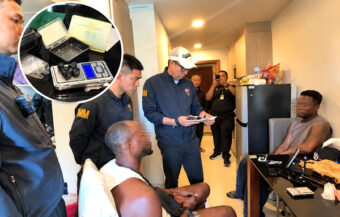
More recently, police launched another major operation against suspected illegal foreign property ownership in Bangkok. Earlier this month, officers raided 17 locations across four luxury housing estates. The operation resulted in 11 arrests, including Chinese nationals. Investigators also reported assets worth more than ฿6 billion seized during the raids.
The Bangkok operation targeted suspected unlawful arrangements involving high-value residential properties. However, the government has not established that every property involved appears among Monday’s 2,360 plots.
The latest announcement identifies a nationwide enforcement programme with its own figures and deadlines. Its principal targets are suspected unlawful holdings and the individuals exercising control behind registered owners.
Provincial governors now have direct responsibility for completing priority investigations. They must identify suspicious landholdings, assign responsibility for individual cases and coordinate with national agencies. Meanwhile, the Department of Lands must examine supporting records and ownership arrangements. Investigators are also expected to establish the actual beneficiaries rather than rely solely on registered names.
Government tightens land registration controls and examines changes in company ownership
Anutin has ordered stronger controls over future land registrations. In particular, transactions involving Thai spouses of foreigners will face closer scrutiny of purchase funds. Higher-value purchases will also attract background checks.
Additionally, companies acquiring land may face examination of shareholders, capital contributions and financing arrangements. The government wants these checks applied alongside investigations into existing suspected nominee holdings.
The scrutiny extends to ownership changes after registration. Investigators may therefore examine whether a property remains under genuine Thai control following subsequent transactions. This is particularly relevant to companies whose shareholders or financial arrangements change after acquiring land. However, any finding of unlawful ownership must still be established under the applicable legislation.
Compulsory disposal remains a principal enforcement objective. Even so, officials must distinguish suspicious holdings from properties legally established to be unlawfully owned. The identification of 2,360 plots does not mean every title deed has already been revoked. Nor does the ฿14.01 billion estimate represent proceeds recovered through forced sales.
Unanswered questions remain over compulsory sales, foreign spouses and previously registered land
The government has not disclosed how many targeted plots have reached final disposal decisions. Furthermore, officials have not published a complete provincial breakdown of the properties involved.
The number of compulsory sales expected before December also remains unspecified. However, Anutin has ordered governors to complete their priority investigations by the end of that month.
For Thai-foreign households, questions remain over financial documentation. The Department of Lands has not issued comprehensive public guidance covering every form of transfer between spouses. Nor has it announced a universal retrospective examination of previously registered family property purchases. Nevertheless, suspicious transactions may be investigated where officials identify grounds for examining the underlying ownership arrangements.
Existing foreign-linked property companies also face individual examination. Officials must establish whether Thai shareholders are genuine investors and whether company arrangements comply with the law. Separately, financial inquiries may identify offences requiring additional proceedings. The government has instructed investigators to pursue such matters where the evidence supports action.
Anutin demands completed investigations and public reporting before December land enforcement deadline
Anutin has also ordered improved public reporting of enforcement results. Officials are expected to provide channels for reporting suspected violations.
Moreover, the Prime Minister wants closer coordination between departments to prevent investigations remaining unresolved. The emphasis is on identifying actual beneficiaries, establishing violations and enforcing the resulting legal decisions.
The December deadline now places immediate responsibility on provincial governors and the Department of Lands. They must determine which suspected holdings violate Thai land ownership restrictions.
Investigators must also identify the individuals directing unlawful arrangements and establish the evidence required for proceedings. Cases involving illegal ownership may then move towards compulsory disposal, criminal prosecution and related financial inquiries.
Probe into 11,000 firms linked to foreigners holding 85 billion baht in property to be complete by Sept 30th
Nominee shareholding crackdown is impacting the property market in Phuket and small foreign investors
Meanwhile, tighter registration checks will apply to higher-value purchases and transactions involving Thai spouses of foreigners. The Department of Lands must still clarify how supporting financial evidence will be assessed in different circumstances.
For existing properties, investigators must establish whether the arrangements conceal prohibited foreign control. Any subsequent compulsory sale must also be examined to prevent replacement nominee ownership.
By the end of December, provincial governors are expected to have completed their priority investigations. Those findings will determine which cases proceed towards forced sales, prosecutions and further financial inquiries.
The Department of Lands must also implement tighter controls over future purchases. Separately, officials must scrutinise subsequent buyers to prevent land sold through enforcement action from returning to the same foreign beneficiaries.
Join the Thai News forum, follow Thai Examiner on Facebook here
Follow Thai Examiner on Google here
Receive all our stories as they come out on Telegram here
Follow Thai Examiner here
Further reading:
Frenchman’s Koh Samui business empire enmeshed in knotty police probe of nominee firms and pot farm
Drive against foreign owned property and business on Koh Samui and Koh Phangan now targets leases
International reservations system used by hotels targeted in latest Koh Phangan swoop by ministers
Anutin visits Koh Phangan as nominee crackdown shows 68% of firms with foreign ownership links
Blitzkrieg on foreign firms and enterprises on Koh Phangan continues with French owned resort busted
Russian-Chinese Koh Phangan alliance to sell drugs to foreigners. Accused entered Thailand illegally
Crackdown aimed at upending foreign business trade moves from Koh Phangan to Phuket. Four arrested
Crackdown to wipe out foreign business abuses and ownership on Koh Phangan & Koh Samui intensifies