Floods batter 4,216 Thai businesses across 55 provinces, with factories stopping and FTI losses topping ฿1 billion. Toyota and Honda suspend production, while 95% of affected firms need financial aid as Industry Minister Varawut launches emergency relief.
Thailand’s flood crisis is hammering the country’s industrial economy, with 4,216 businesses hit across 55 provinces and factories already stopping production. More than 4,000 SMEs are affected, while 95% of surveyed firms need financial help. The FTI puts losses among affected members above ฿1 billion as damaged machinery, blocked roads and component shortages tear through supply chains. Toyota and Honda have temporarily halted production at several plants, while FTI President Pimjai Leeissaranukul has opened an emergency war room. Industry Minister Varawut Silpa-archa is responding with debt holidays, emergency loans and recovery measures as the final business losses continue to mount.
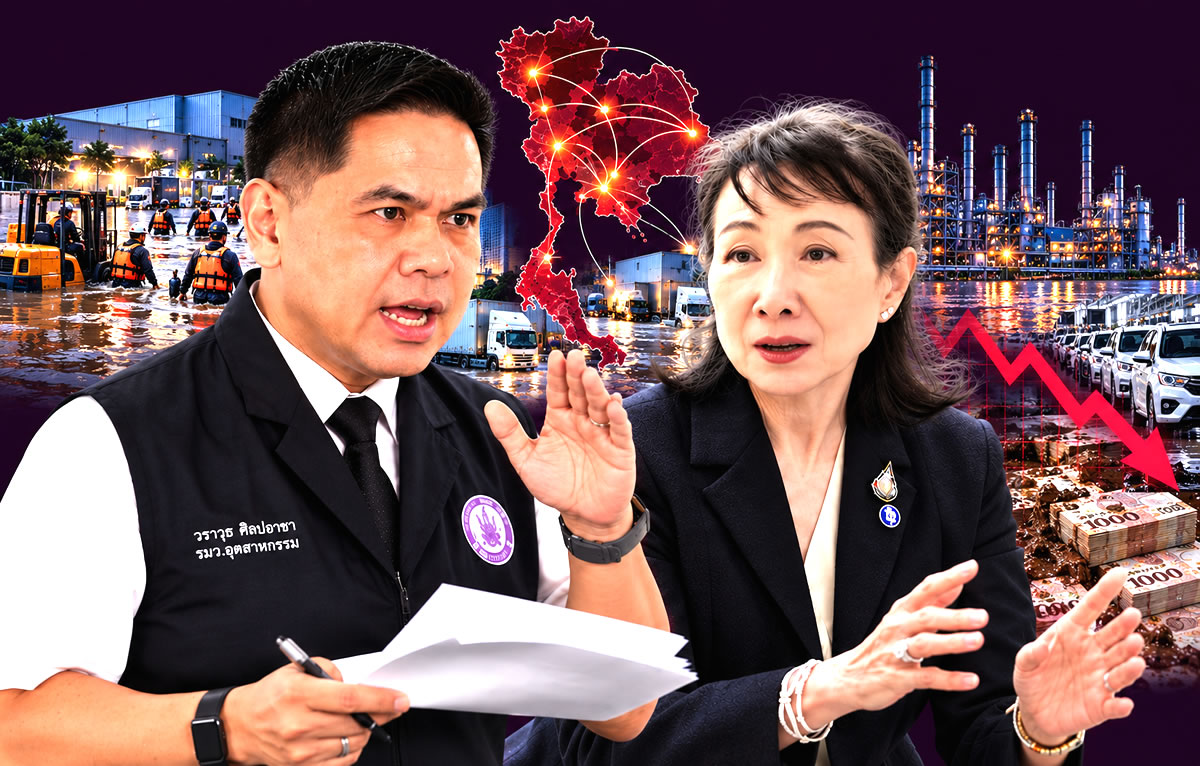
Thailand’s flood crisis has hit 4,216 businesses across 55 provinces, forcing factories to halt production and pushing losses higher. More than 4,000 affected operations are small and medium-sized enterprises. Supply-chain failures are also spreading the disruption beyond premises directly hit by floodwater.
The Ministry of Industry has recorded preliminary direct losses of ฿147.84 million. Separately, the Federation of Thai Industries (FTI) estimates losses among affected members at approximately ฿1.018 billion. Both assessments remain preliminary as companies continue reporting damage.
FTI President Pimjai Leeissaranukul says factories have already stopped production. Floodwater has damaged machinery, equipment and raw materials. At the same time, disrupted transport and component supplies are hitting businesses which escaped direct flooding. The effects now extend through suppliers, manufacturers, logistics operators and factory workforces.
Industry Ministry counts 4,216 affected businesses as Bangkok leads major nationwide flood disruption
Industry Minister Varawut Silpa-archa disclosed the nationwide figures following an assessment by the ministry’s Crisis Management Centre. Of the 4,216 affected establishments, 4,006 are SMEs. Another 126 are industrial factories, while 82 are community enterprises. Two mining operations have also suffered disruption.
Notably, Bangkok has recorded the largest number of affected businesses. The capital accounts for 1,114 establishments, representing more than one quarter of the nationwide total. Samut Prakan follows with 499 businesses, while Prachinburi has 405. Rayong has recorded 272, while Pathum Thani has 232.
The financial damage rankings, however, produce a different provincial picture. Sa Kaeo currently has the highest preliminary losses at ฿58.17 million. Nakhon Pathom follows with estimated damage of ฿16.65 million. Samut Prakan has recorded ฿14.34 million, while Pathum Thani stands at ฿14.15 million. Chanthaburi has reported another ฿9.58 million.
Crucially, those figures cover only preliminary damage identified through the ministry’s assessment. The financial pressure facing affected businesses is already much broader. Some 95% of businesses surveyed said they required financial assistance. The remaining 5% identified other immediate needs.
Businesses seek pumps, repairs and financial aid as flood damage spreads through industrial areas
Among them, businesses have requested pumps, sandbags and large flood barriers. Others need help draining water from factories and commercial premises. In addition, companies require machinery repairs, electrical work and assistance cleaning flooded buildings. Some businesses have also sought exemptions from government fees.
More than 200 companies have already contacted the government seeking non-financial assistance. In response, the Department of Industrial Promotion is coordinating support with provincial industry offices. Businesses in areas still flooded are receiving advice through telephone and video consultations. Field teams will enter affected areas once conditions permit.
The scale of damage will become clearer as water recedes. Machinery, electrical installations and production equipment must then be inspected. Stocks and raw materials must also be examined. Only then can some businesses establish their actual losses.
Pimjai, however, says physical flood damage tells only part of the industrial story. Factories have already started stopping production. Machinery, production equipment and raw materials have been damaged. Beyond that, disruption is spreading through suppliers, parts manufacturers and transport companies.
Workers, suppliers and blocked transport routes deepen production losses beyond flooded factories
Workers unable to reach factories create another problem. Consequently, businesses can lose production without water ever entering their premises. A factory can remain dry but stop because essential components fail to arrive. Similarly, manufacturers can finish products but remain unable to deliver them.
This creates a chain reaction across connected businesses. For example, a disrupted component supplier can interrupt production at a much larger factory. Blocked transport routes can also prevent raw materials from reaching manufacturers. Finished products can become stranded before reaching customers.
In parallel, delayed deliveries can disrupt cash flow. Companies may manufacture goods without receiving payment because orders cannot reach customers. Production losses can therefore extend beyond damaged machinery or flooded inventories. Transport, labour and sales disruptions add further costs.
Thailand’s automotive industry has already demonstrated that risk. Flooding affecting component suppliers disrupted deliveries to major vehicle manufacturers. As a result, Toyota and Honda temporarily suspended production at several Thai plants. The stoppages show how supply problems can reach factories outside flooded areas.
Toyota and Honda halt production as supplier flooding exposes wider risks across Thai manufacturing
On another front, the FTI is examining effects on customer orders, exports and continuity of industrial operations. Companies also face substantial costs before damaged factories can reopen. Electrical systems require inspection after floodwater recedes. Machinery may require extensive repairs or replacement.
Likewise, flooded buildings must be inspected and cleaned. Raw materials can become unusable, while finished goods can also be destroyed. Businesses can therefore face repair bills while simultaneously losing production and sales. Delivery problems can also delay revenue from completed orders.
The FTI’s separate assessment already places losses at approximately ฿1.018 billion. That survey covered flooding between September 24 and September 30. It examined Bangkok and another 14 affected provinces. Communities, transport routes, factories and industrial estates were included.
Importantly, the FTI calculation extends well beyond physical damage to flooded buildings. The federation assumed approximately 40% of members in affected areas suffered disruption. It then calculated losses across several categories. These include company vehicles, electrical systems, utilities and production machinery.
FTI puts industrial losses above ฿1 billion as damage extends beyond factories and flooded premises
The assessment also covers damaged production equipment, raw materials and finished goods. Furthermore, it counts production stoppages where workers cannot reach factories. Goods manufactured but subsequently impossible to sell or deliver are included. Lost business opportunities also form part of the calculation.
Accordingly, the FTI’s ฿1.018 billion estimate cannot be directly compared with the ministry’s ฿147.84 million assessment. The two exercises measure different forms of damage and use different scopes. Neither figure represents a final nationwide economic cost.
Further reports could push the figures higher. The FTI was still collecting information from businesses in affected industrial areas. Likewise, some losses cannot be determined while premises remain flooded. Equipment must first be inspected and inventories checked.
Against this backdrop, Pimjai has established an FTI war room to coordinate the industrial response. It will work with provincial industrial federations, industry groups and regional business networks. The centre will also collect further information from affected companies. Equipment and assistance can then be directed towards businesses reporting urgent needs.
The FTI has divided its operation into three stages called “Respond – Rescue – Recover”. The first stage covers industrial areas which have not yet flooded. Provincial organisations are identifying suppliers of flood-prevention equipment. Companies in vulnerable areas are also preparing before water arrives.
FTI war room launches three-stage response as businesses prepare, rescue operations and recovery
As part of this, the FTI network will identify sources for pumps, barriers and other equipment. Regional organisations will monitor conditions around industrial areas. Suppliers capable of providing equipment quickly will also be identified. Emerging problems will then be reported through the FTI network.
The second stage covers companies already affected by flooding. The federation will conduct additional surveys to establish the extent of damage. Its networks will also help locate pumps and other equipment. Local organisations will coordinate assistance according to conditions in individual areas.
In turn, problems reported by businesses can be forwarded to relevant government agencies. The process gives the FTI another source of information about developing losses. It also allows the federation to identify businesses requiring immediate equipment or technical assistance.
The third stage, “Recover”, begins after floodwater recedes. Factories must determine whether buildings and electrical installations are safe. Machinery and production equipment must then be inspected. Damaged equipment may require repairs before production can resume.
Afterwards, companies must examine raw materials and finished products. Electrical systems may require substantial work before machinery can restart. Specialists will therefore be needed to inspect production systems and equipment. The FTI plans to coordinate technical assistance during this phase.
Factories face difficult restart as FTI tracks broken supply chains and mounting financial pressure
Yet reopening a factory does not automatically restore production. Suppliers must also be operating, while transport routes must remain usable. Workers need access to factories. Customers must also be reachable for deliveries.
For that reason, the FTI will continue monitoring supply chains during the recovery period. It will identify points where production remains interrupted. Information can then be coordinated between manufacturers, suppliers and transport operators. The objective is to identify obstacles preventing production from restarting.
Financial pressure has become another central concern. The government survey found 95% of affected businesses require financial assistance. The FTI is therefore gathering proposals from provincial organisations and industry groups. These will cover financing, taxation, government fees and logistics.
On financing, the federation is seeking low-interest credit for affected businesses. It also wants debt repayment relief while companies restore operations. Liquidity becomes critical when businesses face repairs alongside lost production. Companies can also face wage and operating costs while revenue is interrupted.
Taxation and fees form another part of the proposals. The FTI wants consideration of relief covering relevant government charges. These could include land and building taxes. Repair and restoration expenses are also being examined.
FTI seeks credit, debt and tax relief as firms face repair costs, lost production and cash pressure
Logistics disruption creates a separate financial problem. Businesses unable to deliver goods can face penalties under commercial contracts. Flooding and blocked transport routes can make those deadlines impossible to meet. The FTI is therefore seeking consideration of reductions or waivers for such penalties.
Meanwhile, Varawut has announced government financial measures for affected businesses. SME D Bank is preparing relief for qualifying customers hit directly or indirectly by flooding. Principal and interest repayments can be suspended for up to 12 months.
Additionally, directly affected customers can seek emergency credit. The extra borrowing can equal 10% of an existing credit facility. However, the lending is capped at ฿200,000. Loans can run for up to three years.
During the first 12 months, principal repayments can also be suspended. The measures provide another financing route for businesses requiring immediate liquidity. Companies can use the period to repair premises and restore operations.
Elsewhere, the Pracharath SME Fund is offering additional relief. Affected businesses can receive a three-month suspension of principal and interest payments. The Department of Industrial Promotion has also prepared a ฿50 million emergency lending programme.
Government opens debt relief and emergency lending as Varawut moves to support flood-hit businesses
Existing qualifying borrowers can receive an automatic four-month suspension of principal and interest payments. Subsequently, monthly repayments can be reduced by 50% for six months. Loan periods can also be extended by up to two years.
For new borrowers, loans of up to ฿1 million per business are available. Those loans carry zero interest during the first six months. Several financing channels are therefore being opened as companies assess their losses.
Beyond financing, the Department of Industrial Promotion is preparing its Rebuild SMEs programme. Specialist teams will assess affected businesses and advise them on restoring operations. The Department of Industrial Works is also preparing annual factory fee exemptions.
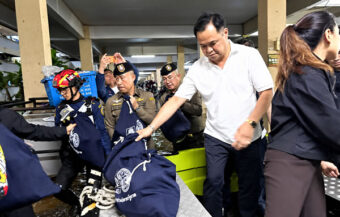
Those exemptions could apply to businesses inside officially designated disaster areas. In addition, the ministry has distributed emergency supplies to affected communities and businesses. Some 9,100 relief bags have already been handed out.
Another 560 relief bags went to factory workers and residents stranded in Suphan Buri and Chanthaburi. The ministry has also supplied 150 large flood-control bags. A further 1,000 have been prepared for organisations and businesses requesting assistance.
Emergency loans, fee exemptions and relief supplies expand as ministry supports flooded businesses
The ministry’s 1564 hotline is receiving requests from factories, SMEs and community enterprises. At present, officials continue collecting information across affected provinces. Those reports will help determine where additional assistance and specialist teams are required.
The full financial cost, however, remains unclear while flooding continues. The 4,216 affected establishments already span 55 provinces and several sectors. More than 4,000 are SMEs. Their problems range from physical damage to production stoppages and transport failures.
Larger factories face their own pressures. Missing components can halt production lines, while damaged machinery can delay reopening. Transport disruption can prevent finished products from leaving plants. Staff shortages can also stop production without physical damage to factory buildings.
Taken together, immediate losses include machinery, electrical systems, vehicles, raw materials and finished goods. Production stoppages add another category. Interrupted deliveries create further losses, while blocked roads can affect companies outside flooded areas.
Supply-chain failures can therefore carry disruption across provincial boundaries. One damaged supplier can affect several manufacturers. Similarly, one transport bottleneck can interrupt several production chains. Thailand’s automotive sector has already shown that effect through temporary factory suspensions.
Flood damage spreads across production networks as final financial cost remains impossible to assess
Smaller businesses face an additional liquidity squeeze. They must finance repairs while production and cash flow remain disrupted. Some need replacement machinery or electrical equipment. Others must replace damaged stocks and raw materials.
At the same time, delayed deliveries can postpone customer payments. That pressure is reflected in the ministry’s survey. Fully 95% of affected businesses said they required financial assistance. The FTI’s separate damage estimate has already exceeded ฿1 billion.
For now, the Industry Ministry continues assessing damage across 55 provinces. The FTI is doing the same through its provincial and industrial networks. Consequently, neither organisation has established a final loss figure.
Bank of Thailand top official warns serial economic shocks are weakening the country’s resilience
Business leaders pile pressure on Thai Airways over vital air cargo artery for the kingdom’s exports to the world
The confirmed scale is already substantial. Some 4,216 businesses have been affected, including 4,006 SMEs and 126 industrial factories. Factories have stopped production, while component shortages and transport disruption are spreading through supply chains.
In response, businesses are seeking emergency credit, debt relief and assistance restoring operations. Government agencies have started financing, fee and recovery programmes. The FTI has established its war room and three-stage response.
Still, damage assessments remain underway across dozens of provinces. Machinery, inventories and electrical systems remain inaccessible at some flooded premises. Further production losses are also being recorded. The final cost to Thai businesses has yet to be counted.
Join the Thai News forum, follow Thai Examiner on Facebook here
Follow Thai Examiner on Google here
Receive all our stories as they come out on Telegram here
Follow Thai Examiner here
Further reading:
Bank of Thailand top official warns serial economic shocks are weakening the country’s resilience
Government takes a stronger hand as Thai Airways crisis at Suvarnabhumi Airport worsened Wednesday
Bangkok airports open and flights running but there are delays and baggage issues at Suvarnabhumi
Engineers work through night after Sunday’s fire on Bangkok’s Blue Line saw more damage than thought
Arrested man linked with Chatuchak building collapse now tells police he is a Chinese state employee