Suvarnabhumi turmoil spreads from baggage halls to Thailand’s export lifeline as Thai Airways battles 8,000 stranded bags and cancelled flights. Chamber demands an overhaul, Phiphat intervenes and military crews are deployed as cargo piles up.
Thailand’s Suvarnabhumi Airport crisis has blown far beyond stranded baggage, hitting flights, cargo and a vital export gateway. Thai Airways entered October with thousands of bags still stranded, more flights cancelled and freight piling up after Bangkok’s floods hammered staffing. Now the Thai Chamber of Commerce is demanding a complete overhaul of an air cargo system handling ฿2.42 trillion in exports over seven months. Transport Minister Phiphat Ratchakitprakarn has intervened, military personnel are helping clear the backlog while Thai Airways shares have fallen sharply. The crisis comes just before the tourism high season and Bangkok’s IMF–World Bank Group Annual Meetings.
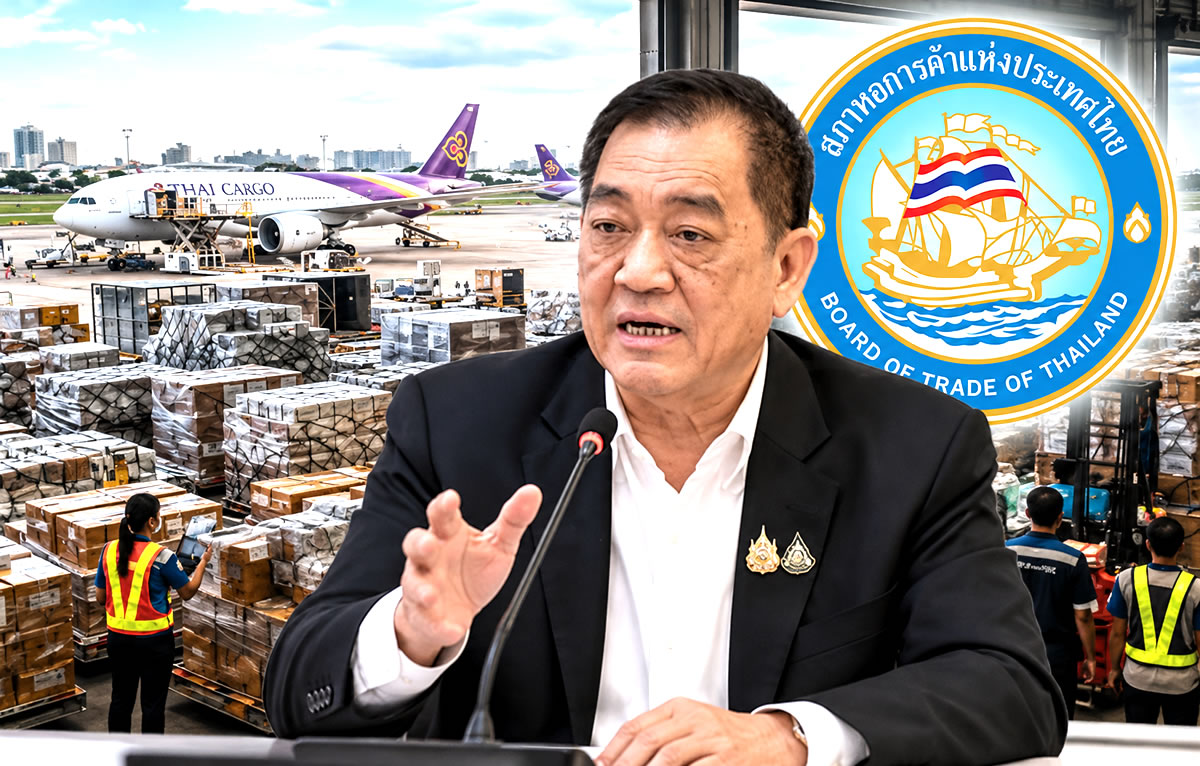
Thailand’s leading business organisation has demanded a complete overhaul of Suvarnabhumi Airport’s air cargo system after severe operational disruption. The intervention came as Thai Airways International struggled with a huge baggage backlog and continuing flight cancellations.
In parallel, flooding hit the airline’s critical cargo operation at Thailand’s principal international airport. Thousands of bags remained stranded as the crisis entered October. Thai Airways also cancelled further domestic and international flights between October 1 and 3.
The problems have now moved far beyond passenger disruption. Suvarnabhumi is a critical processing point for Thailand’s enormous air freight trade. Notably, goods worth trillions of baht move through the country’s air cargo network annually. The airport therefore sits at the centre of passenger aviation and high-value exports. That economic role has moved sharply into focus during the latest crisis.
Poj warns Suvarnabhumi disruption threatens Thailand’s image before tourism peak and IMF meetings
Poj Aramwattananon raised the alarm on Wednesday as the airport battled the continuing disruption. Mr Poj chairs both the Thai Chamber of Commerce and the Federation of Thai Chambers of Commerce. He said the problems exposed serious limitations across Thailand’s air cargo infrastructure. Crucially, many of those problems existed before the latest floods.
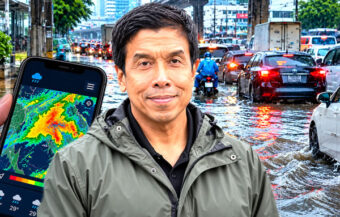
Warehouse space, manpower, equipment and operating procedures were already under increasing pressure. Then flooding across Bangkok and surrounding areas sharply intensified the difficulties. Heavy rain disrupted travel to and from Suvarnabhumi for three to four days. As a result, some Thai Airways employees could not report for work normally. The manpower shortage subsequently spread across passenger and cargo operations.
At the same time, passengers faced delays, cancellations and stranded baggage. Mr Poj said the disruption also carried consequences for Thailand’s international image. “Airports are the first point of contact for travellers arriving in Thailand,” he said. He warned that service disruption would affect confidence and Thailand’s image.
The timing adds another dimension. Thailand is approaching the crucial year-end tourism peak. Separately, Bangkok is preparing to host a major international gathering this month. The IMF–World Bank Group Annual Meetings run from October 12–18. In response, Mr Poj called for government agencies to coordinate their work immediately. He wants travel and airport services restored to normal as quickly as possible.
Air cargo worth ฿5.53 trillion exposes Suvarnabhumi’s vital role as freight bottlenecks deepen further
Yet the Chamber’s most significant warning concerned cargo rather than passengers. Thailand moved approximately ฿5.53 trillion in international trade by air between January and July 2026. Exports accounted for approximately ฿2.42 trillion of that total. That represented roughly one-third of Thailand’s overall export value during the period.
Electronics accounted for more than half of those air exports. Electronics and related products were worth more than ฿1.32 trillion. Agricultural and food products added more than ฿380 billion. Accordingly, disruption across the air freight network can affect enormous volumes of Thai exports. The figures also show the economic weight carried through the country’s airports.
The Chamber has monitored cargo congestion and operating limitations since last year. Its work identified several pressure points across the system. These include warehouse capacity, manpower, equipment and working procedures. In addition, infrastructure used for security checks before flights has come under pressure.
Cargo volumes have continued rising. The number of charter cargo flights has also increased. Consequently, workloads across the air freight system have grown heavier. The problems were therefore developing before flooding disrupted travel across Bangkok. The weather then added a severe manpower shortage to existing operational constraints.
Thai Airways cargo embargo follows flooding as manpower shortages leave freight piling up at airport
Thai Airways’ cargo warehouse had already sought relief before the latest emergency. It previously requested a temporary suspension of charter cargo acceptance. The purpose was to deal with accumulated inventory inside the facility. In effect, the flooding hit an operation already struggling with increased cargo volumes.
Thai Airways then announced a much wider cargo embargo on September 29. Its Cargo Operations Department announced restrictions covering six days. They were due to begin at 12.01 am on October 1. The restrictions were scheduled to remain until 11.59 pm on October 6.
The measure covered incoming, outgoing and transshipment cargo at the Thai Airways warehouse. Thai Airways directly linked the decision to the continuing flooding. Specifically, the airline said employee travel had been badly affected. Some workers could no longer report for duty normally.
Manpower shortages then significantly affected warehouse operations. Goods could not be delivered to customers at the normal rate. Likewise, processing cargo for scheduled flights was affected. A large backlog subsequently accumulated inside the warehouse. The airline was therefore facing accumulated freight alongside its enormous passenger baggage problem.
Thai Airways said temporary restrictions were necessary to manage the situation. The airline wanted to manage available manpower and other resources. It also cited security and operational efficiency inside the warehouse. The embargo represented a major restriction at one of Thailand’s most important cargo facilities.
Transport Minister intervenes as cargo restrictions threaten high-value exports and passenger operations
Several categories were nevertheless exempted. These included diplomatic documents and living organisms. Human remains and mail were also excluded. Thai Airways said the restrictions were designed to restore efficient operations as quickly as possible. The airline also apologised to customers for the disruption and potential impact.
The planned restrictions immediately highlighted Suvarnabhumi’s importance to Thai exports. The airport handles enormous volumes of high-value goods. More importantly, many products moving by air are time-sensitive. Electronics alone accounted for more than ฿1.32 trillion during the seven-month period cited by the Chamber.
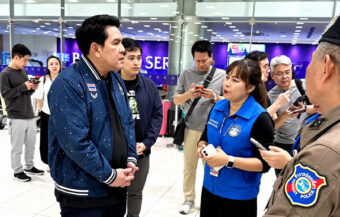
The disruption therefore became an economic issue alongside the aviation breakdown. Deputy Prime Minister and Minister of Transport Phiphat Ratchakitprakarn subsequently intervened. He instructed that cargo operations must continue because of the wider consequences. Airports of Thailand was asked to provide temporary space. Additional personnel were also mobilised.
On another front, Thai Airways continued battling serious passenger disruption. Flooding had initially prevented significant numbers of workers from reaching Suvarnabhumi. However, Suvarnabhumi Airport itself remained open throughout the crisis. Other ground handling operations also continued functioning. Thai Airways nevertheless suffered severe manpower shortages across its own operations.
Thai Airways baggage backlog hits 10,000 as flights are cancelled and shares fall sharply on the SET
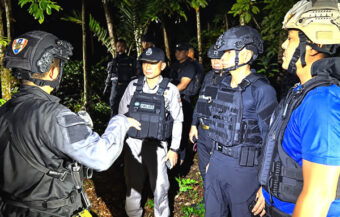
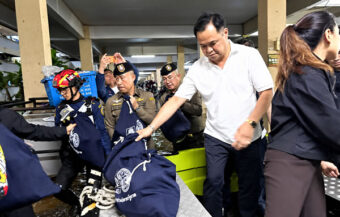
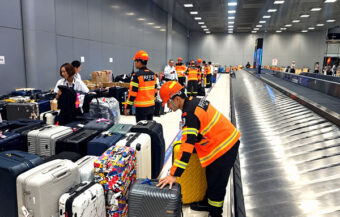
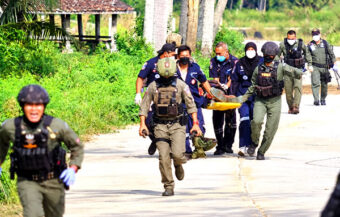
The baggage system consequently came under intense pressure. Thousands of bags accumulated as services were delayed or cancelled. The backlog eventually reached approximately 10,000 bags. By Wednesday, around 8,000 were still awaiting processing and delivery. Military personnel were then brought into the airport to help.
Military equipment was also deployed to support the recovery operation. Thai Airways targeted October 2 for clearing the remaining baggage. Even so, normal flight operations were expected to take considerably longer. Thai Airways Chief Executive Officer Chai Eamsiri indicated recovery could take seven days.
Further flight cancellations were announced for October 1–3. The cancellations covered domestic and international services. International routes affected included Frankfurt and Singapore. New Delhi, Mumbai and Hanoi services were also among those affected. Elsewhere, cancellations included Copenhagen, Taipei, Seoul and Amsterdam. The disruption that began during September therefore continued directly into October.
Financial markets delivered another sign of pressure. Thai Airways International shares fell sharply during trading on September 30. The stock dropped 4.13% to ฿5.80. By 11.01 am, approximately ฿518.85 million of shares had changed hands. The wider Thai stock market was also facing selling pressure.
Poj says cargo constraints caused systemic disruption as Suvarnabhumi handles 59.62m passengers
Still, Thai Airways was simultaneously battling cancellations, stranded baggage and cargo disruption. The operational crisis therefore unfolded across several parts of its business. Passenger flights were reduced while thousands of bags remained outstanding. Meanwhile, its major cargo warehouse struggled with accumulated freight.
Against this backdrop, the Chamber shifted attention towards problems extending beyond the immediate flooding. Mr Poj said rising cargo volumes alone could not explain the difficulties. “The problem isn’t solely due to the volume of goods,” he said. Instead, he identified several simultaneous constraints across the cargo system.
Those constraints included space, manpower, equipment and working procedures. He also identified infrastructure used for pre-flight security checks. “When multiple limitations occur simultaneously, it can cause systemic disruptions,” Mr Poj said. The statement directly linked the breakdown to several operating pressures occurring together.
Flooding then created another major problem. “The recent flooding situation, which affected the travel of employees and passengers, is another contributing factor,” he said. On that basis, Mr Poj called for a complete overhaul of the entire system.
The warning comes against the enormous scale of Suvarnabhumi’s normal operations. Figures cited by the Chamber showed 118 airlines providing services during 2026. The airport handled approximately 340,000 flights. That represented an increase of 1.83%. Passenger numbers stood at 59.62 million.
Chamber maps air cargo overhaul as Phumin calls for coordinated action across Thailand’s freight network
Thailand also continues pursuing its objective of developing into a global aviation hub. For that reason, the Chamber said faster and more convenient airport operations were required. Its proposed changes, however, extend across the entire air cargo supply chain.
Phumin Harinsut is leading the Chamber’s detailed work on the problem. Mr Phumin is Vice Chairman of the Thai Chamber of Commerce. He also chairs its Logistics & Supply Chain Committee. The committee has collected information from operators and relevant agencies across the air cargo network.
As part of this work, the committee developed proposals addressing different stages of the system. Mr Phumin said effective solutions required cooperation across the entire network. That includes cargo warehouses and airport operators. Aviation safety regulators must also be involved. The Customs Department, airlines and private operators are included.
The Chamber specifically praised the Customs Department for adjusting procedures during urgent situations. Nevertheless, it said broader coordination remained necessary. Several government ministries have responsibilities affecting the cargo chain. These include the Ministry of Agriculture and Cooperatives and the Ministry of Commerce. The Ministry of Transport also has a central role.
Chamber seeks central mechanism and stronger cargo capacity as year-end trade and tourism peak approaches
The Chamber additionally cited the Act on Facilitating Licensing and Public Service Provision B.E. 2569. Meanwhile, the approaching year-end peak adds urgency to the discussions. Imports and exports normally increase during this period. Passenger traffic also rises with the tourism high season.
Under those conditions, the Chamber wants measures to reduce cargo congestion rapidly. It also wants greater cargo handling capacity. Beyond that, it is seeking more reliable service delivery. Its proposals therefore extend beyond immediate emergency measures.
The Chamber is preparing short, medium and long-term changes. Initially, it wants a central mechanism linking relevant organisations. That body would jointly define measures and coordinate their implementation. It would also continuously monitor results.
Responsibilities would be clearly allocated under the proposal. Implementation timetables would also be established. In turn, performance indicators would measure results. Airports of Thailand would participate in the proposed mechanism. The Civil Aviation Authority of Thailand would also take part.
The Customs Department would be included alongside cargo warehouse operators. The Thai Air Freight Forwarders Association would also participate. Similarly, the Thai Chamber of Commerce would remain involved. Other relevant sectors could then join the mechanism.
Chamber targets warehouse licensing and service standards before presenting cargo report to minister
For the longer term, the Chamber believes simply expanding cargo capacity will not solve every problem. It therefore wants the licensing framework for new warehouse operators reviewed. This includes conditions contained in the relevant Terms of Reference.
The Chamber also wants standards governing warehouse capacity. Service levels would additionally come under review. Efficiency standards would be established as well. Preparedness for peak cargo periods would form another element. The objective is to match infrastructure with future air cargo growth.
The Chamber has already completed a detailed report on the problems. It is titled “Improving the Efficiency of Thailand’s Air Cargo System: A Case Study of Congestion at Suvarnabhumi Airport.” The report brings together facts gathered across the cargo system. It also contains recommendations covering individual stages of the operation.
Next, those findings will move directly to the government. A meeting with Transport Minister Phiphat Ratchakitprakarn is scheduled for October 5. The Chamber will present its study and proposed solutions. Afterwards, its conclusions will be communicated to the organisations involved.
“The Thai Chamber of Commerce has been continuously monitoring and studying this issue with stakeholders,” Mr Phumin said. He said the Chamber was pressing for urgent limitations to be addressed. At the same time, it was developing medium and long-term strategies.
Flooding exposes Suvarnabhumi cargo constraints as Thai Airways imposes six-day freight embargo
The immediate backdrop remains the disruption triggered by severe flooding. Heavy rainfall affected roads and travel across Bangkok and surrounding areas. Workers consequently struggled to reach Suvarnabhumi. The resulting manpower shortages then spread through Thai Airways operations.
Flight schedules were hit while passenger baggage accumulated. Cargo processing also slowed. Despite that disruption, the airline continued operating from an airport that never closed. The baggage backlog became the most visible sign of the breakdown.
The cargo problems, however, exposed much larger sums. Approximately ฿2.42 trillion of Thai exports travelled by air between January and July. That equalled roughly one-third of the country’s total export value. Of that amount, more than ฿1.32 trillion consisted of electronics. Another ฿380 billion came from agricultural and food products.
Importantly, the Chamber had identified cargo constraints before the flooding struck. Warehouse space was already under pressure. Manpower represented another limitation. Equipment and procedures were also causing difficulties. Pre-flight security infrastructure formed another part of the bottleneck.
Increasing charter cargo traffic added further pressure. Thai Airways’ warehouse had already sought restrictions to manage accumulated freight. Then flooding sharply reduced available manpower. In response, the airline announced its October 1–6 cargo embargo.
Chamber warning grows as baggage, flight and cargo problems hit before major October events in Bangkok
At the same time, thousands of passenger bags remained stranded. Further flights were cancelled. Military personnel were deployed. Thai Airways shares also fell 4.13% during September 30 trading. Thus, the Chamber’s warning arrived during an expanding operational crisis.
The problems are also unfolding before two important October periods. First, the IMF–World Bank Group Annual Meetings begin in Bangkok on October 12. Soon afterwards, Thailand moves deeper into its year-end tourism and trade peak.
Mr Poj said airports represented the first point of contact for international travellers. Yet Suvarnabhumi carries another role that is less visible to passengers. It processes a substantial share of Thailand’s high-value international trade.
The Chamber is therefore focusing heavily on the cargo operation. Its figures put total air trade at ฿5.53 trillion over seven months. Exports alone accounted for ฿2.42 trillion. At the same time, existing cargo bottlenecks had been accumulating since last year.
The flooding then hit manpower and intensified those pressures. Thai Airways responded with flight cancellations and a planned cargo embargo. Subsequently, the Transport Minister intervened over the freight operation. The Chamber is now preparing to put its wider proposals before him.
Chamber proposals target warehouses and manpower as Thai Airways battles disruption on three fronts
Those proposals cover warehouses, manpower and equipment. They also address operating procedures and security infrastructure. Furthermore, the Chamber wants licensing conditions for new warehouse operators reviewed. It wants measurable service standards and clear preparations for peak periods.
The recommendations follow months of work involving participants across the air cargo supply chain. They also come as Thai Airways continues clearing thousands of stranded bags. The airline must simultaneously restore cancelled and delayed services. Its cargo operation must also deal with accumulated freight.
Thai Airways therefore entered October fighting problems across its passenger, baggage and freight operations. Its shares had also fallen sharply as the disruption continued. By contrast, Suvarnabhumi itself remained open throughout the crisis.
For the Chamber, the cargo constraints clearly pre-date the latest flooding. Rising freight volumes had already exposed limitations involving warehouses, manpower, equipment and procedures. The floods then sharply reduced staffing and added another layer of disruption.
Suvarnabhumi’s huge trade role moves into focus as Chamber presses cargo overhaul after airline crisis
Suvarnabhumi handles tens of millions of passengers annually. Equally significant, it processes a huge share of Thailand’s international air trade. That second role has now moved firmly into focus as the baggage and flight crisis continues.
The Chamber’s figures put ฿2.42 trillion of exports through the air cargo system in seven months. Electronics accounted for more than ฿1.32 trillion. Agricultural and food products contributed another ฿380 billion.
Government takes a stronger hand as Thai Airways crisis at Suvarnabhumi Airport worsened Wednesday
Thai Airways admits it got it wrong as Suvarnabhumi Airport public areas are swamped by a baggage flood
In the meantime, the Chamber is pressing for changes across the entire cargo system. Its proposals cover immediate bottlenecks and longer-term capacity. They also include licensing, warehouse standards, manpower, equipment and security procedures.
The next stage comes on Monday, October 5. The Chamber will put its detailed study directly before Transport Minister Phiphat Ratchakitprakarn. Until then, Thai Airways continues battling baggage, flight and cargo disruption following Bangkok’s severe flooding.
Join the Thai News forum, follow Thai Examiner on Facebook here
Follow Thai Examiner on Google here
Receive all our stories as they come out on Telegram here
Follow Thai Examiner here
Further reading:
Government takes a stronger hand as Thai Airways crisis at Suvarnabhumi Airport worsened Wednesday
Bangkok airports open and flights running but there are delays and baggage issues at Suvarnabhumi
Engineers work through night after Sunday’s fire on Bangkok’s Blue Line saw more damage than thought
Arrested man linked with Chatuchak building collapse now tells police he is a Chinese state employee