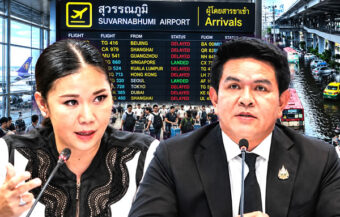
Democrat deputy Karndee turns up the heat on Thailand’s ฿1.621bn AI Passport, demanding answers on procurement, value, payments and Thai data. The five million-user scheme missed its July launch, but Digital Minister Chaichanok presses ahead.
Thailand’s ฿1.621 billion TH-AI Passport is facing mounting political scrutiny after missing its July launch, while its payment system remains under revision. Democrat deputy leader Karndee Leowpairoj is demanding answers from Digital Economy and Society Minister Chaichanok Chidchob over procurement, value for money and Thai citizens’ data. She also questions whether a five million-user scheme can outperform free AI services. Yet Mr Chaichanok is pressing ahead, arguing Thailand urgently needs AI skills, domestic technology and higher productivity as its workforce shrinks.

Democrat Party deputy leader Karndee Leowpairoj has intensified scrutiny of Thailand’s ฿1.621 billion TH-AI Passport project. The party-list MP is demanding answers directly from Digital Economy and Society Minister Chaichanok Chidchob. At the same time, Mr Chaichanok and his ministry are pressing ahead with the artificial intelligence programme.
On August 16, Ms Karndee returned publicly to the dispute through a Facebook post. She said 19 days had passed since she formally approached the minister. On July 27, she submitted a letter to the Digital Economy and Society Ministry. However, she said an official response had still not arrived.
As a result, Ms Karndee repeated five questions which she says require clear answers for taxpayers. They cover procurement, value for money, payments, data processing and the project’s long-term benefits. Notably, she stressed that she was not rejecting answers already supplied by Mr Chaichanok. Her point was that she was still waiting for those answers.
Karndee demands procurement safeguards and proof the ฿1.621 billion AI scheme offers taxpayer value
Her first challenge concerns transparency surrounding procurement of the ฿1.621 billion project. Specifically, Ms Karndee asked what guidelines or directives Mr Chaichanok had issued to guarantee transparency. She also wants to know how those measures would maintain public confidence.
Earlier, Ms Karndee questioned what she described as unusually accelerated approval procedures. She also raised concerns about changes to important tender conditions. Separately, she questioned whether some specifications could have favoured particular contractors. Those concerns now form the basis of her demand for a detailed ministerial explanation.
Her second challenge goes directly to the project’s value for taxpayers. TH-AI Passport aims to reach as many as five million Thais. The scheme combines access to advanced artificial intelligence models with training in AI skills. The government calculates its cost at about ฿27 per participant monthly for one year.
Yet Ms Karndee questions whether the taxpayer-funded service will outperform products already available without charge. She previously tested an early version of the platform herself. Afterwards, she said some functions appeared comparable with, or inferior to, freely available AI services.
Free AI alternatives and unsettled pay-per-use model sharpen questions over the project’s overall benefit
In addition, Ms Karndee pointed to existing learning platforms which already provide services without charge. These include resources from the Office of Knowledge Management and Development (OKMD). Other online learning services are also freely accessible to the public.
Against that backdrop, she wants evidence showing what taxpayers receive for the ฿1.621 billion expenditure. Her question is focused on the quality delivered for that money. She wants assurances that the paid project provides better services than existing free alternatives.
Her third challenge concerns the project’s unsettled payment mechanism. The contract is being amended, particularly over how payments will be calculated. Nevertheless, Ms Karndee says the public has received no official explanation of the revised model.
Accordingly, she wants the ministry to explain how the new payment mechanism will operate. She also wants details about its potential effect on the government budget. The issue is significant because the project has moved towards a “pay per active user” arrangement.
That proposal creates another set of questions. Critics want a precise definition of an active user. They also want details covering token usage, unit costs and methods for verifying genuine activity. In parallel, questions remain about how usage would be confirmed before taxpayer money is released.
Payment formula, missed July launch and foreign data processing deepen scrutiny of TH-AI Passport
The distinction could directly affect the final cost of the programme. A registered user and an active user may not represent the same financial commitment. As part of this, Ms Karndee wants the payment formula explained before the amended mechanism takes effect.
The payment controversy has another important dimension. The project’s original launch date was July 1, 2026. That date passed without the planned launch. Instead, work continued on contractual changes, particularly those involving payments.
By late July, those amendments were still being prepared. Consequently, TH-AI Passport entered August after missing its original launch timetable. The government had already signed the underlying contract months earlier.
Ms Karndee’s fourth challenge concerns the handling of Thai citizens’ information. The project’s Terms of Reference require personal and usage data to be stored and processed inside Thailand. However, TH-AI Passport will provide access to several advanced artificial intelligence models.
Some of those technologies involve foreign providers. On another front, that raises questions about what happens when Thai users interact with overseas AI systems. Ms Karndee wants to know whether their information could ultimately be processed abroad.
Overseas data processing and long-term returns emerge as key tests for the five million-user scheme
She also asks whether overseas processing would breach the project’s Terms of Reference. Furthermore, her concerns extend beyond basic personal information. A programme targeting five million users could generate substantial behavioural and usage information.
In that context, Ms Karndee wants to know what Thailand gains if foreign companies process Thai behavioural data. She also wants assurances about the security of sensitive information and other resources. Her questions therefore focus on both the location and control of data processing.
Ms Karndee additionally questions whether taxpayers could finance the sharing of valuable information with foreign technology companies. She wants clarity about where information will be stored. Likewise, she wants the ministry to identify where processing will actually take place.
Her fifth challenge concerns how the project’s long-term value will be measured. Five million users form the government’s headline target. Even so, Ms Karndee argues that registration numbers alone cannot establish whether the investment succeeds.
Instead, she wants measurable indicators showing what Thailand receives from the ฿1.621 billion expenditure. Those indicators would need to demonstrate benefits beyond simply accumulating user registrations. In particular, she wants the government to explain how long-term returns will be assessed.
Karndee awaits answers as Chaichanok defends AI training to tackle Thailand’s productivity challenge
“We are asking what long-term benefits Thailand will gain, and how we can measure whether this investment, funded by taxpayers, is worthwhile and appropriate,” Ms Karndee said.
She then made clear why she was raising the same questions again. “The reason we need to reconsider all these questions is not because your answers were unsatisfactory, but because we are waiting for your responses,” she said.
For his part, Mr Chaichanok remains committed to TH-AI Passport and its underlying objectives. He argues that Thailand remains behind regional and international competitors in adopting artificial intelligence. Meanwhile, the country faces an ageing population and a shrinking workforce.
The minister believes AI can help increase productivity as those demographic pressures intensify. Therefore, his ministry wants millions of Thais to gain practical experience using advanced artificial intelligence systems. The programme is intended to combine access with skills development.
Crucially, Mr Chaichanok rejects descriptions of TH-AI Passport as merely a government-funded premium subscription programme. The project instead combines access to several AI models with structured training. Its training element operates under a “Learn to Earn” approach.
Chaichanok backs Thai AI infrastructure as foreign data processing and contract questions persist
Participants will receive instruction covering practical artificial intelligence skills, including prompting. They can also obtain certification after completing training. In turn, the government presents the programme as both an AI access scheme and skills initiative.
Mr Chaichanok also argues that Thailand needs its own platform instead of simply purchasing foreign subscriptions. Direct purchases from overseas AI providers would send Thai user information abroad, according to the minister. He also says those purchases would contribute little towards developing domestic AI capabilities.
By contrast, the ministry wants technological infrastructure and expertise developed inside Thailand. Longer term, officials envisage TH-AI Passport supporting the development of Thai-language artificial intelligence models. Usage information could also support that work, subject to personal data protections.
Still, that argument runs directly into Ms Karndee’s questions concerning foreign processing. She wants precise details about compliance when foreign AI models handle Thai queries. Thus, the project’s domestic data requirements remain a central point of contention.
There is also an important contractual constraint. The government says the TH-AI Passport contract was signed on April 7. Hence, officials argue that the project has moved beyond simply rewriting its Terms of Reference.
Binding April contract and delayed payment changes keep pressure on the ฿1.621 billion AI programme
The ministry is instead dealing with an existing and binding contract. Despite that, significant contractual details have subsequently required amendment. The payment mechanism remains the most prominent outstanding issue identified in the supplied material.
The April contract also predates the missed July 1 launch date by almost three months. Since then, work has continued on the payment arrangements. By July 27, Ms Karndee had formally sought a review, substantial amendment or cancellation.
Nineteen days later, she said she was still awaiting an official response. In response to that silence, she publicly restated all five areas requiring clarification. Her questions now span the procurement process and the eventual measurement of results.
Meanwhile, Mr Chaichanok argues that delay itself carries economic costs. Thailand cannot afford to fall further behind international competitors in AI adoption, according to his position. The shrinking workforce adds urgency to the government’s productivity argument.
Beyond access, the ministry is also placing considerable weight on training. The “Learn to Earn” programme is intended to provide practical instruction and certification. Accordingly, officials argue that the ฿1.621 billion project cannot be assessed as subscriptions alone.
Karndee challenges free-service comparisons as payment, data and five million users remain in focus
Ms Karndee’s value challenge uses a different measure. She wants the government’s platform compared directly with services the public can already obtain for free. She also points to existing publicly accessible learning resources, including those associated with OKMD.
At the same time, the five million user target remains central to both sides of the dispute. The government uses that scale to calculate an approximate monthly cost of ฿27 per participant. Ms Karndee instead wants evidence of measurable long-term returns from the total expenditure.
Another unresolved issue is how those five million users would interact with the revised payment system. The contract is moving towards payments based on active usage. Yet the public has not received the detailed formula Ms Karndee is requesting.
Moreover, the data question becomes larger as the potential user base grows. TH-AI Passport could handle information generated through millions of interactions with artificial intelligence systems. Its TOR nevertheless requires personal and usage data to remain processed domestically.
That requirement sits alongside plans to provide access to foreign AI technologies. For that reason, Ms Karndee is demanding precise assurances about processing locations, security and information sharing. She also wants the national benefit from any foreign processing explained.
The dispute has therefore narrowed around several concrete facts. The contract carries a ฿1.621 billion price tag and was signed on April 7. The programme targets five million users and originally aimed for a July 1 launch.
Missed launch and unresolved payment terms leave Chaichanok facing Karndee’s five demands for answers
That launch date has passed. Contractual changes involving payments were still being prepared by late July. Meanwhile, Ms Karndee submitted her formal challenge on July 27 and renewed it publicly on August 16.
Mr Chaichanok, however, continues to press ahead with the project. He argues that Thailand needs wider AI adoption, stronger skills and domestic technological capability. He also links the programme to productivity pressures created by Thailand’s ageing society and shrinking workforce.
Ms Karndee is demanding evidence on a different set of tests. She wants procurement transparency, demonstrable quality and a clearly defined payment mechanism. Additionally, she wants guarantees covering domestic data processing and measurable long-term returns.
Thai workers are now World leaders for AI use. More than double the global average. Firms must wise up
Democrat Party Deputy Leader reveals flaws in the TH-AI Passport plan and calls on Minister to abort it
For now, those five questions remain at the centre of the political dispute. “We are asking what long-term benefits Thailand will gain, and how we can measure whether this investment, funded by taxpayers, is worthwhile and appropriate,” Ms Karndee said.
Meanwhile, the ministry faces the practical task of implementing a contract already signed in April. The payment mechanism is still being amended, while the original launch deadline has passed. Against this background, Ms Karndee says she is still waiting for Mr Chaichanok’s formal response.
Join the Thai News forum, follow Thai Examiner on Facebook here
Receive all our stories as they come out on Telegram here
Follow Thai Examiner here
Further reading:
Ministry fails to halt ฿25.4 billion payment order to Hong Kong based firm linked to 1990 contract
Microsoft accepts charges of corrupt payments in Thailand as it makes a deal with US investigators
Provincial agency boss arrested in Mukdahan after trying to extort ฿2 million from a businessman
Parliamentary vote on constitutional reform is questioned, court says referendum may be needed
Bangkok MP on Phuket mission to investigate controversial local condo project before the courts
Drinks giant Thai Beverage to resume expansion with Singapore IPO for Asean regional beer operation