Beijing’s big visit, but where are the deals? Li Qiang arrives Friday with a five-year automotive pact, while Thailand awaits firm rice, railway and security commitments. Anutin also prepares to sign a US trade statement, not a final deal, as legal negotiations remain open.
Chinese Premier Li Qiang arrives in Thailand on Friday for high-level talks with Prime Minister Anutin Charnvirakul, bringing a new five-year automotive agreement covering electric vehicles, batteries and Chinese investment. However, Bangkok is still waiting for firm commitments on a 500,000-tonne rice purchase, high-speed railway construction and stronger action against cross-border crime. The visit follows 15 agreements signed in Beijing in July, while Anutin prepares for crucial US tariff negotiations and further international summits. Despite the diplomatic activity, the latest China agreement contains no binding financial commitments, with major investment decisions still outstanding. Similarly, Anutin is due to sign a statement with US President Donald Trump in Manila on November 17, but not a final trade deal.
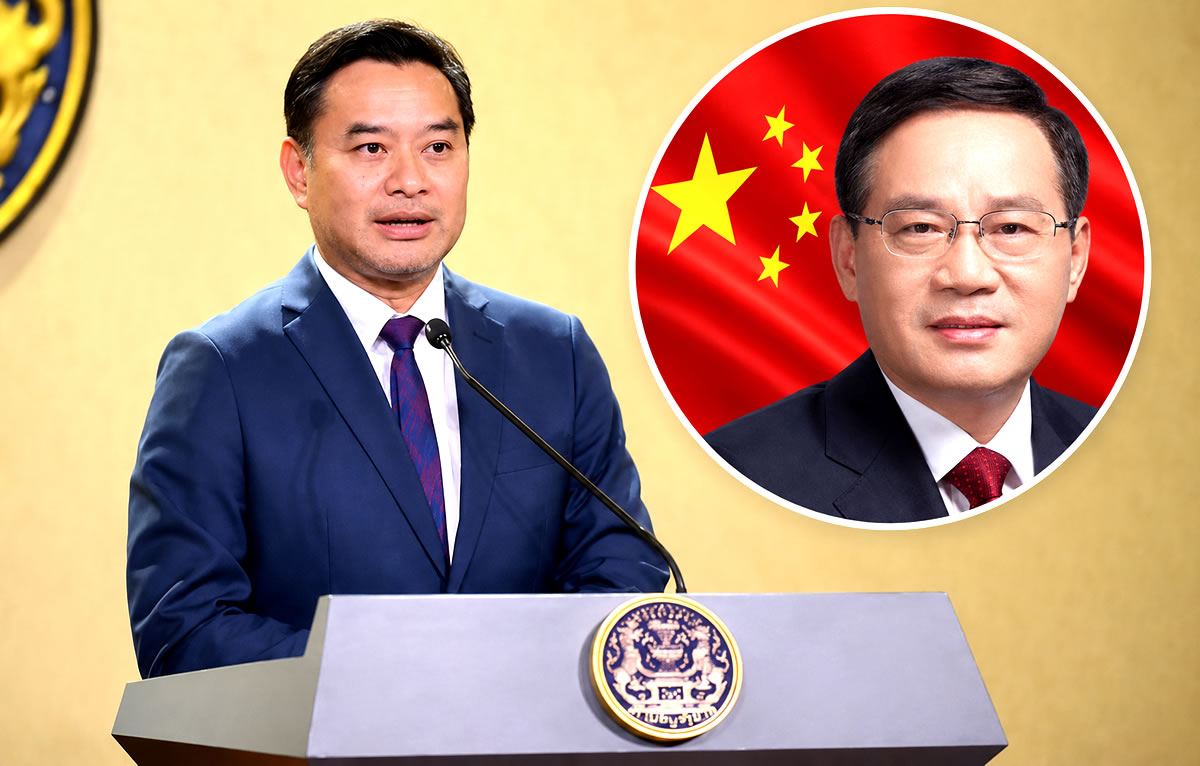
Chinese Premier Li Qiang will arrive in Thailand on Friday, November 13, for high-level talks with Prime Minister Anutin Charnvirakul. His visit comes as Bangkok prepares a five-year industrial agreement with Beijing covering electric vehicles, batteries and advanced automotive manufacturing.
Meanwhile, Thailand is pursuing Chinese investment, agricultural exports and progress on a major railway project. The visit follows Anutin’s July trip to Beijing, when the two governments signed 15 agreements and memorandums.
Thailand’s Cabinet approved the latest automotive agreement on Tuesday, November 10, just three days before Li’s arrival. The memorandum covers investment, trade, technology, industrial standards and government policy.
Chinese premier prepares for Bangkok talks as Thailand sets out new industrial cooperation plans
It also establishes a joint working group to oversee implementation. However, the agreement carries no automatic financial commitments and creates no binding international obligations. Individual projects and spending decisions will require separate approval.
Government spokesman Ekkapop Pienpises confirmed the visit following Tuesday’s Cabinet meeting at Government House. Li will hold official discussions with Thai representatives before attending a dinner hosted by the Thai government.
The visit is scheduled for November 13–14. However, Bangkok has not released a complete itinerary or identified every subject for discussion. The full membership of the Chinese delegation also remains unannounced.
Li is Premier of China’s State Council and the country’s second-ranking political leader after President Xi Jinping. His arrival follows several months of diplomatic exchanges between Bangkok and Beijing. During Anutin’s July visit, both governments identified five principal areas for cooperation.
These covered trade and investment, infrastructure, security, advanced technology and combating transnational crime. The 15 agreements signed during that visit also addressed education and other bilateral priorities.
Thai Cabinet clears five-year automotive deal with China covering investment, standards and policy
The automotive memorandum provides the most concrete new development ahead of Li’s arrival. Deputy Government Spokesperson Lalida Periswiwatana announced Cabinet approval on November 10.
The agreement involves Thailand’s Ministry of Industry and China’s Ministry of Industry and Information Technology, known as MIIT. Accordingly, the Cabinet authorised Thailand’s Minister of Industry, or a designated representative, to sign the document.
The memorandum will operate for five years from its signing date. Nevertheless, it does not create binding international obligations or automatically commit Thailand to additional expenditure. Instead, individual activities and budget allocations will be considered separately.
The arrangement identifies five areas for cooperation covering investment, trade, standards, industrial management and government policy. Both countries will also establish a permanent coordination mechanism for the agreement’s duration.
Investment forms a central part of the new arrangement. Thai and Chinese authorities intend to encourage projects involving manufacturers across the automotive industry. These include conventional vehicles, automotive components, electric vehicles, battery manufacturing and battery recycling.
Electric vehicles and battery production take centre stage as Thailand seeks closer Chinese industry ties
Furthermore, the agreement covers smart vehicle technology and related industrial development. Both governments will facilitate investment projects involving businesses operating within their respective automotive supply chains.
Thailand has identified electric vehicles and advanced automotive technology as important industrial priorities. Consequently, the agreement focuses on manufacturing technology, technical knowledge and cooperation between industrial operators.
The government also wants Thai businesses to participate more extensively in production chains involving Chinese manufacturers. However, Tuesday’s Cabinet announcement identified no individual Chinese companies committing to fresh investment. Nor did it provide figures for additional factories, employment or export earnings.
The memorandum establishes a framework for cooperation rather than announcing completed commercial contracts. Specific investment decisions will therefore depend on subsequent negotiations between participating businesses.
In addition, individual projects will require decisions concerning financing, industrial activities and implementation. The Cabinet has approved the cooperation structure, but no fixed investment programme was announced.
Trade and vehicle standards feature in new China agreement without tariff cuts or export commitments
Trade forms the second major component of the arrangement. Thai and Chinese officials will exchange information concerning market conditions, trade policies and manufacturing demand.
Additionally, both governments will examine opportunities to expand automotive and component exports. The memorandum calls for a fair, equitable and open trading environment. Nevertheless, it does not announce tariff reductions, preferential market access or specific export targets.
Industrial standards constitute another substantial element of the agreement. Thailand and China will exchange information concerning automotive regulations, technical standards and testing requirements.
As part of this process, the governments will organise seminars, training programmes and joint activities. These exchanges will involve regulatory authorities and industry representatives from both countries.
Notably, the memorandum provides for closer alignment of automotive standards and mutual recognition of testing results. The provisions concern regulatory requirements governing vehicles and automotive components.
Industrial regulation and government policy exchanges advance under the five-year China automotive deal
However, the agreement does not immediately change existing Thai regulations or introduce new certification requirements. Further arrangements will depend on decisions taken by the relevant authorities.
Industrial management forms the fourth area of cooperation. Officials will exchange experience concerning strategic planning, industrial regulation and administrative obstacles affecting vehicle manufacturing.
They will also examine problems facing the industry and discuss measures to improve management. On another front, the fifth area concerns industrial policy. Thailand and China will share information about government measures supporting their respective automotive sectors.
These policy exchanges will examine technological developments and changes affecting vehicle manufacturing. Both governments will also discuss how industrial policies respond to emerging production technologies and market conditions. In parallel, officials will consider measures intended to strengthen industrial capabilities and improve cooperation between manufacturers.
Joint Thai-Chinese working group to oversee annual plans, research and industrial cooperation programmes
To oversee the arrangements, both governments will establish a China–Thailand Automotive Industry Cooperation Working Group. The body will coordinate implementation, monitor progress and prepare annual work plans throughout the five-year agreement.
Furthermore, it will organise exchanges concerning industrial policy, regulations, technical standards and research. Cooperation will also extend to manufacturers, universities and research institutions in both countries.
Thailand’s Office of Industrial Economics will serve as the principal Thai coordinating agency. The office operates under the Ministry of Industry. Meanwhile, China’s Department of Industrial Machinery and Equipment 1 will act as the corresponding coordinating agency under MIIT.
Representatives from both organisations will determine priorities, organise meetings and monitor implementation. Their responsibilities will include reviewing progress and coordinating activities under the memorandum.
The arrangement establishes an administrative structure for cooperation between the two industries. However, individual projects and financial commitments remain subject to further approval.
Consequently, Cabinet endorsement does not establish a fixed spending programme or guarantee specific investment projects. Each proposed activity will require separate consideration under the agreed framework.
Bangkok seeks Chinese automotive investment while rice purchase negotiations remain unfinished
Lalida said the government wanted Thailand’s automotive industry to remain competitive as manufacturing technology changes. She identified electric vehicles, batteries and smart vehicles as important areas for cooperation.
Moreover, the agreement seeks to expand opportunities for Thai businesses within automotive production chains involving Chinese manufacturers. No financial value has been attached to the anticipated benefits.
The automotive agreement comes against a wider background of economic negotiations between Bangkok and Beijing. These include agricultural exports, infrastructure development, investment and cooperation against transnational crime.
One outstanding issue concerns China’s previously expressed intention to purchase 500,000 tonnes of Thai rice. Negotiations have continued over prices and delivery arrangements. However, the available government announcements do not confirm a completed purchase agreement covering the entire quantity.
Agricultural trade featured in discussions between Thai Foreign Minister Sihasak Phuangketkeow and Chinese Foreign Minister Wang Yi on November 3. The two ministers met in Beijing, ten days before Li’s scheduled arrival.
Foreign ministers prepare premier’s visit as high-speed railway targets completion of first phase by 2030
Their discussions covered trade barriers, agricultural exports, bilateral security cooperation and preparations for the Chinese Premier’s visit. The meeting followed Anutin’s July discussions with Li and other Chinese representatives.
During those earlier talks, both governments identified trade and investment as major areas for cooperation. In addition, the July agreements covered infrastructure, technology, education and security. The latest visit therefore follows an established programme of bilateral discussions rather than announcing an entirely new relationship.
Infrastructure development remains another major priority. Thailand and China are pursuing the Thai–Chinese high-speed railway, with the first phase targeted for completion by 2030. The project forms part of longstanding infrastructure cooperation between the two countries.
However, no new railway construction contract has been confirmed for signing during the November visit. Similarly, the government has not announced revised financing arrangements or a new completion timetable.
The existing 2030 target remains the stated objective for the railway’s first phase. Nevertheless, the supplied announcements contain no fresh construction milestones or additional financial commitments. The railway therefore remains an established bilateral project without a newly announced agreement linked to Li’s arrival.
China presses for stronger action on cross-border crime as Bangkok keeps security deals unconfirmed
Security cooperation is another important element of the relationship. China has sought stronger action against cross-border gambling operations, online fraud and criminal networks operating around Thailand’s borders.
Wang Yi raised the issue again during his November 3 discussions with Sihasak. Both governments have identified combating transnational crime as an area for closer cooperation.
The discussions concern criminal networks operating across national borders, including illegal gambling and online fraud operations. However, Bangkok has not confirmed any new security agreement for signing during Li’s visit. Nor has the government announced specific additional enforcement arrangements connected to the November meetings.
The broader relationship also includes regional diplomatic matters. Beijing has previously supported dialogue between Thailand and Cambodia amid tensions between the neighbouring countries.
Even so, the Thai government has not confirmed that the border situation will feature in the November discussions. The published programme remains limited to official talks and a government-hosted dinner, alongside the planned automotive memorandum.
Anutin prepares for ASEAN and APEC summits as government discusses prospective US tariff agreements
Li’s arrival also comes ahead of further international engagements for Anutin. Government spokesman Ekkapop outlined the Prime Minister’s forthcoming overseas programme following Tuesday’s Cabinet meeting.
Anutin, who also serves as Minister of Interior, is scheduled to travel to the Philippines with relevant ministers. The delegation will attend an ASEAN summit before the Prime Minister continues to China.
In China, Anutin is scheduled to participate in an Asia-Pacific Economic Cooperation summit. He will also have opportunities to meet foreign leaders, investors and business representatives.
According to Ekkapop, the forthcoming programme includes meetings concerning tariff negotiations with the United States. The spokesman referred to arrangements for signing an agreement connected to those negotiations particularly in Manila on November 17.
However, he did not disclose the precise terms of the proposed agreement. Nor did his announcement establish that a final tariff settlement had already been concluded.
The government is preparing for several diplomatic engagements involving China, the United States and regional economic partners. Trade negotiations and investment discussions feature prominently in the announced programme.
OECD due in Thailand as ministers address Government House protesters ahead of Chinese premier’s visit
Meanwhile, Thailand is preparing for a significant trade announcement with the United States during next week’s ASEAN summit in Manila. Cabinet approved a joint statement on November 10 for Prime Minister Anutin Charnvirakul and US President Donald Trump to sign.
The signing is targeted for November 17 and will confirm substantial progress towards a reciprocal trade agreement. However, the final tariff deal remains unsigned, with legal formalities outstanding. Anutin has indicated that Thailand expects a tariff rate of approximately 19%. The announcement follows Trump’s earlier request to conclude negotiations during his November Asian visit, potentially at ASEAN or APEC.
Separately, another international visit is scheduled for late November. Ekkapop said the Secretary-General of the Organisation for Economic Co-operation and Development would travel to Thailand.
The government has already prepared discussion topics for that meeting. However, the spokesman did not disclose a detailed agenda or announce any agreements connected to the visit.
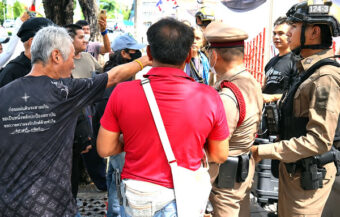
Tuesday’s Cabinet briefing also addressed the protest outside Government House. Ekkapop said Anutin had instructed relevant agencies to maintain security and engage with demonstrators.
The Prime Minister directed ministers and their teams to hear the protesters’ demands and examine possible responses. According to the spokesman, Anutin recognised the constitutional right to demonstrate.
The protest discussions were separate from preparations for the Chinese Premier’s visit. Meanwhile, officials continued arrangements for Li’s arrival, bilateral meetings and the government-hosted dinner. The automotive agreement remains the principal new document scheduled for signing during the visit.
Five-year automotive framework sets out oversight arrangements but leaves spending decisions for later
The memorandum will establish a five-year cooperation framework between Thailand’s Ministry of Industry and China’s MIIT. Its provisions cover investment, trade, technical standards, industrial management and government policy.
In addition, the working group will coordinate implementation and prepare annual plans. However, the agreement contains no automatic financial commitments and creates no binding international obligations.
Individual projects, expenditure and industrial activities will require subsequent decisions. The two coordinating agencies will oversee progress and determine priorities under the memorandum. As a result, the agreement provides an official mechanism for industrial cooperation without specifying the financial scale of future projects.
The wider bilateral relationship still includes outstanding matters concerning rice exports, infrastructure development and cross-border crime. These subjects have featured in previous meetings between Thai and Chinese officials.
No further China agreements confirmed as Li Qiang prepares for talks and government dinner in Bangkok
Nevertheless, no additional agreements covering those matters have been confirmed for signing during the November visit. The government has also not released a complete list of planned bilateral discussions.
As of November 11, Bangkok has confirmed Li’s November 13 arrival, official talks and a government dinner. The five-year automotive memorandum remains the principal new agreement identified in the announcements preceding his visit. It follows the 15 agreements signed during Anutin’s July trip to Beijing.
Chinese warning to its nationals stays as Bangkok embassy reveals it receives up to ten panic calls a day
Tourism industry shaken by the latest Chinese warning coming from its diplomatic missions in Thailand
For Thailand’s automotive industry, the Cabinet has already approved the next formal step. The agreement awaits signature, after which both governments can establish their working group and begin implementing the five-year programme.
Meanwhile, further commitments concerning rice purchases, railway construction and security cooperation have yet to be announced. Li’s visit will bring the two leaders together again, four months after their previous bilateral discussions in Beijing.
Join the Thai News forum, follow Thai Examiner on Facebook here
Follow Thai Examiner on Google here
Receive all our stories as they come out on Telegram here
Follow Thai Examiner here
Further reading:
Three Chinese nationals rescued by police in Tak province near Burma. Police top brass want answers
Tourism chiefs furious as another Chinese abduction and a spat with the Embassy threaten bookings
Thailand losing appeal to Chinese tourists despite a gain in numbers from last year as Vietnam rises
Government to reopen Hua Hin to international flights as it pushes Thai Airways on more flights
Thai Airways suffers turbulence in the boardroom as government exercises powers to appoint directors