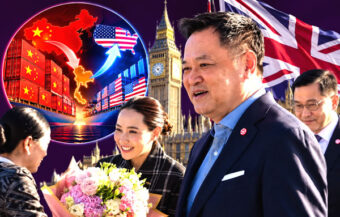
Car tax battle looms as Ekniti moves to raise taxes on imported EVs and reward vehicles built in Thailand. Chinese brands now command 32% of new registrations, while only 45% of cars sold are manufactured locally as Bangkok acts to protect factories.
Thailand is preparing a major shake-up of car taxation as Chinese EVs seize market share and domestic manufacturing slips behind sales. Deputy Prime Minister and Finance Minister Ekniti Nitithanphaphas wants higher taxes on imported EVs and cuts for locally made vehicles by September. The move targets manufacturers relying on finished imports while rewarding factories, jobs, Thai components and technology transfers. It comes as BEVs surge 71%, Chinese brands take 32% of new registrations and only 45% of vehicles sold are made in Thailand.

Deputy Prime Minister and Finance Minister Ekniti has ordered an accelerated overhaul of Thailand’s entire automotive tax structure. The government wants the review completed by September 2026. At its core, the plan will favour manufacturers investing in production inside Thailand. Imported electric vehicles face higher taxes, while domestically produced EVs would receive tax reductions.
The overhaul comes as Thailand’s automotive market changes rapidly. Chinese EV manufacturers are capturing a growing share of new registrations. Notably, only 45% of vehicles sold in Thailand are expected to be manufactured domestically. The government now wants tax policy to give factory investment a clearer advantage over finished imports.
Mr Ekniti discussed the changes with Permanent Secretary for Finance Lavaron Saengsnit. Excise Department Director-General Pornchai Theeravech also joined the talks. In response, officials are reviewing tax disparities between imported vehicles and those manufactured at Thai factories. The review covers the entire automotive tax system rather than EVs alone.
Imported EVs face higher taxes in move to reward manufacturers producing vehicles locally
The initial direction is already clear. Taxes on imported electric vehicles would increase. By contrast, domestically manufactured EVs would receive lower taxes. The government expects that gap to provide a direct incentive for local manufacturing. It also wants existing manufacturers to keep their production bases in Thailand.
“The Ministry of Finance must expedite the completion of the new vehicle tax structure,” Mr Ekniti said. “Taxes on imported electric vehicles (EVs) must be increased, while taxes on domestically produced EVs must be reduced to incentivise their manufacture.”
Thailand already manufactures electric vehicles and exports them to overseas markets. As part of this, the government wants domestic investment to continue expanding. “Currently, EVs are being produced and exported to other countries, so we must promote domestic investment more,” Mr Ekniti said. “Investment is key to laying the foundation and driving the Thai economy.”
Behind the changes is a widening competitive gap involving free trade agreements. Vehicles from some trading partners receive preferential customs duties when entering Thailand. Consequently, those arrangements can reduce import costs compared with vehicles from other countries. They can also benefit companies importing finished vehicles rather than building them locally.
Excise tax overhaul targets import advantages while protecting factories and supply chains in Thailand
Manufacturers operating Thai factories face a different cost structure. They invest in production facilities, employ workers and establish local supply chains. Moreover, some manufacturers use domestic components and transfer technology into Thailand. The Finance Ministry wants the tax system to reflect those contributions more directly.
Excise taxation has therefore emerged as the government’s principal instrument. Customs concessions granted under free trade agreements would remain untouched. Instead, excise rates could address competitive disparities created elsewhere in the tax structure. This would allow Thailand to maintain its existing FTA obligations.
Separately, the government believes the changes could generate additional tax revenue. However, its stated objective extends beyond revenue collection. Officials want a clearer distinction between finished vehicle imports and companies making physical investments in Thailand.
Mr Ekniti pointed to Thailand’s first-baht import tax policy as an example. That measure came into effect on January 1, 2026. Since then, the Customs Department has collected import taxes from the first baht of imported goods. The government expects the change to generate approximately ฿3 billion.
In parallel, that measure was designed to address competitive disadvantages facing Thai small and medium-sized businesses. Imported products previously benefited from tax and cost advantages in some cases. The government consequently removed the previous treatment for low-value imports. Mr Ekniti now wants the same principle considered for automobiles.
Vehicle sales rebound as BEVs surge and tax policy shifts towards manufacturers investing in Thailand
Under that approach, importing a finished vehicle would be treated differently from manufacturing one domestically. A manufacturer operating a Thai factory would receive recognition for its investment. Furthermore, employment, domestic components and technology transfers would form part of the calculation. Related industries and supply-chain development would also carry weight.
The proposed changes arrive during a powerful rebound in overall vehicle sales. Kasikorn Research Centre published its latest automotive assessment on August 14. It expects Thai vehicle sales to reach 675,000 units during 2026. That represents an 8.7% increase from 621,166 units last year.
Yet the headline growth conceals a sharp divide within the market. Passenger cars and sport utility vehicles are driving the expansion. Their combined sales are expected to reach approximately 475,000 units. That would represent growth of around 17%.
Battery electric vehicles are providing much of that increase. BEV sales could reach 210,000 units during 2026. That represents growth of as much as 71%. Significantly, their market share is expected to climb from 20% to 31% within one year.
Several factors have driven that acceleration. Deliveries under the EV3.0 programme surged compared with last year. In addition, manufacturers accelerated deliveries during January. Oil prices affected by the Middle East conflict have also encouraged consumers towards electric vehicles.
Chinese EV makers seize 32% of new registrations as traditional brands lose ground across Thai market
Chinese manufacturers have captured most of this expanding BEV market. More than 91% of battery electric vehicles are Chinese-made. Accordingly, Chinese manufacturers now represent 32% of newly registered vehicles in Thailand. That advance has rapidly altered the competitive balance.
Other manufacturers have lost substantial ground. Their combined market share stood at 77% last year. It has since fallen to 68%. Meanwhile, the decline in traditional internal combustion vehicles has been even sharper.
ICE vehicles previously represented 55% of Thailand’s market. Their share has now dropped to 39%. On another front, hybrid electric vehicles have continued gaining customers. However, their growth remains considerably slower than BEV expansion.
Commercial vehicles are moving in the opposite direction. Sales are expected to reach only 200,000 units during 2026. That would mark a 7% decline from last year. Pickup trucks remain the dominant vehicles within this segment.
Weak purchasing power is weighing heavily on those sales. Farmers and businesses form important customer groups for pickup trucks. As a result, pressure on those buyers continues to restrict commercial vehicle demand. The weakness contrasts sharply with booming BEV passenger sales.
Thailand seeks more local EV production as imported vehicles capture a growing share of domestic sales
This split is reshaping Thailand’s automotive market. Total vehicle sales are increasing, but much of that expansion comes from battery electric cars. Chinese manufacturers dominate those vehicles. More strikingly, only 45% of cars sold in Thailand are expected to be manufactured locally.
That figure sits directly behind the Finance Ministry’s tax overhaul. Thailand has long sought automotive investment through domestic production and exports. Now, the government wants growing EV sales to translate into more factories inside Thailand.
Under the emerging structure, imported finished EVs would become more expensive through taxation. Locally produced electric vehicles would receive the opposite treatment. In turn, manufacturers would gain a stronger financial reason to establish Thai production facilities.
The changes would also benefit companies already maintaining manufacturing bases in Thailand. Those businesses have invested in factories and production equipment. Likewise, they have created employment and developed domestic supplier relationships. The government wants those commitments recognised through the tax system.
Technology transfer is another factor under consideration. Domestic component use will also influence the government’s assessment. Beyond that, related automotive industries could benefit when manufacturers establish additional factories. The policy therefore reaches further than final vehicle assembly.
Tax overhaul aims to retain Thai factories while excise changes target advantages enjoyed by importers
Preserving existing factories is equally important to the review. The government specifically wants to curb manufacturers relocating production to other countries. At the same time, it wants additional manufacturers to choose Thailand for future factories. Related automotive businesses are also being targeted for investment.
The tax changes could create a sharper division between competing business models. Importers would face higher costs on finished electric vehicles. Manufacturers producing the same vehicles domestically could receive lower taxes. Accordingly, the tax advantage would move towards companies with physical Thai operations.
Free trade agreements remain a key part of the calculation. Some trading partners already enjoy preferential customs duties. Those concessions can substantially reduce the cost of bringing vehicles into Thailand. Nevertheless, the government does not propose changing those customs commitments.
Instead, the Excise Department is examining how domestic taxes can rebalance competition. Such changes would operate separately from preferential customs duties. This allows the government to target vehicle taxation without rewriting existing trade agreements.
The approach also follows the broader first-baht import tax principle. That measure was introduced partly to reduce disadvantages facing Thai SMEs. It was also expected to raise about ฿3 billion. Now, similar reasoning is being applied to the automotive sector.
BEV boom raises pressure on Thai factories as Chinese brands take a growing share of new registrations
The stakes are larger because Thailand’s vehicle market is shifting at speed. BEVs could account for nearly one-third of sales during 2026. Chinese manufacturers already command 32% of new registrations. Moreover, more than nine out of ten BEVs are Chinese-made.
Against that, ICE vehicles have fallen to 39% of the market. Their previous share was 55%. Established brands have simultaneously seen their overall share fall nine percentage points. Hybrid growth has not matched the surge in fully electric vehicles.
Despite rising overall sales, domestic production remains another pressure point. Only 45% of vehicles sold are expected to be manufactured in Thailand. Thus, more sales do not automatically translate into equivalent growth at Thai factories.
The Finance Ministry wants the new tax structure to change that equation. Manufacturers building factories would gain advantages unavailable to companies relying principally on finished imports. Employment would count alongside investment. Similarly, domestic parts, technology transfers and supporting industries would strengthen the case for favourable treatment.
For existing manufacturers, the proposal offers another potential benefit. The government wants tax policy to discourage production relocation. For prospective investors, Thailand would offer tax advantages linked directly to establishing manufacturing operations.
Finance Ministry broadens tax incentives as Thailand seeks factories, jobs and local automotive investment
The review is also intended to cover manufacturers beyond the fast-growing BEV segment. Mr Ekniti ordered officials to restructure the entire automobile tax system. Still, imported electric vehicles have become the immediate focus because their market share is rising rapidly.
Kasikorn Research Centre expects BEV sales to jump 71% this year. That would take sales to about 210,000 vehicles. Overall passenger car and SUV sales could reach 475,000 units. Total vehicle sales are forecast at 675,000.
Conversely, commercial vehicles remain under pressure. Their sales are forecast to fall 7% to around 200,000 units. Weak purchasing power among farmers and businesses remains the key drag. The two segments are therefore moving in sharply different directions.
Within the growing passenger market, Chinese EVs have become the dominant force. More than 91% of BEVs are Chinese-made. Their manufacturers have consequently secured almost one-third of all newly registered vehicles. That expansion has occurred while traditional manufacturers lose market share.
The government is now responding through tax policy. Higher taxes on imported EVs would raise their effective cost. Lower taxes on locally manufactured EVs would strengthen domestic production incentives. Meanwhile, the broader overhaul would reward factories, workers and supply-chain investment.
Ekniti sets September deadline for new car taxes favouring factories, jobs and production inside Thailand
Final tax rates have not yet been announced. Nor has the government completed the detailed structure. Officials must still examine the interaction between excise taxes, domestic production and existing FTA arrangements.
Even so, Mr Ekniti has imposed a tight timetable. The Ministry of Finance must reach its conclusion by September 2026. The Excise Department and senior ministry officials are now working through those details.
Toyota reaffirms its commitment to Thailand after tax relief move and amid a courtship from Indonesia
Thailand’s plan to become an EV manufacturing hub may yet go up in smoke if industry costs are not cut
Ultimately, the emerging structure draws a firm distinction between imports and manufacturing investment. Finished EV imports face higher taxation under the initial plan. In contrast, vehicles produced inside Thailand would receive lower taxes.
Manufacturers with factories would also gain recognition for employment and domestic components. Technology transfers and related industrial development would be considered as well. The government wants those factors embedded directly within Thailand’s future automotive tax structure.
Join the Thai News forum, follow Thai Examiner on Facebook here
Receive all our stories as they come out on Telegram here
Follow Thai Examiner here
Further reading:
Khon Kaen Police probing a pre dawn blaze caused by a charging EV that burned down a family home
Government sends strong warning to EV industry after a dramatic surge in consumer complaints
Thaksin wants higher excise duties on EV cars that are simply assembled in Thailand by Chinese firms