Visa fraud dragnet hits Bangkok after a European embassy flags suspect bank statements. Immigration police raid a Sai Mai consultancy, seize fake stamps and records, trace over 400 clients and put losses above ฿16m as the investigation widens.
A European embassy tip-off has exposed a suspected Bangkok visa forgery operation linked to more than 400 Thai clients and over ฿16 million. Immigration police seized counterfeit bank stamps, altered statements, salary certificates and four computers after tracing five suspicious European visa applications. Investigators also found mismatched account holders and the same foreign credit card behind all five cases. The raid comes amid strict European visa rules that can hit lower-income Thais hardest, particularly those with informal work, irregular earnings and quite limited financial records required for case officers.
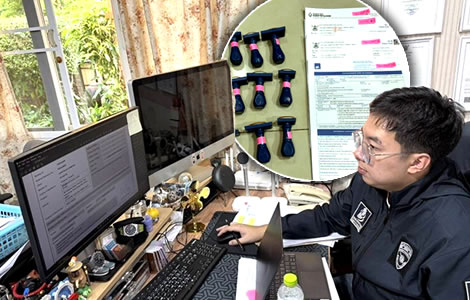
Thai immigration police have raided a Bangkok visa consultancy suspected of producing forged documents for European visa applications. The investigation has already identified more than 400 clients connected with the company. Police estimate financial damage at more than ฿16 million. Notably, officers seized counterfeit bank stamps, suspected forged financial records and four desktop computers.
The investigation began with a warning from the embassy of an unnamed European country. Embassy officials detected suspicious documents submitted by several Thai nationals seeking visas. In particular, bank statements supplied with applications raised concerns about possible forgery. In response, the embassy passed information to Thailand’s Immigration Bureau.
Investigators then compared the submitted documents with genuine banking information. Five applications showed similar irregularities during the initial checks. Crucially, some applicants’ names did not match the actual holders of the bank accounts. The submitted statements also contained altered information which differed from records confirmed by the banks.
Same foreign credit card links five visa applications as immigration police trace Bangkok consultancy
Separately, investigators found another common link between the five applicants. All five had travel expenses sponsored using the same foreign bank credit card number. That discovery strengthened suspicions that the applications were connected. As a result, immigration officers widened the inquiry beyond the individual applicants.
The case was reported to Immigration Bureau Commissioner Pol Lt Gen Panumas Boonyalak. Deputy Immigration Bureau Commissioner Pol Maj Gen Panthana Nuchanart was also briefed. Subsequently, Immigration Bureau Division 3 was ordered to expand the investigation. Officers began tracing the source of the financial documents submitted to the embassy.
Pol Maj Gen Songprot Sirisukha, Commander of Immigration Bureau Division 3, oversaw the operation. Pol Col Prinya Klinakesorn, Deputy Commander of Immigration Bureau Division 3, also participated. Meanwhile, Pol Col Suriya Puangsombat headed investigators from the division’s Investigation Division. Their inquiries eventually led officers to a visa consultancy in Bangkok’s Sai Mai district.
Investigators sought a search warrant from the Min Buri Criminal Court. The court granted the warrant, allowing police to enter and search the premises. Accordingly, Immigration Bureau Division 3 officers raided the company on August 12. Senior officers announced the results publicly on Monday, August 17.
Raid on Sai Mai visa consultancy uncovers bank stamps, forged records and computers after embassy alert
Inside, investigators discovered extensive material suspected of supporting document forgery. Officers recovered more than 20 counterfeit stamps linked to banks and other organisations. They also found rubber stamps carrying the names of various commercial banks. In addition, dozens of suspected forged documents were discovered throughout the premises.
Among the seized records were salary certificates and bank statements. Both can provide important financial evidence during overseas visa applications. Furthermore, officers confiscated four desktop computers for forensic examination. Police believe the office produced supporting documents for numerous Thai nationals seeking visas abroad.
All the material was seized as evidence. As part of this, investigators are examining the computers alongside the stamps and financial documents. Officers are also trying to identify additional people connected with the operation. The evidence could establish how many applications contained documents produced at the Sai Mai office.
The inquiry has already moved far beyond the original five applications. Pol Maj Gen Songprot said preliminary investigations identified more than 400 victims. The company charged approximately ฿40,000 per person for its services. Consequently, investigators calculated losses exceeding ฿16 million.
More than 400 clients emerge as police put losses from Bangkok visa consultancy at over ฿16 million
However, police have not established the individual circumstances surrounding every customer. Investigators must determine which applications contained forged documents and who produced them. Equally, they must establish who used the documents and identify others involved. The seized computers could provide important evidence during that process.
On the legal front, several Criminal Code provisions are under consideration. Sections 264, 265 and 268 cover offences involving forged documents and their use. Sections 251 and 252 concern the forgery of seals. Nevertheless, police said precise charges will depend on forensic results and the completed investigation file.
The case has emerged from Thailand’s substantial market for overseas visa services. Many Thai nationals require visas before travelling to European countries. For short visits across most European Union countries, Thai travellers generally require Schengen visas. Applicants face detailed requirements covering finances, travel arrangements, accommodation and their circumstances in Thailand.
For lower-income Thais, producing strong financial documentation can present particular difficulties. This does not necessarily reflect whether someone can finance a holiday. Instead, the applicant must demonstrate their position through documents acceptable during the visa process. Bank statements can therefore become central to an application.
Police examine forged document offences as strict European visa rules put financial records under scrutiny
Applicants may also need salary certificates, employment records and other evidence of income. Moreover, they must demonstrate sufficient funds for their proposed stay and return journey. The amount required varies according to the destination and circumstances. Sponsorship can also support an application when properly documented.
At the same time, visa officials assess whether applicants are likely to leave after their permitted stay. Employment and financial records can become important evidence during that assessment. Stable salaried work provides applicants with a relatively straightforward documentary trail. Regular salary payments can appear clearly on bank statements over several months.
By comparison, many Thais work outside conventional salaried employment. Some operate small businesses, while others depend on casual or informal work. Others receive substantial portions of their earnings in cash. Their actual financial position can therefore appear weaker when judged through conventional banking records.
A worker may have sufficient money for a European trip without receiving a regular monthly salary. Likewise, a small trader may generate adequate income while showing irregular bank deposits. Another applicant may depend partly on relatives or another sponsor. These circumstances can require additional evidence during the application process.
Salary records and proof of funds create hurdles for lower-income Thais seeking short European visits
For established professionals, the documentary position can be considerably simpler. A salaried employee may provide regular bank deposits, payslips and confirmation from an employer. In contrast, an informal worker may have few comparable records. Two applicants with similar travel budgets can therefore present markedly different financial histories.
The Sai Mai investigation directly involves documents used to demonstrate such financial circumstances. The embassy initially questioned bank statements supplied by several Thai applicants. Investigators then checked those records against information held by the banks. That comparison uncovered discrepancies in five cases.
Most significantly, names appearing in applications did not always correspond with genuine bank account holders. Submitted account statements had also been altered. The information therefore failed to match records independently confirmed by the banks. In parallel, the same foreign credit card number appeared across all five cases.
Those findings shifted the inquiry towards the visa consultancy. Investigators traced the suspicious documentation before obtaining the Min Buri Criminal Court search warrant. Once inside the office, they found stamps associated with banks and other organisations. They also recovered salary certificates, statements and other suspected forged material.
Informal workers face tougher paperwork such as bank statements and evidence of regular salaries
The discovery of commercial bank stamps added another significant element to the case. More than 20 counterfeit bank and agency stamps were seized. Additionally, officers recovered dozens of documents suspected of being forged. Police believe the premises were being used to manufacture paperwork supporting overseas visa applications.
The four desktop computers now provide investigators with another major source of potential evidence. Forensic examination could help establish the scale of document production at the office. Officers are also examining physical records recovered during the search. Meanwhile, they are working to identify other related individuals.
On another front, investigators can compare seized material with documents already supplied through visa applications. The embassy’s original evidence gives police a direct starting point. Bank confirmations have already established irregularities in five cases. The inquiry can now examine whether similar patterns appear across other applications.
The number of clients uncovered has sharply increased the scale of the case. Preliminary inquiries point to more than 400 people. At ฿40,000 for each customer, the amount involved exceeds ฿16 million. Yet police still have to determine what happened in each individual application.
Altered statements and mismatched accounts lead investigators from embassy tip-off to Sai Mai office
The financial pressures surrounding European visa applications provide important context for the consultancy market. A standard adult Schengen visa application costs €90. Beyond that, external visa centres can charge additional service fees. Applicants must also arrange appropriate travel medical insurance.
Moreover, those expenses arise before the cost of flights and accommodation. Travellers must also finance transport and everyday spending during their European stay. For someone on a modest Thai income, the overall expense can become substantial. Visa application fees are generally not returned when an application fails.
Financial means are only one element examined during the process. Applicants must also provide information supporting their intention to return to Thailand. Established employment can help document those circumstances. Similarly, regular income and a clear financial history provide conventional evidence for consideration.
Informal employment creates a different documentary picture. A casual worker may earn genuine income without receiving monthly payslips. A small business owner may also receive fluctuating payments rather than a fixed salary. Accordingly, their banking records can look less predictable despite having funds available for travel.
Counterfeit bank stamps and computers widen inquiry into paperwork used for overseas visa applications
Against this background, specialist visa consultancies offer assistance navigating foreign application procedures. Customers can seek help assembling extensive paperwork and understanding overseas requirements. The company targeted in Sai Mai operated within this sector. Police say, however, their search uncovered suspected forgery materials inside its premises.
The physical evidence is now central to the investigation. Bank stamps must be examined and compared with genuine seals. Suspected salary certificates and statements must also be traced to particular applications. At the same time, forensic specialists must examine the four computers recovered during the raid.
Investigators also face the task of separating hundreds of individual cases. More than 400 clients have been identified during the preliminary inquiry. Police must determine which received suspect documents and which applications contained them. They must also establish who prepared, handled and submitted each relevant document.
European visa costs mount before travel as applicants must also prove finances and plans to return home
Ultimately, those findings will determine the criminal charges. Sections 264, 265 and 268 remain under consideration for document-related offences. Sections 251 and 252 are being examined over suspected forged seals. Final decisions will follow forensic examination and completion of the investigation file.
The case started with several suspicious bank statements spotted by one European embassy. It then produced five applications containing comparable irregularities. Investigators also uncovered the same foreign credit card number across those cases. From there, the inquiry led directly to the Sai Mai consultancy.
Rome wants funding for DNA tests to prevent Chinese paternity fraud widespread in Thailand’s hospitals
2 Chinese men arrested in Bangkok centre for visa fraud and forgery trying to fool Immigration officers
The August 12 raid dramatically widened the investigation. Officers recovered commercial bank stamps, suspected forged financial documents and four desktop computers. More than 400 clients have since emerged from preliminary inquiries. Police now estimate the damage at above ฿16 million.
For now, Immigration Bureau Division 3 continues examining the evidence seized in Bangkok. Investigators are tracing other people who may be connected with the operation. Forensic examination will determine the significance of the computers, stamps and documents. The findings will then shape the final charges in the expanding case.
Join the Thai News forum, follow Thai Examiner on Facebook here
Receive all our stories as they come out on Telegram here
Follow Thai Examiner here
Further reading:
Bitter end of the dream for Chinese woman who came to Thailand to start a new life over 30 years ago
Chinese invasion claim by Chuwit saying there are now 3 million new arrivals in tourist hotspots
Charges brought against Chinese mafia kingpin as Chuwit warns witnesses are put under pressure
DSI chief removed from his post as scandal over a raid on a former diplomatic residence grows
Chinese gangs approaching expectant Thai fathers in private hospitals seeking identity transfers