
Northern flight plans collapse as Ezy Airline faces a ฿40,000 Chiang Mai airport charge for its ten-seat passenger aircraft. Pai and Mae Hong Son lose 40-minute links, forcing residents and tourists again onto six-hour routes with 762 mountain bends.
A ฿40,000 Chiang Mai airport charge has grounded Ezy Airline’s ambitious northern network before its first scheduled flight. Even full, its ten-passenger aircraft could not cover the bill, forcing Pai, Mae Hong Son and wider expansion plans into suspension. Governor Wiboon Waewbanthit now seeks a review as residents and tourists return to dangerous mountain roads with 762 bends. The lost services promised 40-minute journeys to destinations attracting hundreds of thousands of visitors, instead of gruelling six-hour road trips.
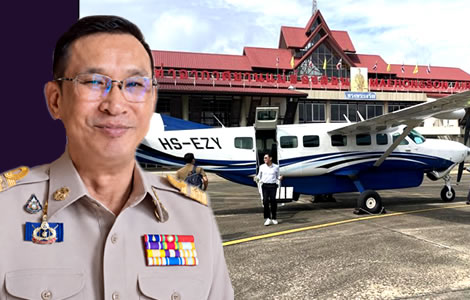
A small Thai airline planned to fill a significant gap in northern Thailand’s transport market. Ezy Airline intended to carry residents and tourists from Chiang Mai to remote provincial destinations. However, high airport-related costs have shot down its business model before scheduled services began.
The carrier faced approximately ฿40,000 in charges whenever its aircraft used Chiang Mai International Airport. Consequently, one airport bill exceeded the maximum ticket revenue from a completely full aircraft.
The airline has now suspended its planned Chiang Mai services to Pai and Mae Hong Son indefinitely. Its wider northern expansion, including proposed connections involving Nan, Phitsanulok and Mae Sot, has also been shelved.
Meanwhile, existing operations across southern Thailand will continue normally. No new starting date has been announced for any northern route. Technically, the decision remains an indefinite suspension rather than a permanent cancellation.
Mae Hong Son seeks review after ฿40,000 Chiang Mai airport charge grounds small airline route plans
Mae Hong Son Governor Wiboon Waewbanthit confirmed the setback following a provincial economic meeting on Monday. He said Ezy Airline could not carry the costs imposed at Chiang Mai International Airport. In response, the province will seek a formal review by the Ministry of Transport and Airports of Thailand.
Airports of Thailand operates Chiang Mai airport, while the Department of Airports manages Pai and Mae Hong Son airports. Both smaller airports stood to gain regular commercial traffic from the airline’s programme.
Reports have described the ฿40,000 charge as an aircraft parking or storage fee. However, Governor Wiboon referred more broadly to landing, handling and associated operating costs. Airports of Thailand has not issued a public breakdown confirming that the entire sum represented parking.
Accordingly, the established figure is approximately ฿40,000 in airport-related charges for each Chiang Mai use. Whatever its precise composition, the amount made Ezy Airline’s proposed routes financially unworkable.
The carrier planned to use a Cessna 208B Grand Caravan EX single-engine turboprop aircraft. Although the aircraft has 12 seats, two would be occupied by pilots. Therefore, only ten paying passengers could travel on each flight.
That limited capacity left little room to distribute fixed airport costs. Even with every passenger seat sold, the aircraft could not generate enough revenue to meet the reported Chiang Mai bill.
Ten-seat aircraft cannot cover ฿40,000 airport charge even when every available passenger seat is sold
Earlier reports placed one-way fares between ฿2,500 and ฿3,000. Later launch publicity quoted regular prices between ฿3,000 and ฿3,500. In addition, Ezy Airline advertised a September promotional fare of ฿2,700, reduced from ฿3,500. Ten passengers paying ฿2,500 would generate only ฿25,000. Similarly, a full aircraft at ฿3,000 per passenger would produce ฿30,000.
Even at the highest quoted fare, total ticket revenue would reach only ฿35,000. Consequently, the airline could not cover the reported ฿40,000 charge under any published fare. Moreover, these calculations exclude fuel, pilots, maintenance, insurance and other operating expenses. Ground services and passenger handling would add further costs. Therefore, each completely full flight would still begin with a substantial shortfall.
Ezy Airline is operated by M-Landarch Company Limited. It provides scheduled and charter services linking larger cities with smaller regional destinations. The company specialises in routes with flying times of up to 60 minutes. It began operations in 2024 and established Hat Yai International Airport as its southern hub. Its fleet includes the Cessna 208B Grand Caravan EX, chosen for the northern programme.
The airline’s southern network includes Betong, Surat Thani, Nakhon Si Thammarat and Narathiwat. Those routes connect provincial centres without forcing passengers to travel through Bangkok. Unlike the suspended northern programme, the existing southern network remains unaffected. The company will continue those scheduled and charter flights. The reported cost dispute centres upon its proposed use of Chiang Mai International Airport.
Ezy Airline trial flights promised 40-minute journeys before its northern route launch was suspended
Ezy Airline announced its northern expansion during July. Initial government publicity suggested that services could begin during that month. Subsequently, the timetable was moved to September, with full daily operations scheduled from October 1. Bookings had been due to open on August 17. Earlier launch material indicated that two or three return flights could operate each day.
The project had progressed beyond preliminary discussions before its suspension. Ezy Airline completed trial and promotional flights between Chiang Mai and Mae Hong Son. It also operated trial services between Chiang Mai and Pai.
At Mae Hong Son province’s invitation, the company examined the routes and promoted them before the approaching high season. Therefore, the withdrawal followed operational testing, public promotion and detailed scheduling.
The trial flights demonstrated the substantial time savings available from regional aviation. Chiang Mai and Mae Hong Son could be connected within 35 to 40 minutes. By contrast, the twisting road journey normally takes between six and seven hours. Pai would also have regained a scheduled connection with Chiang Mai. Moreover, regular services would have restored commercial activity at two underused provincial airports.
An earlier warning appeared during August when Ezy Airline postponed three planned Chiang Mai routes. Those services would have connected the city with Mae Hong Son, Pai and Nan.
At that stage, the airline was awaiting approval to conduct its own ground handling at Chiang Mai airport. Nevertheless, the company maintained its commitment to the northern network. The later ฿40,000 cost problem produced a much wider suspension.
Government-backed regional airport programme stalls as wider northern flight network is abruptly shelved
The abandoned programme stretched beyond the first two provincial destinations. A Chiang Mai–Phitsanulok route also formed part of the earlier plan. Furthermore, services involving Nan were under consideration after the initial launch.
The company had also examined a possible connection serving Mae Sot in Tak province. Consequently, the dispute has stopped an entire regional network rather than one isolated route.
The suspension follows direct government promotion of Ezy Airline’s plans. Deputy Minister of Transport Phattharaphong Phatprasit publicly supported the project on May 14. He had met company representatives to discuss restoring commercial services at regional airports. Afterwards, he identified Pai and Mae Hong Son as priorities for renewed air connections. Both destinations were presented as part of a broader provincial transport policy.
The deputy minister linked the flights with the “Airport for Regional Development” programme. That policy seeks to use regional airports to strengthen transport and local economic activity.
In parallel, it aims to restore passenger traffic at airports without regular commercial flights. The Department of Airports had expressed readiness to support operators capable of serving those destinations. Ezy Airline’s small aircraft appeared suited to routes unable to support larger jets.
Governor says fixed Chiang Mai charges leave small aircraft unable to compete financially with larger jets
Under the original proposal, the Cessna Caravan would connect Chiang Mai with Pai, Mae Hong Son and Phitsanulok. Later expansion was expected if passenger demand justified additional services. Separately, the airline was considering larger aircraft for future growth.
However, the first scheduled northern flight never entered commercial operation. The government-backed regional programme stalled at its main operating base.
Governor Wiboon said the Chiang Mai costs failed to reflect major differences between aircraft sizes. Ezy Airline could carry only ten paying passengers. By comparison, conventional commercial aircraft may accommodate between 100 and 200 people. Larger operators can spread fixed airport charges across far more tickets. A small operator must recover the same expense from a fraction of that passenger base.
A ฿40,000 charge divided among ten passengers equals ฿4,000 for each traveller. That sum alone exceeds the highest fare announced for the routes. Moreover, it arises before fuel, crew, maintenance or insurance costs are included. The same amount spread across 100 passengers would equal ฿400 each. Across 200 passengers, the charge would fall to ฿200 per traveller.
Following Monday’s meeting, Mae Hong Son’s public-private committee agreed to pursue the matter. It will write to the Ministry of Transport and Airports of Thailand. In addition, provincial representatives will contact other organisations involved in airport charges. Mae Hong Son will also present the problem to the Senate Transport Committee. Committee members are expected to inspect transport conditions in the province.
Mae Hong Son seeks fee relief as residents return to lengthy and demanding mountain road journeys
Governor Wiboon did not announce a preferred charge or specific reduction. Instead, the province is requesting a review that recognises the capacity of small aircraft. Officials will explain how Chiang Mai’s costs affect routes serving remote communities. However, Airports of Thailand has not announced any concession or revised fee. Until that changes, Ezy Airline has no financially workable starting date.
The proposed flights were intended to serve more than the tourism market. Older residents regularly travel between Mae Hong Son and Chiang Mai. Patients also make the journey for medical appointments and hospital treatment. Meanwhile, businesspeople, academics and government officials depend upon the same connection. A 35-minute flight would replace six or seven hours across mountain roads.
Without the flights, road transport remains the principal link between Chiang Mai and Pai. A scheduled Prem Pracha minivan from Chiang Mai’s Arcade Bus Station normally costs approximately ฿150.
Tickets purchased through hotels or online agents can cost between ฿200 and ฿370. The air-conditioned vans usually depart hourly between approximately 6.30 am and 5.30 pm. Each vehicle commonly carries between 12 and 13 passengers.
The minivan costs far less than the proposed Ezy Airline service. However, the journey normally takes between three and four hours. Traffic, passenger stops, roadworks and heavy rain can extend it beyond four hours. Furthermore, many passengers experience motion sickness because of the constant turning. The lower fare therefore accompanies a substantially longer and more demanding journey.
Highway 1095 confronts travellers with 762 bends, steep descents, fog and dangerous blind corners
A private car or taxi usually costs between ฿1,500 and ฿2,500 one way. Larger private vans and advance tourist transfers can cost between ฿3,000 and ฿3,700. Airport collections may increase the final charge further.
Under favourable conditions, a private vehicle can reach Pai within approximately three hours. Nevertheless, weather and traffic can quickly increase that journey time.
Pai lies approximately 130 to 135 kilometres from Chiang Mai by road. Yet the distance does not explain the difficulty of the trip. Highway 1095 crosses the heavily forested mountains separating Chiang Mai from Mae Hong Son province. The route is widely described as containing 762 bends between Chiang Mai and Pai. Although the exact count is travel folklore, the road turns almost continuously.
The highway contains steep climbs, long descents and tight hairpin bends. It also includes blind corners and rapid changes in elevation. In addition, several sections are narrow and provide little space for evasive action. Passenger vans, cars, motorcycles and slower commercial vehicles share the same two-lane road. Overtaking becomes difficult because many bends conceal approaching traffic.
Weather adds further pressure to the journey. Heavy rain makes the road slippery during the wet season, while fog reduces visibility at higher elevations. Landslides and fallen trees can also interrupt traffic. Meanwhile, some mountain sections have limited lighting after dark. These conditions require constant adjustments to speed, steering and braking.
Fatal van crash near Pa Pae highlights risks facing passengers travelling to Pai and Mae Hong Son
The extended downhill sections place sustained pressure on vehicle brakes. Drivers also face fatigue from repeated acceleration, braking and continuous cornering. At the same time, passengers endure constant sideways movement inside crowded vans.
The difficult road continues beyond Pai towards Mae Hong Son town. The wider Mae Hong Son Loop is popularly described as containing more than 1,800 bends.
A scheduled Prem Pracha journey between Chiang Mai and Mae Hong Son costs approximately ฿400. However, the full trip normally takes around six hours. Poor weather, heavy traffic or road disruption can push it towards seven hours. Private transfers cost several thousand baht. Therefore, the proposed flight offered a large time saving despite its higher ticket price.
Serious passenger-van crashes have demonstrated the route’s risks. On November 10, 2023, a Chiang Mai–Pai–Mae Hong Son van left Highway 1095 near Pa Pae. The crash occurred in Mae Taeng district before the vehicle reached Mae Hong Son province. Two people died and ten others suffered injuries. Thai and foreign passengers were travelling aboard the van.
Vehicle tracking information reportedly recorded a speed of 83 kilometres per hour before the vehicle overturned. The van left the road approximately two kilometres before Ban Mae Lao. Rescue teams transported the injured passengers to Mae Taeng Hospital. Subsequently, police began investigating the cause. The crash occurred on the principal road serving Pai and Mae Hong Son.
Second fatal van crash leaves 13 Danish tourists injured as officials warn drivers about mountain road
Less than three months later, another passenger van crashed near Pai. The February 8, 2024 accident involved 13 Danish tourists travelling from Chiang Mai. Their Prem Pracha van plunged from Highway 1095 between the Mae Ya and Mae Ping checkpoints. The Thai driver later died. Meanwhile, all foreign passengers suffered injuries, including three who were seriously hurt.
The crash occurred approximately 17 kilometres from Pai, near kilometres 82 and 83. That section contains a continuous sequence of downhill bends. Lighting at the scene was also inadequate. Before his death, the driver reportedly said the brakes had failed. Rescue teams required between one and two hours to recover and transport the casualties.
Some passengers received treatment in Pai, while others were transferred elsewhere. Hospitals in Mae Hong Son and Chiang Mai accepted the more seriously injured travellers. Afterwards, road officials warned motorists about the route’s difficult terrain. They said drivers unfamiliar with Highway 1095 should avoid excessive speed. They also stressed the need for mechanically sound vehicles and properly maintained brakes.
No reliable published figure covers every accident along the entire Chiang Mai–Pai road. Nevertheless, two fatal passenger-van crashes occurred within three months. Motorcycles present an additional danger along the route. Pai attracts foreign visitors who rent scooters in Chiang Mai or after reaching the town. Some riders have limited experience and little knowledge of mountain roads.
Pai draws 221,000 foreign visitors despite dangerous mountain roads and limited air access
Sharp downhill bends require controlled entry speeds and careful braking. Similarly, loose gravel, heavy rain and fog can reduce available grip. Overtaking around blind corners can place riders directly in front of approaching vehicles.
However, Highway 1095 also attracts experienced Western motorcyclists. For those visitors, the difficult road forms part of the wider Mae Hong Son Loop.
Despite its remote location, Pai has become a major international backpacker destination. Mae Hong Son immigration figures recorded 221,776 foreign visitors during 2024. British tourists formed the largest group, with 39,390 arrivals. Israeli travellers ranked second, with 31,735 visitors. Dutch, German and American tourists were also among the largest national groups.
Local reports place Pai’s annual visitor total between 200,000 and 300,000. That volume is substantial for a small mountain town. Pai first developed a following among independent Western backpackers. They were drawn by its mountain location and distance from Thailand’s larger tourism centres. Subsequently, a sizeable visitor economy developed around that market.
Pai tourism expands beyond backpackers as cooler weather and low costs attract longer-staying visitors
Pai’s cooler weather remains particularly popular between November and February. Its surrounding countryside includes rice fields, forests, rivers and mountain viewpoints.
Major attractions include Pai Canyon, waterfalls, hot springs and the Pai River. Meanwhile, inexpensive guesthouses and hostels expanded with the backpacker trade. Cafés, restaurants, bars and live-music venues followed.
The nightly walking street became another established attraction. In addition, yoga, meditation, massage and wellness businesses developed around foreign tourism. Pai’s compact centre and hostel network also attract solo travellers. Travel blogs and social media then expanded its international profile. Consequently, the town now draws visitors beyond its original backpacker market.
Digital workers, families and longer-staying foreigners have joined that market. Some older Western visitors remain because daily living costs are relatively low. Others choose Pai for its cooler climate and mountain environment. Furthermore, the town provides access to caves, villages and trekking routes. It also serves as a gateway to northern Mae Hong Son province.
Mae Hong Son province received approximately 1.4 million visitors during 2024. Tourism income exceeded ฿8 billion during the same year. However, those figures include Thai and foreign travellers throughout the province. Pai accounts for only part of that total. Mae Hong Son town serves a separate and generally quieter tourism market.
Mae Hong Son’s cultural attractions draw visitors while stalled flights leave residents on mountain roads
The provincial capital has strong Shan cultural influences and Burmese-influenced religious architecture. Its lakeside temples form part of the town’s central landscape. Meanwhile, Wat Phra That Doi Kong Mu overlooks the valley from a nearby hill. Other destinations include Ban Rak Thai and its Chinese Yunnanese heritage. Pang Ung reservoir and Tham Lot cave also attract domestic and international visitors.
Trekking routes lead into Mae Hong Son’s forests and mountain communities. The Mae Hong Son Loop remains popular with experienced Western motorcyclists. For those travellers, the demanding road is part of the journey.
Virgin Atlantic service from London to Phuket leads new slots agreed with 87 airlines to boost tourism
Driver dies, three young Danish tourists seriously injured in van accident enroute to Pai Full Moon party
However, patients, older residents and families face the same route through necessity. Businesspeople, academics and officials must also spend hours crossing the mountains.
Ezy Airline planned to serve that wider passenger market before the high season. Its flights would have cut a six-hour road journey to approximately 40 minutes. Instead, the aircraft remains grounded while Mae Hong Son seeks a fee review. The calculation is straightforward. Ten passengers cannot generate ฿40,000 from the fares announced for these routes.
The airline must also meet fuel, crew, maintenance, insurance and operating expenses. Consequently, a completely full aircraft would still lose money under the quoted Chiang Mai costs. No revised fee has been announced. Until one emerges, Ezy Airline’s northern network cannot leave the ground.
Join the Thai News forum, follow Thai Examiner on Facebook here
Receive all our stories as they come out on Telegram here
Follow Thai Examiner here
Further reading:
Thai Airports to become far more expensive after government jacks up service charge by 50% from June
Another false dawn? Minister announces delayed tourism levy will be instituted under his watch
Tourism Levy will take at least six months to implement even after a cabinet decision to approve it
New Electronic Travel Authorisation (ETA) system coming soon with a ฿300 tourist levy and insurance
Tragic death of a Taiwanese tourist is another wake-up call for the government on insurance cover
66-year-old Thai woman highlights Thailand’s official tiered pricing in hospitals for foreigners