Chai Eamsiri’s four-decade Thai Airways career hits a dramatic reversal as he is ousted from command after 10,000 bags pile up. The executive who helped steer THAI from bankruptcy now faces an inquiry amid mounting government pressure.
Thai Airways ousted Chief Executive Officer Chai Eamsiri from operational command on Friday after days of chaos stranded thousands of bags, cancelled flights and threatened vital cargo operations at Suvarnabhumi Airport. The dramatic boardroom move came barely 16 months after THAI escaped court rehabilitation, ending Chai’s control after he played a central role in its remarkable financial recovery. Now the 40-year airline veteran faces a fact-finding investigation as director Samrit Samniang takes command. Yet the upheaval reaches far beyond one executive. Government ministers piled pressure on THAI before the board acted, while the Finance Ministry remains its dominant shareholder. Its Permanent Secretary also chairs the board, putting the state’s powerful continuing influence over Thailand’s flag carrier firmly back under the spotlight.
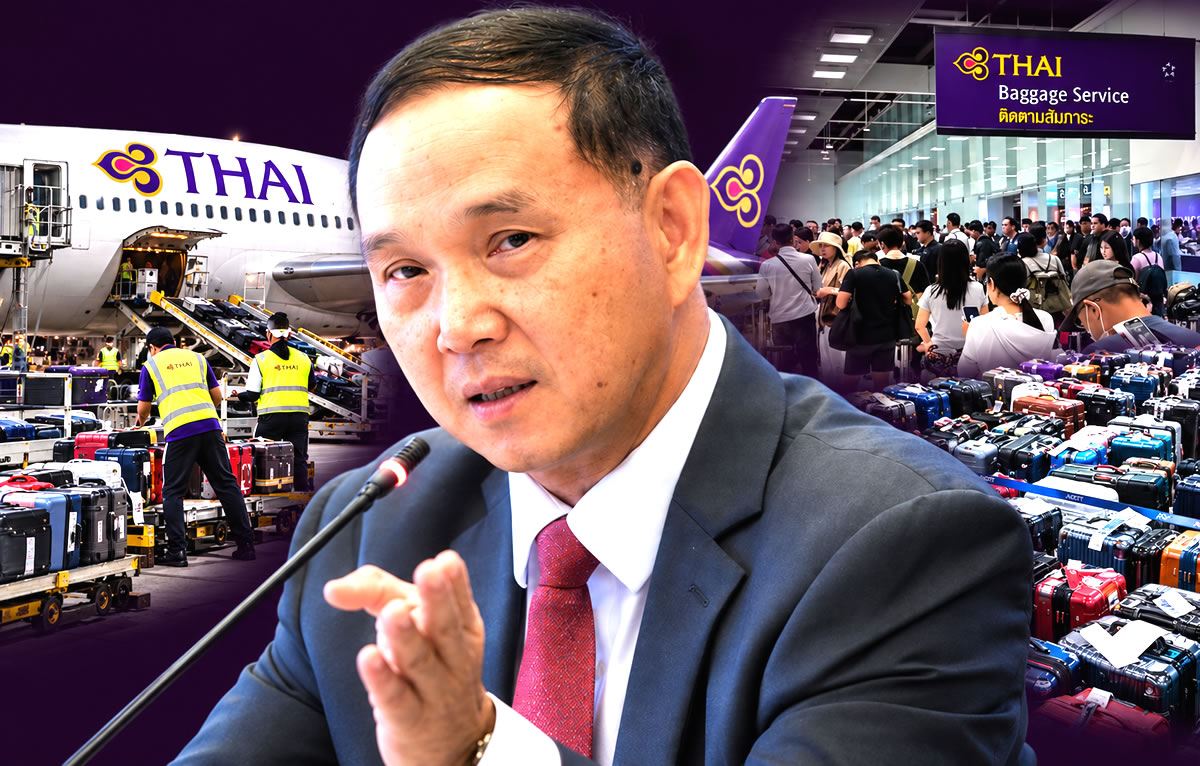
Thai Airways International removed Chief Executive Officer Chai Eamsiri from executive control on Friday after the crippling Suvarnabhumi baggage crisis. The decision followed days of cancellations, stranded luggage, cargo disruption and mounting government pressure. Yet Chai’s fall reaches far beyond an airport breakdown.
He helped manage THAI’s finances during its rehabilitation and later led its return to profitability. Last year, the airline finally emerged from court supervision. It also returned to normal Stock Exchange of Thailand trading under his leadership.
Now, the executive closely associated with that recovery has lost operational command. Thai Airways’ board made the decision at an extraordinary meeting on October 2. Chairman Lavaron Sangsnit presided over the meeting.
Finance Ministry chief chairs Thai Airways board meeting as Chai loses command and Samrit takes over
Significantly, Lavaron is also Permanent Secretary of the Ministry of Finance. The ministry remains THAI’s dominant shareholder with a 38.90% stake. After the meeting, director Samrit Samniang was appointed acting chief executive with immediate effect.
Chai’s precise employment status, however, is more complicated than an outright dismissal. He said he had not been dismissed as a Thai Airways employee. Instead, the board removed him from CEO duties during a fact-finding investigation.
He also remains a company director. His existing employment contract runs until January 31, 2027. In practical terms, however, Chai no longer controls the airline he led since February 2023.
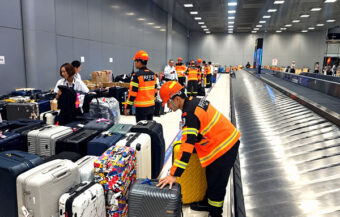
His removal followed THAI’s worst operational crisis since completing rehabilitation. Severe flooding across Bangkok initially prevented many ground workers from reaching Suvarnabhumi Airport. As a result, the airline suffered acute manpower shortages across its ground-handling operation. What began as weather disruption then developed into a major operational failure. Thousands of bags accumulated as THAI struggled to recover.
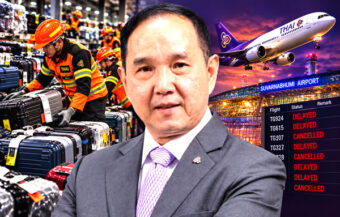
Passengers face stranded bags as Thai Airways cuts flights and struggles to restore normal operations
Passengers waited hours for their luggage, while some eventually flew without their bags. At the same time, flights were delayed, rescheduled or cancelled. Cargo operations also came under increasing pressure. At its peak, the baggage backlog reportedly reached about 10,000 items. Almost 40 flights were cancelled or rescheduled during the disruption.
On September 29, Chai acknowledged that about 5,000 bags were already stranded. He apologised publicly and promised to clear the backlog within 72 hours. Instead, the disruption worsened. The number of accumulated bags subsequently moved towards 10,000. Thousands remained outstanding while THAI struggled to rebuild its handling capacity.
In response, the airline reduced its flying programme to match available manpower. Fifteen flights scheduled for October 1 were cancelled. Another nine were cancelled on October 2. Meanwhile, further schedules were reduced as management tried to stabilise operations. Full scheduled services were expected to resume on Saturday, October 3.
The baggage crisis also exposed problems beyond Bangkok’s flooded roads. Other ground-handling companies at Suvarnabhumi continued operating during the disruption. THAI suffered the overwhelming breakdown. Consequently, scrutiny shifted towards staffing, outsourcing, contingency planning and management preparation. The airline’s ability to respond to a severe manpower shortage became a central issue.
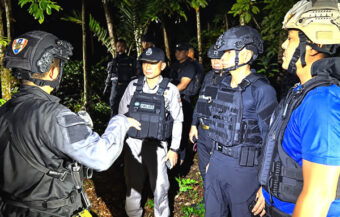
Military crews join baggage recovery as ministers turn mounting pressure on Thai Airways management
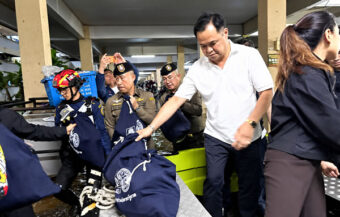
Military personnel were eventually deployed to help clear the baggage mountain. Separately, Airports of Thailand became involved in the recovery effort. Thailand Post also provided assistance. Government intervention then increased as the breakdown continued. The problem had moved beyond an internal airline crisis.
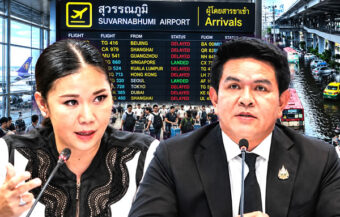
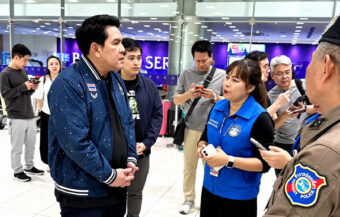
Tourism and Sports Minister Surasak Phancharoenworakul inspected the situation at Suvarnabhumi. Afterwards, he sharply criticised Thai Airways management. Surasak questioned why THAI staff reportedly continued servicing partner airlines during the disruption. Its own passengers, meanwhile, were enduring serious delays. He demanded urgent corrective action from senior management.
More pointedly, Surasak said executives unwilling or unable to solve the problems should resign. His intervention intensified pressure on Chai and other senior executives. Deputy Transport Minister Siripong Angkasakulkiat also became involved. Together, Surasak and Siripong pressed for an urgent board meeting. Deputy Prime Minister and Transport Minister Phiphat Ratchakitprakarn subsequently intervened as disruption continued.
By Friday, therefore, government pressure surrounding the airline had become intense. Still, the formal decision to remove Chai came from Thai Airways’ board. It was not announced as a cabinet order. That distinction matters because THAI is no longer formally a state enterprise. Even so, Friday’s events highlighted the state’s powerful position within the airline.
Finance Ministry remains dominant Thai Airways shareholder as state influence stays embedded in governance
The Ministry of Finance remains Thai Airways’ largest individual shareholder by a wide margin. Its holding currently stands at 38.90%. In comparison, Bangkok Bank is the second-largest shareholder with 8.49%. Krung Thai Bank and Government Savings Bank are also substantial shareholders. More importantly, the Finance Ministry’s most senior civil servant chairs THAI’s board.
Against that backdrop, Lavaron chaired the extraordinary meeting which ended Chai’s executive command. Cabinet ministers had already demanded accountability from management. However, the supplied material contains no evidence that ministers instructed directors how to vote. Nor does it establish that the government has formally retaken control of Thai Airways.
Legally, THAI remains a listed public company. Its shares continue trading on the Stock Exchange of Thailand. Accordingly, Lavaron stressed that the company remained subject to capital-market disclosure requirements. The board decision therefore had to be disclosed through the appropriate market procedures. Nonetheless, the state remains firmly embedded in the airline’s ownership and governance.
That structure emerged from THAI’s near financial collapse in 2020. The airline had struggled with losses since 2012. Then Covid-19 devastated international aviation and destroyed passenger traffic. Revenue collapsed while substantial debts remained. By 2020, the flag carrier faced a severe financial crisis.
Thai Airways sheds state enterprise status before court rehabilitation tackles about ฿400 billion of debt
At that point, the government made a crucial structural change. On May 22, 2020, the Finance Ministry sold 3.2% of THAI to Vayupak Fund 1. Its holding consequently fell to 47.9%. Government ownership therefore dropped below the 50% threshold. Thai Airways ceased being a conventional state enterprise.
Four days later, the airline petitioned the Central Bankruptcy Court for business rehabilitation. The restructuring ultimately dealt with debts of about ฿400 billion. Thai Airways sharply reduced its workforce and simplified its aircraft fleet. Costs were cut throughout the business. Assets were reorganised, while creditors accepted extensive restructuring of their claims.
The Central Bankruptcy Court approved THAI’s rehabilitation plan on June 15, 2021. Subsequently, an amended rehabilitation plan was approved in October 2022. Thai Airways therefore entered rehabilitation in 2020, not 2022. Nevertheless, 2022 became another critical stage in the restructuring process.
Chai was already near the centre of the financial operation. Born in 1962, he joined Thai Airways in 1985. His career with the carrier eventually stretched beyond four decades. Chai studied business administration at Assumption University, specialising in marketing. Later, he completed an MBA in management at Kasetsart University.
Chai rises through Thai Airways finance ranks to take a central role during the airline’s restructuring
Over time, however, his career increasingly shifted towards finance. That experience became crucial during THAI’s financial collapse. In November 2020, Chai became acting senior finance executive. The appointment came months after the rehabilitation petition. In January 2021, he became Executive Vice President for Finance and Accounting. Four months later, he became Chief Financial and Accounting Officer.
Chai was therefore deeply involved in senior financial management during the restructuring. He was not solely responsible for THAI’s rescue. Creditors, plan administrators, employees and other executives were also central to the process. Even so, Chai occupied a key financial position while the rehabilitation plan was implemented.
His responsibilities increased again on February 1, 2023. Chai became Thai Airways chief executive while the company remained under court-supervised rehabilitation. Commercial performance was already improving. His task was to drive that recovery while completing the remaining rehabilitation requirements.
The subsequent financial results were substantial. During 2023, revenue excluding one-off transactions reached ฿161.07 billion. That represented growth of 53.3%. Operating profit reached ฿40.21 billion. Net profit, meanwhile, rose to ฿28.12 billion after a small loss during 2022.
Passenger traffic and profits surge as Thai Airways clears key financial targets during rehabilitation
Passenger traffic also recovered sharply. Thai Airways carried 13.76 million passengers during 2023, representing growth of 52.7%. Its average cabin factor reached 79.7%. Notably, another important rehabilitation target was comfortably exceeded. EBITDA after aircraft lease payments reached ฿42.88 billion. The rehabilitation plan required at least ฿20 billion.
The improvement continued during 2024. Revenue excluding one-off transactions increased another 16.7% to ฿187.99 billion. Operating profit reached ฿41.52 billion. THAI technically recorded a consolidated net loss of ฿26.9 billion. That figure, however, included a major one-time accounting charge.
Specifically, the charge amounted to ฿45.27 billion and related to debt conversion under the rehabilitation process. Elsewhere on the balance sheet, the change was dramatic. Shareholders’ equity had previously stood at negative ฿43.35 billion. By the end of 2024, it had moved to positive ฿45.50 billion. Another major barrier to completing rehabilitation had disappeared.
Thai Airways then prepared to leave court protection. On April 28, 2025, it petitioned the Central Bankruptcy Court to terminate rehabilitation. The court approved the request on June 16. That decision formally ended almost five years of court-supervised restructuring.
Thai Airways exits court rehabilitation and returns to stock trading as profits and equity strengthen
By then, THAI had repaid approximately ฿94 billion of debt. Around ฿190 billion in obligations remained. Those liabilities were scheduled for repayment over the following decade. Even with those debts, the airline had met the conditions required to leave rehabilitation.
Less than two months later, another milestone followed. Thai Airways shares resumed trading on the Stock Exchange of Thailand on August 4, 2025. The SET removed the suspension and possible-delisting designations. In effect, THAI had travelled from bankruptcy protection back to normal listed-company trading.
Financial improvement continued during 2025. Thai Airways recorded approximately ฿30.91 billion in net profit. Shareholders’ equity climbed further to ฿75.83 billion. Liabilities, meanwhile, declined to ฿228.15 billion. Chai consequently became closely associated with the final stages of THAI’s financial recovery.
That record makes the speed of his downfall particularly striking. The financial rehabilitation took almost five years. The crisis which cost Chai executive control unfolded within days. Yet Friday’s board action was not limited to the baggage breakdown.
A fact-finding committee will examine the operational crisis and senior management responsibility. Investigators are expected to consider why the disruption became so severe. In addition, THAI’s crisis-management arrangements will come under scrutiny. The airline plans to review its management structure following the breakdown.
Thai Airways reviews staffing and outsourcing as Chai also faces scrutiny over major wine procurement
As part of that process, employment arrangements covering ground and warehouse staff will also be examined. Multi-tier subcontracting and external outsourcing are expected to receive particular attention. Those arrangements became important after manpower shortages crippled THAI’s ground operation.
On another front, Chai reportedly faces scrutiny over a separate procurement matter. That inquiry concerns approximately 860,000 bottles of wine worth more than ฿800 million. Reports said the procurement involved a single supplier. However, the supplied material contains no finding that Chai committed wrongdoing. The issue remains under investigation.
Chai has also described what happened inside Friday’s extraordinary board meeting. Senior management initially briefed directors about the flooding and recovery operation. Chai participated in that presentation. However, he was the board’s only executive director. He therefore left while the non-executive directors continued their discussions.
Behind closed doors, those directors considered his position without him. They subsequently decided to remove him from CEO duties. Chai said he learned of the decision afterwards. He also said detailed grounds were not initially provided. He was still awaiting the formal scope of the investigation.
Chai awaits investigation details after directors remove him from CEO duties at extraordinary meeting
From his perspective, investigators could examine why the crisis escalated. They could also consider why its impact was not contained earlier. Additionally, the inquiry could examine why THAI’s crisis-management plan was not effectively activated. Chai stressed that these were his own expectations. The detailed investigation terms had not yet been given to him.
Asked about politics, Chai stopped short of accusing the government of ordering his removal. He acknowledged that politics existed throughout Thailand. However, he made no direct claim of political interference. He also said several people wanted the chief executive position. Those interested parties came from inside and outside Thai Airways.
The timing adds another layer to Friday’s decision. THAI was already recruiting Chai’s permanent successor before the baggage crisis brought his removal. His contract was scheduled to expire on January 31, 2027. Applications for the next CEO reportedly closed on September 30. Two days later, Chai was stripped of executive authority.
For the moment, Samrit has taken command. He was already a Thai Airways director before Friday’s decision. Previously, he served as a senior executive at PTT Exploration and Production. His immediate task is restoring normal operations following the Suvarnabhumi breakdown.
Thai Airways said normal flight schedules would resume on Saturday. It also planned to deliver outstanding delayed baggage by Saturday night. In parallel, arrangements for passengers collecting bags were being changed. Previously, delayed luggage was collected from the Suvarnabhumi terminal.
Chai’s successor takes command as Thai Airways restores flights and changes delayed baggage collection
From Saturday, collection would move to the THAI Ground Service Maintenance building. The facility will operate around the clock. Thai Airways is also continuing efforts to deliver delayed luggage directly to passengers.
Separately, the Transport Ministry has addressed compensation for affected travellers. Siripong told Parliament on Thursday that existing legislation would govern compensation. He cited the International Carriage by Air Act B.E. 2558 and its subsequent amendment. Those provisions cover passenger rights involving delayed flights and baggage.
Thai Airways also reimburses certain essential purchases caused by delayed luggage. Passengers, however, must provide supporting documentation, including receipts. Compensation therefore remains governed by existing airline and legal procedures.
Financial markets showed little immediate alarm on Friday afternoon. THAI shares were trading 0.88% higher at ฿5.70. The management upheaval nonetheless marks another major turning point for Thailand’s flag carrier.
Chai entered Thai Airways in 1985 and rose through decades of expansion, losses and financial crisis. During rehabilitation, he became one of the airline’s senior finance executives. He later took command while THAI remained under court supervision. Under his leadership, revenue surged and operating profits returned.
At the same time, passenger traffic recovered strongly and shareholders’ equity returned to positive territory. Court-supervised rehabilitation subsequently ended. Thai Airways then returned to normal stock-market trading. Those milestones formed the strongest period of Chai’s leadership.
Thai Airways shares hold firm as Chai’s four-decade career culminates in recovery before sudden removal
Days of chaos at Suvarnabhumi then brought his executive tenure to an abrupt halt. Initially, flooding and staff shortages triggered the disruption. Soon afterwards, thousands of bags were stranded. Flights were cancelled, schedules were cut and cargo operations came under pressure.
Outside help then became necessary. Military personnel joined the recovery effort. Airports of Thailand and Thailand Post also became involved. At government level, ministers publicly demanded accountability. THAI’s contingency planning, staffing and outsourcing arrangements subsequently came under scrutiny.
The board then acted. Chai was removed from CEO duties, while Samrit took operational command. Fact-finding investigations were ordered. Thai Airways also announced reviews covering crisis management, staffing and subcontracting. Separately, the wine procurement inquiry remains unresolved.
Friday’s events also place THAI’s post-rehabilitation governance back under close examination. The airline is no longer a state enterprise. The Finance Ministry does not hold a majority stake. Even so, its 38.90% holding makes it the dominant shareholder.
At board level, the connection is equally direct. The Finance Ministry’s Permanent Secretary serves as THAI chairman. State-linked financial institutions are also substantial shareholders. Meanwhile, cabinet ministers became heavily involved as the Suvarnabhumi crisis intensified.
State links remain strong after Chai’s removal as Thai Airways faces fresh scrutiny over its governance
Those are the established governance facts surrounding Friday’s decision. The supplied material does not establish a formal return to state-enterprise status. Likewise, it does not establish that cabinet ministers directed the board vote. The sequence itself, however, is clear.
First came a major operational breakdown at Suvarnabhumi. Government ministers then publicly intervened. Pressure on management intensified before an extraordinary board meeting was convened. The Finance Ministry Permanent Secretary chaired that meeting. Afterwards, Chai no longer controlled the airline.
Attention now turns to the investigations. One will examine the baggage crisis and management response. Another concerns the reported wine procurement. At the same time, Thai Airways must complete the search for its next permanent chief executive.
For Chai, the reversal has been dramatic. He spent more than 40 years inside Thai Airways. During its collapse, he rose to a senior financial position. During its recovery, he became chief executive. He then led THAI through the final stages of rehabilitation.
By the end of that process, the numbers had changed radically. Operating profits had returned. Shareholders’ equity had turned positive. Billions of baht in debt had been repaid. Thai Airways had also returned to the stock exchange.
Now Chai remains an employee and director, but without executive control. His removal came months before his contract expired. It also came two days after applications closed for his successor. His position will now depend on the investigations and subsequent board decisions.
Chai’s dramatic reversal follows five-year rehabilitation as Thai Airways enters another leadership change
The contrast is sharp. Thai Airways spent almost five years escaping court-supervised rehabilitation. Chai stood near the centre of its financial management for much of that period. He then ran the airline during its return to normal corporate life.
Within days, however, the Suvarnabhumi breakdown transformed his position. A weather-driven staff shortage became a baggage crisis. The baggage crisis became a flight and cargo problem. Government ministers then intervened, and the board moved against its chief executive.
Business leaders pile pressure on Thai Airways over vital air cargo artery for the kingdom’s exports to the world
Government takes a stronger hand as Thai Airways crisis at Suvarnabhumi Airport worsened Wednesday
Thai Airways therefore enters another leadership transition barely 16 months after leaving rehabilitation. This time, the airline is profitable and publicly traded. Its immediate problems are operational recovery, management accountability and selecting a new chief executive.
At the same time, its ownership structure remains unchanged. The Finance Ministry remains the dominant shareholder. Its Permanent Secretary remains chairman. Thai Airways remains outside formal state-enterprise status.
For Chai, however, Friday changed everything. The finance executive who helped carry THAI through rehabilitation no longer runs the airline. Samrit now holds operational command while investigators examine how the Suvarnabhumi crisis was allowed to grow.
Join the Thai News forum, follow Thai Examiner on Facebook here
Follow Thai Examiner on Google here
Receive all our stories as they come out on Telegram here
Follow Thai Examiner here
Further reading:
Government takes a stronger hand as Thai Airways crisis at Suvarnabhumi Airport worsened Wednesday
Bangkok airports open and flights running but there are delays and baggage issues at Suvarnabhumi
Engineers work through night after Sunday’s fire on Bangkok’s Blue Line saw more damage than thought
Arrested man linked with Chatuchak building collapse now tells police he is a Chinese state employee