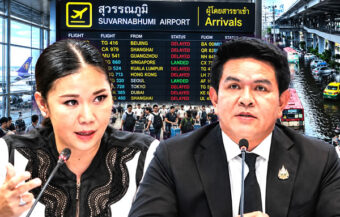
Sex worker group SWING turns the tables on Pattaya’s pre-US Navy crackdown, demanding an investigation into how 25 people were treated. The row comes as its push to repeal Thailand’s 1996 prostitution law remains stalled.
Thailand’s prostitution debate has burst back into focus after a sex worker group demanded an investigation into a Pattaya crackdown on 25 people. The sweep came days before 5,000 US sailors and Marines were expected ashore from the USS Abraham Lincoln carrier group. Now, SWING is questioning how the workers were apprehended and treated, while conflicting reports describe arrests, detention and administrative fines. The dispute comes as SWING campaigns to repeal Thailand’s 1996 prostitution law. However, its citizen-backed Sex Worker Protection Bill remains stalled without Prime Minister Anutin Charnvirakul’s endorsement.

A leading sex worker organisation has demanded an investigation into the treatment of 25 people caught in a Pattaya prostitution crackdown. The Service Workers in Group Foundation, known as SWING, made the call on Friday, October 2. The move reopens a controversy surrounding an enforcement operation carried out on August 29. Crucially, the sweep came immediately before thousands of United States sailors and Marines arrived in the area.
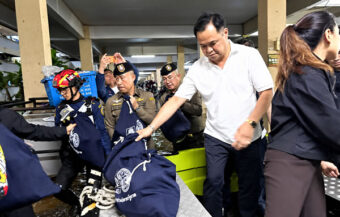
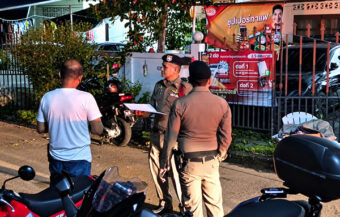
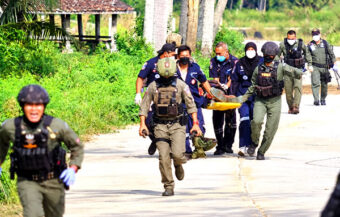
Police and social development officials swept Pattaya Beach, Second Road and other public areas that evening. During the operation, officials identified 25 people accused of loitering or soliciting for prostitution. They included 18 Thais, five Lao nationals and two Ugandans. Officials then took the group away for proceedings and fines.
Now, SWING wants the circumstances surrounding that operation investigated. Questions centre on how the 25 were apprehended, processed and treated. They also concern the legal procedures used against them. However, no finding currently establishes unlawful conduct by police or other officials.
Reports differ over Pattaya arrests as US Navy arrival puts August prostitution crackdown under scrutiny
Notably, contemporary reports differ over precisely what happened to the group. Some described the 25 as arrested or detained. Others reported that they were cited and fined. That distinction matters because Thailand changed its handling of some minor offences in 2022. Certain offences can now be resolved through administrative fines without becoming criminal punishment.
Against that background, the terminology surrounding the August operation has become important. A criminal arrest is not necessarily equivalent to receiving an administrative fine. Reports after the sweep indicated that fines were imposed. Yet conflicting descriptions of arrest, detention and citation have remained unresolved.
The timing also made the operation unusually sensitive. Days later, the USS Abraham Lincoln carrier group arrived at Laem Chabang. Around 5,000 American sailors and Marines were expected to come ashore from September 2. Many were expected to spend shore leave in Pattaya.
As a result, businesses were preparing for a sizeable spending boost. Hotels, restaurants, bars and entertainment venues stood to benefit. At almost the same moment, officials were stepping up prostitution enforcement across public areas. The August 29 sweep therefore unfolded directly before the expected American influx.
Officials defend Pattaya crackdown as SWING challenges treatment and raises wider claims over policing
For their part, officials stressed that prostitution remained illegal. They also sought to present Pattaya as a safe and orderly international tourism destination. Meanwhile, the city’s entertainment economy was preparing for thousands of visiting American military personnel. That collision of events quickly attracted international attention.
SWING director Surang Janyam criticised the operation from the outset. She accused officials of attempting to manufacture a sanitised image before the Americans arrived. She also pointed to the established presence of sex work within Pattaya’s entertainment sector. Her organisation has since widened its challenge to the treatment of those caught.
Separately, SWING has made broader accusations about interactions between police and sex workers. The organisation claims some workers have been required to make unofficial payments. It also claims some were marked on their wrists after payments. Those remain SWING allegations rather than established findings.
Importantly, the supplied material contains no police response addressing those particular accusations. Nor does it establish that those practices involved the 25 people apprehended on August 29. The claims instead provide background to SWING’s concerns about prostitution enforcement. Its latest intervention focuses directly on the August group.
SWING turns focus to police procedures as conflicting figures cloud scale of Pattaya prostitution raids
In effect, the October 2 move changes the immediate focus of the controversy. The original dispute centred heavily on the timing of the crackdown. The latest questions concern what officials actually did during the operation. They also concern what happened after the 25 were taken from Pattaya’s streets.
At issue is the precise legal action used against each person. Reports indicate fines followed the operation. However, accounts differ on whether those involved were formally arrested. SWING is now seeking scrutiny of those procedures and the group’s treatment.
Under Thailand’s 2022 fines regime, some offences can be handled without criminal punishment. Consequently, being cited and fined can carry different legal implications from criminal arrest. That distinction provides an important backdrop to SWING’s demand. The available material does not establish which procedure applied individually to all 25 people.
On another front, questions remain over the actual scale of that weekend’s prostitution crackdown. Most contemporary reports identified 25 people in the August 29 operation. However, Pattaya police chief Anek Srathongyoo subsequently gave a much larger figure.
Reuters cites up to 50 detained as SWING pushes legal reform and seeks repeal of Thailand’s 1996 law
Reuters quoted him saying weekend raids involved between 40 and 50 people detained for suspected prostitution. Therefore, the group of 25 may represent only part of the enforcement activity. Other operations could account for the larger police figure. Still, the available material does not establish the relationship between those numbers.
The discrepancy leaves two distinct figures surrounding the same weekend. One concerns the specific group of 25 now highlighted by SWING. The other concerns the wider figure cited by Pattaya’s police chief. Neither figure establishes wrongdoing during the operations.
Beyond the immediate dispute, SWING has operated in Thailand for years. Its work with sex workers includes legal assistance and support involving rights and welfare. Surang has also been active on sex worker issues for many years. Moreover, the organisation is campaigning for a fundamental change to Thailand’s prostitution laws.
Specifically, SWING and allied groups want the Prevention and Suppression of Prostitution Act of 1996 repealed. The law remains in force. Their proposed replacement would create a different framework for consensual adult sex work. It would also introduce labour and welfare protections.
Citizen-backed sex worker bill faces new parliamentary barrier after being classified as a financial bill
Earlier this year, that campaign entered another parliamentary phase. SWING and civil society partners submitted a citizen-backed legislative proposal supported by 13,526 signatures. The proposed Sex Worker Protection Bill was formally submitted on May 28. However, it followed an earlier legislative attempt that had already failed to survive political upheaval.
That previous effort ended when the House of Representatives was dissolved in December 2025. Subsequently, campaigners returned with the latest proposal. The bill again seeks to replace the 1996 prostitution legislation. Yet it has encountered another major procedural barrier.
On July 10, a joint parliamentary meeting considered the citizen-sponsored bill’s legal status. Members ruled that it constituted a financial bill. The decision passed by 17 votes to six, with two abstentions. That classification immediately changed the bill’s route through Parliament.
Under the Constitution, a citizen-sponsored financial bill requires prime ministerial endorsement before it can proceed. Accordingly, the proposal cannot advance through normal parliamentary consideration without that approval. Campaigners later called on Prime Minister Anutin Charnvirakul to provide his endorsement.
Sex worker bill stalls without Anutin’s approval as Thailand’s 1996 prostitution law remains in force
As of October 2, the supplied material shows no evidence that Anutin has given that approval. The bill therefore remains stalled. Significantly, it has not yet lapsed. Instead, it remains unable to advance without the prime minister’s endorsement.
For now, the legal position is unchanged. The Prevention and Suppression of Prostitution Act of 1996 remains operative. Sex work has not been decriminalised in Thailand. Police therefore continue operating under the existing legal framework.
In parallel, supporters of the replacement bill have continued making their case for legislative change. They argue criminalisation can discourage workers from reporting violence, exploitation and non-payment. They also say workers risk penalties themselves when approaching law enforcement. SWING has previously raised similar concerns about sex workers’ dealings with police.
Those arguments form part of the organisation’s wider campaign. By contrast, the latest Pattaya dispute concerns enforcement under existing law. No replacement legislation has taken effect. The August 29 operation therefore occurred while the 1996 law remained applicable.
US Navy visit puts Pattaya crackdown in focus as SWING demands investigation into treatment of workers
The American naval visit added another layer to that enforcement drive. The USS Abraham Lincoln carrier group represented a major commercial opportunity for Pattaya. Approximately 5,000 sailors and Marines were expected ashore. Businesses consequently prepared for increased spending across the resort.
At the same time, police and social development officials targeted suspected prostitution before those personnel arrived. Reuters later examined both the expected economic benefit and Pattaya’s association with sex tourism. Thus, the crackdown became more than a routine local policing operation.
For decades, Pattaya has also had a close association with visiting American military personnel. The latest carrier visit again promised substantial shore-leave spending. Yet the prostitution sweep immediately before the arrival exposed an awkward contrast. Officials were enforcing prohibition while businesses prepared for thousands of foreign servicemen.
SWING challenged that operation almost immediately. More than one month later, it has returned with a demand for investigation. This time, its questions concentrate on the conduct and procedures surrounding the 25 people.
Questions over fines and police procedures persist as Thailand’s proposed sex worker law remains stalled
Among those questions is how officials classified the enforcement action. Another concern is what happened after the group was removed from public areas. The legal basis for the fines is also relevant. So is the distinction between administrative penalties and formal criminal proceedings.
At present, the supplied material does not answer every question raised by SWING. It also provides no established finding of wrongdoing by individual officers. Similarly, it does not establish unlawful confinement or other specific misconduct involving the 25.
Even so, several factual discrepancies remain unresolved. Reports disagree over whether the group was arrested, detained or cited. Police figures also differ from the widely reported total of 25 people. Meanwhile, SWING’s broader claims about unofficial payments remain unanswered in the supplied material.
As part of its wider campaign, the foundation is simultaneously seeking to replace the law underpinning prostitution enforcement. That effort has already survived one failed legislative attempt. Its replacement proposal now faces a different obstacle requiring prime ministerial endorsement.
Until that changes, Thailand’s prostitution regime remains intact. The 1996 law continues to govern enforcement. The Sex Worker Protection Bill remains stalled before normal parliamentary consideration. Anutin’s endorsement is still required because lawmakers classified it as a financial bill.
Pattaya crackdown returns to focus as conflicting police figures and SWING investigation demand persist
The Pattaya case, however, has entered a new phase. Initially, attention centred on clearing public areas before thousands of American military personnel arrived. Businesses were preparing for their spending while officials targeted suspected prostitution.
More than a month later, attention has turned back onto the August 29 operation itself. The group included 18 Thais, five Lao nationals and two Ugandans. All 25 were taken away during the crackdown and subsequently faced proceedings and fines.
Meanwhile, the wider weekend figure remains unclear. Pattaya’s police chief referred to between 40 and 50 people detained during raids. That remains substantially above the 25 repeatedly identified in reports about the August 29 operation.
Pattaya police operation targets street sex workers ahead of expected arrival of US sailors on Wednesday
Procedural move in parliament may well stall the Sex Workers Act making prostitution in Thailand legal
Ultimately, SWING’s October 2 demand puts those unresolved details back before police and officials. The organisation wants the treatment of the 25 examined. It also wants scrutiny of how the enforcement action was conducted.
The legal backdrop remains equally clear. Thailand has not legalised or decriminalised sex work. Its 1996 prostitution law remains in force. Meanwhile, the proposed replacement remains blocked from progressing without prime ministerial approval.
The immediate story has nevertheless shifted. What began as a prostitution crackdown before a major US Navy visit now faces scrutiny over its own procedures.
Join the Thai News forum, follow Thai Examiner on Facebook here
Follow Thai Examiner on Google here
Receive all our stories as they come out on Telegram here
Follow Thai Examiner here
Further reading:
Business lobby urges Anutin to improve climate for inward investment by axing old laws and red tape
Tax and welfare revolution as Thailand moves ahead with Negative Income Tax that expands reporting
Thumbs up from economic gurus for 2027 Negative Income Tax plan. It’s a game-changer for progress
Expert warns foreign tourism has become Thailand’s curse, fueling inertia and a widespread malaise