Sitthichot blows the Senate scandal open, revealing a 5–2 EC split over clearing Anutin and other political heavyweights. He cites voting lists, phone records, money trails and a Bangkok hotel meeting as DSI and Supreme Court cases continue.
Whatever hopes the Bhumjaithai-led government had of burying the 2024 Senate selection scandal took a heavy blow on Tuesday. Election Commissioner Sitthichot Intrawises revealed that two commissioners opposed clearing key political figures, including Prime Minister Anutin Charnvirakul. He then detailed evidence of suspected voting lists, political networks, phone contacts, money trails and a Bangkok hotel meeting. Sitthichot said the evidence, taken together, pointed to a wider coordinated operation. The disclosure came as a separate DSI investigation remains active and 77 cases head towards the Supreme Court.
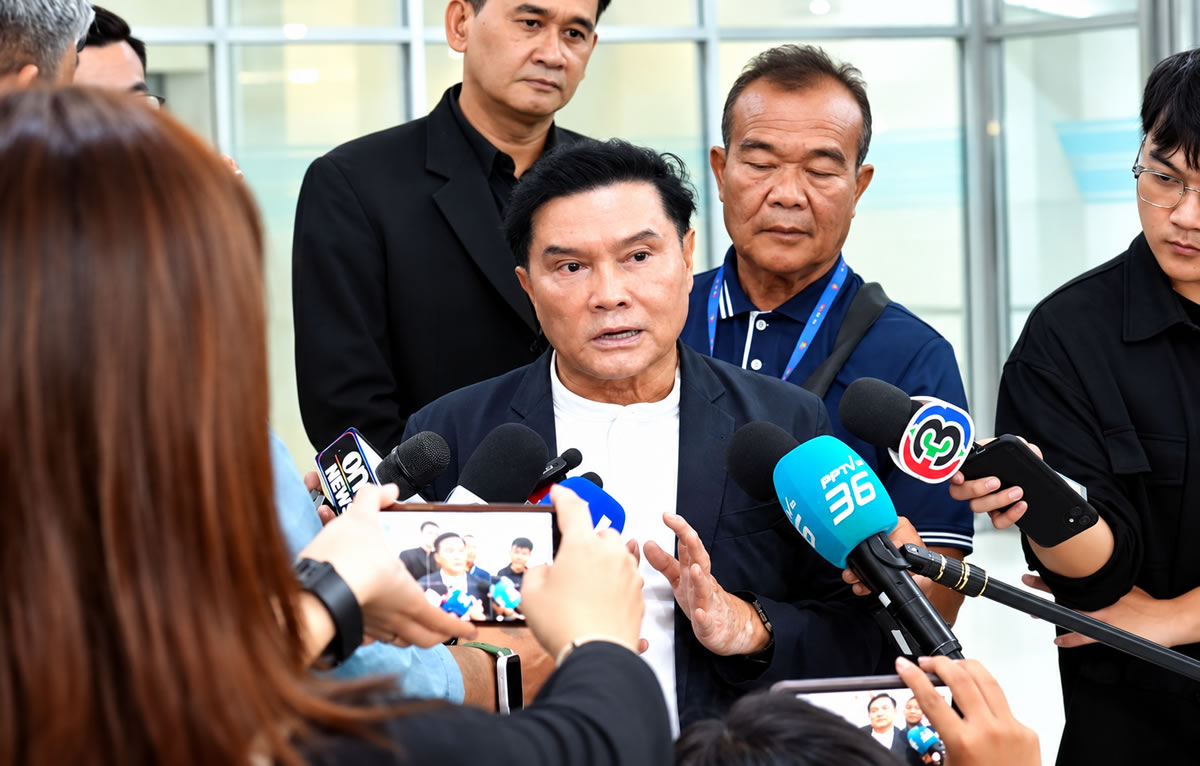
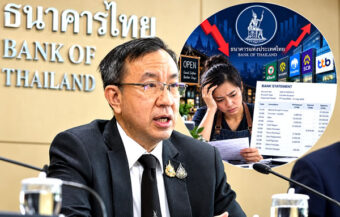
Election Commissioner Sitthichot Intrawises has reopened the political front in Thailand’s 2024 Senate selection scandal. His intervention came one day after the Election Commission explained its ruling in the sprawling case.
Crucially, Mr Sitthichot revealed that key political figures were cleared by only five votes to two. He was one of two commissioners who wanted proceedings to continue. Fellow Election Commissioner Chai Nakornchai was the other dissenter.
The disclosure strikes at efforts to put the political side of the Senate scandal to bed. Prime Minister Anutin Charnvirakul escaped referral following the EC investigation. Influential Bhumjaithai Party figure Newin Chidchob also escaped proceedings under the Commission’s ruling. Yet the decisions concerning important political figures were not unanimous. Two members of the seven-member Commission reached the opposite conclusion from the majority.
Two EC dissenters say combined evidence justified proceedings as DSI and Supreme Court cases continue
Notably, both dissenters considered the combined evidence strong enough to justify court proceedings. Mr Sitthichot has now publicly explained what convinced them. The evidence included suspected voting lists, provincial meetings, telephone contacts and financial trails. It also included witness statements, political connections and a Bangkok hotel meeting involving newly selected senators.
Meanwhile, the wider Senate scandal remains active on several legal fronts. The Department of Special Investigation continues investigating aspects of the affair. Separately, the EC has referred 77 people towards proceedings before the Supreme Court. They include 26 serving senators. However, every political figure accused of assisting candidates escaped referral.
As a result, Mr Sitthichot’s intervention puts the Commission’s handling of those political cases under renewed scrutiny. It also exposes a sharp disagreement over evidence inside the EC. Nonetheless, he denied that the disagreement amounted to factionalism. Commissioners had simply reached different conclusions after examining the facts, he said.
Even so, the difference was substantial. Two commissioners believed allegations concerning key political figures were substantiated. Five commissioners disagreed. In other cases, Mr Sitthichot said complaints were dismissed by six votes to one. By comparison, executive committee members considered completely uninvolved were cleared unanimously.
For that reason, Mr Sitthichot said the voting figures mattered. He wanted people to understand that important political decisions were not unanimous. His intervention followed Monday’s announcement by EC Chairman Narong Klanwarin. Before that press conference, commissioners discussed how their decisions should be presented.
Sitthichot names minority voices and details 12 suspected voting lists found across several provinces
According to Mr Sitthichot, commissioners agreed that each accusation should be addressed in detail. They also agreed that voting outcomes should be made clear. He compared the proposed format with statements explaining Constitutional Court decisions. Still, commissioners saw no requirement to identify individual majority and minority members.
Mr Sitthichot has now removed that anonymity himself. He confirmed that he and Mr Chai formed the minority in crucial political cases. More significantly, he detailed the evidence which persuaded them. Their case stretched across several provinces and involved different strands of evidence.
First, investigators uncovered suspected coordinated voting lists across the country. Meetings were held in several provinces where such lists were prepared, Mr Sitthichot said. Locations included Nakhon Si Thammarat, Phuket and Nong Bua Lamphu. Uthai Thani, Nakhon Sawan and Sukhothai were also identified.
Altogether, Mr Sitthichot referred to 12 suspected voting lists. The numbers appearing on them became important to the minority’s assessment. Candidates eventually ranked first through seventh matched numbers appearing on the lists, he said. People responsible for preparing voting lists had already faced punishment.
Accordingly, Mr Sitthichot considered their preparation important evidence of electoral wrongdoing. He said the conduct could fall under criminal offences contained in Section 77(1). The minority, though, did not depend upon the voting lists alone. Its assessment also examined who was connected with activity in the provinces.
Minority links provincial voting activity to one political party as witness accounts match events locally
In particular, Mr Sitthichot said those provincial connections repeatedly led towards one political party. He said no other political party appeared in the network examined by the minority. Instead, the people involved were party members or people associated with it.
“Every area is connected to only one political party; no other party is involved. Everyone is a member of or associated with the party.”
Beyond that, witness statements described instructions passing through political networks. Witnesses said MPs or party personnel received responsibilities in particular areas. The minority then compared those accounts with what subsequently happened. Mr Sitthichot said he did not simply accept statements because witnesses made them.
Rather, he examined whether the events described by witnesses later occurred. Where their accounts corresponded with actual events, he considered the testimony credible. That approach connected witness evidence with activity on the ground. It also became central to the minority’s assessment of the wider case.
“I don’t trust the individuals themselves, but rather I trust whether their words were followed and actually happened. If it can be proven that they did, then it is credible.”
In parallel, telephone records added another layer. Mr Sitthichot said genuine contacts existed between witnesses and political figures. Those contacts included party members, executive committee members and MPs. The telephone information was also documented in the investigation file.
Telephone contacts link witnesses and political figures as case files add another layer to minority view
Financial evidence provided another strand. Mr Sitthichot referred to money trails connecting people examined during the investigation. Investigators also uncovered cash transactions. Importantly, some financial connections to politicians did not originate directly from the politicians themselves. Instead, they involved people around them.
One financial trail involved money moving from Prachuap Khiri Khan to Surat Thani. Commissioners were divided over whether that connection should be accepted. The vote was four to three against accepting it. Consequently, that particular connection was not pursued further by the Commission. Mr Sitthichot disagreed with the decision.
On another front, investigators examined events after the Senate selection results were announced. A meeting involving newly selected senators was held at a Bangkok hotel on July 21, 2024. The gathering became significant in the minority’s assessment. A witness subsequently gave evidence concerning what happened there.
That witness had served as an MP’s secretary and previously worked in a minister’s office. According to the testimony, the meeting concerned the leadership of the newly selected Senate. The positions of Senate president and vice-president were discussed. Mobile phones were also confiscated during the gathering.
Money trails, cash transfers and Bangkok hotel meeting deepen minority case over Senate selection affair
More strikingly, an important party figure was seen leaving the meeting, according to Mr Sitthichot’s account. Evidence also indicated the party leader may have been present. However, that person may have been in another room. Telephone contacts involving some ministers during the Senate selection period were also examined.
Taken together, Mr Sitthichot said those communications were consistent with other evidence in the case. The minority therefore considered the material supportive of suspected vote collusion. Former senator Direk Pornsima also provided corroborating testimony.
Later, however, parts of the witness evidence became disputed. Some witnesses withdrew or changed earlier statements. Claims followed that intimidation had influenced their original testimony. Mr Sitthichot questioned those explanations.
One witness was an MP. Another was the father-in-law of the leader of a major political party. Mr Sitthichot questioned who could have intimidated people holding such positions. He also highlighted the timing of their changed evidence.
The retractions were submitted to the 36th subcommittee on October 30, 2025. That was considerably later than the original testimony. Hence, Mr Sitthichot considered the circumstances surrounding those retractions suspicious.
Party figure seen leaving Bangkok meeting as disputed witness retractions add to minority evidence picture
For the minority, the central issue was how these strands fitted together. Mr Sitthichot used an elephant analogy to explain that approach. Individual pieces could be disputed or incomplete. The combined evidence, he argued, still revealed the complete picture.
“When all the suspicious points are considered together, it’s like looking at the whole elephant. We know the real elephant is here; the other minor details are wrong, but the whole elephant is here.”
On that basis, the minority concluded that allegations one and two were substantiated. Those allegations concerned party personnel, executive committee members and MPs. Mr Sitthichot and Mr Chai therefore favoured proceedings against key individuals. The five-member majority reached the opposite conclusion.
Elsewhere in the case, different accused people received different decisions. Some political figures were cleared by six votes to one. Executive committee members considered entirely uninvolved were cleared unanimously. Conversely, some findings against other accused people were unanimous because the evidence was particularly clear.
Mr Sitthichot cited witness testimony and forensic evidence in those cases. He also pointed to telephone records and financial trails. The Commission’s voting therefore varied considerably across different parts of the investigation.
Minority says evidence showed the whole elephant as five-member majority cleared key political figures
Among serving senators, the voting was similarly divided. Some groups were decided by four votes to three, according to Mr Sitthichot. Cases involving voters with clear financial connections produced unanimous findings. Thus, commissioners repeatedly differed over how far particular evidence could be taken.
The commissioner’s account also revealed problems encountered during the original investigation. He explained why the EC eventually established its 26th investigative committee. Initially, local investigators reached a barrier at the district level.
Candidates repeatedly gave essentially identical explanations for entering the Senate selection. They said they had applied independently and personally paid their expenses. They also claimed they chose stronger candidates instead of voting for themselves.
Yet Mr Sitthichot noted the financial circumstances of some applicants. Some were employees. Others were struggling to make ends meet. Despite that, local EC investigators could not advance the inquiry beyond those explanations.
As part of the response, the Commission sought outside investigative assistance. The Department of Special Investigation became involved. Regional investigative police also joined the work. That cooperation eventually led to the establishment of the 26th working group.
Thereafter, investigators assembled a much broader evidential picture. They obtained telephone information and financial records. They gathered witness statements and evidence concerning meetings. Suspected voting lists from several provinces were also examined.
Split votes among senators emerge as stalled district inquiries brought DSI and police into investigation
The resulting investigation eventually covered 229 people. They included 138 serving senators and another 91 people. The second group included politicians, former candidates and others connected with the selection.
Monday’s EC ruling, by contrast, referred only 77 people towards court proceedings. Just 26 were serving senators. None of the accused political figures was referred. That outcome separated the political allegations from cases now heading towards the Supreme Court.
Mr Sitthichot’s intervention reveals how narrowly some political decisions were reached. For key individuals, the margin was five votes to two. The rejection therefore represented a majority judgment, rather than agreement across the Commission.
Meanwhile, the wider affair remains active outside the EC. The DSI investigation has not ended. Supreme Court proceedings are also forthcoming for people referred by the Commission. Parts of the Senate scandal therefore remain under active investigation or judicial consideration.
At Commission level, however, Mr Sitthichot said the case file was complete. He cannot now change the majority decision publicly. The Supreme Court nevertheless retains discretion over evidence in cases reaching it. Mr Sitthichot said the court could call for further evidence.
EC probe covered 229 people but only 77 face court as political figures escape referral after split votes
In addition, an aggrieved party could petition the court seeking further judicial consideration. That leaves the judicial process separate from the Commission’s completed deliberations.
Another pressure point concerns possible Section 157 action against Election Commission members. The provision concerns wrongful exercise or neglect of official duties. Mr Sitthichot said he was not worried about facing such proceedings.
In response, he pointed to his written reasoning and the evidence supporting his vote. He said his explanation had been prepared in a legally reasoned form. He compared it with a concise court ruling. If challenged, he said he was prepared to defend his decision.
“This matter is guided by opinion. If it’s considered valid, then it must be that way, regardless of which side it benefits.”
Mr Sitthichot also acknowledged the political perceptions surrounding the majority decision.
“But since the majority sees it this way and it benefits one side, people can perceive it that way. However, please focus on the reasoning behind the decision.”
He then defended the professional motives of commissioners despite their different conclusions.
“People at the Election Commission level are in the final stages of their careers; everyone wants to do good for the country. The answer should lie in the reasoning.”
Section 157 pressure grows as Sitthichot says his written reasoning can withstand any legal challenge
The disclosure has now placed the EC’s internal voting directly into the public record. The same seven commissioners examined the underlying investigation. They differed sharply over whether the combined evidence justified proceedings against key political figures.
Mr Sitthichot and Mr Chai concluded that it did. Five commissioners concluded otherwise. Even then, Mr Sitthichot insisted the disagreement did not represent an institutional rupture.
According to him, commissioners could separate personal relationships from their assessment of evidence. Different findings therefore reflected different judgments concerning the facts. Those judgments, however, are now public.
Separately, Mr Sitthichot addressed claims concerning the EC’s role in collecting suspected voting lists. He denied that Election Commission members had participated in collecting them. Commissioners nevertheless knew that a process of collecting voting lists had occurred.
“Regarding the rumours that the Election Commission participated in collecting voting slips, I confirm that we did not participate in that process.”
He said the status of the lists remained subject to evidential assessment.
EC voting split enters public record as Sitthichot denies commissioners helped collect suspected lists
“However, everyone knew that there was a process of collecting voting slips, which has not yet been proven to be collusion slips or memorized notes.”
Above all, Mr Sitthichot said he spoke because the public needed an accurate account of the Commission’s decision.
“I am speaking out today simply to ensure the public understands correctly that the decision was not unanimous.”
The Election Commission has since issued another statement identifying majority and minority voting proportions for individual allegations. The five-to-two division is therefore no longer obscured by the Commission’s collective ruling.
Politically, the disclosure comes at a sensitive moment for the Bhumjaithai-led government. Prime Minister Anutin was among senior political figures who escaped referral. Newin Chidchob likewise escaped proceedings under the EC ruling.
Nevertheless, two commissioners examining the case wanted proceedings against key political figures to continue. Their position was based on the combined evidence contained in the investigation. Mr Sitthichot has now laid much of that reasoning before the public.
Sitthichot says public must know ruling was divided as Anutin and Newin escaped referral by EC majority
The minority evidence included 12 suspected coordinated voting lists. Candidate numbers on those lists matched people subsequently ranked first through seventh, Mr Sitthichot said. The investigation also found meetings across several provinces.
Additionally, witnesses described assignments involving MPs or party personnel. Telephone records showed contacts involving witnesses and political figures. Financial trails and cash transactions added another layer.
The July 21 Bangkok hotel meeting provided another important element. Newly selected senators gathered there to discuss Senate leadership, according to testimony. Mobile phones were confiscated. An important party figure was seen leaving.
Furthermore, evidence suggested a party leader may have been present elsewhere in the hotel. Telephone contacts involving ministers during the selection period were also examined. The minority regarded these separate elements as mutually reinforcing.
Against that background, disputed witness retractions became another issue. Mr Sitthichot questioned both their credibility and timing. One came from an MP. Another involved the father-in-law of a major party leader.
The minority therefore assessed the evidence as a connected national picture. The majority rejected that conclusion for key political figures. That difference now sits at the centre of the continuing dispute.
Minority evidence links voting lists, party networks, hotel meetings and phone contacts across the country
In practical terms, the EC majority ruling remains in force. The 77 referred cases will proceed towards the Supreme Court. The separate DSI investigation remains active.
The political cases rejected by the EC majority are in a different position. Yet Mr Sitthichot’s disclosure establishes that their rejection was contested inside the Commission.
It also comes as the Commission faces questions about its independence following the politically sensitive ruling. Those questions now accompany continuing DSI work and forthcoming Supreme Court proceedings.
Election Commission exposed based on Monday’s sweeping decisions and judgments warns opposition
Election Commission creates more questions than answers as it refers 77 people to the Supreme Court
Mr Sitthichot, for his part, remains unequivocal about his vote. He said his conclusion followed the evidence and his assessment of the law. He has documented his reasons and says he will defend them if challenged.
Ultimately, the central voting fact is now clear. Two commissioners wanted proceedings against key political figures. Five commissioners did not.
One of those two dissenters has now stepped forward. He has identified the other. More importantly, he has publicly detailed the evidence which convinced them both.
Join the Thai News forum, follow Thai Examiner on Facebook here
Follow Thai Examiner on Google here
Receive all our stories as they come out on Telegram here
Follow Thai Examiner here
Further reading:
Election Commission exposed based on Monday’s sweeping decisions and judgments warns opposition
Election Commission creates more questions than answers as it refers 77 people to the Supreme Court
Ex Pheu Thai minister warns Commission members that soon they could be judged as crunch vote looms
Opposition and People’s Party leader attacks ‘blue regime’ on the 12th anniversary of the 2014 coup
Thammasat University legal scholar and 1992 protest leader warns another coup cannot be ruled out