French zoo owner Kevin Dimino faces deportation after Anutin rejects his appeal and officials cite assault, spitting, a knife threat and flight trouble. Israeli rival Ohayon is already deported as controversy over foreign conduct spreads into Phuket.
Prime Minister Anutin Charnvirakul has rejected French zoo operator Kevin Dimino’s final administrative appeal against deportation after officials revealed an extraordinary record of reported misconduct. The Interior Ministry cited harassment, assault, a knife threat, spitting, confrontations with foreigners and trouble aboard a domestic flight. It also raised nationality-related social-media activity and a traffic conviction. Dimino now faces removal after a decade on Koh Samui unless the Administrative Court intervenes. Officials insist the case extends far beyond his zoo’s refusal to admit Israelis and display of a Palestinian flag. Meanwhile, Israeli businessman Yaacov “Jacob” Ohayon, convicted over threatening messages in the same bitter dispute, was deported on September 23. Mr Anutin rejected Dimino’s appeal that same day, amid mounting controversy in Phuket over Israeli visitors and demands for tougher controls.
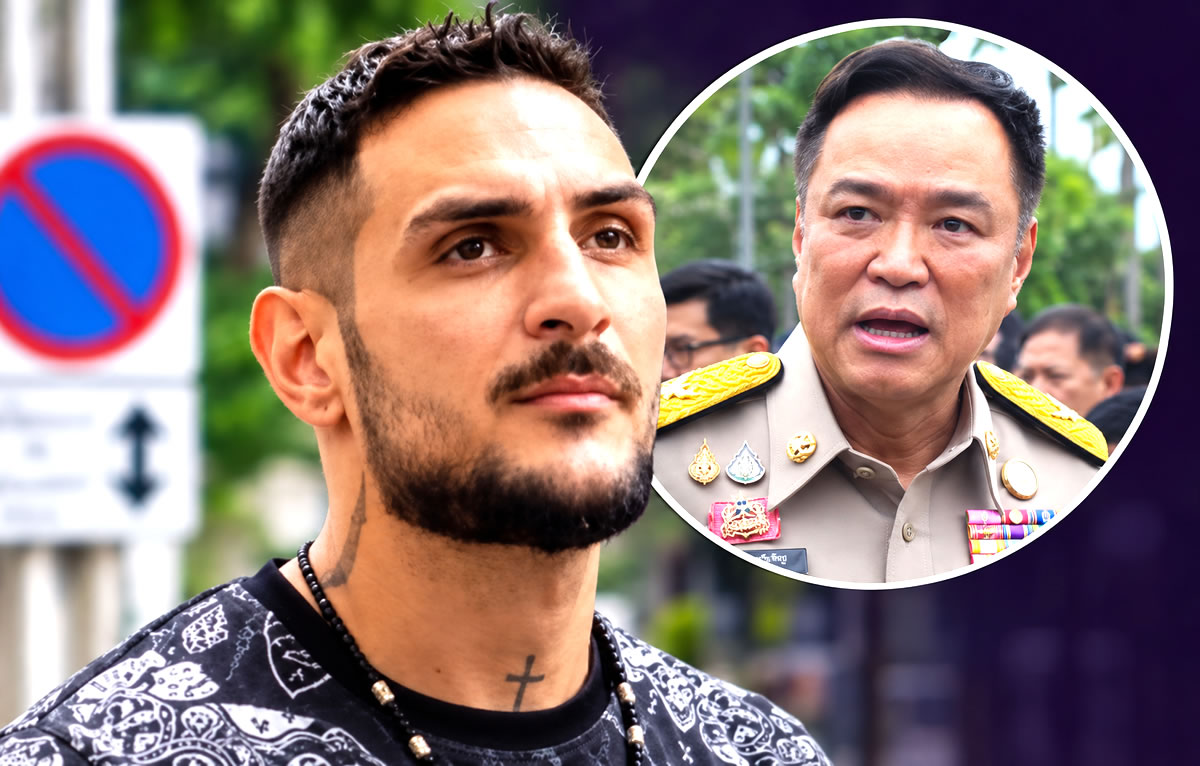
Prime Minister Anutin Charnvirakul has rejected French national Kevin Dimino’s appeal against deportation from Thailand. The decision leaves Dimino facing removal after about a decade living on Koh Samui. Crucially, the government’s case extends far beyond his controversial refusal to admit Israeli visitors to his zoo.
The Interior Ministry cited an extensive record of reported misconduct involving several separate incidents. These included harassment, assault, a knife threat, spitting, confrontations with foreigners and trouble aboard a domestic flight. Officials also cited social-media activity which they said encouraged hostility based on nationality.
Mr Anutin, who is also Interior Minister, signed the original deportation order on September 7. Interior Ministry Order No. 2354/2569 required Dimino to leave Thailand. However, the French national exercised his statutory right to appeal. His Thai wife, Jindarat Sattayapun, subsequently took his case directly to the Interior Ministry.
Anutin rejects Dimino appeal as French zoo operator faces deportation after a decade on Koh Samui
On September 11, Mrs Jindarat travelled to Bangkok to submit the appeal. Akkarawut “Tae Achiva” Kraisrisombat, chairman of the Thai Mai Thon group, accompanied her. In response, they asked Mr Anutin to reconsider the evidence underpinning the deportation decision. Mrs Jindarat also raised threats which she said her family had received. Additionally, she sought clarification about protection available to them.
That effort failed. The Prime Minister’s Office issued a letter dated September 23 rejecting Dimino’s appeal. It also refused his request to revoke or suspend the original deportation order. Accordingly, the Interior Ministry’s permanent secretary was instructed to formally notify him. Dimino must also be informed about his right to seek relief from the Administrative Court.
The ruling effectively exhausts Dimino’s administrative appeal. As of September 28, officials were proceeding with the deportation process. Still, there was no reliable confirmation that he had physically left Thailand. His remaining avenue is therefore a challenge before the Administrative Court. Without court intervention, the deportation order remains effective.
At the centre of the decision is an unusually extensive account of reported conduct compiled by the Interior Ministry. Initially, national attention focused on Dimino’s dispute with Israelis at Samui Exotic Park. He operates the Koh Samui attraction with his Thai wife. The park displayed a Palestinian flag and later refused admission to Israelis following disputes involving Israeli visitors.
Interior Ministry details six categories of reported misconduct extending far beyond Samui zoo dispute
Yet the ministry says the zoo controversy represents only part of Dimino’s case. Officials disclosed six categories of reported conduct involving different people and circumstances. Notably, several incidents had no direct connection with the Israeli dispute. The government consequently based its decision on a wider public-order assessment.
One part of the dossier concerned reported harassment and abusive behaviour involving people at a language school. Separately, officials detailed a physical confrontation involving a Turkish national. The ministry cited an assault against the man. It also cited a reported threat involving a pocket knife.
On another front, officials described aggressive behaviour outside private premises. During that confrontation, Dimino was reported to have spat. A further incident involved another confrontation with foreign tourists. Taken together, these episodes expanded the case beyond political arguments or disputes involving Israeli visitors.
The ministry also examined Dimino’s activities online. According to officials, some social-media material encouraged hostility based upon nationality. As part of this, officials cited activities concerning political or religious gatherings. Those matters were included in the government’s broader public-order assessment.
Domestic flight police call and traffic conviction add to extensive case assembled against Dimino
Perhaps most strikingly, the dossier included trouble aboard a domestic commercial flight. Cabin crew reportedly became sufficiently concerned about Dimino’s behaviour to call police. He was subsequently removed from the aircraft. Thus, the reported incidents extended from Koh Samui confrontations to an intervention aboard a passenger flight.
There was also an established criminal court matter in Dimino’s record. Koh Samui Provincial Court convicted him of an offence under the Land Traffic Act. The court initially imposed a ฿10,000 fine. Following his guilty plea, however, the penalty was reduced to ฿5,000.
Overall, the government presented a record stretching well beyond one confrontation at a tourist attraction. It cited harassment and abusive behaviour involving people at a language school. It also cited an assault and reported pocket-knife threat involving a Turkish national. Elsewhere, officials recorded aggressive behaviour, spitting and a separate confrontation involving foreign tourists.
Beyond those incidents, the ministry raised Dimino’s social-media activities. It said some material encouraged nationality-based hostility. Officials additionally cited activities surrounding political or religious gatherings. Finally, they included the domestic flight incident, which reportedly resulted in police being called.
Ministry says wider public-order record, not Palestinian flag, forms basis for Dimino deportation order
The Interior Ministry assessed that accumulated record under Thailand’s deportation laws. Officials concluded Dimino’s conduct was contrary to public order, good morals or public welfare. Consequently, the government relied upon Section 5 of the Deportation Act 1956. It also acted under Thailand’s newer deportation regulations.
The ministry therefore disputes claims that Dimino was targeted simply for refusing Israelis admission to his zoo. Equally, officials say displaying a Palestinian flag was not itself the basis for deportation. Rather, they point to the wider record assembled during his years in Thailand. That distinction is central to the government’s explanation for removing him.
For their part, Dimino and his wife dispute the government’s presentation of the affair. They say threats and behaviour directed against their family must also be considered. Mrs Jindarat said these included threats against both the family and the zoo. She also maintained that evidence could be supplied to investigators.
The dispute originally became highly charged because Samui Exotic Park displayed a Palestinian flag. Later, its refusal to admit Israelis following disputes with Israeli visitors intensified the controversy. Videos showing confrontations involving Dimino then circulated widely. Reports cited footage appearing to show him headbutting an Israeli man.
Israeli businessman Ohayon emerges as second central figure as both sides face government enforcement
Meanwhile, Israeli businessman Yaacov “Jacob” Ohayon became another central figure in the dispute. Dimino later told AFP that Ohayon had “started the story”. Mrs Jindarat, meanwhile, maintained that her family had been threatened. The increasingly bitter confrontation eventually brought government action against men on both sides.
In parallel, Ohayon faced a separate criminal case involving threatening communications. Koh Samui Provincial Court convicted him under Section 392 of the Criminal Code. The case concerned threatening messages which caused fear or alarm. He initially received a one-month prison sentence and a ฿10,000 fine.
After Ohayon pleaded guilty, the court reduced his punishment. He received a 15-day suspended prison term and a ฿5,000 fine. Mr Anutin subsequently ordered his deportation. Unlike Dimino, however, the Israeli businessman has already been physically removed from Thailand.
On September 23, officials escorted Ohayon onto El Al flight LY84 at Suvarnabhumi Airport. The aircraft departed for Tel Aviv at 4.05 pm. According to the government’s Public Relations Department, his deportation was completed without incident.
Ohayon deported to Israel as Dimino loses appeal on same day in bitter aftermath of Koh Samui dispute
Significantly, Mr Anutin rejected Dimino’s appeal on that same date. The timing brought both sides of the original Samui confrontation back into focus. Ohayon was physically flown out of Thailand. At the same time, Dimino lost his administrative attempt to prevent the same ultimate outcome.
The government can consequently point to deportation action against both central protagonists. Even so, the legal basis underlying their cases differs. Ohayon had a conviction specifically concerning threatening messages. Dimino faces a wider public-order case containing numerous reported incidents and an established traffic conviction.
Against this backdrop, southern Thailand has faced growing controversy surrounding the conduct of some foreign visitors. Phuket has emerged as one centre of that debate. Protests and petitions there have included demands for tougher scrutiny of Israeli visitors. Security concerns surrounding proposed Israeli activities have also surfaced.
On September 8, the Phuket Land Protection Group and local leaders petitioned the provincial governor. They opposed plans for a large Israeli religious gathering in Patong. Group representative Danai Dada said their concern centred on security. He also raised fears that Phuket could become exposed to an overseas conflict.
Phuket campaigners seek tougher scrutiny of Israeli visitors amid wider controversy in southern Thailand
At the same time, Mr Danai denied that the campaign was driven by religious conflict. He said no political party stood behind the movement. Subsequently, another Phuket demonstration reportedly attracted around 150 people. Protesters called for tougher enforcement against foreigners, with particular attention directed towards Israelis.
Among their demands was a shorter permitted stay for Israeli tourists. Protesters wanted the period reduced from 30 days to 15 days. That proposal remains a demand from protesters rather than government policy. Nonetheless, the demonstrations form part of the wider backdrop to the Samui dispute.
Within that climate, the Dimino deportation has attracted particular attention. Some campaigners have concentrated on the conduct of Israeli visitors in southern Thailand. The Interior Ministry, by contrast, says individual behaviour determines its enforcement decisions. Officials specifically maintain that Dimino’s nationality was irrelevant to their assessment.
The deportation of Ohayon also gives the government a direct comparison. Both men connected with the original Samui confrontation were ultimately ordered out of Thailand. Even so, officials relied upon separate evidence and circumstances against each man. The two deportation cases were not legally identical.
Foreign Minister raises Israeli visitor conduct as embassy issues Hebrew guidance for visitors to Thailand
The wider issue has also reached Thailand’s foreign-policy leadership. Deputy Prime Minister and Foreign Minister Sihasak Phuangketkaew discussed Israeli visitor behaviour with Israel’s ambassador. Specifically, he referred to incidents in Phuket and Phang Nga. Mr Sihasak said foreign visitors must respect Thai laws and culture.
At the same time, he cautioned against treating individual incidents as representative of Israelis generally. Subsequently, the Israeli Embassy issued Hebrew-language guidance for Israelis visiting Thailand. The material addressed appropriate behaviour while staying in the kingdom. It was distributed through social media, airlines and travel agencies.
More broadly, southern Thailand has seen increasing scrutiny of foreign-linked businesses and landholding arrangements. Officials have also examined the conduct of some foreign visitors. The Samui controversy has therefore developed during a wider period of government scrutiny.
Still, Dimino’s case is notable for the sheer breadth of reported conduct cited against him. The original zoo controversy provided only one element. Once disclosed, the Interior Ministry’s dossier presented a substantially different and much wider picture.
Dimino dossier spans harassment, knife threat, spitting, tourist confrontation and domestic flight trouble
First came the reported harassment and abusive behaviour involving people at a language school. Then came the incident involving a Turkish national. Officials cited an assault and a reported pocket-knife threat during that episode. Another confrontation involved aggressive behaviour outside private premises and reported spitting.
A separate incident involved foreign tourists. The ministry then cited social-media material which it said encouraged hostility based on nationality. Officials also raised activities involving political or religious gatherings. Added to that was the domestic flight incident which reportedly required police involvement.
Importantly, those reported incidents did not all concern Israelis. Neither were they confined to Samui Exotic Park. Instead, the ministry presented separate episodes involving different people, locations and circumstances. The Land Traffic Act conviction provided an additional established legal finding.
Ultimately, the Interior Ministry concluded that the accumulated record justified deportation. Mr Anutin accepted that assessment when he signed the September 7 order. Dimino then exercised his right to appeal. He also sought suspension or revocation of the deportation order while challenging the decision.
Anutin’s rejection leaves the Administrative Court as Dimino’s remaining route to stop deportation
That challenge has now failed at the administrative level. Mr Anutin rejected it on September 23. Meanwhile, Ohayon was being escorted from Thailand aboard a Tel Aviv-bound flight. The coincidence brought a sharp conclusion to one side of the dispute while Dimino’s case continued.
Five days later, Dimino remained in Thailand. However, his legal options had narrowed considerably. He can now seek intervention from the Administrative Court. Otherwise, officials can proceed with the deportation order already approved by the Prime Minister.
The zoo dispute may have propelled Dimino into national headlines. However, the Interior Ministry says that confrontation does not explain the deportation by itself. Instead, officials point to a lengthy record of reported behaviour accumulated during his years in Thailand.
Israeli detained for deportation as PM signs order to deport now missing French zoo owner Kevin Dimino
Spider Man ‘peace’ protest and arrest the latest news from the ongoing Koh Samui animal park controversy
That record includes harassment, abusive behaviour, assault and a reported knife threat. It includes aggressive conduct, spitting and another confrontation involving foreign tourists. In addition, officials cited nationality-related social-media activity and political or religious gatherings. Finally, they cited the aircraft incident which reportedly resulted in police intervention.
Dimino and his wife continue to contest the wider presentation of the case. They have also stressed the threats which they say were directed against their family. Even so, the Interior Ministry concluded that his overall record met the threshold for deportation.
Mr Anutin has now upheld that assessment by rejecting Dimino’s appeal. Ohayon, meanwhile, has already been deported to Israel. Unless the Administrative Court intervenes, Dimino now faces the same ultimate outcome after about a decade on Koh Samui.
Join the Thai News forum, follow Thai Examiner on Facebook here
Follow Thai Examiner on Google here
Receive all our stories as they come out on Telegram here
Follow Thai Examiner here
Further reading:
Frenchman’s Koh Samui business empire enmeshed in knotty police probe of nominee firms and pot farm
Drive against foreign owned property and business on Koh Samui and Koh Phangan now targets leases
International reservations system used by hotels targeted in latest Koh Phangan swoop by ministers
Anutin visits Koh Phangan as nominee crackdown shows 68% of firms with foreign ownership links
Blitzkrieg on foreign firms and enterprises on Koh Phangan continues with French owned resort busted