Southern police face a 44% allowance axe, but PM Anutin insists there are no cuts. Police orders tell another story. A ฿314m shortfall sparks fury, with MPs demanding answers and a November 12 showdown over who ordered the reductions. Who ordered it?
Prime Minister Anutin Charnvirakul is under fire after denying police allowance cuts of up to 44% in Thailand’s insurgency-hit southern provinces. Official orders confirm the reductions, while police headquarters admits a ฿314 million allowance shortfall. Frontline officers face losing nearly ฿3,000 monthly. Meanwhile, two MPs have challenged the government’s contradictory accounts. People’s Party MP Ramadhan Panjor accuses security-linked information operations of spreading false claims blaming Parliament and shielding senior authorities. The row has widened to combat pay and welfare funding. Now, a parliamentary committee will demand answers from police, government and security chiefs on November 12.
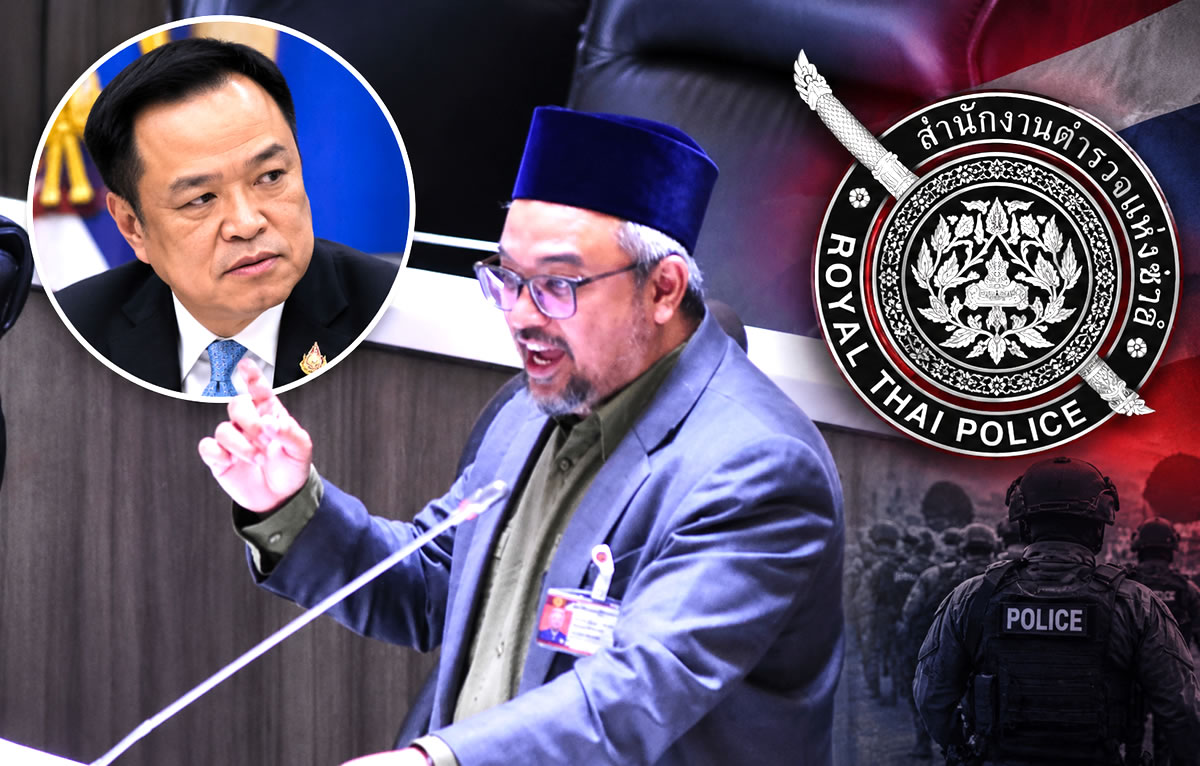
Prime Minister Anutin Charnvirakul faces mounting questions over police allowance cuts of up to 44% in Thailand’s troubled southern border provinces. Official police orders confirm substantial reductions in payments to frontline officers.
Yet the Prime Minister publicly denied that allowances were being cut. Police headquarters subsequently acknowledged a reduced budget allocation. Meanwhile, two MPs have challenged the government over conflicting explanations.
People’s Party MP Ramadhan Panjor has also accused security-linked information operations of falsely blaming Parliament. At stake is a reported ฿314 million reduction in police allowances. The dispute comes as officers prepare to receive their first payments under the 2027 fiscal year budget.
Police circular orders southern allowance cuts as ฿314 million funding reduction hits frontline officers
The controversy centres on special allowances paid to police serving in Pattani, Yala and Narathiwat. Officers stationed in four districts of neighbouring Songkhla province are also affected. These areas have experienced a prolonged separatist insurgency involving repeated attacks on security personnel.
Consequently, police receive additional payments reflecting the dangers associated with their assignments. The allowances supplement their regular salaries and form part of the financial arrangements supporting southern security operations.
On October 19, the Royal Thai Police Forward Operations Centre circulated instructions setting out substantially lower monthly payments. The document covered several categories of officers serving in the southern border region. These included special operations personnel, provincial investigators, general-duty officers and Border Patrol Police units. Notably, the circular specified actual payment amounts rather than merely proposing future reductions.
According to Thai PBS, the Royal Thai Police budget allocation for fiscal 2027 had fallen by more than ฿429 million. Of that reduction, approximately ฿314 million concerned allowances. The figures established the scale of the funding dispute. Moreover, the new payment schedules showed how individual officers would be affected.
Border Patrol Police face 44% allowance cuts as Songkhla MP raises complaints from junior officers
Special operations and provincial investigation officers previously received monthly allowances of ฿6,700. Under the new instructions, those payments would fall to ฿5,000. That represents a reduction of ฿1,700, or approximately 25%. Over a full year, an affected officer would receive ฿20,400 less if the reduced rate continued.
Separately, general-duty police faced cuts from ฿5,860 to ฿4,300 monthly. These personnel include officers involved in crime prevention, public protection and traffic operations. Their allowances would therefore fall by ฿1,560 each month, equivalent to approximately 27%. The annual difference would reach ฿18,720 if maintained for 12 months.
Border Patrol Police personnel faced the largest reported reductions. Their monthly allowances would fall from ฿6,780 to ฿3,820. That represents a loss of ฿2,960 every month, or approximately 44%. Consequently, an officer receiving that rate would lose ฿35,520 over a full year. The precise reductions depend on individual duties and assignments.
The controversy first reached Parliament on October 22. Democrat Party MP Jury Numkaew, representing Songkhla, raised complaints from junior officers serving in the southern border provinces. His intervention also concerned personnel stationed in four districts of Songkhla. By then, the reductions had already been communicated through official police channels.
Regional police acknowledge budget constraints before Anutin rejects reports of southern allowance cuts
The complaints followed an administrative order signed by Police Lieutenant General Piyawat Chalermsri, commander of Provincial Police Region 9. Thai PBS reported that the order reduced allowances for affected personnel. In response, the regional commander issued a message acknowledging budget constraints. He also sought to reassure officers concerned about their payments.
Thus, senior regional police authorities had already addressed the financial problem before the Prime Minister intervened publicly. The written instructions also established that the reductions were more than unsubstantiated reports. Indeed, the dispute concerned specific payment schedules issued through the police administration.
On October 26, Anutin said he had not received a report concerning the allowance reductions. He indicated that he would consult National Police Commissioner General Samran Nuanma to establish the facts. At that stage, the Prime Minister had not publicly rejected the existence of the reported cuts.
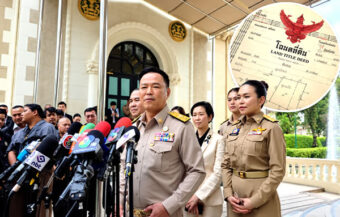
However, his position changed following discussions at Royal Thai Police headquarters on October 28. Anutin rejected reports that Border Patrol Police and other southern officers were losing their allowances. He said the discussions had established that there was no such issue. Instead, he attributed the controversy to miscommunication.
Police spokesman confirms reduced funding despite Prime Minister’s denial of cuts to police allowances
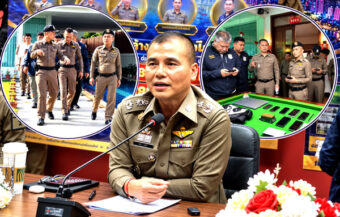
The statement directly conflicted with the October 19 circular and the regional police instructions. Furthermore, the Royal Thai Police acknowledged that its overall budget allocation had decreased. Police Major General Siriwat Deepor, spokesman for the Royal Thai Police, confirmed the reduction on October 28.
The spokesman explained that General Samran had instructed commanders to manage their budgets and minimise the impact on personnel. Additional government funding might also be requested. Accordingly, police headquarters was discussing financial adjustments while the Prime Minister dismissed reports of allowance cuts.
The conflicting accounts became the central issue. Anutin publicly rejected the reported reductions following discussions with senior police officials. Yet the police administration had already circulated instructions specifying lower monthly payments. In parallel, its spokesman acknowledged a reduced allocation and the possibility of seeking additional funding.
The documents establish that lower allowances were ordered. They do not establish that the Prime Minister knowingly provided false information. Nevertheless, his public account differed from the administrative record and the police spokesman’s explanation. The status of the reduced payments also remained unclear.
People’s Party MP demands answers over conflicting police accounts and increased deployment claims
By Thursday, October 29, People’s Party list MP Ramadhan Panjor had entered the dispute. He demanded an explanation from the government over the allowance reductions and contradictory official statements. The MP said documents detailing the changes were circulating widely. Despite this, senior authorities had failed to provide a straightforward account.
Ramadhan highlighted the approaching first payment under the 2027 fiscal year budget. Officers were preparing to receive their allowances without clear information about the amounts involved. Meanwhile, conflicting statements from government leaders and police commanders had compounded the uncertainty.
The MP also challenged explanations suggesting that increased police deployments had forced authorities to redistribute existing funding. According to those accounts, more personnel had been assigned to the southern provinces without a corresponding budget increase. As a result, the available allocation would have to be divided among a larger number of officers.
Ramadhan described that explanation as highly unusual in government administration. He questioned why increased personnel numbers would result in reduced payments for officers already performing dangerous duties. In particular, he demanded clarification of the budget calculations and decisions behind the changes.
Ramadhan accuses security-linked pages of blaming Parliament and concealing southern police cuts
His criticism also focused on Anutin’s public denial. The Prime Minister had rejected reports of cuts despite the circulation of official police instructions. Ramadhan said the conflicting explanations had created confusion among personnel serving in high-risk areas. He also raised concerns about the impact on morale.
On another front, the People’s Party MP accused security-linked social media pages of conducting information operations against Parliament. He said some pages associated with security agencies were blaming the House of Representatives for the reductions. The accusations also targeted him personally.
Ramadhan rejected those claims. He accused the pages of distorting Parliament’s role in examining and approving the national budget. Furthermore, he described the accusations as false information intended to shift responsibility away from senior authorities.
The MP went further, accusing senior commanders or higher authorities of seeking to conceal the facts. He said the information operations disregarded complaints from lower-ranking officers serving in dangerous areas. These were accusations made by Ramadhan, rather than findings established through a formal investigation.
The allegations introduced another dispute over responsibility for the allowance reductions. Specifically, they raised questions about whether Parliament had reduced the funding available for frontline police payments. Ramadhan maintained that the accusations against MPs misrepresented the parliamentary budget process.
Parliamentary operating budget left intact as dispute shifts to police investment spending and ISOC
According to the parliamentary account, the Royal Thai Police operating budget was not reduced during parliamentary scrutiny. Instead, the reductions made during that process concerned investment expenditure. This distinction became central to the argument over who authorised the lower allowances.
Investment expenditure generally covers equipment, infrastructure and other capital requirements. Operating expenditure supports the continuing activities of government agencies. Therefore, reductions in investment allocations do not automatically explain lower monthly payments to serving officers.
Likewise, a reduction in the overall police budget does not establish that Parliament specifically ordered cuts to southern allowances. The parliamentary decisions and subsequent administrative allocations involve different stages of government spending. Ramadhan argued that these distinctions had been obscured in public explanations.
The funding arrangements for southern border security operations add another layer of complexity. Special allowances and related payments can be channelled through different government organisations. These include the Royal Thai Police and the Internal Security Operations Command, known as ISOC.
Separate police and ISOC funding channels complicate questions over responsibility for allowance cuts
Consequently, payments to personnel serving in the same region may involve separate funding streams. Different agencies also have responsibilities for managing their allocations. The dispute therefore extends beyond the overall police budget to the distribution of funds between government bodies.
The available information does not establish whether the reductions originated in the government’s initial budget allocation. Alternatively, subsequent decisions within the police administration may have affected the payments. Changes involving ISOC funding could also be relevant. The reported ฿314 million allowance shortfall has not been attributed to a specific decision-making authority.
Ramadhan said he had monitored southern security budgets over several fiscal years. Even with that experience, he found the current explanations difficult to understand. He questioned why the administration had failed to clarify the figures despite the circulation of official orders.
The MP also referred to wider changes in government budget management. He said fiscal 2027 had originally been identified as an important transitional year under the national strategy. Against that background, he reported complaints involving several categories of security and welfare payments.
Complaints widen to combat pay and welfare as House committee summons security officials for November
Beyond police allowances, Ramadhan had received concerns about special compensation and combat payments for other security units. Separately, complaints had reached him concerning relief payments for vulnerable groups. These reports suggested that the immediate police dispute was part of a broader set of payment concerns.
The most detailed figures, however, concerned officers in the southern border provinces. Their reported allowance reductions ranged from approximately 25% to 44%. Border Patrol Police personnel faced the steepest identified losses. At the same time, the overall police budget reduction exceeded ฿429 million, including approximately ฿314 million concerning allowances.
On October 29, Ramadhan formally referred the matter to the House Police Affairs Committee. Deputy committee chairman Kiatikhun Tonyang received the complaint. Subsequently, the committee arranged to seek explanations from the government and security agencies.
Relevant officials are expected to appear before the committee on November 12. Those invited include representatives of the Prime Minister, the Royal Thai Police and ISOC. The hearing will examine the disputed allocations and the administrative decisions affecting payments.
Police circular and Prime Minister’s denial form central evidence in dispute before House committee
The committee will also have the competing official accounts before it. The October 19 police circular specified lower allowances. The October 22 intervention by Democrat MP Jury Numkaew documented complaints from affected officers. Meanwhile, the regional police commander had acknowledged budget constraints.
The sequence continued on October 26, when Anutin said he had not received a report about the reductions. Two days later, he rejected reports of cuts following discussions at police headquarters. On the same day, however, the police spokesman acknowledged a reduced allocation and described efforts to manage the shortfall.
Ramadhan’s October 29 intervention added the parliamentary budget dispute and allegations concerning security-linked information operations. He maintained that Parliament had not reduced the police operating budget during its scrutiny. Rather, he identified reductions involving investment expenditure and highlighted the complexity of southern security funding.
The MP has invited officers and others possessing relevant information to submit further evidence. He said he would use parliamentary channels to obtain clarification. His complaint now places the funding decisions and conflicting explanations before the House Police Affairs Committee.
November hearing to examine reduced allowances and conflicting accounts as southern officers await pay
The November 12 hearing will bring together agencies involved in administering the disputed payments. Their explanations will address the October 19 instructions, the reduced police allocation and the Prime Minister’s subsequent denial. The committee will also examine the respective responsibilities of the police and ISOC.
For affected personnel, the immediate issue remains the payment rates specified in the official instructions. Border Patrol Police officers face a reported monthly reduction of ฿2,960. Other categories face losses of ฿1,560 or ฿1,700. Meanwhile, the first payments under the new fiscal year are approaching.
Six dead in deadly clashes in Southern Thailand including a policeman killed on National Police Day
Base pipe bomb attack on Thursday in southern Yala province left five army officers with minor injuries
The dispute has developed from complaints about police allowances into a confrontation over government budget decisions and contradictory official statements. Police documents specified reduced payments, while headquarters acknowledged a funding shortfall. Yet Prime Minister Anutin Charnvirakul publicly rejected reports of cuts. The House Police Affairs Committee is scheduled to examine the competing accounts on November 12.
Join the Thai News forum, follow Thai Examiner on Facebook here
Follow Thai Examiner on Google here
Receive all our stories as they come out on Telegram here
Follow Thai Examiner here
Further reading:
Six dead in deadly clashes in Southern Thailand including a policeman killed on National Police Day
Ranger killed in heavy Narathiwat security operation. Extended battle between army and insurgents
Police officer’s wife killed in troubled Pattani province on Monday holding her baby by hajib gunmen
Southern army units robustly deny any involvement in attempted assassination of Prachachart Party MP
Prime Minister Anutin condemns cowardly attack on Southern Muslim MP who voted for him on Thursday