Thaksin amnesty deal storm. Pheu Thai denies trading 74 MP votes for his legal relief. Democrat leader Abhisit threatens a probe. Corruption exclusions threaten the bid, while Thaksin has issued no reported denial ahead of December’s showdown.
Pheu Thai leader Julapun Amornvivat has flatly denied a secret deal to secure amnesty for Thaksin Shinawatra in exchange for 74 parliamentary votes backing Prime Minister Anutin Charnvirakul. The reported bargain comes ahead of December’s no-confidence debate involving 18 government office-holders. On Sunday, Democrat leader Abhisit Vejjajiva threatened an investigation into any improper intervention. Meanwhile, People’s Party leaders warned against political interference. Thaksin seeks amnesty in four major cases, including ฿46.373 billion in confiscated assets. However, corruption exclusions threaten his bid, while reported committee objections raise further obstacles. Crucially, Thaksin has issued no reported personal denial. Neither has any evidence of a deal emerged.
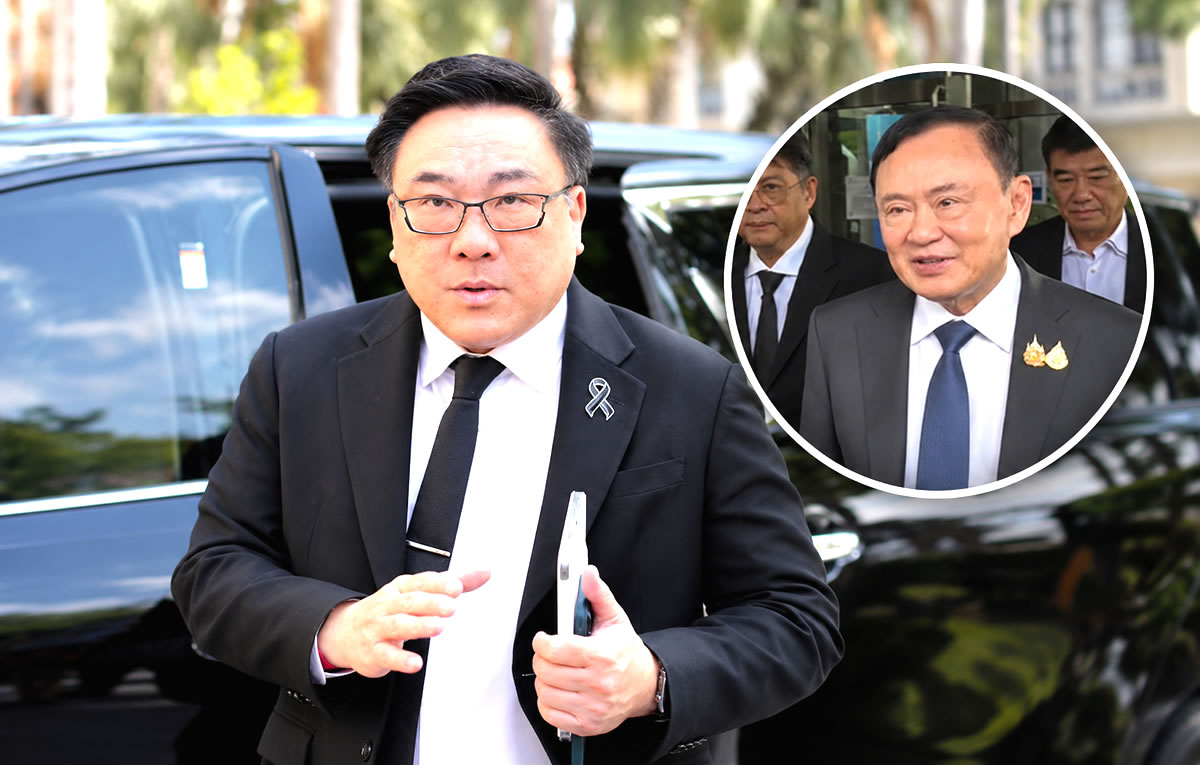
Pheu Thai Party leader Julapun Amornvivat on Sunday categorically denied a secret political bargain to secure amnesty for Thaksin Shinawatra. The alleged deal would exchange Pheu Thai’s 74 parliamentary votes for favourable treatment of the former prime minister’s criminal cases.
However, Democrat Party leader Abhisit Vejjajiva warned that his party would investigate any improper intervention. Meanwhile, senior People’s Party figures questioned the reports but rejected political interference in the amnesty process.
The controversy comes ahead of December’s no-confidence debate against Prime Minister Anutin Charnvirakul. Notably, Thaksin himself has not been identified as publicly denying the allegations.
Julapun denies secret Thaksin amnesty bargain and insists Pheu Thai needs no deal to support Anutin
Speaking at the Udon Thani International Horticultural Expo on Sunday, November 1, Julapun rejected the reported negotiations. The Labour Minister denied both secret and openly discussed arrangements between Pheu Thai and Bhumjaithai.
Furthermore, he insisted that the two parties were already coalition partners. No special agreement was needed to secure parliamentary cooperation, he argued. Julapun also maintained that the government remained stable despite mounting speculation over December’s confidence vote.
According to Julapun, neither he nor Prime Minister Anutin Charnvirakul had discussed an arrangement involving Thaksin’s amnesty. Their conversations had concerned government business, he explained.
Separately, he stressed that the former prime minister’s application was a legal matter for the responsible committee. Julapun denied government involvement in determining its outcome. He also rejected suggestions that coalition changes were being negotiated alongside the controversy.
Any decision about admitting additional parties into government would rest with Anutin, Julapun said. Accordingly, he dismissed suggestions that Pheu Thai was seeking concessions to guarantee parliamentary support. His remarks represented the strongest government-side denial since the allegations surfaced on Friday. However, the Pheu Thai leader’s statement was not a personal denial from Thaksin, whose application remains under examination.
Reports link Thaksin amnesty bid to 74 Pheu Thai votes in December’s planned no-confidence debate
The controversy intensified following reports published on Friday, October 30. These alleged that Thaksin was seeking support from government figures and members of the amnesty committee. In exchange, Pheu Thai’s 74 MPs would allegedly back Anutin and his ministers during December’s no-confidence debate.
The reports specifically identified 18 government office-holders who could benefit from that parliamentary support. However, no documentary evidence establishing such an agreement has emerged.
The alleged negotiations were linked to the expected no-confidence debate between December 7 and 11. As a result, the reports concerned a specific parliamentary confrontation rather than ordinary coalition cooperation.
They suggested that Thaksin’s application could receive favourable consideration in return for Pheu Thai’s votes. Nevertheless, the existence of such an arrangement remains unsubstantiated, despite the political attention surrounding the claims.
The speculation also involved Kla Tham Party leader Captain Thamanat Prompow, whose party reportedly controls 58 parliamentary seats. However, reports suggested that Thamanat was not interested in the proposed arrangement.
No confirmed agreement involving him has emerged. Similarly, no evidence has established that Pheu Thai offered its parliamentary votes in exchange for amnesty. Even so, the allegations have prompted responses from senior politicians across the government and opposition.
Abhisit questions legal basis for Thaksin amnesty and warns committee members against misconduct
On Sunday, Democrat Party leader and former Prime Minister Abhisit Vejjajiva issued a direct warning over Thaksin’s application. Speaking to reporters, he questioned whether the former prime minister’s previous cases qualified under the new amnesty legislation.
Abhisit argued that Parliament had enacted the Peaceful Society Promotion Act 2026 principally to protect participants in political demonstrations. Therefore, he saw no obvious justification for extending its protection to Thaksin’s previous criminal proceedings.
Abhisit acknowledged that the Committee on Promoting a Peaceful Society was responsible for determining eligibility. However, he insisted that its decisions must comply with the legislation. He also warned that committee members could face consequences if they disregarded the law’s requirements. His intervention raised questions about the legal scope of the amnesty process and the conduct of officials examining applications.
Asked about reports of negotiations between Pheu Thai and Bhumjaithai, Abhisit said he did not know whether they were accurate. Nonetheless, he recognised that politicians facing outstanding legal difficulties might seek protection under the legislation.
He also rejected suggestions that the controversy would influence the opposition’s parliamentary responsibilities. The reported negotiations concerned coalition parties rather than the opposition, he explained.
Democrats promise investigation as Nattapong questions need for parliamentary bargaining over amnesty
In response, Abhisit confirmed that the Democrat Party would investigate any improper conduct if evidence emerged. His warning followed two days of speculation involving the government, opposition leaders and Thaksin’s legal representatives.
The allegations concern both the interpretation of the amnesty legislation and the government’s parliamentary position. Still, Abhisit stopped short of claiming that a political agreement had been established.
The Democrat leader’s objections centre on the distinction between political protest cases and proceedings involving public office. He maintains that the legislation was principally intended to protect people prosecuted over political demonstrations.
Thaksin’s application, by contrast, concerns four previous cases involving his period in government and subsequent legal proceedings. Consequently, the committee must determine whether those cases qualify under the law or fall within its exclusions.
Meanwhile, People’s Party leader Nattapong Ruangpanyawut questioned the alleged negotiations on Saturday, October 31. Speaking to reporters beside Vibhavadi Road, he stressed that Parliament had already approved the amnesty legislation.
Thaksin therefore possessed the legal right to submit an application without negotiating parliamentary support. Nattapong said he could see no reason for political bargaining when the former prime minister could already exercise that right.
Nattapong rejects interference while Rangsiman urges caution over rumours of a secret political deal
Yet Nattapong distinguished between making an application and attempting to influence the committee’s decision. The former was permitted under the legislation. The latter, he warned, would constitute unacceptable political interference.
Asked about reports involving Pheu Thai’s support for 18 Bhumjaithai ministers, Nattapong rejected any such arrangement. In addition, he warned that both he and the public would condemn attempts to manipulate the process.
Nattapong did not argue that Thaksin should automatically be excluded from consideration. Instead, he insisted that the application must be assessed according to the law and the merits of the cases. His comments placed responsibility for determining eligibility with the committee established under the legislation. On that basis, he rejected the suggestion that parliamentary bargaining was necessary to secure a lawful decision.
People’s Party deputy leader Rangsiman Rome also addressed the controversy on October 31. Rangsiman acknowledged hearing the reports but warned against treating political rumours as established facts. He said the available information was insufficient to determine whether Pheu Thai and Bhumjaithai had reached any agreement. Even so, he suggested that negotiations could become more attractive if opposition scrutiny exposed serious government weaknesses.
Rangsiman vows parliamentary scrutiny as Thaksin’s October amnesty application faces legal obstacles
Rangsiman also referred to information reaching opposition politicians from sources within political circles. However, he declined to identify any party as responsible for circulating the allegations concerning Thaksin.
He insisted that the People’s Party would continue examining the government’s conduct regardless of negotiations elsewhere. In particular, he identified allegations concerning collusion in Senate elections as an issue requiring parliamentary scrutiny.
The People’s Party deputy leader said opposition MPs intended to pursue those allegations during their examination of the government’s record. Moreover, he argued that politicians should assess the evidence and vote in the national interest.
He also warned against allowing political bargaining to prevent accountability where serious wrongdoing had been established. Despite those warnings, his remarks stopped short of confirming any agreement involving Thaksin or Pheu Thai.
The political controversy follows Thaksin’s formal application for amnesty on October 8. His lawyer, Winyat Chatmontree, submitted the request and publicly confirmed it on October 12. The application seeks consideration under the Peaceful Society Promotion Act 2026.
The legislation was introduced to address legal consequences arising from Thailand’s prolonged political conflicts. However, its provisions contain specific exclusions that could prevent Thaksin from obtaining relief.
Thaksin seeks relief in four major cases but corruption exclusions threaten his bid for political amnesty
Thaksin’s lawyers argue that previous proceedings against him were politically motivated, particularly following the September 2006 military coup. The application concerns four principal cases arising from his earlier period in power and subsequent legal proceedings.
One involves the confiscation of approximately ฿46.373 billion in assets. Another concerns a government-backed loan arranged through the Export-Import Bank. The remaining matters involve the two- and three-digit lottery scheme and telecommunications and satellite concession arrangements.
His legal representatives maintain that these proceedings cannot be separated from the political conflict surrounding his removal from office. Winyat has also said Thaksin wants to clear his name and live peacefully outside politics.
By contrast, the legislation excludes corruption and misconduct, serious offences against the monarchy, and offences causing death or grievous bodily harm. The classification of Thaksin’s previous cases is therefore central to the application.
His lawyers seek consideration of the political circumstances surrounding the proceedings. Critics, however, argue that the nature of the offences places them outside the legislation’s protection. The distinction is central to Abhisit’s objections and the committee’s examination.
Specifically, the law’s exclusions concerning corruption and misconduct present potential obstacles to Thaksin’s application. No final ruling on his eligibility has been announced.
Screening committee examines Thaksin cases as reports reveal objections over corruption exclusions
The application is currently being examined by a screening subcommittee chaired by Justice Ministry Permanent Secretary Piyasiri Watthanawarangkun. Its findings will subsequently be considered by the full Committee on Promoting a Peaceful Society.
That committee is chaired by Deputy Prime Minister Pakorn Nilprapunt. Under the legislation, the committee has an initial 180-day period to complete its work. Extensions are also permitted. Submitting an application, however, does not guarantee amnesty.
A further development emerged on Sunday when local media sources reported concerns within the committee itself. According to the report, a committee member had informally communicated objections concerning Thaksin’s eligibility to Prime Minister Anutin.
The member reportedly considered all four cases ineligible for amnesty. The objection centred on their connection to corruption and misconduct involving the exercise of public office.
The report also referred to Section 7 of the legislation, described as principally protecting participants in political demonstrations. Under that interpretation, Thaksin’s previous cases would fall outside the intended protection.
The report additionally identified legal obstacles concerning the asset confiscation proceedings. However, the reported communication was informal and did not constitute an official committee ruling. No final determination has been announced.
Committee objections echo Abhisit’s warning as PM prepares ministers for December confidence debate
Notably, the reported objections closely reflect the legal questions raised publicly by Abhisit. Both concern whether the legislation can cover cases involving a former prime minister’s conduct while holding office.
The issue is separate from the allegations of parliamentary bargaining. Even without any political agreement, Thaksin’s application must satisfy the legislation’s eligibility requirements. The committee’s legal examination consequently remains central to the controversy.
On another front, Prime Minister Anutin has rejected suggestions that his administration intends to avoid parliamentary scrutiny. Speaking on October 31, he maintained that ministers were ready to answer questions during a no-confidence debate.
Anutin also disclosed that he had previously instructed Cabinet members not to travel during the expected proceedings. However, disagreements over scheduling had prevented the debate from taking place earlier.
The prime minister insisted that government business and national interests must take precedence over political confrontation. He also expressed confidence in the stability of his administration. The debate is expected between December 7 and 11.
The reported amnesty arrangement specifically concerns parliamentary support for Anutin and 18 government office-holders during those proceedings. Yet no verified evidence has established that Anutin agreed to influence Thaksin’s application.
No evidence establishes a secret amnesty deal as opposition prepares to challenge Anutin’s government
Nor has any confirmed agreement emerged involving government ministers, Pheu Thai’s MPs or members of the amnesty committee. The alleged bargain remains unsubstantiated despite the attention it has attracted. Pheu Thai’s 74 MPs nevertheless represent a substantial parliamentary bloc.
Their votes could affect government voting strength during a confidence challenge. Julapun, however, insists that cooperation between the coalition partners requires no separate arrangement.
Separately, reports involving Thamanat and Kla Tham have not established their participation in negotiations. The opposition has maintained its intention to proceed with parliamentary scrutiny.
Rangsiman has specifically identified the Senate election collusion allegations as a matter requiring examination. Nattapong has rejected interference in the amnesty process. Abhisit has promised an investigation if improper conduct is established. None of those statements, however, confirms that the alleged political agreement exists.
Thaksin has made no reported personal denial while Pheu Thai rejects claims of an amnesty bargain
Another unresolved issue concerns Thaksin’s personal response to the reports. As of Monday morning, November 2, the available reporting has not identified a direct public denial from the former prime minister.
His party leader has categorically rejected the allegations. Thaksin himself, however, has not been identified as personally addressing the reported parliamentary bargain. His lawyer has explained the legal grounds for seeking amnesty, but those explanations preceded the latest allegations.
There is also no established evidence that Thaksin has deliberately refused to answer questions about the reports. The absence of a reported personal denial does not establish that any agreement was reached. Nonetheless, the distinction remains clear.
Pheu Thai has denied the alleged arrangement, while Thaksin’s personal response remains unreported. In parallel, the committee’s examination of his application continues as the only confirmed formal process concerning his eligibility.
Abhisit’s intervention has added a warning concerning the conduct of committee members. He has made clear that the Democrat Party will investigate improper action if evidence emerges.
Amnesty ruling remains pending as opposition presses ahead with scrutiny of Anutin’s coalition government
Nattapong has insisted that Thaksin’s application should be considered on its legal merits. Rangsiman has questioned the reliability of the rumours while confirming that opposition scrutiny will continue. Julapun has denied negotiations and maintained that the government remains stable.
Anutin, for his part, has insisted that his ministers are ready for December’s parliamentary confrontation. The immediate legal question remains whether Thaksin’s four previous cases qualify under the Peaceful Society Promotion Act.
Thaksin era minister reflects on Thailand’s 2006 coup d’état. Calls for a democracy dedicated to people
Six political prisoners released early by 2026 Royal Amnesty as rights group highlights 55 still held in prison
The screening subcommittee must examine the application before the full committee considers its findings. At the same time, the government faces the expected no-confidence debate, with opposition MPs preparing to challenge its record.
The reported connection between those two processes remains unproven. No official decision granting Thaksin amnesty has been announced. Equally, no verified agreement involving Pheu Thai’s parliamentary votes has emerged.
For now, Thaksin’s application remains under examination, while Abhisit has warned that any improper intervention will face Democrat Party scrutiny. The government also faces December’s confidence debate amid continued opposition scrutiny and Pheu Thai’s categorical denial of a political bargain.
Join the Thai News forum, follow Thai Examiner on Facebook here
Follow Thai Examiner on Google here
Receive all our stories as they come out on Telegram here
Follow Thai Examiner here
Further reading:
Thammasat University legal scholar and 1992 protest leader warns another coup cannot be ruled out