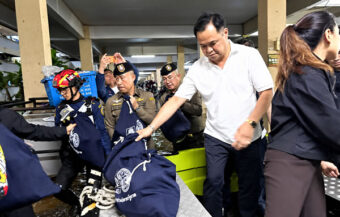
Foreign ownership crackdown grips Phuket as 361 firms face checks and officials probe naturalised Thai shareholders. More than 100 companies with ฿5 billion in revenue face financial tracing after eight raids led to 16 Thai and foreign prosecutions.
Thailand has widened its foreign nominee crackdown to 361 companies amid concerns that naturalised citizenship may be concealing foreign control. More than 100 Phuket firms earning over ฿5 billion face financial tracing after raids led to 16 prosecutions. The expanding inquiry now covers shareholders, bank records, land, citizenship approvals and Chabad-linked businesses in Patong. Meanwhile, the government is considering changes to investment and naturalisation laws as similar structures surface across major tourist centres.
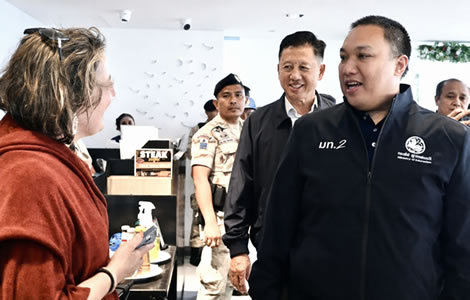
Thai officials are investigating whether naturalised citizenship is being used to conceal foreign control of businesses in Phuket. The Interior Ministry has ordered financial checks on more than 100 companies operating across the island. Together, those firms generated revenue exceeding ฿5 billion last year. In parallel, government records have identified 361 companies nationwide for closer examination.
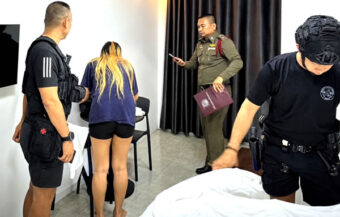
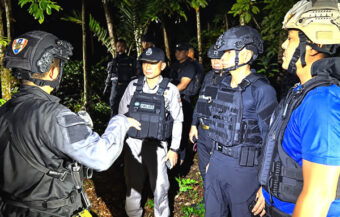
The inquiry follows a coordinated police operation launched in Phuket on August 6. Officers searched eight locations and prosecuted 16 people. They comprised 10 Thais, two Canadians, three Russians and one Kazakhstani. Since then, the investigation has moved beyond those initial cases.
The targeted operations spanned several industries with substantial foreign participation. They included vehicle rentals, car washes, restaurants and traditional medicine pharmacies. Language schools, international schools, electronics shops and information technology companies were also covered. More importantly, officials are now examining the people controlling those businesses.
Naturalised Thai shareholders now face checks over foreign capital and control of Phuket businesses
Deputy Interior Minister Polpeerapong Suwannachawi said investigators had uncovered a potentially significant ownership pattern. It involves foreign-born people who recently obtained Thai citizenship and Thai identity cards. Their company shares consequently count as Thai holdings. Yet officials suspect some structures may conceal foreign capital and control.
“This could be a new form of security threat gradually impacting economic resources and sovereignty,” Mr Polpeerapong said. He spoke following an inspection of Chabad House in Patong. Despite that setting, the inquiry reaches far beyond the building and its connected operations. It covers hundreds of firms in Phuket and other provinces.
Notably, Mr Polpeerapong identified three directors and shareholders of The Kosher Place (Thailand) Company Limited. The business operates in Patong with registered capital of ฿30 million. Its headquarters are registered on Sukhumvit Road, while the company operates 10 branches. All three shareholders hold Thai identity cards but were born outside Thailand.
Two of those shareholders became naturalised Thai citizens on November 21, 2017. As part of this, officials are checking whether they invested their own money. Investigators also want to establish whether they exercise genuine ownership rights. Alternatively, the registered holdings could represent foreign capital and commercial interests.
Financial inquiry now traces capital behind 361 firms as Phuket companies report ฿5 billion revenue
The financial inquiry will determine who supplied the company’s founding capital. It will also trace later investment and operating funds. In addition, investigators will identify who controls company accounts and directs commercial decisions. Those findings will be compared with the registered ownership structure.
Records from three government bodies produced the wider list of 361 companies. The information came from the Department of Lands, the Interior Ministry and the Commerce Ministry. Separately, the Interior Ministry ordered financial tracing involving more than 100 Phuket businesses. Those companies reported combined revenue exceeding ฿5 billion last year.
Investigators will examine bank statements and the original source of registered capital. They will verify shareholder identities and inspect registered business premises. Furthermore, officials will determine whether each address is a genuine operating location. Paper ownership alone will not settle those questions.
On another front, the review has moved into the citizenship histories of several shareholders. Officials will examine their applications, supporting documents and personal backgrounds. They will also review how each application passed through the approval process. The inquiry will establish whether every decision followed the required procedures.
Central government controls citizenship reviews as Phuket officials investigate company ownership
Naturalised citizenship gives the case an important additional dimension. A naturalised citizen holding a Thai identity card is legally Thai. Accordingly, that person’s company shares are classified as Thai-owned. Investigators are asking whether this status has helped bypass foreign ownership restrictions.
Still, provincial officials cannot review or cancel citizenship themselves. That responsibility belongs to the central government under the Nationality Act of 1965. The Department of Provincial Administration also handles citizenship matters. As a result, Phuket officials must refer those questions to the responsible central agencies.
Phuket Governor Chotinrin has drawn a firm distinction between the two inquiries. Provincial officials can investigate suspected nominees, companies, shareholders and business premises. By contrast, they cannot reopen citizenship decisions or reassess naturalisation approvals. Their powers cover only the business and ownership investigation.
“We are acting within our authority,” Governor Chotinrin said. “Anything outside our jurisdiction must be referred to the central government or the relevant authorities.” At the same time, he said every investigation must follow legal procedures. Cases cannot rest solely on accusations, suspicions or tip-offs.
Nominee checks spread beyond Phuket as Chabad House fundraising and land ownership face scrutiny
Even so, Phuket officials hold a list of people and companies requiring further investigation. Site inspections are continuing across the province. Investigators are matching company documents against financial records and actual operations. They are also testing whether declared shareholders exercise real control.
Mr Polpeerapong said suspected nominee arrangements had appeared far beyond Phuket. He identified Bangkok, Koh Samui, Koh Pha-ngan, Pai and Chiang Mai. Against that backdrop, the government is considering changes to investment and naturalisation laws. The review will examine whether existing provisions contain exploitable gaps.
The Chabad House inspection took place on July 26. Officials visited the five-storey premises on Rath-U-Thit 200 Pi Road in Patong. During the visit, they examined fundraising, land ownership and the business structure behind the building. They also confirmed that Jewish religious ceremonies take place there.
Officials found a donation box inside the premises. Following that discovery, they began checking whether collecting donations required official permission. The review falls under the Fundraising Control Act of 1944. No finding has been announced concerning the box.
Chabad rejects claims of special status as questions now grow over security at its Patong premises
Questions also arose about security and restricted access to the property. Mr Polpeerapong asked why entry to the five-storey building was controlled. In his view, a religious site should remain accessible regardless of a visitor’s faith. Chabad House administrators disputed his description of the restrictions.
During an earlier visit, Mr Polpeerapong addressed another contested issue. He said a local person had described Chabad House as “Israeli territory”. In response, he rejected suggestions that the property enjoyed extraterritorial status. He said every part of the premises remained subject to Thai law.
“Chabad is not extraterritorial,” Mr Polpeerapong said. “It’s Thai territory that must be managed by Thai law.” Nevertheless, The Phuket News said it had seen no video confirming the reported remark. A large group of Thai journalists filmed the visit from numerous angles.
Patcharee Channatho, a Thai national associated with Chabad House Phuket, defended the building’s security controls. She said they did not represent a claim to special legal status. Likewise, she denied that the arrangements excluded Thai visitors. She compared them with security procedures commonly used by hotels.
Chabad defends Israeli investment and plans an open house amid scrutiny of its business structure
Visitors generally need a reason to enter a hotel, Ms Patcharee said. They may also be required to identify themselves before gaining access. On that basis, she rejected claims that Chabad regarded the property as Israeli territory. She said the security arrangements served a practical purpose.
Ms Patcharee also addressed the investigation involving The Kosher Place. She could not confirm whether its structure constituted a nominee arrangement. She did, however, acknowledge Israeli investment in the business. She described it as a family company supplying kosher food to Jewish visitors.
Moreover, Ms Patcharee rejected claims that The Kosher Place operated as a front. “Some of the suspicions and media coverage are greatly distorted,” she said. Despite her response, investigators continue examining the company’s shareholders and funding. They will also assess who exercises practical control over the operation.
Chabad House has faced additional scrutiny over its donations and charitable work. According to Ms Patcharee, donations to Patong Hospital were portrayed as an attempted takeover. She rejected that interpretation. Meanwhile, Chabad is considering opening its premises to journalists and the public.
Phuket enforcement drive targets hundreds of firms across six sectors following August police raids
Such an open house would allow visitors to inspect the building directly. It would also let Chabad administrators explain its activities. Regardless, the event would not replace the official inquiry. Police and government departments will continue examining the relevant records.
The Chabad examination forms one part of a much larger enforcement drive. Phuket has 32,024 registered legal entities with approximately ฿240.6 billion in registered capital. Of these, 11,078 are classified as foreign-owned. Another 6,682 businesses across six sectors have been flagged as high risk.
Police are reviewing 361 companies with the Phuket Provincial Land Office and its Thalang branch. So far, legal proceedings have been initiated against 114 companies. Beyond that, 31 suspected nominee cases have been prosecuted. Investigations and site inspections remain underway.
The August 6 operation marked a significant expansion of the Phuket campaign. Police targeted eight locations connected with businesses across several commercial sectors. These covered education, transport, food, retail, technology and traditional medicine. The searches then produced prosecutions involving 16 Thai and foreign nationals.
Foreign-backed companies face deeper checks as officials test funding, ownership and management
From now on, companies involving foreign investment face deeper documentary and physical checks. Officials will demand bank statements and evidence identifying the source of capital. They will inspect shareholder identities and registered premises. Crucially, investigators will compare declared ownership with actual management and financial control.
A nominee is a Thai person listed as an owner without making a genuine investment. Instead, a foreigner supplies the money and controls the company. Under the Foreign Business Act, such arrangements are illegal for both participants. For that reason, investigators must establish who provided the capital and exercised ownership rights.
Foreigners cannot hold majority stakes in many categories of Thai business. They are also generally prohibited from owning land. Consequently, some investors establish companies with a Thai shareholder majority. Officials must then decide whether those Thai shareholders are genuine investors.
A genuine shareholder should be able to explain the source of the investment. The person should also show evidence of paying for the shares. Equally, that shareholder should participate in company decisions or exercise genuine ownership rights. Failure to explain an investment can trigger closer examination.
Naturalised shareholders face closer examination as officials trace funding and business control
Naturalised citizens make the present cases more complex. Their shares are legally Thai because they hold Thai citizenship. In practice, this can satisfy the formal Thai ownership requirement. Investigators are now testing whether the underlying control matches those official records.
Beyond the company records, officials are examining how some shareholders obtained citizenship. Their paperwork, backgrounds and approval histories will be reviewed. In turn, those findings could determine whether other central departments must act. Phuket officials cannot make that decision themselves.
The inquiry does not change the rules for properly structured foreign-owned businesses. Even so, companies involving overseas capital now face sharper scrutiny across Phuket. They should expect questions about capital, bank records, shareholders and registered addresses. Officials may also inspect premises to confirm genuine business activity.
For Thai shareholders, the examination reaches beyond signatures on corporate documents. Investigators will seek evidence that each person paid for their shares. They will also examine whether each shareholder participates in the business. Ultimately, registered ownership must correspond with financial and operational control.
Officials link company, land and banking records as more than 100 Phuket firms face financial tracing
For foreign investors, the focus centres on control, money and beneficial ownership. Officials will examine who finances the company and receives its income. They will also identify who signs contracts and directs daily operations. Any mismatch with registered ownership could deepen the inquiry.
Across Phuket, the review links company registrations with land records and banking information. It also connects shareholder backgrounds with business premises and operating activity. In the wider investigation, officials are repeating that process across 361 companies. The work covers several major tourism and investment centres.
The Interior Ministry’s separate financial trace adds another layer. More than 100 Phuket companies fall within that review. Collectively, their annual revenue exceeds ฿5 billion. Investigators want to know where the capital originated and who ultimately controls it.
Hundreds of firms remain under review as government weighs changes to investment and citizenship laws
For now, hundreds of companies remain under official examination. The government is also considering whether investment and naturalisation laws need revision. At issue are the structures linking foreign money, Thai shareholdings and naturalised citizenship. Any legal changes will depend on the government’s review.
In the meantime, provincial investigators are continuing site visits and financial checks. Central departments will handle questions concerning citizenship approvals. Police will continue pursuing cases supported by evidence. The broader examination will compare declared ownership with the reality behind each company.
Raids in Pattaya on Friday led by two ministers targeting Israeli business networks and legal advisors
Crackdown in southern provinces against nominee and foreign owned enterprises intensifies. 48 arrested
Inclusion on an investigation list does not establish an offence. None of the claims involving these companies has been tested in court. Governor Chotinrin has stressed the need for evidence and lawful procedure. Chabad representatives have similarly rejected conclusions based on suspicions and disputed reports.
Join the Thai News forum, follow Thai Examiner on Facebook here
Receive all our stories as they come out on Telegram here
Follow Thai Examiner here
Further reading:
Frenchman’s Koh Samui business empire enmeshed in knotty police probe of nominee firms and pot farm
Drive against foreign owned property and business on Koh Samui and Koh Phangan now targets leases
International reservations system used by hotels targeted in latest Koh Phangan swoop by ministers
Anutin visits Koh Phangan as nominee crackdown shows 68% of firms with foreign ownership links
Blitzkrieg on foreign firms and enterprises on Koh Phangan continues with French owned resort busted
Russian-Chinese Koh Phangan alliance to sell drugs to foreigners. Accused entered Thailand illegally