Thailand’s island crackdown moves onto 30-year land leases as officials probe foreign control of businesses and property. Around 8,000 Koh Samui firms face scrutiny, 2,579 nominee cases are suspected and police are pursuing 101 arrest warrants.
Thailand’s crackdown on foreign business and property control is now moving decisively onto long-term land leases and the wider issue of foreign-controlled businesses. Investigators are probing 30-year leases used to secure effective property control, alongside nominee companies, land holdings and overseas rental payments. On Koh Samui, around 8,000 companies are under scrutiny, while 138 face urgent land action and another 2,579 are suspected nominee operations. Police are pursuing 101 warrants as the campaign widens across Koh Samui and Koh Phangan, reaching villas, hotels, advisers and business networks in Phuket and Bangkok.
Thailand’s crackdown on foreign-controlled businesses and property is widening sharply across Koh Samui and Koh Phangan. Investigators are no longer concentrating only on nominee shareholders. They are now examining land holdings, rental businesses, overseas payments and long-term leases. In particular, 30-year leases used by foreigners have emerged as a new focus.
The shift significantly expands a campaign that began about a year ago. Previously, enforcement centred heavily on Thai shareholders suspected of fronting foreign-controlled companies. Now, investigators are looking behind corporate paperwork to establish who controls businesses and property. They are also tracing where rental income ultimately goes.
On Koh Samui, the numbers are substantial. The island has approximately 12,000 registered legal entities, with around 8,000 now under scrutiny. Land Department records show that 3,892 companies own land in Koh Samui district.
Koh Samui probe flags 138 illegal landholders as Phase 7 crackdown targets thousands of other firms
Of these, 138 have been identified as holding land illegally or having excessive foreign shareholdings. Another 2,579 companies are suspected of nominee land ownership.
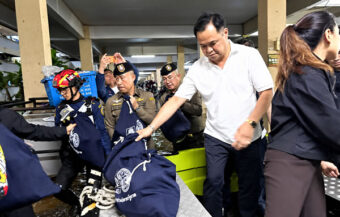
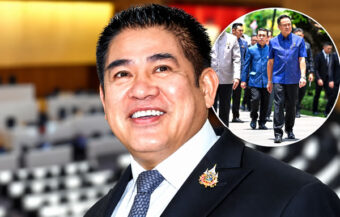
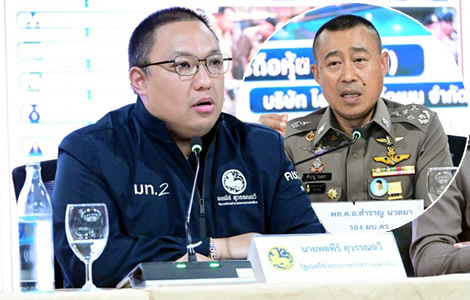
Against that backdrop, the government launched Phase 7 of its Koh Samui operation on August 15. Deputy Interior Minister Polpeera Suwannachawi led the operation at the College of Interdisciplinary Studies. Deputy National Police Commissioner Pol Gen Samran Nawalma joined him. Surat Thani Governor Jumphot Wannachatsiri was also present.
Alongside them were senior police, provincial and business regulation officials. They included Department of Provincial Administration Deputy Director-General Ronnarong Thipsiri. Department of Business Development Deputy Director-General M.L. Phuthong Thongyai also participated. Assistant National Police Commissioner Pol Lt Gen Surapong Thanomjit joined the operation. Pol Lt Gen Nophasil Phoolsawat also attended from the Office of the National Police Commissioner.
Notably, officials described the latest operation as part of an integrated national policy. It brings together the Interior Ministry, Royal Thai Police and business regulators. The stated target is illegal foreign control through nominee structures and prohibited land holdings. However, investigators are increasingly looking beyond formal ownership.
Deputy Interior Minister Polpeera described the Koh Samui figures as alarming. He ordered immediate action against the 138 companies already verified by the Department of Business Development. Officials said these companies clearly breached land ownership or foreign shareholding requirements. The provincial committee must now move their cases forward for enforcement.
Officials order land sales as 30-year leases emerge as a new route around foreign ownership rules
As part of this, land held illegally must be disposed of through the applicable legal process. Provincial officials were told to accelerate those proceedings. The government is therefore moving from investigation into enforcement against companies already identified. Thousands of other companies remain under examination.
In parallel, Polpeera ordered deeper checks on more than 2,000 suspected companies. The Surat Thani Governor, Land Department and Provincial Commerce Office must coordinate the work. Investigators will examine shareholders, directors, company structures and individual land holdings. Cases establishing legal breaches will proceed to enforcement.
Yet the investigation has now uncovered another method attracting official attention. Officials said conversations with foreigners revealed increased reliance on long-term leases. Some foreigners were using 30-year agreements instead of buying land directly. Investigators are examining whether those arrangements circumvent restrictions on foreign land ownership.
That development broadens the inquiry considerably. A foreigner does not need to appear as a registered landowner under such an arrangement. Instead, a long lease can provide control over the property for decades. Officials are therefore examining the practical control created by particular lease structures.
Israeli-linked network, overseas rental payments and professional advisers enter wider investigation
Separately, one investigation involves a network connected with an Israeli national. Officials said arrest warrants had been issued as part of that inquiry. Investigators found that a company held land connected with the operation. Properties in a village were also being rented through suspected nominee companies.
The money trail has added another dimension. Some rental payments were reportedly made in cash after foreign customers arrived. Other payments went directly into overseas bank accounts. Officials said the arrangements indicated deliberate illegal business activity on Koh Samui. Financial flows are therefore being examined alongside company ownership and land records.
On another front, police are examining the advisers behind suspect company structures. Pol Gen Samran said enforcement would cover those assisting, advising or supporting offenders. That includes law firms and accounting businesses where evidence establishes involvement. The investigation consequently extends beyond foreign investors and their Thai shareholders.
Pol Gen Samran said lawyers and accountants should guide clients towards compliance with Thai law. Investigators will examine professional assistance where illegal structures are uncovered. This adds another layer to the crackdown. Company advisers can now become part of the investigation surrounding a suspect business.
Police pursue 101 warrants as assets remain exposed and Prime Minister backs full nominee crackdown
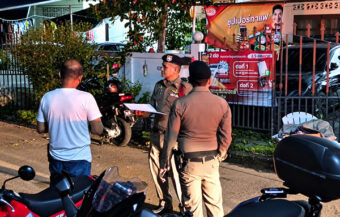
Meanwhile, the Surat Thani Provincial Police Commander reported that 187 cases have already been concluded. Police are also working through a large number of arrest warrants. Pol Gen Samran referred to 101 warrants available in the area. So far, officers have executed 27 warrants.
In some cases, foreign suspects leave Thailand before officers can arrest them. Even so, Pol Gen Samran stressed that their assets remain inside Thailand. Land and other property can therefore remain subject to legal proceedings. A suspect’s departure does not remove the assets from the investigation.
Under the process described by Pol Gen Samran, relevant assets must be returned to their rightful owners. Where required, a public auction can run for 180 days. Embassies can subsequently be contacted where money must legally be returned. Assets can ultimately revert to the state under the applicable procedure.
At the same time, Pol Gen Samran stressed that legal rights would be respected. However, he left no doubt about the land enforcement objective. He said officials were reclaiming land belonging to Thailand. The operation would continue against holdings found to breach Thai law.
The campaign also has direct backing from Prime Minister Anutin Charnvirakul. Pol Gen Samran said he had reported the Phase 7 operation to the Prime Minister. According to him, Mr Anutin gave clear instructions to eradicate illegal nominee arrangements completely. That instruction now sits behind the expanding Koh Samui operation.
Police stress lawful foreign investment remains welcome as Surat Thani sets 90-day enforcement push
Nevertheless, Pol Gen Samran stressed that enforcement was not aimed at foreigners generally. Suspects involved in the cases come from several nationalities. Accordingly, he declined to identify one nationality as the principal target. He also stressed that police remain responsible for protecting foreign visitors.
As an example, he cited the recent assault of a Japanese national in Bangkok. Police arrested and prosecuted five Thai suspects involved in that case. His point was that police operations cut both ways. Foreigners breaking Thai laws face action, while foreign visitors also receive police protection.
More broadly, he said Thailand continues to support lawful investment and tourism. Companies operating legally are not targets of the campaign. Police Region 8 has meanwhile become a model for investigating nominee cases. Its work is now feeding into the broader enforcement effort.
Surat Thani officials have also been given a tight timetable. Governor Jumphot told the Deputy Interior Minister that action on more than 180 nominee cases would proceed during August. He also promised progress on approximately 2,500 remaining cases within 90 days. That timetable would dramatically expand the volume of cases being processed.
Business Development Department deploys specialist team as resort ownership links draw closer scrutiny
For its part, the Department of Business Development has deployed its own specialist team. Director-General Poonpong Naiyanapakorn assigned Deputy Director-General M.L. Phuthong Thongyai to the integrated operation. The department’s nominee suppression team is also involved. Officers come from the Division for Prevention and Suppression of Illegal Businesses.
During the latest operation, officials concentrated on four specific targets. The first was a large resort hotel occupying more than 25 rai. Investigators questioned a Thai director about its business operations and investment structure. However, officials said the director could not fully explain either.
Further checks found that the Thai director held shares in several companies. Foreign investors were also involved in those businesses. Investigators then found the same person held directorships and shares across several other companies. Those links prompted further examination of the corporate network.
The pattern is important to the nominee investigation. Officials are checking whether Thai shareholders are genuine investors with real business roles. They are also examining whether shareholdings conceal foreign control. Multiple directorships and shareholdings are therefore receiving closer attention where other concerns exist.
Villa payments and cannabis outlets widen probe across Koh Samui, Koh Phangan, Phuket and Bangkok
A second target involved a villa rented to foreign tourists. Israeli visitors staying there told investigators they paid tens of thousands of baht nightly. Significantly, they had made their payments online before arriving in Thailand. The money was not paid upfront in Thai baht after arrival.
Officials said those arrangements may have tax implications. Consequently, the payment structure is now subject to further investigation. Company checks also found Thai nationals holding directorships and shares across several businesses. Investigators are examining whether those positions represent genuine investment and management roles.
A third target involved cannabis retail outlets operated by companies with foreign shareholders. The business had four branches covering Koh Phangan, Koh Samui, Phuket and Bangkok. Thus, one investigation already reaches well beyond the two Surat Thani islands. Officials also examined the company’s cannabis-related sales.
The outlets sold controlled herbal prescriptions, known as Form 33, for ฿300 each. They also offered a range of cannabis-related products. A recent financial statement examination showed revenue reaching approximately ฿15 million. Thai shareholders again held positions in several companies.
Those relationships have raised further questions for investigators. Officials will now examine the shareholders and underlying company structures. The geographic reach is also significant. The company links businesses on Koh Phangan and Koh Samui with operations in Phuket and Bangkok.
Luxury villa and 104 entities holding 124 plots face deeper checks and possible enforced land sales
The fourth target was a luxury hillside villa. The property was closed when officials arrived. Nobody was available to explain its ownership or business operations. Even so, investigators established that the land title was issued in an individual’s name. Further checks will examine both ownership and connected business arrangements.
Taken together, the four targets show the widening range of the operation. Officials inspected a resort, rental villa, cannabis business and luxury hillside property. Each raised different questions involving ownership, payments, shareholders or land. The campaign is therefore moving across several commercial sectors simultaneously.
The broader Surat Thani figures are larger still. The province currently has 25,603 registered legal entities. Within that total, 104 legal entities holding 124 land plots face specific action. Deputy Interior Minister Polpeera instructed the Land Department to proceed through the provincial governor’s powers.
In response, proceedings are to be convened for land sales where violations are established. The Department of Business Development will simultaneously investigate suspected nominee structures behind those entities. Corporate and land enforcement are consequently being pursued together. That marks a broader approach than checking company share registers alone.
Crackdown expands from nominee shareholders to leases, overseas payments and effective property control
The campaign now has several distinct fronts. Thai shareholders suspected of acting as nominees face investigation. Companies holding land in breach of foreign ownership rules face separate enforcement. Foreign suspects and Thai associates can also face criminal proceedings.
Beyond that, lawyers and accountants can be investigated for assisting unlawful arrangements. Rental income and overseas payments are being traced. International online payments are also attracting scrutiny. Now, long-term property leases have added another major element.
The 30-year lease issue is particularly important to the latest expansion. Officials say the practice emerged during conversations with foreigners on Koh Samui. Instead of buying land directly, some foreigners reportedly turned to long leases. Investigators are now examining whether particular arrangements circumvent Thai ownership restrictions.
Previously, nominee company structures were the central concern. Now, effective property control is also becoming part of the inquiry. That brings lease agreements directly into the enforcement picture. It also widens scrutiny beyond land titles registered to companies or individuals.
At the same time, international booking and payment arrangements are receiving greater attention. The inspected villa produced evidence of online payments made before tourists reached Thailand. Elsewhere, investigators found rental payments transferred to overseas accounts. Cash payments on arrival were also identified.
Police follow ownership, income and overseas payments as nominee penalties reach three years jail
As a result, investigators are increasingly following the entire commercial chain. They can examine who owns the land and who holds company shares. They can also establish who manages the property and receives the income. Overseas payment flows add another source of information.
The Department of Business Development has separately set out the criminal penalties involved. Director-General Poonpong said Thai nominees can face prosecution under Section 36 of the Foreign Business Act B.E. 2542. The provision covers Thais facilitating prohibited foreign business activity.
It also applies to those accepting money or benefits to conceal foreign control. Offenders face imprisonment for up to three years. Alternatively, courts can impose fines between ฿100,000 and ฿1 million. Both imprisonment and fines can also be imposed.
Foreigners illegally conducting restricted businesses face equivalent penalties under Section 37. The department is therefore targeting both foreign operators and Thai nominees. Its investigations run alongside police and land enforcement work. Each agency is examining a different part of the same structures.
Poonpong also addressed foreign entrepreneurs operating legally in Thailand. “In the past, many foreigners have invested in or conducted business in Thailand legally,” he said.
“I would like to urge foreign entrepreneurs who intend to do business in Thailand, or those providing investment advice, to comply with the law. The Department is ready to facilitate this.”
Poonpong warns Thai nominees as thousands of companies, plots and financial links under scrutiny
He also directed a warning towards Thais involved in nominee arrangements. “I would also like to urge Thais who are assisting or supporting foreigners in committing illegal acts through nominees to cease such behaviour and prioritise the benefit of the nation,” Mr Poonpong said.
By the numbers, the enforcement operation is already extensive. Koh Samui has approximately 12,000 legal entities, with around 8,000 under suspicion. Land Department records show 3,892 companies owning land in the district. Among them, 138 have already been identified for urgent action.
Beyond those cases, another 2,579 companies are suspected of nominee land holdings. Across Surat Thani, 104 legal entities controlling 124 plots face additional proceedings. Police have concluded 187 cases. Officers have also executed 27 warrants from the larger group under investigation.
The investigation is now connecting those figures with actual business operations. Officials are examining hotels, villas, cannabis outlets and other foreign-linked businesses. They are checking shareholders and directors across multiple companies. Land titles and rental arrangements are also being examined.
At the financial level, investigators are following cash, online payments and overseas bank transfers. After that, at the property level, they are scrutinising direct ownership and long leases. At the corporate level, they are checking nominee shareholders and foreign control. Professional advisers form another investigative layer.
Phase 7 combines land, corporate and financial probes as enforcement reaches beyond Surat Thani islands
This makes Phase 7 considerably broader than a simple nominee-company sweep. The operation now combines corporate, criminal, financial and land investigations. Moreover, the examination of 30-year leases extends scrutiny into another widely used property arrangement.
Koh Samui and Koh Phangan have attracted foreign entrepreneurs and investors for decades. Villas, hotels, resorts and tourism businesses are prominent across both islands. The latest campaign is now examining the structures behind many foreign-linked operations. Its reach can also extend beyond Surat Thani.
One targeted cannabis business, for example, operates across four major locations. Its branches cover Koh Phangan, Koh Samui, Phuket and Bangkok. Corporate investigations originating on the islands can therefore uncover links elsewhere. The operation is no longer confined to individual properties or isolated companies.
Within Koh Samui, officials have already reached Phase 7. They have also promised action involving approximately 2,500 remaining cases within 90 days. Police continue executing warrants while land officials examine company holdings. Business regulators are simultaneously investigating nominee arrangements.
Land sales, villa rentals and 30-year leases move to centre of widening foreign ownership crackdown
Alongside those efforts, provincial officials are preparing proceedings involving land sales. Investigators are scrutinising villa rentals and overseas payment arrangements. They are also examining advisers connected with suspect companies. Most recently, 30-year leases have moved firmly onto the agenda.
The campaign has therefore expanded well beyond its original nominee-shareholder focus. It now reaches land ownership, company control, leasing structures and rental income. Payment routes and professional assistance are also under scrutiny. Thousands of companies remain inside the investigative net.
International reservations system used by hotels targeted in latest Koh Phangan swoop by ministers
Koh Phangan crackdown continues as Thai officials send a message. Illegal investors are not wanted
For companies operating lawfully, officials say foreign investment remains supported. For illegal nominee arrangements, however, the government has ordered continued enforcement. The same applies to prohibited land holdings already identified by investigators. Now, long-term leases used to secure effective property control face scrutiny as well.
Join the Thai News forum, follow Thai Examiner on Facebook here
Follow Thai Examiner on Google here
Receive all our stories as they come out on Telegram here
Follow Thai Examiner here
Further reading:
International reservations system used by hotels targeted in latest Koh Phangan swoop by ministers
Anutin visits Koh Phangan as nominee crackdown shows 68% of firms with foreign ownership links
Blitzkrieg on foreign firms and enterprises on Koh Phangan continues with French owned resort busted
Russian-Chinese Koh Phangan alliance to sell drugs to foreigners. Accused entered Thailand illegally
Crackdown aimed at upending foreign business trade moves from Koh Phangan to Phuket. Four arrested
Crackdown to wipe out foreign business abuses and ownership on Koh Phangan & Koh Samui intensifies