
Bangkok declares WAR ON RATS as Governor Chadchart targets Chinatown, Silom and Sukhumvit. Food waste fuels infestations across tourist districts. City Hall wants a 30% cut, but decades of disease warnings and no verified rat count expose the crisis.
Bangkok Governor Chadchart Sittipunt has declared war on rats infesting the capital’s busiest tourist, restaurant and commercial districts. From Chinatown to Silom and Sukhumvit, rodents are thriving on discarded food left on pavements for hours. City Hall is launching tighter rubbish collection schedules, sealing rat burrows and targeting drains and breeding sites. Meanwhile, officials are considering contraceptive bait and using surveillance technology to measure results. The campaign aims to cut rat activity by 30%. However, research dating back 25 years exposed extensive infestations in Bangkok’s food markets and disease-carrying parasites. With leptospirosis, food contamination and other health dangers at stake, the crackdown faces a six-month test. Yet City Hall has no verified current rat count, no published overall budget and no evidence yet that its reduction target can be achieved, although measurements and metrics are a key focus.
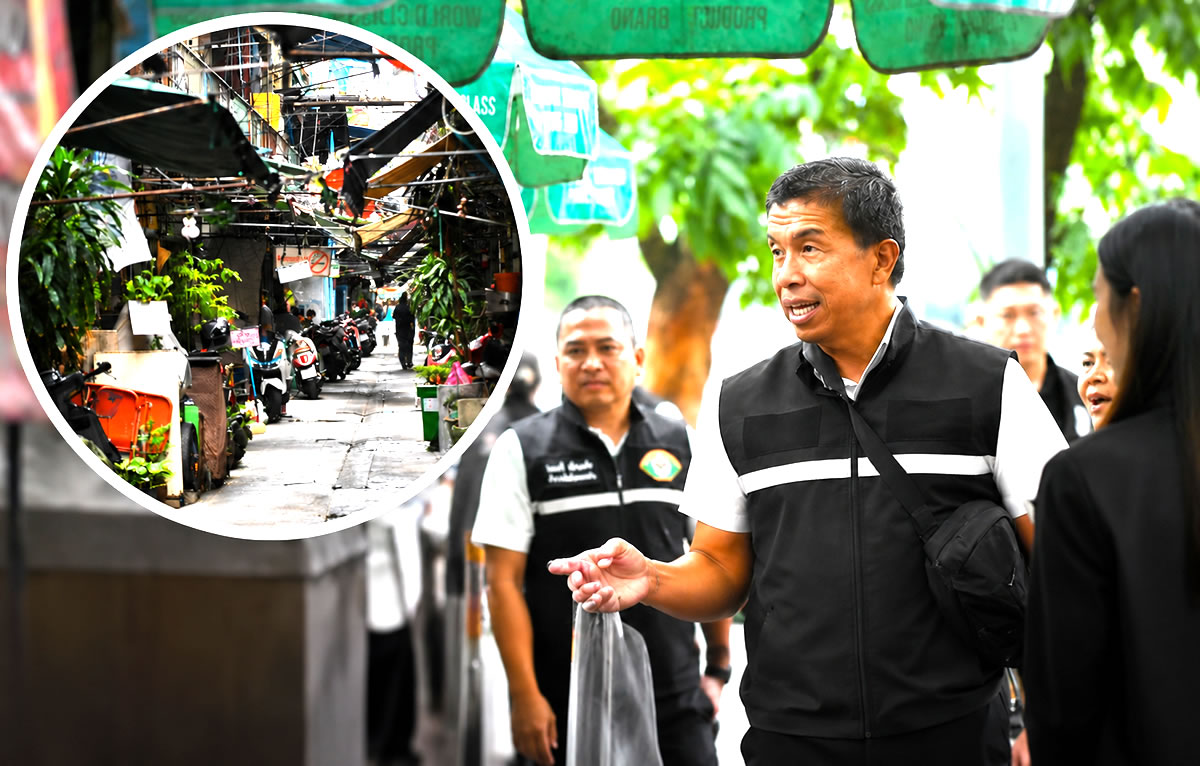
Bangkok Governor Chadchart Sittipunt has declared war on rats infesting the capital’s busiest commercial, restaurant and tourist districts. City Hall is targeting Silom, Chinatown, Sukhumvit and Banthat Thong, where discarded food attracts rodents onto pavements.
The crackdown includes tighter rubbish collection schedules, sealed nesting sites, drainage barriers and scientific monitoring. Officials want to cut rat activity by 30%. However, Bangkok has battled the problem for decades.
Earlier scientific research uncovered extensive infestations in inner-city food markets and identified disease-carrying parasites. The authorities are preparing a six-month assessment to establish whether the campaign delivers measurable results.
Chadchart launches rat crackdown across Bangkok as food waste fuels infestations in busy districts
The operation came into sharper focus on Saturday, November 14, when Chadchart inspected Bang Rak district. He identified discarded restaurant food as a principal cause of the city’s persistent rodent problem.
Rubbish bags frequently remain on pavements for hours before municipal collection trucks arrive. Consequently, rats have regular access to food throughout the evening and late into the night. The problem is particularly serious around restaurants, hotels, shops and street-food stalls.
City Hall’s latest operation goes beyond conventional pest extermination. Officials are targeting the conditions allowing rodents to feed, breed and establish colonies. The campaign covers four principal pilot areas: Silom, Yaowarat, Banthat Thong and Sukhumvit.
Additional operations include Din Daeng, while Ratchathewi and Huai Khwang have been identified for special attention. Meanwhile, Deputy Governor Pornprom Vikitsreth is overseeing changes to rubbish collection arrangements.
The proposed changes include a collection system based on practices in Taiwan. Officials want to stop discarded food from accumulating along pavements before municipal trucks arrive. In parallel, public works teams are examining rat burrows, drainage systems and older commercial buildings.
Infrared cameras, motion detectors and trapping surveys will also help monitor rodent populations. City Hall has established a target of reducing measured rat activity by 30%. However, no verified results demonstrating that reduction have been published.
Bang Rak rubbish crisis exposes how late collections provide rats with nightly supplies of discarded food
The campaign forms part of Bangkok’s wider environmental programme, first announced in August. It also follows changes to household rubbish collection charges introduced in October 2025.
At the centre of the latest operation is Bang Rak, one of the capital’s busiest commercial districts. Chadchart said the district has approximately 30,000 registered residents. However, the actual number of people using the area is considerably higher.
Office workers, tourists, shoppers and restaurant customers arrive throughout the day. Consequently, the district produces far more rubbish than its registered residential population suggests.
This places additional pressure on municipal collection services. Restaurants and other food businesses also generate waste during the evening, when commercial activity remains heavy. Notably, rubbish collection schedules do not always match the times businesses discard their waste.
Deputy Governor Pornprom identified this mismatch as a major weakness in the existing system. Restaurants and households frequently put rubbish outside during the evening. However, municipal trucks may not arrive until late at night or after midnight.
As a result, discarded food can remain accessible to rats for several hours. The animals can feed on exposed waste before disappearing into drains, buildings and other hiding places.
Sukhumvit trials strict rubbish collection windows to stop rats feeding on exposed restaurant waste
Chadchart stressed that plastic and other dry rubbish were not the main attraction. Instead, discarded food was the critical factor drawing rats into commercial areas. Therefore, officials are concentrating on separating food waste, securing rubbish containers and shortening collection times.
One trial in Sukhumvit introduces a tightly coordinated collection schedule. Under the arrangement, businesses and residents receive a one-hour period to put out their rubbish. Municipal trucks are then expected to collect it during the following hour.
The system is intended to eliminate prolonged exposure of food waste on public pavements. However, the arrangement depends on cooperation between businesses, residents and municipal collection teams.
Collection vehicles must arrive within the designated period. Likewise, businesses must avoid leaving rubbish outside before the scheduled disposal window. Separately, City Hall is developing another collection model along Banthat Thong Road, a major dining destination attracting substantial evening crowds.
Taiwan-style collections planned as Chinatown and Bangkok dining districts confront mounting food waste
Officials are working with Chulalongkorn University’s property management office on the proposed arrangements. The approach draws on Taiwan’s coordinated rubbish collection system.
There, waste disposal is organised around collection schedules rather than prolonged pavement storage. Bangkok officials want to adapt the system to local conditions. For now, the broader Taiwan-inspired model remains under development and has not been introduced throughout the capital.
The campaign also targets Yaowarat, Bangkok’s Chinatown. The district is famous for its restaurants, food markets and street-food businesses. Large numbers of visitors arrive during the evening, generating additional commercial waste.
On another front, Silom combines office buildings, restaurants, shops and entertainment businesses. Sukhumvit presents another challenge, with hotels, residential buildings, restaurants and nightlife businesses operating across a major urban corridor. Accordingly, the four pilot areas face different collection demands despite sharing the same underlying problem.
Removing discarded food is only one element of the operation. Public works officials are also inspecting buildings and surrounding infrastructure for rat burrows and hiding places.
City Hall targets rat burrows, drains and breeding sites with barriers, building repairs and bait controls
Older shophouses, damaged pavements and openings around buildings are among the locations receiving attention. Property owners may be advised to seal holes using cement or other suitable materials. Additionally, officials are considering permeable asphalt around tree bases where rodents establish burrows.
Drainage systems are another major target. Bangkok’s official War on Rats policy proposes installing rat-resistant barriers at identified drainage risk points.
These include flaps and grilles designed to restrict rodents moving between underground drainage networks and surrounding streets. Nevertheless, City Hall has not established that every proposed barrier has already been installed. The programme also includes measures aimed at controlling rat reproduction, including a proposal involving liquid contraceptive bait.
The contraceptive bait is intended to reduce breeding and supplement existing rodent control methods. At the same time, stricter waste-storage requirements are being proposed for restaurants and street vendors. Under the published policy, vendors would be required to maintain at least one covered rubbish bin at each stall.
They would also have to remove discarded waste after trading or use designated collection points. Restaurants face additional requirements for keeping food waste securely stored before collection.
Bangkok sets 30% rat reduction target but official dashboard offers no verified population results
Furthermore, the policy provides for possible penalties against businesses failing to comply with the relevant rules. Private building owners are also expected to play a role.
Rats can move between adjoining commercial premises, drainage systems and public pavements. Consequently, treating individual streets would not necessarily eliminate infestations inside neighbouring buildings. City Hall therefore wants stronger cooperation between district authorities and property owners.
The Bangkok Metropolitan Administration has published six performance targets under its official policy, designated P253. The principal target is a 30% reduction in measured rodent activity.
In addition, officials want 90% of food businesses to comply with waste-management requirements. Another target calls for rat-resistant barriers at 100% of identified drainage risk points. Similarly, the programme aims to treat every designated tree-base burrowing site.
All identified infestation areas requiring intervention are also supposed to receive control measures. Meanwhile, 90% of buildings classified as being at risk should undergo assessments and protective work.
Yet the published performance figures do not establish whether these objectives have been achieved. City Hall’s dashboard records an overall administrative project achievement figure of 89.9%. Crucially, that figure does not mean Bangkok’s rat population has fallen by 89.9%.
Officials prepare six-month rat surveys as Bangkok confronts decades of unresolved market infestations
The six principal outcome indicators remain without reported results. Moreover, the dashboard does not disclose an overall programme budget. During the November 14 inspection, Bang Rak district councillor Wiphut Sriwa-urai reported that rat numbers had already declined.
However, no published before-and-after population counts substantiate that observation. Deputy Governor Pornprom said the authorities intended to measure results scientifically rather than rely on impressions.
Officials are examining the use of infrared cameras, motion-detecting equipment and trapping surveys. These methods would establish rodent activity before and after intervention. The monitoring period is expected to last approximately six months.
Subsequently, the findings will be used to modify the measures or determine whether they should be extended elsewhere. The latest operation follows earlier changes to Bangkok’s rubbish collection system.
In October 2025, the monthly household collection fee increased from ฿20 to ฿60 for homes that do not separate their waste. The War on Rats initiative later appeared in City Hall’s 100-day Quick Win environmental programme in August 2026.
However, the problem confronting Chadchart is far older than his administration. Scientific research has documented substantial rodent populations in Bangkok’s inner-city food markets for more than 25 years.
Historic Bangkok market survey captured 1,177 rodents and found inner-city districts worst affected
A study published in September 2003 examined conditions at 47 fresh-food markets across the capital. Researchers worked under the Bangkok Metropolitan Administration’s Division of Veterinary Public Health.
The trapping surveys took place between June 1999 and May 2000. During the investigation, researchers captured 1,177 rats and shrews. The dominant species was Rattus norvegicus, commonly known as the Norway rat or brown rat. It accounted for 84.3% of the captured animals.
Researchers also identified black rats, Polynesian rats, house mice and Asian house shrews. Significantly, inner Bangkok recorded the highest rodent presence and the highest flea index in the survey.
The researchers recommended giving priority to sanitation improvements in the inner city. Their findings established extensive rodent activity around food markets long before the latest campaign. Nonetheless, the historical results cannot establish Bangkok’s present rat population.
Nor do the findings demonstrate whether infestations have increased or declined since the original research. The study nevertheless documented a longstanding problem involving food markets, urban development and rodent activity.
The latest campaign is therefore confronting conditions identified by municipal researchers more than two decades ago. Beyond rubbish and sanitation, rats present several recognised public health dangers. Rodents can contaminate food, carry parasites and transmit organisms associated with serious infectious diseases.
Rat-borne diseases threaten food safety and public health as Bangkok tackles contaminated waste and drains
One important concern is leptospirosis, a bacterial infection associated with urine from infected animals. Humans can become infected through broken skin or mucous membranes after contact with contaminated water or soil.
Severe infections can cause kidney failure, liver damage and other serious complications. Bangkok’s heavy rainfall, seasonal flooding and extensive drainage systems make contaminated water an important public health concern. Crucially, infection does not require a direct rat bite.
People can encounter contaminated water without seeing the animals responsible. In addition, rats can contaminate food preparation areas, storage containers and packaging through droppings and urine.
This creates risks involving Salmonella and other foodborne infections. Another concern is murine typhus, a bacterial disease transmitted through infected fleas associated with rodents. Symptoms can include fever, headaches and a rash.
Rat-bite fever presents an additional risk following bites, scratches or certain contact with contaminated material. Furthermore, rodents can carry mites and other parasites associated with disease transmission.
The damage is not confined to human health. Rats can gnaw electrical wiring, insulation, food packaging and other materials inside commercial and residential buildings. Thailand has previously documented disease-related organisms among rodents captured following major flooding.
Post-flood research identifies infections in Thai rodents as Bangkok confronts risks to public health
A study published in the Disease Control Journal in 2014 examined 292 rodents. The animals were captured in Bangkok, Ayutthaya and Lopburi between November 2011 and February 2012. The investigation followed Thailand’s devastating floods in 2011.
Researchers detected Leptospira bacteria in 1.4% of the sampled rodents. Separately, antibodies associated with murine typhus were identified in 10.3%.
Antibodies associated with scrub typhus were recorded in 36.2% of the animals. Additionally, rat lungworm parasites were identified in some sampled rodents. However, the research covered three provinces and reflected conditions following the floods.
It cannot be used to calculate current disease prevalence among Bangkok’s rats. There is also no evidence in the latest campaign reporting of a new rat-borne disease outbreak in the capital.
Even so, the findings demonstrate that rodents in Thailand have carried organisms associated with significant human infections. These dangers are particularly relevant around restaurants, fresh-food markets and premises handling food intended for consumption.
Bangkok’s international tourism industry adds another dimension to the campaign. Silom, Chinatown, Sukhumvit and Banthat Thong attract substantial numbers of visitors alongside local residents. Restaurants, street-food stalls and markets are prominent features of these districts.
Tourist districts face sanitation concerns as tighter rubbish schedules test Bangkok collection services
Consequently, visible rats around food outlets create an additional sanitation concern in major visitor areas. However, City Hall has not published figures establishing any direct tourism losses caused by rodent infestations.
The immediate focus remains rubbish collection, building maintenance and population monitoring. In parallel, the programme places additional demands on municipal services. Businesses may face tighter disposal schedules, while collection teams must coordinate their operations more closely.
If trucks arrive late, discarded food could remain exposed despite the new arrangements. Similarly, poorly maintained buildings could continue providing nesting places after surrounding pavements have been treated.
The programme therefore involves environmental teams, public works officials, district administrations and private property owners. Its effectiveness will be assessed through monitoring rather than claims based solely on visible improvements.
Bangkok has no verified rat count or campaign budget as six-month assessment approaches across pilot areas
Three major figures remain unavailable. City Hall has not published a verified current rat population for the targeted districts.
It has also not disclosed a complete programme budget or confirmed that the 30% reduction target has been achieved. The six-month assessment is expected to provide the first substantial evidence of the campaign’s results.
Halloween security operation in central Bangkok and the Khaosan Road undertaken by Tourism Police
3 popular Bangkok pubs already closed in citywide crackdown ordered by Governor Chadchart Sittipunt
For now, Bangkok’s War on Rats is concentrated on some of the capital’s busiest commercial streets. Chadchart’s administration is combining rubbish collection reforms with drainage barriers, nesting-site treatment and proposed reproductive controls. Scientific monitoring is intended to establish whether these measures reduce rodent activity.
The operation follows decades of documented infestations in Bangkok’s food markets. More than 25 years after municipal researchers identified substantial rat populations in the inner city, the problem remains unresolved. City Hall has set a 30% reduction target. However, the results, final costs and extent of any lasting improvement have yet to be established.
Join the Thai News forum, follow Thai Examiner on Facebook here
Follow Thai Examiner on Google here
Receive all our stories as they come out on Telegram here
Follow Thai Examiner here
Further reading:
Halloween security operation in central Bangkok and the Khaosan Road undertaken by Tourism Police
Furious Dutchman rips ATM from its moorings after his ฿10 million investment in with Thai wife fails