Trump secures massive Thai trade concessions as Anutin signs in Manila. US pork, vehicles and medicines gain access, alongside $2.6bn in farm purchases. America takes 24.6% of Thai exports, but Bangkok still awaits final US tariff terms and approval.
Thailand has made sweeping trade concessions to Washington after Prime Minister Anutin Charnvirakul signed a landmark statement with US President Donald Trump in Manila. Foreign Minister Sihasak Phuangketkeow admitted Bangkok must compromise to protect America, its largest export market, taking 24.6% of Thai exports. Crucially, Thailand will open protected markets to American pork, vehicles and pharmaceuticals, alongside $2.6 billion in farm purchases. Meanwhile, US-China tensions and semiconductor restrictions deepen commercial pressures. Yet Washington’s final tariff concessions remain undisclosed while the agreement still requires legal completion and approval in both countries.
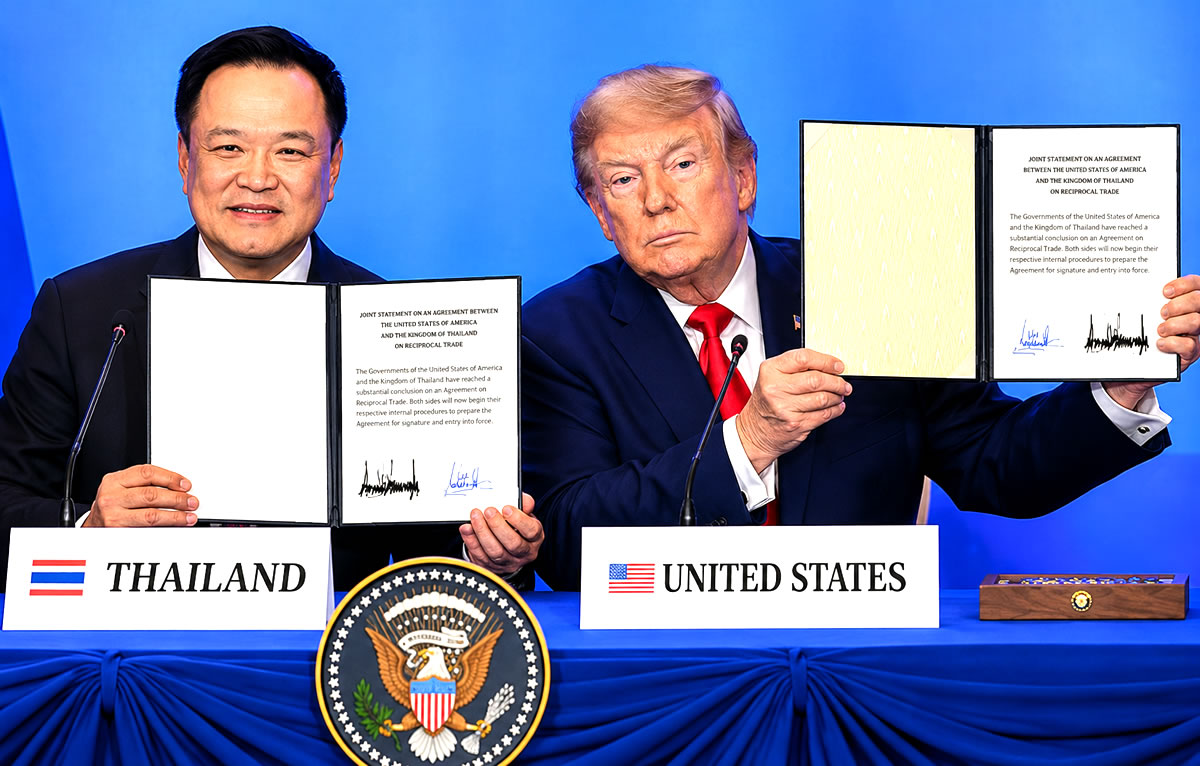
Deputy Prime Minister and Minister of Foreign Affairs Sihasak Phuangketkeow has acknowledged Thailand must make major concessions to the United States. His remarks followed Tuesday’s trade statement signed by Prime Minister Anutin Charnvirakul and US President Donald Trump in Manila.
Thailand has agreed to move towards zero tariffs on American imports and open sensitive domestic markets. Crucially, the concessions include American pork, previously a major obstacle in negotiations.
Washington also announced approximately $2.6 billion in additional purchases of American agricultural products. The United States already accounts for 24.6% of Thai exports, making it the kingdom’s largest overseas market. However, the final agreement remains unsigned, and the precise American tariff concessions have yet to be confirmed.
Sihasak admits major concessions as Thailand opens pork market and removes barriers to US imports
“We all have to make sacrifices and compromises. But what can we do? The US is a big market,” Sihasak told Bloomberg Television following Tuesday’s signing. The foreign minister’s admission provided a direct explanation of Bangkok’s negotiating position.
Thailand is accepting substantial American demands to protect access to its most important export destination. In return, Bangkok wants more predictable American tariffs and competitive treatment for Thai manufacturers. Nevertheless, the commercial benefits remain subject to the final agreement, which has not been published.
Sihasak confirmed that Thailand would move towards eliminating tariffs on American goods. More significantly, he acknowledged that American pork would gain access to the Thai market. Previously, Thai officials had treated pork imports as a sensitive issue during negotiations.
The concession marks a substantial change in Bangkok’s position. Furthermore, the foreign minister confirmed commitments involving American soybeans and other agricultural products. These measures form part of a wider package opening Thailand’s domestic market to American exporters.
President Trump announced further details following the signing ceremony on November 17. According to Reuters, Thailand would eliminate tariffs on American exports and remove major non-tariff barriers. The changes would affect vehicles, medical devices, pharmaceuticals, ethanol and poultry.
Trump announces $2.6 billion in farm purchases but Manila statement leaves final trade pact unsigned
Separately, Trump announced approximately $2.6 billion in additional American agricultural purchases. The commitments would expand opportunities for American manufacturers, farmers and agricultural exporters across several major sectors.
The announcement followed a ceremony in Manila at approximately 7 pm local time. Prime Minister Anutin Charnvirakul and President Donald Trump signed the joint statement before the Special ASEAN–US Summit. Both governments confirmed substantial agreement on the proposed Agreement on Reciprocal Trade, known as ART.
However, the document was not the completed trade treaty. Legal drafting, domestic consultations and approval procedures remain outstanding. Consequently, Tuesday’s ceremony did not immediately change import duties or establish an implementation date.
The White House published the document under its formal title, Joint Statement on an Agreement Between the United States of America and the Kingdom of Thailand on Reciprocal Trade. It confirmed that substantive negotiations had reached a conclusion.
Nevertheless, the complete agreement, including tariff schedules, exceptions and implementation provisions, remains unpublished. Trump said he expected the final document to be completed within weeks. Anutin acknowledged that further work remained before implementation.
Washington secures Thai market access while Bangkok seeks tariff certainty for its biggest export market
The agreement gives Washington substantial commitments concerning access to Thailand’s domestic market. Bangkok, by contrast, has emphasised preserving exports, securing competitive tariffs and restoring investor confidence.
However, the precise American tariff concessions have not been disclosed. Nor has Washington published a complete schedule identifying which Thai products will receive exemptions. The distinction is important because Thailand has already acknowledged major concessions affecting agriculture, manufacturing and protected domestic sectors.
Sihasak’s remarks came as Thailand’s dependence on American demand continued to grow. Reuters reported that the United States accounted for 24.6% of Thai exports during 2026. That represents almost one-quarter of the kingdom’s overseas sales. Notably, America is Thailand’s largest individual export destination.
Its purchases support electronics, electrical equipment, machinery and automotive component manufacturers. American demand also sustains industrial employment, investment and extensive manufacturing supply chains across Thailand.
The scale of those exports gives Washington considerable influence over Thailand’s commercial conditions. American tariff changes directly affect prices, contracts and the competitiveness of Thai manufacturers.
Thai exporters face tariff uncertainty after Washington shifts duties and US Supreme Court ruling
Furthermore, competing Southeast Asian exporters face similar pressure from Washington’s changing import policies. Bangkok therefore wants tariff treatment that does not leave Thai products at a disadvantage. The government has repeatedly identified maintaining American market access as a central objective of negotiations.
The United States is Thailand’s largest export destination by value. However, the available figures do not establish that it is the kingdom’s most profitable market. Comprehensive profit margins by export destination have not been supplied.
Even so, the American share of total exports establishes its commercial importance. Thai manufacturers depend on continued access to American customers across several major industries.
Thailand has already experienced sharp changes in Trump’s tariff policies. Washington initially threatened a 36% tariff on Thai goods in 2025. That proposed rate was subsequently reduced to 19%. However, further American legal developments changed the tariff position again.
A US Supreme Court ruling in February 2026 affected the administration’s earlier tariff authority. As a result, the legal basis for some American import duties changed, adding uncertainty for exporters.
Suphajee leads Thai trade talks as Bangkok seeks relief from separate American tariff measures and duties
These developments complicated business planning. Thai manufacturers must negotiate contracts and production schedules against changing American import costs. At the same time, investment decisions depend on expectations about future tariffs and market access.
Higher duties can weaken the competitiveness of Thai goods against products manufactured elsewhere. The government therefore sought greater clarity through a negotiated arrangement with Washington.
Deputy Prime Minister and Minister of Commerce Suphajee Suthumpun led the Thai negotiating team. Prime Minister Anutin and the Cabinet assigned her responsibility for the talks. She worked alongside relevant government agencies through the Team Thailand structure.
During negotiations, officials consulted private businesses, public agencies and other affected sectors. The government said these consultations helped determine Thailand’s position and identify concerns surrounding American market-access demands.
Following Tuesday’s ceremony, Suphajee identified potential benefits under future American trade measures. In particular, she referred to Section 301 investigations affecting Thai exports.
According to Bloomberg’s reporting, Bangkok hopes certain American duties could fall from 12.5% to 10%. However, these figures concern separate tariff measures and should not be confused with the proposed reciprocal arrangement. Bloomberg reported that Thai officials still expected a 19% rate on most goods under the prospective agreement.
Thai exporters await US exemptions as Trump claims wider tariff concessions than earlier framework
Meanwhile, Bangkok continued seeking exemptions for selected products. The distinction between American tariff measures remains important for exporters. Different duties can arise under separate legal authorities and apply to different categories of goods.
Some measures may operate alongside others, depending on exemptions and implementation provisions. Consequently, a single headline tariff percentage cannot establish the total duty payable on every Thai shipment.
The Manila statement did not explain how overlapping American tariffs would operate. Nor did it identify every product eligible for exemption. Until the complete schedules are published, exporters cannot calculate the full benefits of the proposed agreement.
This matters particularly for manufacturers negotiating contracts extending into 2027. Their prices and commercial commitments depend on the final American tariff treatment.
Another discrepancy concerns the extent of Thailand’s promised tariff reductions. The October 2025 negotiating framework envisaged removing tariffs on approximately 99% of American goods.
However, Trump described Tuesday’s commitments as eliminating all tariffs on American exports. The published material does not resolve that difference. It remains unclear whether Thailand will retain exemptions for sensitive products. Similarly, no complete timetable has been released for removing individual import duties.
American pork and poultry gain ground as Thailand prepares to ease sensitive agricultural restrictions
Agriculture is among the most sensitive areas. Sihasak’s confirmation concerning American pork represents a notable concession. Thai officials had previously maintained restrictions in this sector during negotiations.
Now, Bangkok has accepted market opening as part of the proposed agreement. However, the final conditions governing American pork imports remain unpublished. These include sanitary requirements, import procedures and any transitional arrangements.
American poultry is another sector identified in Trump’s announcement. Washington also expects changes affecting agricultural products and ethanol. Therefore, the concessions extend beyond industrial tariffs into markets previously subject to regulatory restrictions.
The final agreement must establish which import protections remain and which barriers will disappear. For Thai agricultural producers, those details will determine the practical extent of additional American competition.
The purchasing commitments provide a separate benefit for American exporters. Trump announced approximately $2.6 billion in additional agricultural purchases. Sihasak also confirmed commitments involving soybeans and other American farm products.
Nevertheless, the announcements did not establish every product quantity, delivery date or contractual arrangement. The full purchasing schedule has not been released.
American vehicles and medicines gain promised access as Thai officials review remaining trade barriers
Manufacturing concessions are similarly extensive. Washington identified American vehicles, medical devices and pharmaceuticals among the products affected by Thai trade restrictions. The proposed agreement would remove tariffs and major non-tariff barriers across these sectors.
In addition, ethanol and poultry feature among the American priorities. These commitments could require changes to Thai import regulations and administrative procedures.
The published statement does not identify every regulation scheduled for amendment. Nor does it establish which concessions will begin immediately upon implementation. Some measures could require administrative changes or new legislation.
Accordingly, the final ART must specify the legal obligations and implementation dates. Until publication, the complete extent of American market access remains unsettled.
Government spokesman Ekkapop Pienpises confirmed the signing in Manila on Tuesday evening. He described the statement as important progress towards maintaining Thailand’s export markets. Furthermore, he said the agreement would strengthen confidence among businesses and investors.
Ekkapop emphasised that the United States remained Thailand’s number one export destination. He also pointed to major changes in American tariff policy affecting trading partners worldwide.
Anutin welcomes Manila breakthrough but legal drafting and domestic consultations remain unfinished
The spokesman said reaching agreement on the principal ART provisions was important for Thailand’s competitiveness. In particular, Bangkok wanted tariff treatment comparable with that available to regional competitors.
Greater clarity would help exporters and investors plan their operations. The government also expects opportunities in trade, investment, technology and innovation. However, those benefits remain objectives rather than completed outcomes under the agreement.
Prime Minister Anutin welcomed the conclusion of substantive negotiations during his meeting with Trump. He reaffirmed Thailand’s commitment to strengthening its longstanding relationship with Washington.
The prime minister also expressed support for expanding bilateral cooperation beyond trade. Nevertheless, the government’s own announcement confirmed that substantial procedural work remained. Both sides must complete legal drafting and review before signing the final ART.
For Thailand, domestic procedures will include consultations with affected sectors. Ekkapop confirmed that the government would seek opinions before submitting the agreement to Parliament. Those consultations will form part of the process required under Thai law and the Constitution. The final agreement will therefore face further scrutiny after the legal text has been completed.
Thai Parliament faces scrutiny of trade concessions under constitutional rules before final approval
Section 178 of Thailand’s 2017 Constitution governs parliamentary approval of certain international agreements. Trade treaties with significant economic implications can require National Assembly approval.
The same applies to agreements requiring new legislation or substantial commitments. The constitutional framework provides a 60-day consideration period once a qualifying agreement is submitted. However, that period does not begin with Tuesday’s signing ceremony.
The government must first complete the necessary drafting, consultations and submission procedures. Consequently, parliamentary approval cannot be calculated simply from November 17. The timetable depends on completion of the legal text and domestic preparations.
Moreover, the final agreement’s agricultural, investment and regulatory provisions will form part of parliamentary consideration. Legislators will examine the completed commitments rather than Tuesday’s short political statement.
The final tariff schedules will be particularly important. So will provisions governing sensitive agricultural imports and changes to domestic regulations. Parliament will also need to consider obligations requiring amendments to Thai law. However, the government has not announced when the completed ART will be submitted. No confirmed date exists for final parliamentary approval.
US Congress may not need to vote on trade pact as legal route and implementation timetable remain unclear
American procedures present a separate legal issue. The US Constitution gives Congress authority over tariffs and foreign commerce. However, not every American trade arrangement requires a new congressional approval vote.
Presidents can implement certain measures using powers already delegated by Congress. Other commitments require changes to federal legislation and therefore congressional action.
The traditional American Trade Promotion Authority system expired in 2021. Since then, Washington has increasingly used narrower executive trade arrangements. Nevertheless, the White House has not identified the complete statutory basis for implementing the Thailand ART. Consequently, it remains unclear whether Congress must approve any implementing legislation.
A separate congressional vote is not automatically required. Equally, congressional involvement cannot be excluded until the agreement’s legal provisions are settled. Trump’s proposed timetable of several weeks concerns completion of the agreement. It does not establish when the treaty will enter into force. Thai parliamentary procedures and American legal requirements could extend implementation into 2027.
Some tariff concessions could also have separate implementation dates. Others may require administrative changes before businesses can use them. No official schedule covering these measures has been announced. The final ART must therefore establish both the legal commitments and the conditions governing their application.
Thailand balances Chinese industrial investment with American export demand amid new technology controls
The negotiations are unfolding against substantial economic competition between Washington and Beijing. Thailand maintains extensive manufacturing and investment relationships with China.
Chinese capital supports automotive production, electric vehicles, batteries, electronics and regional industrial supply chains. Meanwhile, the United States remains Thailand’s largest export destination. The two relationships have different commercial characteristics and involve major sectors of the Thai economy.
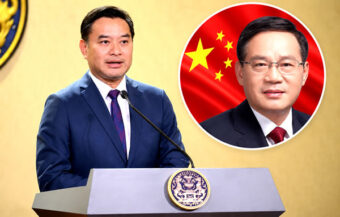
China is an important source of investment and manufacturing integration. America provides access to a consumer market purchasing almost one-quarter of Thai exports. Chinese Premier Li Qiang promoted closer economic cooperation during Monday’s ASEAN summit.
He also emphasised free trade and regional economic integration. His remarks came as Washington pursued additional market-access commitments from Southeast Asian trading partners.
On another front, the American administration has tightened controls affecting sensitive technology. Bloomberg reported new licensing requirements for advanced semiconductor exports to Thailand and four other countries on November 16.
Washington’s concern involves possible transfers of sensitive technology to China through third countries. These restrictions are separate from the reciprocal trade agreement. Nevertheless, they affect the wider commercial environment facing Thai manufacturers.
American semiconductor controls raise new issues for Thai factories linked to Chinese supply chains
Companies operating across regional supply chains must comply with applicable American technology controls. Furthermore, national security measures can operate independently of tariff agreements.
The final ART will therefore not necessarily remove restrictions imposed under separate American authorities. Thai businesses must account for both trade rules and technology controls when planning international operations.
The published Manila statement does not require Thailand to reduce Chinese investment. Nor does it contain a verified commitment to change Bangkok’s foreign policy towards Beijing. No such undertaking has been identified in the available document.
However, rules governing product origins and transshipment remain important to the final agreement. Chinese-origin components are used across regional manufacturing networks.
Additional restrictions could affect goods manufactured or assembled in Thailand. Nevertheless, the existence and wording of any new provisions remain unconfirmed.
The published statement does not provide a complete set of origin rules. Similarly, it does not establish additional obligations concerning Chinese investment or digital infrastructure. These matters cannot be resolved without the final legal text.
Bangkok seeks other export markets while trade talks cover labour, investment and digital trade rules
The negotiations have also involved labour standards, intellectual property, digital trade and foreign investment. Thai reporting identified these as sensitive areas before Tuesday’s signing.
Meanwhile, Bangkok maintained negotiating limits concerning sanitary standards, national security and investment. The final agreement will establish which positions survived and which obligations require changes to Thai law.
Sihasak has separately acknowledged the importance of reducing Thailand’s dependence on individual export markets. Bangkok is pursuing a trade agreement with the European Union. It is also examining commercial opportunities in Central Asia and Africa.
These initiatives are proceeding alongside negotiations with Washington. However, the United States already purchases 24.6% of Thailand’s exports.
Alternative markets would require substantial additional sales to match that existing American demand. The foreign minister’s remarks therefore carry particular significance. He has publicly acknowledged that Thailand must accept sacrifices and compromises.
His comments followed concessions affecting tariffs, agriculture and access to protected domestic markets. They also highlighted the importance Bangkok attaches to preserving American demand.
Washington details market gains while Thai exporters still await final tariffs and product exemptions
Washington has announced specific commercial commitments benefiting American exporters. These include market opening for vehicles, medical products, pharmaceuticals, ethanol and poultry.
The agricultural purchasing commitments add approximately $2.6 billion to the announced package. Thailand, by contrast, has emphasised preserving market access and obtaining more predictable tariff treatment. However, the precise American concessions remain subject to the final legal agreement.
The arrangement leaves important commercial questions unanswered. Thai exporters still need confirmation of the duties applicable to their products. They also require details of exemptions, product classifications and implementation dates.
Similarly, Thai producers facing increased American competition need the final import arrangements. Agricultural businesses require clarity over pork and poultry access. Manufacturers need confirmation of the changes affecting vehicles, pharmaceuticals and other imported goods.
The government’s consultations will address sectors affected by the agreement. Parliament will then consider the completed legal commitments under the applicable constitutional procedures. However, neither stage has a confirmed completion date.
Manila trade statement highlights American leverage as Thailand seeks to protect its largest export market
For Washington, the Manila statement records substantial progress towards expanding American access to Thailand’s market. For Bangkok, it represents progress towards securing the kingdom’s largest export destination.
The timing is significant. Thailand entered negotiations after facing the threat of sharply higher American tariffs. It has since accepted commitments extending across major domestic sectors.
Meanwhile, the government continues seeking competitive American tariff treatment for Thai exports. Sihasak’s remarks provide the clearest account of that negotiating position. The foreign minister directly acknowledged the commercial importance of the United States.
The American market accounts for almost one-quarter of Thailand’s exports. That gives Washington a central position in Bangkok’s trade negotiations. Furthermore, the proposed agreement covers far more than ordinary tariff reductions.
It involves access to agricultural markets, industrial imports and regulatory arrangements. It also sits alongside separate American restrictions affecting advanced technology.
However, the published statement does not establish any formal Thai commitment to reduce economic relations with China. The final ART will determine whether additional provisions affect regional manufacturing networks. Until then, the precise obligations concerning product origins, investment and supply-chain compliance remain unresolved.
Final US–Thailand trade pact still awaits legal terms, approvals and clear benefits for Thai exporters
The next stage will establish the binding terms. Both governments must complete the ART, settle its legal provisions and undertake domestic approval procedures. Subsequently, they must confirm the dates and conditions for implementation. Tuesday’s ceremony therefore marked the conclusion of substantive negotiations rather than completion of a trade treaty.
Thailand has publicly acknowledged substantial concessions. Washington has announced major new opportunities for American exporters.
However, the enforceable benefits for Thai exporters remain to be established. The outstanding details include American tariff rates, exemptions, implementation schedules and the treatment of sensitive products.
Good news in Manila as Anutin and ministers report 2.9% growth and a trade deal terms with Trump
Three day visit by China’s Premier puts focus on Thailand’s planned trade pact with the United States
For Prime Minister Anutin Charnvirakul, the remaining work includes legal completion and parliamentary scrutiny. Deputy Prime Minister Suphajee Suthumpun must continue addressing the tariff treatment available to Thai exports.
Meanwhile, Sihasak has publicly explained the central commercial pressure behind Thailand’s concessions.
The foreign minister’s assessment was direct. Thailand must compromise because the United States is a major market. With 24.6% of Thai exports heading to America, that market is central to the kingdom’s trade negotiations. Tuesday’s statement established the principal commitments.
However, the final agreement will determine the precise terms of American market access and Thailand’s reciprocal benefits. Until its publication, the full extent of the exchange remains unresolved.
Join the Thai News forum, follow Thai Examiner on Facebook here
Follow Thai Examiner on Google here
Receive all our stories as they come out on Telegram here
Follow Thai Examiner here
Further reading:
Good news in Manila as Anutin and ministers report 2.9% growth and a trade deal terms with Trump
Three Chinese nationals rescued by police in Tak province near Burma. Police top brass want answers
Tourism chiefs furious as another Chinese abduction and a spat with the Embassy threaten bookings
Thailand losing appeal to Chinese tourists despite a gain in numbers from last year as Vietnam rises