AI fever hits Thailand as 307,000 people rush to register for TH-AI Passport within half a day. The five-million-user scheme offers 30+ AI models, but parliamentary scrutiny and an NACC complaint hang over the government’s August 31 AI rollout ahead.
Thailand’s controversial TH-AI Passport has burst out of the blocks, drawing more than 307,000 registrations within its first half-day. The government is targeting five million users for access to over 30 AI models, with the platform opening on August 31. Yet the huge early response comes amid opposition attacks, parliamentary scrutiny and an NACC complaint over the project. Digital Economy and Society Minister Chaiyanok Chidchob insists the scheme is legal and secure. Meanwhile, Prime Minister Anutin Charnvirakul is firmly backing the rollout as Thailand prepares for mass public access to advanced AI.
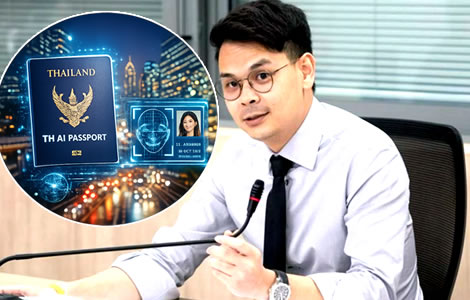
Thailand’s TH-AI Passport programme drew more than 307,000 registrations within hours of opening on Wednesday. The response immediately put the government’s five-million-user target into focus. However, the rapid uptake came as opposition scrutiny intensified over procurement, spending and implementation.
Digital Economy and Society Minister Chaiyanok Chidchob welcomed the figures after advance registration opened on August 19. By 1.30 pm, about 307,000 people had signed up. That represented more than 6% of the programme’s maximum capacity within the first half-day. Notably, Mr Chaiyanok wants registrations to reach several million before the system goes live.
The government will formally launch TH-AI Passport on August 28. Three days later, AiPASS will officially open to registered users. The Ministry of Digital Economy and Society has capped participation at five million people. Thai citizens aged 15 and older can apply.
AiPASS offers over 30 AI models as Chaiyanok urges Thais to test premium services before paying
At the centre of the programme is AiPASS, which combines numerous generative artificial intelligence services on one platform. The National Digital Economy and Society Commission is overseeing the programme under the ministry. Eventually, users will have access to more than 30 AI models from over 14 providers. The package also contains more than 96 artificial intelligence training courses.
For Mr Chaiyanok, the early registration figures showed strong public interest before the formal launch. He said subscription costs currently restrict access to premium AI products. Accordingly, the project gives participants an opportunity to test several paid services during its one-year lifespan.
“This is an opportunity to use a variety of AI Pro models,” Mr Chaiyanok said. “I want people to use this opportunity to increase their income and try the AI models that suit their needs.”
The government-supported access will not continue indefinitely. After one year, participants must purchase any commercial AI services they wish to retain. In effect, users can test competing services before deciding whether to pay for them.
Mr Chaiyanok said this would help ensure the government’s investment produced practical use. Participants would already know which AI services suited them when the programme ended.
“I am happy to have received such a positive response,” he said. “I want everyone to make full use of their rights and have access to it.”
ThaID congestion hits first-day registration as users are directed to smoother government verification
Despite the strong uptake, the first registration day exposed difficulties in the identity verification process. Some applicants experienced problems while using the ThaID application. Mr Chaiyanok denied that the central TH-AI Passport platform had collapsed. Instead, he said congestion occurred within the separate ThaID verification system.
In response, the minister recommended another government verification route. Identity checks through the government application were operating more smoothly, he said. Therefore, applicants were advised to use that service for faster processing.
Users can register independently through either a mobile phone or computer. First, they access the TH-AI Passport website through a normal browser. They can then register or log in through Google, Microsoft or Apple accounts. Afterwards, applicants enter the information required by the programme.
Identity verification follows through either the government application or ThaID. Once verification succeeds, the system creates an AiPASS account before activation. As a result, successful applicants should have their accounts prepared when services begin on August 31.
Access, however, involves more than simply registering for free AI services. The government has linked continued participation to artificial intelligence training. Deputy Digital Economy and Society Minister Nan Bunthida Somchai outlined those conditions as registrations opened.
Free AI access lasts at least 30 days before users must complete courses to earn further credits
Initially, users will receive free AI access for at least 30 days. After that period, participants must complete additional AI courses specified by the programme. Successful completion provides credits allowing continued use of the available services.
As part of this, more than 96 AI training courses will be offered through the programme. The arrangement links continued subsidised access with the government’s stated upskilling objective. Participants cannot simply register and expect unrestricted free access throughout the entire year.
Separately, the government has changed the programme’s payment structure. Earlier attention had focused heavily on its five-million-user capacity. The latest arrangements instead link payments to actual usage.
Consequently, five million registrations would not automatically mean payments covering five million active participants. The number of people actually using AiPASS becomes important once the platform opens. Continued participation will also depend on users completing the required training.
Meanwhile, the project is entering public operation under substantial political scrutiny. Opposition politicians have challenged its procurement, implementation and value for money. A complaint concerning the programme has also been filed with the National Anti-Corruption Commission.
Delayed July rollout faces parliamentary and NACC scrutiny as Chaiyanok defends project’s legality
The controversy predates Wednesday’s registration opening. Originally, the government intended to roll out the programme in July. That timetable was subsequently abandoned while the project’s arrangements were reconsidered. The government then renegotiated benefits and revised the programme before setting the August launch dates.
On another front, opposition MP Ratchanok Srinok has demanded clarification before Parliament’s Budget Committee. The programme’s expenditure and implementation are therefore facing parliamentary examination while registrations continue.
Mr Chaiyanok said he was not concerned about the NACC complaint. He maintained that his intention was to act in the public interest. Furthermore, he insisted that the programme complies with the law.
Regarding the Budget Committee, the minister said officials appearing before MPs were capable of answering questions. He said those responsible for providing clarification were suitable for the task.
“Our intention is for scrutiny,” Mr Chaiyanok said. “This may not be pleasing to everyone, but it is legal.”
Data protection has emerged as another point of scrutiny. The programme connects Thai users with AI products supplied by numerous providers, including foreign companies. Mr Chaiyanok sought to address concerns as registrations began.
“I can confirm that this project is secure,” he said. “As stipulated in the contract, participating foreign AI companies cannot further process the data.”
Personal data stays in Thailand as foreign AI providers face strict contractual limits on information
Under the arrangements described by the minister, personal information will remain stored in Thailand. However, prompts submitted to international AI models may be processed overseas. Participating providers nevertheless face contractual restrictions governing that information.
Specifically, providers cannot retain users’ information or use it to train their artificial intelligence models. The distinction matters because AiPASS will connect users with more than 30 models through one platform.
In parallel, Prime Minister Anutin Charnvirakul has publicly backed the programme. He addressed the project while undertaking his official visit to Australia. Mr Anutin highlighted wider AI access for education, employment and business.
In particular, the Prime Minister identified students, start-ups and small and medium-sized enterprises as potential users. His intervention came as the programme moved from months of preparation towards mass public registration.
The scale of that registration will now test government infrastructure. More than 300,000 applicants arrived during the first half-day alone. Already, congestion involving ThaID has demonstrated pressure on systems supporting the programme.
Anutin backs wider AI access as huge early registration numbers put government systems under pressure
Nevertheless, Mr Chaiyanok said the main TH-AI Passport system remained operational. The problem was confined to ThaID verification, according to his account. Applicants were therefore directed towards the alternative government application.
Beyond registration, August 31 presents a different challenge. That is when sign-ups become active AiPASS users. The distinction has become more significant since payments were tied to actual usage.
Likewise, the 30-day initial access period will provide another measurement. Users seeking further credits must then complete specified training. Their continued participation will consequently depend on engagement beyond the original registration.
The government is therefore heading towards launch with several figures under close examination. The first is the number of registered users. The second is the number who actually activate AiPASS. Another will be continued participation after the initial free period.
Political scrutiny will run alongside those measurements. The NACC complaint remains part of the process surrounding the project. Parliament’s Budget Committee is also seeking explanations about the programme.
The revised timetable adds another layer to that examination. A July rollout did not proceed as originally planned. Instead, the government renegotiated benefits and revised arrangements before moving ahead.
August 31 opening shifts focus from registrations to active users, training and actual AI usage rates
For applicants, however, the immediate process is already open. Thai citizens aged 15 and older can register before the official launch. They can use mobile phones or computers and verify their identities electronically.
Once registered, successful applicants receive pre-created AiPASS accounts. Those accounts are scheduled for activation when the platform opens. The five-million-person ceiling remains in place.
The formal launch comes first on August 28. Then, on August 31, the platform begins providing public access to participating AI services. Users will initially receive at least 30 days of free access.
Democrat Party deputy leader renews attacks on the TH-AI passport project as the minister pushes ahead
Digital Economy minister presses ahead with AI law even with warnings of adverse investment reaction
Thereafter, further access will require additional training and earned credits. The programme itself is scheduled to continue for one year. At its conclusion, users must pay for any commercial services they decide to retain.
For now, the government has secured a rapid start to registration. More than 307,000 people signed up within the first half-day. Mr Chaiyanok wants that figure running into several million before August 31.
Yet the larger test begins when the platform opens. Registration numbers will then give way to active-user figures, training participation and actual AI usage. At the same time, opposition and NACC scrutiny will continue alongside the rollout.
Join the Thai News forum, follow Thai Examiner on Facebook here
Receive all our stories as they come out on Telegram here
Follow Thai Examiner here
Further reading:
Ministry fails to halt ฿25.4 billion payment order to Hong Kong based firm linked to 1990 contract
Microsoft accepts charges of corrupt payments in Thailand as it makes a deal with US investigators
Provincial agency boss arrested in Mukdahan after trying to extort ฿2 million from a businessman
Parliamentary vote on constitutional reform is questioned, court says referendum may be needed
Bangkok MP on Phuket mission to investigate controversial local condo project before the courts
Drinks giant Thai Beverage to resume expansion with Singapore IPO for Asean regional beer operation