Nestlé and billionaire Prayudh Mahagitsiri turned Nescafé into Thailand’s dominant coffee brand. Now their 34-year partnership has become a ฿120 billion legal war as Nestlé prepares a ฿30 billion factory while courts decide its bitter aftermath ahead.
A 34-year partnership that helped make Nescafé Thailand’s dominant coffee brand has collapsed into a legal war exceeding ฿120 billion. Nestlé and billionaire Prayudh Mahagitsiri’s family now face each other across civil and criminal proceedings after decades of extraordinary commercial success. The dispute includes two huge damages claims, injunctions, counterclaims and reported arrest warrants involving former executives. Yet Nestlé is doubling down on Thailand, with nearly ฿30 billion committed to a new Samut Prakan factory. The corporate divorce comes as Thailand itself balances foreign investment liberalisation against tighter protection of Thai ownership and control of the economy.
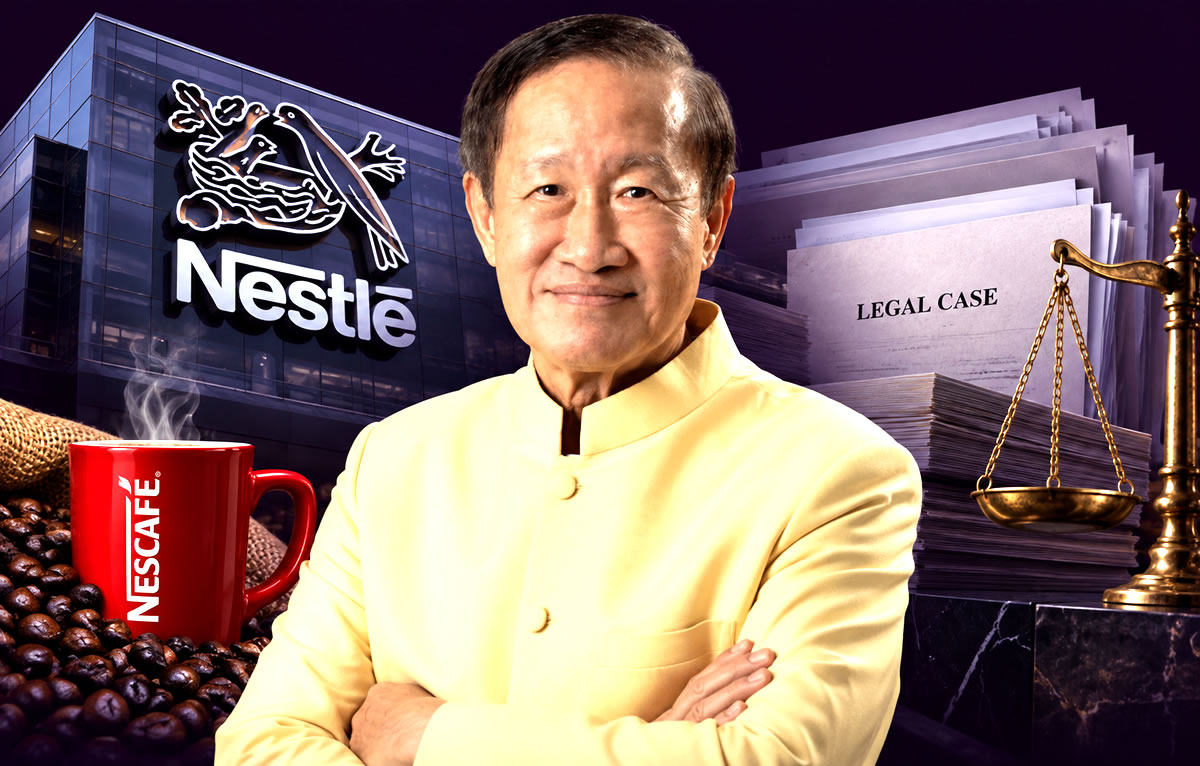
For more than three decades, Nestlé and billionaire Thai businessman Prayudh Mahagitsiri shared one of Thailand’s outstanding consumer business successes. Their 50:50 coffee partnership helped make Nescafé the country’s dominant coffee brand.
Crucially, that expansion accompanied the emergence of Thailand’s modern middle class. International brands entered millions of homes while supermarkets and convenience stores spread nationwide. Nescafé eventually secured more than half the Thai coffee market.
Today, the partnership has ended in an extraordinary legal battle. Claims exceeding ฿120 billion are before Thai courts. The fight has also produced injunctions, counterclaims, criminal complaints and reported arrest warrants involving two former executives. At the same time, Nestlé is preparing for life without its former partner. It plans nearly ฿30 billion of fresh investment in a new Samut Prakan coffee factory.
Nestlé builds new Thai coffee base after 34-year partnership that helped Nescafé dominate the market
The contrast is stark. The old partnership lasted 34 years and helped create an enormously valuable consumer franchise. Now the former partners are fighting over its collapse. Yet Nestlé is simultaneously building a new manufacturing base for the same market. Production at the new plant is scheduled to begin in 2028.
Nestlé’s Thai history started long before its association with the Mahagitsiri family. Indeed, its products were advertised in Bangkok as early as 1893. Local manufacturing followed in 1968. Five years later, Nescafé entered the Thai market. Nestlé initially entered instant coffee through an arrangement involving Thai Soluble Coffee Company and its Bangna factory.
Subsequently, Nestlé acquired a 49.9% interest in Thai Soluble Coffee in 1979. The timing proved important. Thailand was entering decades of industrialisation, urbanisation and rising household purchasing power. Modern retailing expanded rapidly. In turn, international consumer brands became familiar purchases for an increasingly prosperous urban population. Nescafé grew with that transformation.
By 1990, the relationship had entered another phase. Nescafé manufacturing moved to a new Chachoengsao factory operated by Quality Coffee Products Company Limited, or QCP. Nestlé and the Mahagitsiri interests each controlled 50%. The joint venture would survive for another 34 years. During that period, Nescafé became Thailand’s leading coffee brand.
Prayudh became Nescafé’s ‘Godfather’ as Nestlé built a ฿57 billion Thai consumer business over decades
Notably, Prayudh became closely associated with that extraordinary expansion. He was sometimes described as Thailand’s “Godfather of Nescafé”. The description reflected a business relationship spanning much of Thailand’s modern consumer development. Nescafé eventually controlled more than half the national coffee market. The instant-coffee market alone was worth an estimated ฿30-35 billion by 2024.
In parallel, Nestlé developed a much broader Thai business. Its operations expanded across beverages, milk, cooking products, nutrition, water, confectionery and pet products. Major brands included Milo, Bear Brand, Maggi, Coffee-mate and Nestlé Pure Life. Thailand also became Nestlé’s Indochina regional hub in 1999. Its Bangpoo plant later became Nestlé’s largest Coffee-mate creamer factory worldwide.
Financially, the wider business became formidable. Nestlé Thailand reported ฿57.028 billion in revenue during 2023. Net profit reached ฿2.682 billion. Four years earlier, revenue had stood at ฿50.366 billion. Between 2018 and 2024, Nestlé invested another ฿22.8 billion in Thailand.
Consequently, the QCP fight is not about an unsuccessful joint venture or a brand struggling for customers. The partnership worked for decades. It accompanied Nescafé’s rise to commanding market leadership. Both shareholders were attached to a business created during one of Thailand’s greatest periods of consumer expansion.
Eventually, however, relations between the shareholders broke down. Nestlé gave notice terminating the joint venture arrangements. The QCP manufacturing relationship finally ended on December 31, 2024. Nestlé maintained that it possessed the contractual right to terminate. By then, the dispute had already moved into international arbitration.
Arbitration victory failed to end Nestlé dispute as ฿100 billion Thai court battle moved to centre stage
The International Chamber of Commerce arbitration process subsequently backed Nestlé on the central issues. Prayudh challenged the outcome in Singapore. Nevertheless, the Singapore High Court dismissed the remaining challenges on March 4, 2026. The Mahagitsiri side subsequently paid approximately ฿200 million in legal costs and interest.
That defeat did not end the confrontation. Instead, the fight shifted decisively into Thailand’s courts. At least seven legal proceedings have become connected with the wider dispute. Some have since been withdrawn or dismissed. However, two enormous damages cases remain before the Central Intellectual Property and International Trade Court.
The largest is Black Case No. TP.92/2025. Prayudh Mahagitsiri, Suvimol Mahagitsiri and Chalermchai Mahagitsiri are seeking approximately ฿100 billion. The action was initially filed at Min Buri Civil Court on April 3, 2025. Later, it moved to the specialist intellectual property court following a jurisdictional determination.
Six defendants face the claim. They include Nestlé SA and Société des Produits Nestlé SA. Nestlé (Thai) Limited is also named. Additionally, Nestlé ROAS (Thailand) Limited and Nestlé Trading (Thailand) Limited are defendants. Former QCP managing director Ramon Mendivil Gil completes the six.
Mahagitsiri family says Nestlé dismantled profitable 50:50 venture through a 12-act, three-stage plan
At its core, the case concerns how the profitable 50:50 partnership was dismantled. The Mahagitsiri family accuses the defendants of tortious conduct and exercising their rights in bad faith. Specifically, the plaintiffs claim pressure was applied to force a sale below the proper share value. They also accuse the defendants of failing to meet joint venture obligations.
Furthermore, the plaintiffs say actions prevented QCP from continuing its business. They claim those measures consequently damaged the value of their shares. Nestlé rejects the accusations and maintains that it acted within its contractual rights.
Prayudh’s closing arguments set out what his side calls a 12-act, three-stage plan. The accusations include an undervalued buyout offer and simultaneous termination of important contracts. Another claim concerns boardroom deadlock. The plaintiffs also cite the transfer of more than 440 employees away from QCP. Finally, they point to the factory closure and an application to liquidate the company.
The valuation behind the case is equally striking. The Mahagitsiri side cites a DBS assessment valuing QCP at approximately ฿171 billion. The plaintiffs also say they previously offered their combined interest for ฿100 billion. Chalermchai and Suvimol together held 46.8% and seek ฿93.6 billion. Separately, Prayudh held 3.2% and seeks ฿6.4 billion plus statutory interest.
Second ฿21.98 billion case and reported arrest warrants widen Nestlé-Mahagitsiri legal confrontation
Evidence hearings have now finished. Plaintiff witnesses appeared from late May until mid-June. Defence witnesses then testified from late June until mid-July. On September 4, Prayudh filed his closing statement. The court has scheduled judgment for December 21.
On another front, Chalermchai is pursuing Black Case No. TP.98/2025. He seeks precisely ฿21,975,785,998.90 in damages. In addition, he demands ฿8 million for every day the challenged conduct continues. The action concerns marketing, distribution and other charges imposed upon QCP.
Chalermchai claims excessive fees were charged. He also disputes payments for services which he says were not properly authorised. Nestlé contests those claims. Previously, the case produced a temporary order concerning QCP’s corporate governance. The court revoked that order in July 2025. Witness hearings in the substantive action run between August and November 2026.
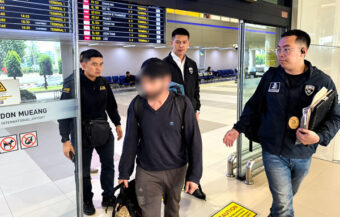
Beyond the civil courts, the corporate fight has entered the criminal justice system. Reports emerged in August concerning Victor Heng Lim Seah and Ramon Mendivil Gil. Seah is a former senior Nestlé executive. Mendivil previously served as QCP managing director.
According to those reports, the South Bangkok Criminal Court approved arrest warrants on August 20. The warrants followed a police request connected with a QCP complaint. In response, Nestlé publicly disputed how the development had been portrayed. It issued its explanation on August 31.
Nestlé disputes warrant claims and seeks nearly ฿600 million after eight-day Nescafé restrictions
Nestlé said police had initially issued summonses connected with a complaint filed by Prayudh. By that stage, both men had already left Thailand following resignation or retirement. The company said the summonses went to addresses where they no longer lived or worked. Accordingly, Nestlé said neither man received them.
From Nestlé’s account, any subsequent warrants followed their failure to answer those summonses. The company rejected suggestions that warrants represented findings on the underlying accusations. Those criminal accusations remain unresolved.
Nestlé has also opened another legal front itself. The company is seeking nearly ฿600 million following an earlier injunction against its Nescafé operations. That order briefly created an extraordinary situation for Thailand’s dominant coffee brand. For eight days, Nestlé faced restrictions affecting manufacture, outsourcing, imports and distribution.
Soon afterwards, the Central Intellectual Property and International Trade Court restored operations. The court also confirmed Nestlé Thailand’s exclusive rights to use the Nescafé trademark. Temporary protection against Nestlé was fully revoked on December 15, 2025. Nestlé then pursued Prayudh, Suvimol and Chalermchai for losses approaching ฿600 million.
Behind the courtroom battles, the old manufacturing structure has already disappeared. QCP produced Nescafé products between 1990 and 2024 under its arrangements with Nestlé. However, Nestlé says the recipes and manufacturing technology remained its intellectual property. It also says Nestlé personnel comprised the production and management teams.
Nestlé commits nearly ฿30 billion to new Samut Prakan coffee factory as old QCP structure disappears
Following QCP’s shutdown, Nestlé turned to other Thai manufacturers. Some products were also temporarily imported from ASEAN. More significantly, the company is now preparing a permanent manufacturing replacement. That project represents one of its largest commitments to Thailand.
Nestlé plans to invest CHF563 million, close to ฿30 billion, at Araya Industrial Estate in Samut Prakan. The factory will manufacture soluble coffee, coffee mixes and ready-to-drink products. Moreover, it is expected to employ more than 500 people. Production is scheduled to start in late 2028.
Thus, Nestlé is not withdrawing from the market built during its partnership with the Mahagitsiri family. It is committing substantially more capital. The company describes Thailand as one of its largest coffee markets. Its investment also follows ฿22.8 billion already committed between 2018 and 2024.
The corporate structure, however, will be very different from the arrangement established in 1990. Then, a 50:50 Thai-foreign partnership provided the platform for Nescafé’s next major expansion. Over three decades, that venture accompanied a transformation of Thailand’s consumer economy. Millions gained greater purchasing power while international brands became everyday purchases.
Against that backdrop, Nescafé became an exceptional success. The brand secured more than half the market and remained dominant for decades. The Mahagitsiri-Nestlé partnership therefore spanned Thailand’s transition into a major modern consumer economy. Its collapse comes under very different global and domestic business conditions.
Thailand balances foreign investment liberalisation with tougher enforcement of Thai ownership rules
Thailand’s present Foreign Business Act dates from 1999. QCP therefore predates the legislation by almost a decade. It cannot accurately be described as a creation of the current law. Even so, its structure reflects an era of extensive partnerships between foreign corporations and major Thai investors.
Today, Thailand continues protecting Thai participation across substantial parts of its economy. Simultaneously, it is competing aggressively for international capital. Foreign investment is moving into advanced manufacturing, electronics, digital industries and massive data-centre projects. The government has also loosened selected Foreign Business Act restrictions covering several service activities.
Conversely, enforcement of Thai ownership rules is becoming tougher. The government is targeting nominee shareholding arrangements used to evade foreign ownership restrictions.
Investigations have also expanded into foreign-linked companies controlling Thai land. Hence, selected liberalisation is proceeding alongside stronger enforcement of existing ownership rules.
December 21 ruling looms over ฿100 billion case as Nestlé presses ahead with new Thai coffee factory
For Nestlé and the Mahagitsiri family, however, the immediate fight remains in court. Their partnership produced 34 years of growth and extraordinary market success. Now claims exceeding ฿120 billion hang over its dismantling. Criminal complaints and Nestlé’s counterclaims have further widened the confrontation.
Next, attention turns to December 21. The Central Intellectual Property and International Trade Court is scheduled to rule on the ฿100 billion action. Elsewhere, the separate ฿21.976 billion case continues through witness hearings. Nestlé is pressing ahead with its Samut Prakan investment regardless.
Top Thai executives roll out plans but ultimately ‘herd immunity’ may be the basis for recovery in the long run
Commerce Minister Suphajee responds to Sondhi Limthongkul’s attack on new liberal investment rules
Two sharply different chapters of Nescafé’s Thai history are therefore unfolding together. One concerns the legal dismantling of a highly successful 34-year partnership. The other involves nearly ฿30 billion for the brand’s next Thai manufacturing era. For decades, Nestlé and the Mahagitsiri family built that coffee business together. Now they face each other in court while Nescafé prepares for its next phase.
Join the Thai News forum, follow Thai Examiner on Facebook here
Follow Thai Examiner on Google here
Receive all our stories as they come out on Telegram here
Follow Thai Examiner here
Further reading:
Government to control rollback of lockdown measures to reopen all businesses from May until July
Some shops and outlets to reopen in Bangkok but measures to be reimposed if infection rate rises
Government begins looking at borrowing options to fund huge ฿1.9 trillion economy rescue package
Government begins looking at borrowing options to fund huge ฿1.9 trillion economy rescue package
Virus may be partially airborne and Minister right in face mask fracas according to new US research
Health Minister in an outburst against western foreigners as 7 more are infected by the coronavirus