Washington adds a fresh condition to Thailand’s US trade deal as Anutin heads for New York. The expected Trump call remains unconfirmed while Senate, ballot and exam scandals persist and ordinary Thais struggle with living costs.
Prime Minister Anutin Charnvirakul heads to New York with Thailand’s crucial US trade deal hitting a fresh hurdle after Washington imposed another undisclosed condition. A telephone call with President Donald Trump was expected to seal the agreement, but remains unconfirmed. In Tokyo, Anutin defended his government, citing ฿20 billion in scam-related asset seizures and Fitch’s improved outlook. Yet trouble is mounting at home. The Senate collusion case has sent 77 people towards the Supreme Court, including 26 serving senators. The barcode ballot and local examination scandals remain active. Meanwhile, ordinary Thais are cutting meals and buying cheaper food as public debt approaches its 70% statutory ceiling.
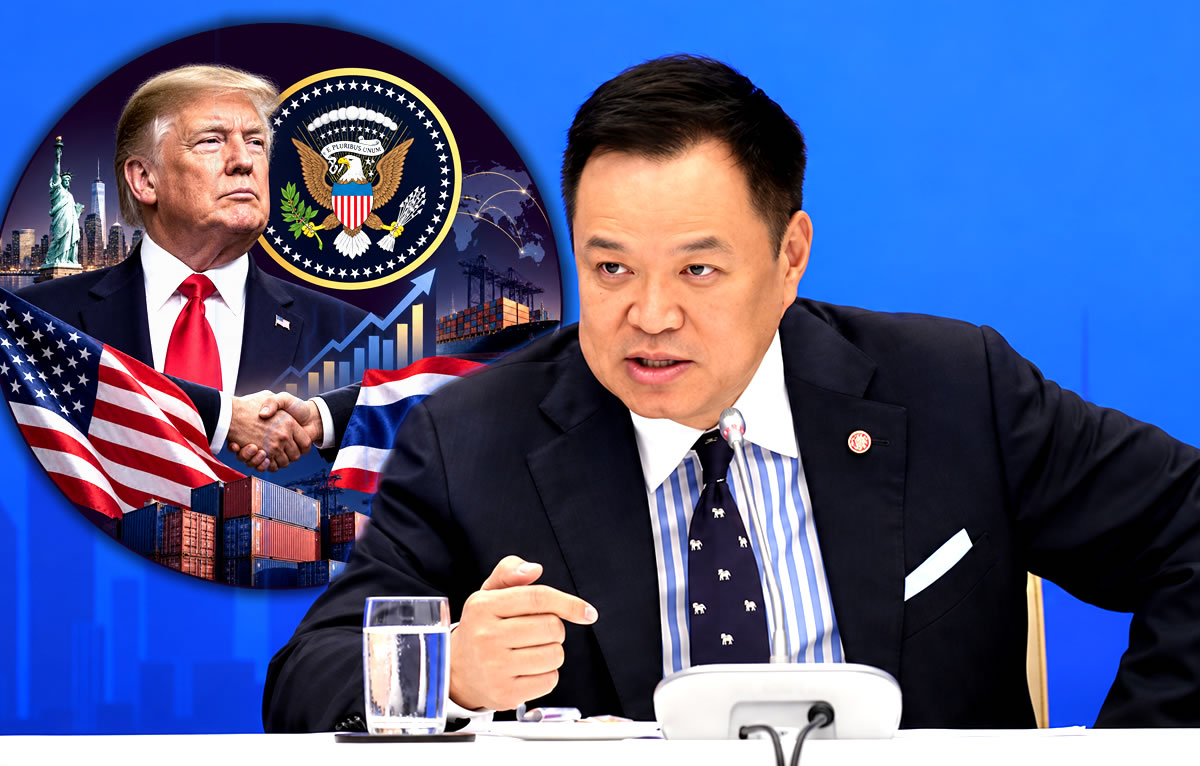
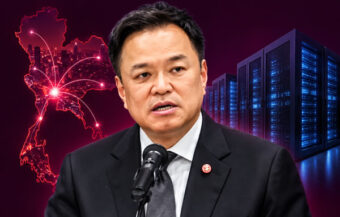
Thailand’s long-running trade negotiations with the United States have hit another snag at a critical moment. Prime Minister Anutin Charnvirakul disclosed the setback before heading to New York. Washington has introduced one additional condition before the Agreement on Reciprocal Trade can be concluded. However, Anutin has not disclosed what the new American demand involves.
Commerce Minister Suphajee Suthumpun told Anutin the condition should not require substantial changes. She remains confident the agreement can be completed. Even so, the development interrupts an increasingly optimistic message from Bangkok. Earlier this month, Thai officials indicated that the principal issues had effectively been settled.
Suphajee previously said both sides had agreed on the main terms. Technical teams were then working through the remaining language. By September 18, the Commerce Ministry described negotiations as being in their final stage. Now, another American condition must be cleared before the agreement can be signed.
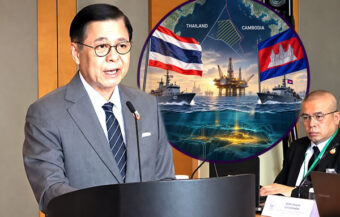
Thailand races to settle US tariff deal as Washington seeks fresh industrial data before agreement
The timing matters for Thailand. Bangkok wants the ART concluded before Washington advances further with its Section 301 process. In particular, Thailand wants to limit the danger of additional tariffs. Its objective remains a final tariff burden within the previous 19% framework or lower.
In response, Thailand has supplied Washington with updated information on three major industrial sectors. The data covers automotive, machinery and rubber production. Bangkok says these industries are operating at approximately 75% to 90% capacity. Crucially, the figures address American concerns about excess industrial capacity.
Washington has also raised concerns about possible transshipment through Thailand. That issue could become grounds for additional US trade measures. Consequently, Bangkok is supplying detailed evidence about manufacturing capacity and production levels. Thai officials want to demonstrate that major industries are serving genuine commercial demand.
The stakes extend well beyond tariffs. The broader negotiations cover major Thai purchases of American aircraft and energy products. Agricultural products, including feed corn and soybean meal, have also featured. Additionally, digital trade and non-tariff barriers remain part of the package.
Yet Bangkok has not secured the political-level breakthrough it sought. Last week, Thailand proposed direct talks between Anutin and US President Donald Trump. Initially, September 17 or 18 was suggested for the conversation. The proposed contact was intended to help conclude negotiations and discuss the tariff rate.
No Trump meeting confirmed as Anutin leaves Tokyo defending his government before New York visit
Instead, Anutin confirmed on Sunday that no Trump meeting had been scheduled during his New York visit. The additional American condition emerged immediately before his departure. Therefore, Anutin arrives in the United States with the trade agreement close but unfinished.
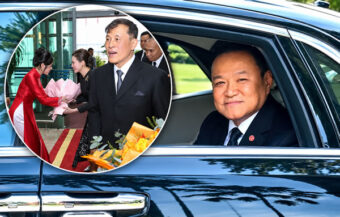
The prime minister left Bangkok on Sunday morning and spent the night in Tokyo. On Monday, he met “Team Thailand” at the Imperial Hotel. Afterwards, he was due to depart Haneda Airport for New York. Following his arrival at JFK, senior Thai diplomats were scheduled to brief him.
During his Tokyo stop, Anutin delivered a forceful defence of his government. Specifically, he rejected suggestions that Cabinet members had connections with illegal businesses. He also highlighted continuing operations against scam networks, illicit businesses and drug trafficking.
“I can assure you that no one in my government is involved in these activities,” Anutin said. “No Cabinet member has any relationship with grey businesses or any form of illegal business. There is no such person in this government.”
Moreover, Anutin said his government had no reason to compromise with anyone involved in illegal activities. He said enforcement had continued from his previous government into the present one. According to Anutin, more than ฿20 billion in scam-related assets had been seized.
Anutin cites ฿20 billion scam seizures and improved credit outlook while defending government in Tokyo
That figure covers seven months under his government and three months under its predecessor. As part of this, Anutin presented the crackdown as evidence of tighter enforcement against illicit activity. He said the government remained committed to pursuing scammers, illegal businesses and drug trafficking.
Separately, Anutin pointed to Thailand’s improved sovereign credit outlook to reinforce his stability message. Fitch Ratings recently changed Thailand’s outlook from Negative to Stable. Importantly, the agency maintained Thailand’s sovereign credit rating at BBB+.
Anutin also referred to international assessments from Fitch, S&P and Moody’s. He said the improved outlook reflected greater stability and improving conditions. “The government has a very high level of stability, both in terms of support in Parliament and relations among coalition parties.”
Furthermore, Anutin said the civil service and armed forces were working effectively together. He described political stability and national security as significant Thai strengths. He said those points could be communicated to Japan and the wider international community.
At the same meeting, Anutin addressed another issue affecting relations with Japan. He acknowledged concerns about Thai nationals overstaying their permitted residence periods. Thailand was prepared to cooperate with Japanese officials, he said. He had also instructed the Royal Thai Police to strengthen preventive and enforcement measures.
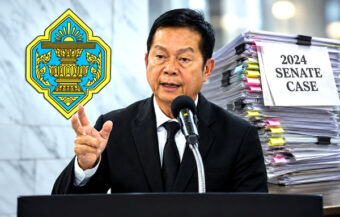
Senate collusion case hangs over Bangkok as 77 people face Supreme Court action after EC decision
Back home, however, several major political and legal cases remain unresolved. Most prominently, the Election Commission has referred 77 people to the Supreme Court. The politically sensitive case concerns the 2024 Senate selection process.
The referrals include 26 serving senators and 36 eligible participants in the selection. Another 15 people were also referred. Notably, the referrals are not findings of guilt. Anutin, Cabinet ministers and senior Bhumjaithai figures were not among those referred.
Still, the scale of the original investigation was considerable. The wider case involved 229 people, including 138 senators. Another 91 political figures and other individuals were investigated. Two Election Commissioners also dissented from significant elements of the eventual majority decision.
The investigation examined suspected organised voting and political involvement in the Senate selection. Evidence included telephone records, meetings and suspected voting lists. Investigators also examined gatherings involving participants in several provinces. In parallel, attention focused on a July 2024 meeting at Bangkok’s Pullman Hotel.
At least 40 senators were linked through location information to that gathering. Investigators also examined 12 suspected voting lists. Furthermore, the wider evidence included provincial meetings and financial information. Nevertheless, the Election Commission declined to refer several prominent political figures.
Barcode ballot case and local exam cheating scandal add to political and legal pressure on government
The commission ultimately referred 77 people for Supreme Court consideration. Among them, 26 are currently serving senators. The case now moves towards the Supreme Court’s Election Cases Division.
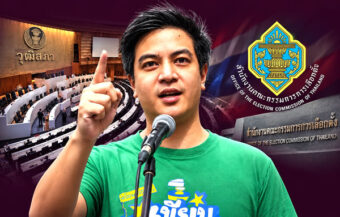
On another front, the Constitutional Court is considering the barcode ballot controversy from February’s general election. The dispute concerns barcodes and QR codes printed on ballot papers. Specifically, the case examines whether unique identifiers compromised the constitutional requirement for secret voting.
The Ombudsman referred the dispute to the Constitutional Court. Subsequently, the court accepted the case in March. Accordingly, another significant election-related dispute remains active while Anutin promotes stability overseas.
Meanwhile, the government is still dealing with a major local government examination cheating scandal. Investigators uncovered evidence that examination answer sheets had been altered. The changes produced passing scores for candidates who had originally failed.
As a result, 5,925 recruits found to have benefited from manipulated scores were removed. The investigation then developed into a substantial financial case. On September 11, Anutin said ฿320.86 million in assets linked to the scandal had been frozen.
He also pledged that investigators would continue pursuing those responsible. Thus, the examination scandal remains another substantial enforcement issue facing his government. It sits alongside the Senate case and the unresolved barcode ballot litigation.
Households cut meals and seek cheaper food as public debt moves closer to Thailand’s statutory ceiling
Beyond those political and legal pressures, economic conditions remain difficult for many Thai households. Recent surveys show families changing basic spending habits as living costs squeeze budgets. One food hardship survey found 32.83% of respondents had reduced their number of meals.
Likewise, 64.82% reported buying cheaper food or relying more heavily on discounts. Another 37.51% said they were cooking at home to save money. At the same time, 33.58% reported growing vegetables themselves.
Those pressures are unfolding alongside mounting constraints on Thailand’s public finances. The National Economic and Social Development Council has urged tighter budgets for the next two to three years. Public debt now stands at approximately 67.5% of GDP. Thailand’s statutory public debt ceiling is 70%.
By comparison, the ratio stood at 41.1% before the Covid-19 pandemic. More significantly, annual debt servicing now exceeds ฿400 billion. NESDC has warned that the 70% ceiling could be breached by 2028 without tighter fiscal management.
Anutin heads to New York for UN assembly with unfinished US trade agreement still awaiting settlement
Against this backdrop, Anutin is travelling from Tokyo to New York. He will attend the 81st United Nations General Assembly from September 21 to 24. On Tuesday, he is scheduled to attend the opening and General Debate. Later, Thailand’s national statement is scheduled for September 24.
After New York, Anutin travels to London on September 25 and 26. He is due back in Thailand on September 27. Before then, however, the unfinished US trade negotiations will remain a major issue during his American visit.
Substantial US Thai trade deal ready to be finalised by a call between Anutin and Trump says Minister
Widening Chinese trade gap cannot be ignored as it distorts economic data of an underlying GDP struggle
For Bangkok, the remaining gap is now clearly defined but not publicly explained. Washington has introduced another condition at the final stage. Thailand is simultaneously supplying industrial evidence to address American concerns over production capacity and transshipment.
Most importantly, no Trump-Anutin meeting has been confirmed. Bangkok had sought political-level contact to help close the negotiations. Instead, Anutin heads into New York with another American demand outstanding and the final trade agreement still unsigned.
Join the Thai News forum, follow Thai Examiner on Facebook here
Follow Thai Examiner on Google here
Receive all our stories as they come out on Telegram here
Follow Thai Examiner here
Further reading:
Commerce Minister Suphajee talks about gold in an economy and world driven by US-China trade rivalry
Rate cut anticipated as outgoing Bank of Thailand governor attends last Monetary Policy Committee