Thailand launches a high-stakes bid to cut US tariffs as Commerce Minister Supachie heads to Washington armed with new manufacturing data, demands for export exemptions and firm red lines on meat standards, sovereignty and trade with China.
Thailand is preparing for one of its most consequential trade missions in years as Deputy Prime Minister and Commerce Minister Supachie Suthamphan heads to Washington to defend a US$50 billion trade relationship, fight US trade investigations, push for lower tariffs on Thai exports and protect key national interests. With Section 122 of the U.S. Trade Act due to expire within days, Bangkok will argue Thai industries are not a backdoor for Chinese goods, seek exemptions for products including jasmine rice and draw firm red lines over meat standards and interconnected trade with China.
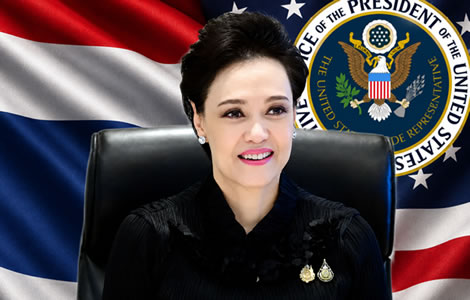
Deputy Prime Minister and Commerce Minister Supachie Suthamphan will travel to the United States from July 15 to 17 to lead crucial trade negotiations aimed at reducing tariffs on Thai exports.
The visit comes as Thailand faces parallel US investigations under Section 301 and Section 122 of the U.S. Trade Act of 1974. Section 122 is due to expire on July 24, adding urgency to the discussions.
The delegation’s primary objective is to negotiate an Agreement of Reciprocal Trade. Thailand wants US import tariffs on its goods cut from 12.5% back to 10%. That would restore parity with neighbouring Malaysia. Ms Supachie said the negotiations would focus on protecting the best interests of Thai exporters while addressing Washington’s concerns.
Thailand seeks tariff cuts while racing to answer US trade concerns before Section 122 expires in July
The talks carry considerable weight. Thailand currently has the seventh-largest trade surplus with the United States. That surplus is worth about US$50 billion. As a result, even modest changes to tariff rates could affect one of Thailand’s largest export markets. The Commerce Ministry believes the negotiations will shape future bilateral trade.
One key issue is labour standards. Ms Supachie said Thailand remains at a disadvantage because it is viewed as lacking internationally recognised legislation addressing forced labour. In response, the government is accelerating the enactment of new legislation.
It is also establishing procedures to demonstrate clearly that no forced labour is used in Thai production. Those measures are intended to strengthen Thailand’s position during the negotiations.
Another major issue is the Section 301 investigation. Washington has questioned whether Thailand serves as a transit point for Chinese goods seeking to avoid US trade measures. However, Thai officials say production data contradicts that claim. Ms Supachie said the delegation will present evidence covering three major industrial sectors. They include machinery, automobiles and rubber products.
Thailand to present manufacturing data rejecting claims it serves as a transit point for Chinese exports
According to the Commerce Ministry, local content in those industries ranges from 70% to 90%. Notably, none of the products examined contains less than 60% Thai content.
Thai negotiators will argue those figures reflect genuine domestic manufacturing rather than simple transhipment. They believe the data directly addresses concerns over trade circumvention.
Separately, the delegation plans to challenge assumptions surrounding Thailand’s trade surplus. Ms Supachie said a substantial share is generated by American companies operating inside Thailand.
Those businesses manufacture products in the kingdom before exporting them to the United States. Consequently, much of the bilateral surplus reflects production by US-owned firms rather than purely Thai exporters. Bangkok intends to emphasise that point during the talks.
As part of this, officials will argue that American investment has become an important contributor to Thailand’s export performance. They believe that investment should be recognised when assessing the overall trade relationship. The Commerce Ministry says the surplus cannot be viewed in isolation from the activities of US manufacturers based in Thailand.
Thailand sets firm negotiating red lines on meat standards and trade freedom despite tariff pressure
Despite seeking concessions, Thailand has identified several issues it will not compromise on. Ms Supachie described them as “red lines” that Thailand “will absolutely not back down from”. The first concerns standards governing growth-promoting substances in meat production. Thailand will not lower its meat safety standards in response to US demands.
On another front, Bangkok will reject any condition restricting its trade with other countries. Ms Supachie said Thailand values freedom in trade negotiations.
She added that the government would not accept conditions preventing trade with countries of concern, including China. She said the policy is intended to protect Thailand’s sovereignty and national interests.
Meanwhile, Thailand will submit an exemption list covering six product groups. Thai jasmine rice will be among the products proposed for tariff relief. Officials will argue that higher tariffs would directly increase food prices in the United States. They will also say the measures would raise the cost of living for American consumers.
Thailand seeks exemptions for jasmine rice as officials warn tariffs would raise US food and living costs
Furthermore, Thailand will argue that many of the proposed products are not produced domestically in the United States.
Others are difficult to replace through alternative suppliers. Thai negotiators believe those factors strengthen the case for exemptions. They also intend to demonstrate that lower tariffs would benefit consumers as well as importers.
Commerce Minister Suphajee talks about gold in an economy and world driven by US-China trade rivalry
Commerce Minister Suphajee visits Brussels to push a badly needed Thai European Union trade pact
The three-day mission comes at a critical stage in the trade dispute. Section 122 expires only days after the negotiations conclude. Therefore, the timetable leaves limited room for delay. The Commerce Ministry hopes the meetings will secure lower tariffs, answer US concerns and reinforce Thailand’s position in one of its most important export markets.
Join the Thai News forum, follow Thai Examiner on Facebook here
Follow Thai Examiner on Google here
Receive all our stories as they come out on Telegram here
Follow Thai Examiner here
Further reading:
Commerce Minister Suphajee talks about gold in an economy and world driven by US-China trade rivalry
Rate cut anticipated as outgoing Bank of Thailand governor attends last Monetary Policy Committee
Last minute tweaks in Bangkok as deal is finalised with U.S. However, Thailand may not match Vietnam