WHO showdown in Bangkok as Anutin’s government moves to control billions in alcohol and tobacco taxes. ThaiHealth and three other bodies face budget uncertainty, while a luxury Koh Samui conference draws serious questions over public spending claims.
A fierce row has broken out between Thailand’s government and the World Health Organisation over control of billions in alcohol and tobacco taxes. On Sunday, Prime Minister Anutin Charnvirakul’s spokesman warned the WHO against interfering in Thai affairs. The clash follows government plans to bring approximately ฿12–14 billion annually under Treasury control, ending dedicated funding for ThaiHealth and three other institutions. Meanwhile, the government has challenged spending on a luxury Koh Samui tobacco-control conference, citing hotel rooms costing ฿15,000 nightly. The WHO is defending Thailand’s internationally acclaimed health funding model, while public health leaders warn of political interference. Four institutions now face losing guaranteed revenue under legislation proposed to come into effect on the opening day of October 2027.
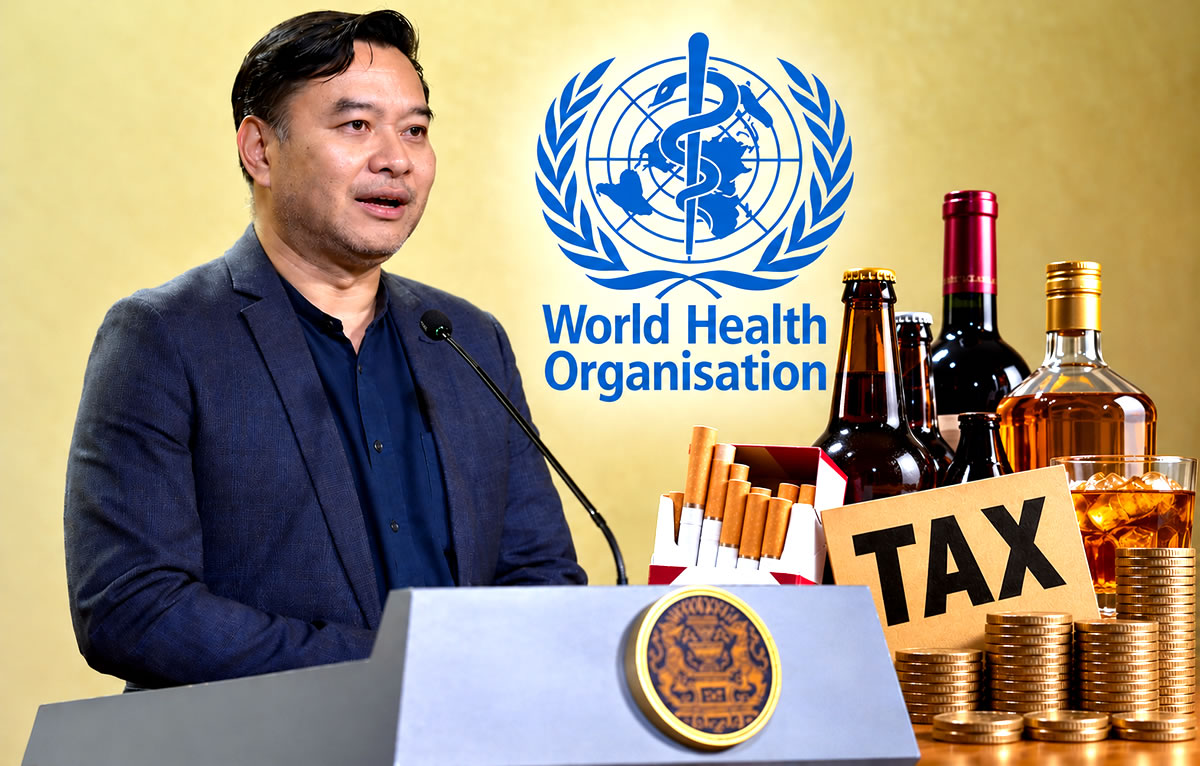
Thailand’s government has entered a bitter dispute with the World Health Organisation (WHO) over plans to overhaul alcohol and tobacco taxation. At stake is control over approximately ฿12–14 billion annually, collected through special levies on cigarettes and alcoholic drinks.
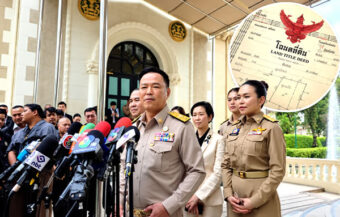
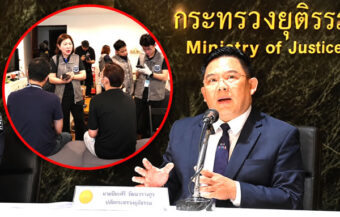
On Sunday, government spokesman Dr Ekkapop Pianpises warned the WHO against interfering in Thailand’s internal affairs. Meanwhile, Prime Minister Anutin Charnvirakul’s government faces opposition to changes affecting four major public institutions. The row has also widened into questions over luxury hotel conferences, expensive international travel and the use of taxpayers’ money.
The confrontation intensified on Sunday, 25 October 2026, following a direct intervention by WHO Director-General Tedros Adhanom Ghebreyesus. In a letter dated 14 October, Tedros urged Prime Minister Anutin to protect Thailand’s established public health financing arrangements.
WHO warning over ThaiHealth funding sparks sovereignty row as government defends its legal rights
Specifically, he called for the financial independence of the Thai Health Promotion Foundation, widely known as ThaiHealth, to be preserved. He also urged Thailand to maintain effective taxation of alcohol and tobacco products.
However, the government’s response was forceful. Ekkapop publicly challenged the WHO’s involvement in Thailand’s domestic legislative affairs.
The spokesman published his response on Facebook under the title Thank You to the WHO for Taking an Interest in Thailand’s Internal Affairs. He acknowledged the organisation’s responsibility to provide public health advice to member countries.
Nevertheless, he insisted that its recommendations must respect national sovereignty and avoid interference in domestic affairs.
Ekkapop argued that Thailand has established constitutional procedures for introducing, amending and repealing legislation. Furthermore, he stressed that the executive branch must honour commitments made to parliament and the public. He also referred to the judiciary’s separate constitutional responsibilities. His intervention followed criticism of the proposed changes from senior Thai public health specialists.
Government plans to redirect billions in sin taxes threaten dedicated funding for four Thai institutions
At the centre of the confrontation is legislation that would change how four major public institutions receive funding. Currently, those organisations receive dedicated revenue from special levies imposed on alcohol and tobacco excise duties.
The arrangements operate outside the government’s ordinary annual budget allocation process. Under the proposed amendments, these earmarked funding mechanisms would be abolished. Instead, the revenue would enter the Treasury and become subject to annual government budget decisions.
The four recipients are ThaiHealth, the National Sports Development Fund, the Older Persons Fund and Thai PBS. Together, they have received tens of billions of baht through the existing arrangements. Indeed, figures attributed to Thailand’s Excise Department show combined receipts of ฿58.031 billion between fiscal years 2022 and 2025. That represents an average of approximately ฿14.51 billion annually.
Contemporary estimates place the annual revenue affected by the proposed changes at approximately ฿12–14 billion. The final audited figures for fiscal year 2026, which ended on 30 September, have not been established in the available material. Even so, the historical figures demonstrate the substantial scale of the funding arrangements now under examination.
ThaiHealth funding of billions faces overhaul alongside sports, elderly welfare and public broadcasting
For ThaiHealth alone, average annual receipts during the four-year period reached approximately ฿4.04 billion. Its financial plan for fiscal year 2026 provides for approximately ฿4.58 billion.
Notably, that figure represents planned financing rather than confirmed collections from the special levy. The National Sports Development Fund received approximately ฿4.07 billion annually during the same four-year period.
Similarly, the Older Persons Fund received an annual average of approximately ฿4.38 billion. Thai PBS received approximately ฿2.01 billion annually. Consequently, the proposed legislation reaches far beyond Thailand’s principal health promotion foundation. It also affects funding for sports development, elderly welfare and the country’s public broadcasting service.
The existing arrangements are based on additional charges calculated against alcohol and tobacco excise tax liabilities. ThaiHealth receives a levy equivalent to 2% of the relevant excise duty. The National Sports Development Fund receives another 2%. Likewise, the Older Persons Fund receives 2%, while Thai PBS receives 1.5%. Together, the four levies amount to 7.5% of the underlying excise tax.
How Thailand collects alcohol and tobacco levies from producers and importers before consumers pay
Importantly, these percentages are not applied directly to the retail prices of cigarettes or alcoholic drinks. Instead, they are calculated on the amount of excise duty payable by manufacturers and importers.
For example, an excise liability of ฿100 generates an additional ฿2 for ThaiHealth. Another ฿2 goes to the National Sports Development Fund, while the Older Persons Fund receives the same amount. Thai PBS receives ฿1.50.
Therefore, the four levies increase the combined liability from ฿100 to ฿107.50. That calculation excludes other applicable charges, including the local or Interior surcharge and value-added tax. The system is administered through Thailand’s Ministry of Finance and the Excise Department.
For domestically manufactured products, excise tax generally becomes payable when goods leave factories or relevant bonded facilities.
In parallel, imported alcohol and tobacco products are subject to excise obligations when entering Thailand through customs. The duties apply to both domestic production and imported products. Although manufacturers and importers are responsible for payment, much of the financial burden passes through to consumers. As a result, the taxes are reflected in retail prices paid for cigarettes, beer, spirits and other taxable products.
Bhumjaithai defends Treasury control of sin taxes as critics warn ThaiHealth could lose independence
Alcohol excise calculations depend on both product value and alcohol content. Tobacco excise also incorporates value-based and quantity-based calculations. The special levies are then calculated against the resulting excise liabilities.
Under the proposed changes, these dedicated allocations would disappear. The government would adjust ordinary excise taxation and direct the resulting revenue into the Treasury.
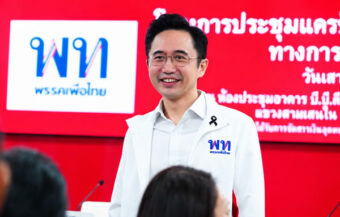
Subsequently, the four organisations would seek funding through the annual national budget. The proposed amendments are associated with the Bhumjaithai Party, which leads the governing coalition. Bhumjaithai legal affairs chairman Supachai Jaisamut has defended the changes.
He argues that the legislation would not abolish ThaiHealth or necessarily terminate its existing programmes. Rather, the proposals would consolidate public revenue within the government’s fiscal system and strengthen oversight of expenditure financed through taxation.
Critics argue that the changes would remove an important guarantee of independent financing. Currently, ThaiHealth receives dedicated funding through a statutory mechanism linked to alcohol and tobacco excise collections. That arrangement allows the foundation to operate without depending entirely on annual government budget decisions. Under the proposed system, its funding would become subject to those decisions.
Proposed ThaiHealth law would give government wider control over funding from October 2027 onwards
The legislation would also change the wording governing government financial support for ThaiHealth. The existing annual subsidy obligation would be replaced by a provision for assistance as necessary.
Consequently, the government would gain greater discretion over the amount allocated to the foundation. The proposed ThaiHealth amendment is scheduled to take effect on 1 October 2027, subject to legislative approval.
However, the changes have not yet become law. Nor have future budget allocations for the four affected organisations been established. The financial implications are significant. Under the current arrangements, the recipients have statutory access to designated revenue streams. Under the proposed arrangements, those funds would become part of the central budget process.
The transfer would not automatically provide the government with ฿14 billion in additional income. The money is already collected under existing tax legislation. Instead, the principal change would concern control over its allocation and subsequent expenditure. Any additional resources available for other government priorities would depend on future funding decisions.
On another front, the government has questioned spending associated with ThaiHealth. On Saturday, 24 October, Ekkapop challenged expenditure connected with a tobacco-control conference on Koh Samui. The event was identified as the For a Smoke-Free Thai Society conference. It was held at a luxury hotel on the island.
Government spokesman questions luxury Koh Samui tobacco conference and costly international travel
The spokesman questioned why an event devoted to tobacco control required such expensive accommodation. Specifically, he cited hotel room rates starting at ฿15,000 per night. Those figures did not include additional expenditure on meals, conference facilities or travel. He also referred to accounts of expensive international conference arrangements.
According to Ekkapop, people in the pharmaceutical industry had described first-class air travel, luxury hotels and other costly arrangements. The spokesman also referred to six-star accommodation and luxury travel.
However, the available reporting does not establish that ThaiHealth financed all the expenditure he described. Nor does it establish that the foundation paid for the international travel arrangements mentioned.
Nevertheless, Ekkapop questioned the use of taxpayers’ money for expensive conferences and accommodation. He sought explanations from senior Department of Disease Control officials concerning the funding arrangements. His intervention added a dispute over spending to the wider argument about statutory financing. The following day, the spokesman turned his attention directly towards the WHO.
WHO defends Thailand’s award-winning ThaiHealth funding model and calls for sustainable health taxes
His Facebook statement challenged the organisation’s involvement in domestic legislative decisions. The sequence brought together two separate issues: financial accountability and international criticism of the proposed reforms. Meanwhile, the WHO has defended Thailand’s existing health promotion financing model.
ThaiHealth was established in 2001 and has operated for approximately 25 years. Its principal financing mechanism draws on special levies linked to alcohol and tobacco taxation.
The organisation uses these resources for health promotion and disease prevention programmes. In addition, its financing model has received international recognition.
In 2021, ThaiHealth received the WHO’s Nelson Mandela Award for Health Promotion. The award recognised its contribution to public health promotion. Consequently, the foundation occupies an established position in the WHO’s international health promotion work. In his letter to Anutin, Tedros described ThaiHealth as an internationally recognised model for financing preventive healthcare.
He urged Thailand to preserve sustainable funding for its activities. The WHO also raised the importance of maintaining effective taxation on products associated with preventable illness. Its intervention referred to the organisation’s 3 by 35 initiative. That programme promotes higher real prices for tobacco, alcohol and sugary drinks by 2035. The policy uses taxation and pricing measures to discourage consumption.
WHO offers technical assistance as Thai health specialists warn against political control of funding
The WHO did not demand that Thailand abandon its legislative proposals outright. Instead, it urged the government to protect health promotion financing and preserve the benefits of existing taxation. It also offered technical assistance to Thailand. In response, the government focused on the limits of international involvement in domestic policy.
Ekkapop acknowledged that the WHO could provide recommendations on public health matters. However, he maintained that legislative decisions must follow Thailand’s own constitutional procedures.
His statement also stressed the government’s obligations arising from its commitments to parliament. The exchange has therefore developed beyond a disagreement over tax revenue.
Meanwhile, opposition to the proposed changes has emerged within Thailand’s medical and public health communities. Dr Wichai Chokwiwat, chairman of the Senior Citizens Council of Thailand, has criticised the proposed funding arrangements.
He warned that placing ThaiHealth under the annual budget process could expose its programmes to political pressure. In particular, he questioned the implications of removing the foundation’s existing financial independence.
Former ThaiHealth leaders defend audits as critics challenge changes to earmarked public health taxes
Other critics have raised concerns about the continuity of long-term health promotion programmes. They argue that dedicated statutory financing provides greater certainty than annual budget allocations.
Separately, former ThaiHealth executives have defended the foundation’s existing financial oversight arrangements. They have pointed to annual audits and reporting requirements.
Their response challenges suggestions that independent financing necessarily means an absence of financial scrutiny. The rector of Mahidol University has also supported the WHO’s intervention. He has warned against changing the destination of revenue collected through the existing sin-tax system. The objections have added institutional weight to opposition from public health specialists.
Some critics have raised concerns about the possible influence of tobacco and alcohol interests. However, the available information does not establish improper industry influence over the legislative proposals. The government’s stated case remains focused on fiscal management, accountability and budgetary oversight. Supachai has maintained that the proposed changes would bring public revenues within a unified financial framework.
Opponents argue that this would alter the independence of organisations established for specific public purposes. The difference concerns how public money is allocated after collection.
It does not necessarily concern whether alcohol and tobacco excise duties should be abolished or reduced. Indeed, the proposed arrangements envisage continued taxation, with changes to the handling of the resulting revenue.
Four institutions face annual budget decisions as government seeks control over dedicated tax income
The four organisations currently receive funding according to statutory percentages of excise liabilities. Consequently, their receipts are linked to the operation of the tax system rather than individual annual budget decisions.
Under the proposed legislation, those automatic allocations would end. The government would instead determine funding through the national budget process.
For ThaiHealth, this would replace a dedicated revenue stream with allocations subject to government discretion. The same broad change would affect sports development, elderly welfare and public broadcasting. Together, the four recipients have received more than ฿58 billion over the four fiscal years examined. Their average annual receipts exceeded ฿14.5 billion during that period.
Meanwhile, ThaiHealth’s planned financing for fiscal year 2026 stands at approximately ฿4.58 billion. However, no confirmed replacement allocations have been established for the affected organisations. Nor has the government specified, in the available material, how much each would receive under future budgets.
Separately, Ekkapop’s allegations concerning the Koh Samui conference have introduced questions about specific expenditure. The spokesman cited accommodation rates of at least ฿15,000 per night. He also raised concerns about expensive international conference arrangements and luxury travel.
Koh Samui spending questions remain unresolved as WHO dispute puts ThaiHealth reform under scrutiny
However, the available information does not establish the total cost of the Koh Samui event. It also does not establish how much ThaiHealth paid towards the conference or related expenditure. Ekkapop has sought explanations from Department of Disease Control officials. The outcome of those inquiries has not been established in the supplied reporting.
His public criticism came immediately before his confrontation with the WHO. On 24 October, he challenged spending associated with a tobacco-control conference.
On 25 October, he warned the WHO against involvement in Thailand’s internal legislative affairs. Both interventions occurred against the background of the proposed overhaul of earmarked excise taxation.
Prime Minister Anutin is the direct recipient of the WHO director-general’s letter. The correspondence dated 14 October urged the preservation of ThaiHealth’s financial independence. It also offered assistance concerning sustainable health financing. In contrast, the government’s public response has emphasised sovereignty and domestic legislative authority.
Thailand remains a member of the WHO and participates in its international public health programmes. Nevertheless, Ekkapop has insisted that membership does not displace Thailand’s constitutional procedures. The legislative proposals remain subject to consideration and approval. Consequently, the existing funding mechanisms continue to operate pending any changes to the law.
ThaiHealth funding changes face parliamentary approval before proposed October 2027 commencement
The planned commencement date for the ThaiHealth amendment is 1 October 2027. Before then, the government must secure the legislative changes required to redirect the revenue. However, it has not established future annual allocations for the four organisations. The WHO has offered technical assistance, while the government spokesman has challenged its intervention.
Meanwhile, the spending questions raised over the Koh Samui conference remain unanswered in the available reporting. The total cost, financing arrangements and ThaiHealth’s precise contribution have not been established.
Failing foreign tourism sector at war over tourist levy and exactly who benefits from the billions raised
New taxes simply for going in and out of Thailand in addition to higher airport tax already implemented
Ekkapop has demanded explanations from Department of Disease Control officials. Further scrutiny of those arrangements now accompanies parliamentary consideration of the proposed tax changes.
The next stage rests with the legislative process. If approved, the amendments would replace automatic statutory allocations with funding determined through annual government budgets. ThaiHealth and the other three recipients would remain eligible for public financing, but without their existing earmarked revenue arrangements. The proposed commencement date remains 1 October 2027, subject to parliamentary approval.
Join the Thai News forum, follow Thai Examiner on Facebook here
Follow Thai Examiner on Google here
Receive all our stories as they come out on Telegram here
Follow Thai Examiner here
Further reading:
60-day visa regime to be ended confirms Minister responding to rising industry security concerns
Tourism boss warns Thailand it is facing a Chinese blacklist if another security controversy erupts