Thailand on war alert. US-Iran tensions threaten half its crude imports as oil tops $113. Prime Minister Anutin Charnvirakul orders energy and cyber preparations, while Thai embassies ready evacuation plans. Security chiefs meet Wednesday.
Thailand is bracing for fresh US strikes on Iran, with oil supplies threatened and fuel prices soaring. Prime Minister Anutin Charnvirakul has ordered emergency preparations as Washington weighs attacks after Tuesday’s American midterm elections. Meanwhile, Thai embassies are on alert, with military evacuations under consideration. Half of Thailand’s crude oil imports come from the Middle East, while Brent has topped $113 a barrel. Iranian attacks reportedly targeted 25 ships in October, threatening further disruption. Thailand’s strained Oil Fuel Fund faces another blow as officials scramble to secure alternative energy supplies. Cyber defences are also under review. An urgent National Security Council meeting is set for Wednesday, November 4. However, Bangkok insists food supplies are secure, despite uncertainty over current oil reserves and evacuation arrangements.
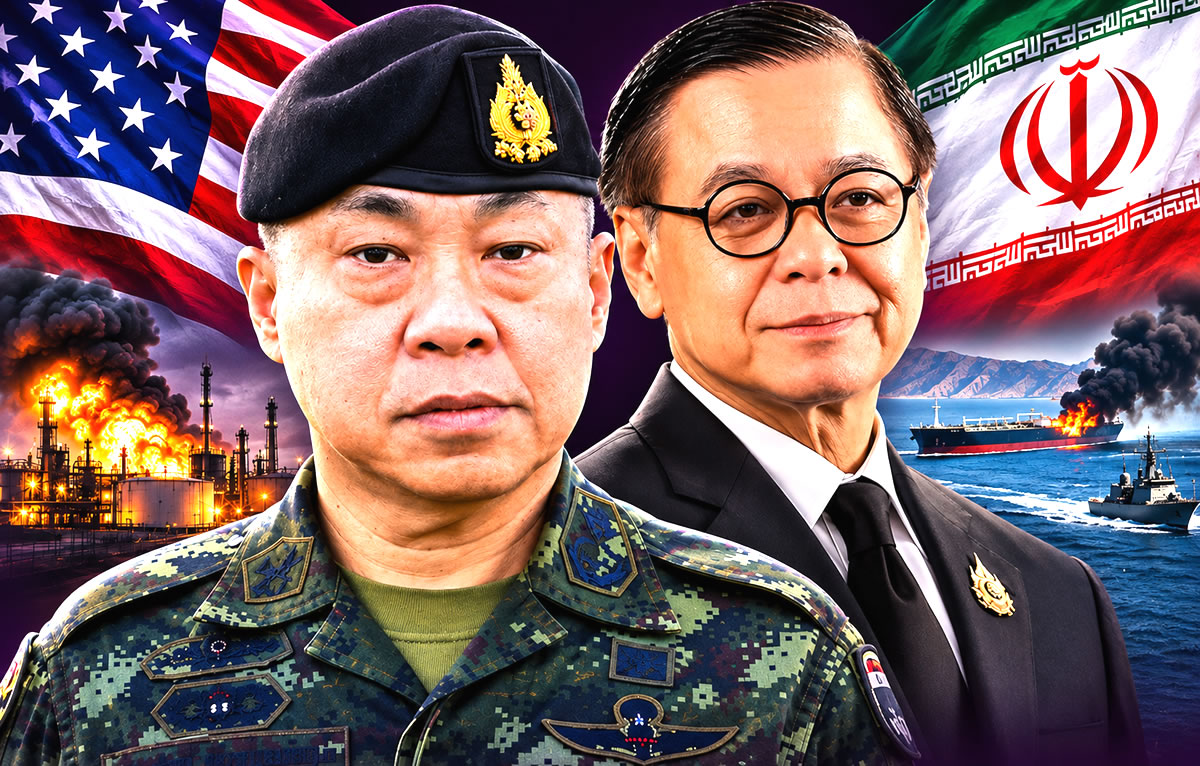
Thailand is preparing for renewed US military strikes against Iran, with oil supplies and prices posing the greatest immediate threat. Prime Minister Anutin Charnvirakul has ordered emergency preparations as tensions rise across the Middle East.
The Foreign Affairs and Defence ministries are also coordinating daily over possible evacuations of Thai nationals. Meanwhile, intelligence agencies are monitoring military deployments, and energy officials are reviewing alternative oil supplies.
Bangkok faces the prospect of higher fuel prices, disrupted shipping and further economic pressure. An urgent National Security Council meeting is scheduled for Wednesday, November 4. However, the government insists Thailand remains food secure and has urged the public not to panic.
Washington considers fresh Iran strikes as Thailand faces oil supply threats and rising economic pressure
The preparations follow reports that Washington is considering fresh military operations against Iran after the November 3 American midterm elections. US officials have reportedly warned regional allies to prepare for possible strikes and Iranian retaliation.
Notably, the warnings include potential attacks on oil installations and critical infrastructure across the Gulf. However, US President Donald Trump has not confirmed a decision to launch another operation. Diplomatic negotiations are continuing, although the military threat has prompted emergency planning across the region.
Thailand faces particular exposure because approximately half its crude oil imports originate in the Middle East. Consequently, another prolonged disruption could threaten fuel availability and push domestic prices higher.
Rising petroleum costs would also affect transport, agriculture, manufacturing and tourism. The government has already introduced emergency measures during earlier hostilities. In response, officials are reviewing those arrangements and examining whether additional protection is required.
National Security Council confirms emergency preparations ahead of urgent November 4 meeting
National Security Council Secretary-General General Chaipruak Doungprapat confirmed the latest preparations on Friday, October 30. He said Thai intelligence agencies were monitoring American and Iranian military deployments alongside diplomatic developments.
The objective is to assess the risk of renewed hostilities and their consequences for Thailand. Separately, government departments are reviewing energy security, economic disruption, evacuation arrangements and potential cyberattacks.
General Chaipruak said agencies had prepared contingency arrangements covering different levels of emergency. These include routine readiness measures and responses to more serious developments.
Nevertheless, he stressed that the preparations did not indicate an imminent crisis. The government wanted agencies ready to respond if the international situation deteriorated. He also acknowledged that renewed fighting would affect energy supplies and could have wider economic consequences.
The National Security Council will convene an urgent meeting on Wednesday, November 4. Government departments and academic specialists monitoring the Middle East are expected to participate. During the meeting, officials will assess Thailand’s exposure and examine further emergency measures.
Prime Minister orders wider emergency planning covering energy security, cyberattacks and Thai citizens
The review will cover essential supplies, energy availability and national infrastructure. General Chaipruak said Prime Minister Anutin Charnvirakul had instructed the council to identify areas requiring advance preparation.
Energy security is a central concern, but the government’s preparations extend beyond petroleum imports. On another front, the Ministry of Digital Economy and Society is preparing for potential cyberattacks.
The National Security Council is coordinating with relevant agencies to assess these threats. Existing emergency arrangements are also being reviewed against possible changes in the regional security situation. General Chaipruak said the government had already developed alternative energy supply plans following the earlier crisis.
Those arrangements may require further changes if another confrontation develops differently. The security chief said officials would examine possible responses rather than rely entirely on previous measures.
In parallel, the Foreign Affairs and Defence ministries are reviewing the safety of Thai nationals across the Middle East. Their daily coordination includes plans for military assistance if evacuations become necessary.
Foreign Minister confirms military evacuation plans as Thai embassies monitor threats across the Middle East
Deputy Prime Minister and Minister of Foreign Affairs Sihasak Phuangketkeow confirmed the evacuation preparations on October 30. He said the Foreign Affairs Ministry was working closely with the Royal Thai Armed Forces.
Both organisations have plans to relocate Thai citizens if regional security deteriorates. Significantly, General Chaipruak confirmed that discussions between the two ministries were taking place daily. The arrangements cover possible military involvement in moving citizens from threatened locations.
Thai diplomatic missions throughout the region have been instructed to monitor security developments and maintain contact with Thai communities. Particular attention is being paid to countries potentially exposed to Iranian retaliation.
These include Gulf states hosting important energy installations and strategic infrastructure. Such facilities could face attacks if American military operations trigger a wider confrontation. Foreign Minister Sihasak said Thailand had previous experience conducting evacuations during international conflicts.
That experience provides the basis for coordinating diplomatic and military assistance. However, Bangkok has not ordered a general evacuation under the latest preparations. Neither has the government confirmed the dispatch of military aircraft for a new operation.
For the moment, officials are maintaining readiness rather than instructing Thai nationals to leave. The Foreign Affairs Ministry is instead urging citizens to follow emergency guidance issued by their host governments.
Emergency food warnings spread across Gulf states as Thailand reviews evacuation routes and flight risks
Several foreign governments have advised residents to maintain sufficient food and drinking water for at least 72 hours. The warnings have increased concern about renewed military operations.
Accordingly, Thai embassies have been instructed to communicate relevant local announcements and emergency instructions. Sihasak said evacuations or relocations could become necessary if public safety deteriorated. The government has not disclosed how many Thai nationals might require assistance.
Nor has Bangkok identified specific evacuation routes, assembly locations or aircraft assignments. These details could become important if hostilities interrupt commercial aviation across the Gulf.
Thai citizens might then require assistance reaching safer areas before returning home. In addition, workers employed throughout the region could face interrupted employment and lost earnings. Their families in Thailand could consequently experience reduced remittances.
No country-by-country assessment of Thai nationals potentially affected has been released. Nevertheless, daily coordination between the Foreign Affairs and Defence ministries confirms that evacuation planning is active.
The government is also monitoring developments that could affect civilian transport and regional infrastructure. Any wider confrontation could complicate evacuation arrangements while increasing pressure on Thailand’s energy supplies.
Thailand’s dependence on Middle East crude oil leaves fuel prices and domestic supplies facing fresh threats
The petroleum threat is particularly serious because Thailand depends heavily on imported crude oil. Much of that supply originates in the Persian Gulf. Consequently, interruptions to production facilities or shipping routes could rapidly affect domestic fuel costs.
On April 6, Prime Minister Anutin Charnvirakul warned that approximately half of Thailand’s energy imports came from the Middle East. He said earlier fighting had already disrupted production, refining, storage and transportation.
Damage to energy infrastructure can also have consequences beyond the immediate fighting. Even after hostilities cease, damaged facilities may require time before normal operations resume. Thailand therefore faces exposure to both immediate supply interruptions and prolonged international price pressure.
Imported crude supports domestic refining and petroleum distribution. Higher purchase prices subsequently increase the cost of supplying petrol, diesel and other petroleum products.
The government has already taken steps to protect domestic fuel availability. In March, Thailand suspended petroleum exports during the earlier Middle East crisis. Officials also began pursuing alternative sources of crude oil.
Thailand reviews alternative energy sources as latest oil reserve figures remain undisclosed by government
These measures were intended to safeguard supplies while international markets faced disruption. As part of the response, agencies considered increasing natural gas production in the Gulf of Thailand. Greater use of coal-fired and hydroelectric generation was also examined.
Alternative energy arrangements could reduce dependence on disrupted imports. Their effectiveness, however, would depend on the duration and severity of another confrontation. Existing oil reserves are therefore an important part of Thailand’s emergency position.
On March 13, officials reported petroleum reserves equivalent to approximately 98 days of consumption. That figure described the country’s position during the earlier crisis. Sources cannot establish the quantity available on November 2.
The latest government announcements have not provided an updated reserve figure. Furthermore, officials have not confirmed new emergency crude oil purchases. The precise volume available to withstand another prolonged disruption therefore remains unclear.
Existing inventories would influence how long domestic supplies could be maintained. Alternative imports might provide additional protection, depending on international availability and shipping arrangements.
Oil prices surge above $113 as Strait of Hormuz shipping attacks threaten supplies across Asian markets
Oil prices are already under severe pressure. Market reports published on November 1 placed Brent crude above $113 per barrel. American crude was reported at approximately $104. These levels demonstrate the substantial cost of imported petroleum before any further military escalation.
Another interruption to Gulf production or transportation could drive costs higher. For Thailand, the consequences would extend from refineries and fuel distributors to businesses and consumers.
The Strait of Hormuz remains a critical vulnerability. The waterway carries petroleum shipments leaving the Persian Gulf for international markets. Disruption there can therefore affect energy importers throughout Asia.
Although shipping movements have recovered from earlier wartime lows, attacks on commercial vessels continue. Insurance premiums and freight charges have also increased. These additional costs raise the expense of transporting petroleum even when shipments continue.
The Washington Post reported on October 30 that Iran had attacked at least 25 ships during October. Two vessels were sunk during those incidents. The newspaper also reported seven seafarer deaths since intensified shipping protection operations began in August.
The attacks have maintained pressure on commercial shipping despite efforts to protect maritime traffic. Meanwhile, OPEC+ producers have maintained existing output levels rather than announcing a substantial production increase.
Thailand’s Oil Fuel Fund faces mounting pressure as higher crude prices threaten transport and agriculture
International buyers consequently remain exposed to further disruption if hostilities intensify. Thailand could face higher import costs without suffering a complete interruption to deliveries. Increased insurance premiums and shipping charges could compound the impact.
Any sustained disruption to Gulf oil facilities would add another source of pressure. The scale of the economic consequences would depend on the amount of production and transportation affected.
Thailand’s Oil Fuel Fund represents another major concern. In September, officials reported expenditure of approximately ฿770 million daily on fuel subsidies. The fund was already under substantial financial pressure.
Another sustained increase in international petroleum prices could therefore raise the cost of maintaining domestic fuel subsidies. Alternatively, higher prices could be passed through to motorists and businesses. No additional subsidy arrangements or fuel price controls have been confirmed in the latest announcements.
The consequences could extend across the economy. Diesel prices affect road haulage, public transport, agricultural machinery and the distribution of goods. Higher fuel costs could increase operating expenses for lorries, buses and logistics companies. As a result, businesses could face more expensive distribution and pressure on profit margins. Agriculture would also be exposed through fuel, fertiliser and transportation costs.
Rising energy costs threaten Thai manufacturing, electricity generation and international tourism
Manufacturers using petrochemicals, plastics and energy-intensive production processes could encounter higher expenses. Electricity generation represents another area of exposure. Any tightening of natural gas or liquefied natural gas supplies could increase generation costs. Similarly, higher energy prices could affect industrial operations and household expenditure. These pressures would arise even if Thailand remained outside the military confrontation.
Tourism could also face disruption. Airlines are exposed to higher aviation fuel costs and restrictions affecting routes across the Middle East. Flights linking Thailand with Europe through Gulf aviation hubs could be interrupted by security concerns.
Higher airfares could increase travel expenses and discourage long-haul visitors. In addition, disruption to international connections could complicate journeys involving Gulf carriers. The extent of these effects would depend on the scale and duration of hostilities.
A limited confrontation lasting several days could produce a sharp but temporary increase in oil prices. Existing inventories and alternative supply arrangements might cushion immediate disruption.
By contrast, prolonged attacks on energy installations and shipping routes could create sustained shortages. Crude oil and LNG availability could tighten while freight and insurance charges rise. Thailand could then face continuing pressure on fuel prices, electricity costs and industrial production.
US and Israel weigh further Iran strikes as Tehran threatens Gulf oil facilities and communications
A wider conflict involving Gulf countries would present additional difficulties. Commercial aviation restrictions could complicate the evacuation of Thai nationals.
At the same time, shipping disruptions could affect petroleum imports and increase the cost of essential supplies. Bangkok could therefore face simultaneous demands involving energy security and the safety of citizens overseas. These remain potential consequences rather than confirmed government forecasts.
The military threat follows reports that Washington and Israel have developed plans for further operations against Iran. According to an Associated Press report published on October 29, American officials privately warned regional allies about possible strikes.
The reported timetable placed potential operations after the November 3 American midterm elections. Notably, the warnings included possible Iranian retaliation against energy installations and other critical infrastructure. President Donald Trump had not made a final decision at the time of the report.
Iran has separately threatened retaliation against oil facilities and undersea communications cables if major American and Israeli attacks resume. Other infrastructure across Gulf countries could also become targets.
Such operations could disrupt telecommunications, transport and essential services alongside petroleum production. The consequences would therefore extend beyond oil markets and commercial shipping. Nevertheless, diplomatic contacts are continuing while military preparations remain under consideration.
Qatar mediates US-Iran talks as Prime Minister Anutin reassures Thais over food and energy security risks
Reports on November 1 indicated that Qatar was mediating indirect discussions involving the Strait of Hormuz and frozen Iranian assets. The talks concerned possible arrangements to reopen the waterway and release Iranian funds.
These diplomatic efforts are continuing alongside reports of possible military operations. No confirmed American attack date has been announced. The outcome remains uncertain as governments across the region prepare for further developments.
Against this background, Prime Minister Anutin Charnvirakul has sought to reassure the Thai public about essential supplies. Speaking on Friday, October 30, he said Thailand remained secure in food production and agricultural resources.
His comments followed reports that foreign governments were advising residents to stockpile emergency provisions. The Prime Minister urged Thais to remain vigilant without becoming alarmed. He said the country possessed sufficient agricultural production and raw materials to meet domestic needs.
The government is also preparing alternative energy arrangements to address possible international disruptions. Separately, General Chaipruak said the National Security Council would provide public information at an appropriate time.
He emphasised that emergency planning should not be interpreted as evidence of an impending domestic crisis. Government agencies were preparing for different levels of disruption rather than responding to a confirmed attack.
Important operational details nevertheless remain undisclosed. Thailand has not released its latest verified oil reserve position or confirmed new agreements with alternative petroleum suppliers. Nor has the government announced additional emergency funding for fuel subsidies.
Thailand awaits emergency security meeting as oil supply risks and evacuation questions remain unresolved
The Foreign Affairs Ministry has also withheld detailed evacuation timetables and country-by-country assessments of Thai nationals at risk. These matters could receive further attention during Wednesday’s National Security Council meeting.
Thailand’s exposure centres on imported energy, international shipping routes and global commodity prices. The country could face substantial economic consequences without becoming directly involved in military operations.
USS Abraham Lincoln departs Thailand after a special visit. Captain gave thanks for the very warm welcome
US sanctions on Iran must be taken seriously in Bangkok. Time to cut exposure to the Islamic Republic
Earlier hostilities have already disrupted Gulf energy infrastructure and commercial shipping. Another confrontation could therefore increase fuel costs, raise business expenses and place additional pressure on the Thai economy. The government might also face demands to evacuate citizens from countries affected by military operations.
Bangkok has confirmed preparations covering energy security, evacuations and cyber defences. The Foreign Affairs and Defence ministries are maintaining daily coordination over possible emergency movements.
Intelligence agencies are monitoring American and Iranian military deployments, while officials review alternative energy supplies. The National Security Council will examine the country’s readiness on Wednesday, November 4. No new American military operation has been confirmed. However, Thailand is preparing for renewed Middle East hostilities, with its oil supplies, economy and citizens overseas potentially exposed.