Security locks down coastal Chonburi as 5,000 USS Abraham Lincoln sailors and Marines arrive. Around 3,000 are expected in Pattaya, where police patrol nightlife zones while US Navy rules ban Soi 6, cannabis shops, jet skis and more on shore leave.
Thailand has mounted a huge security operation across coastal Chonburi as the USS Abraham Lincoln brings around 5,000 sailors and Marines ashore. About 3,000 are expected in Pattaya during the five-day visit after more than 200 days at sea and Middle East operations. Checkpoints guard Laem Chabang Port as Royal Thai Navy personnel, police and port security lock down access around the carrier. Pattaya has been carved into policing zones covering hotels, beaches, malls, nightlife districts and tourist attractions. Extra patrols, rapid-response teams and organised transport are deployed, while Koh Larn is watched by more than 280 CCTV and 42 AI facial-recognition cameras. US Navy rules put Soi 6, Soi 6/1, Soi 7, cannabis shops, certain pharmacies, jet skis and specified water activities off-limits. Meanwhile, Thai agencies are cracking down on street prostitution, protecting minors, policing taxi fares and overcharging, with Tourist Police on 24-hour standby.
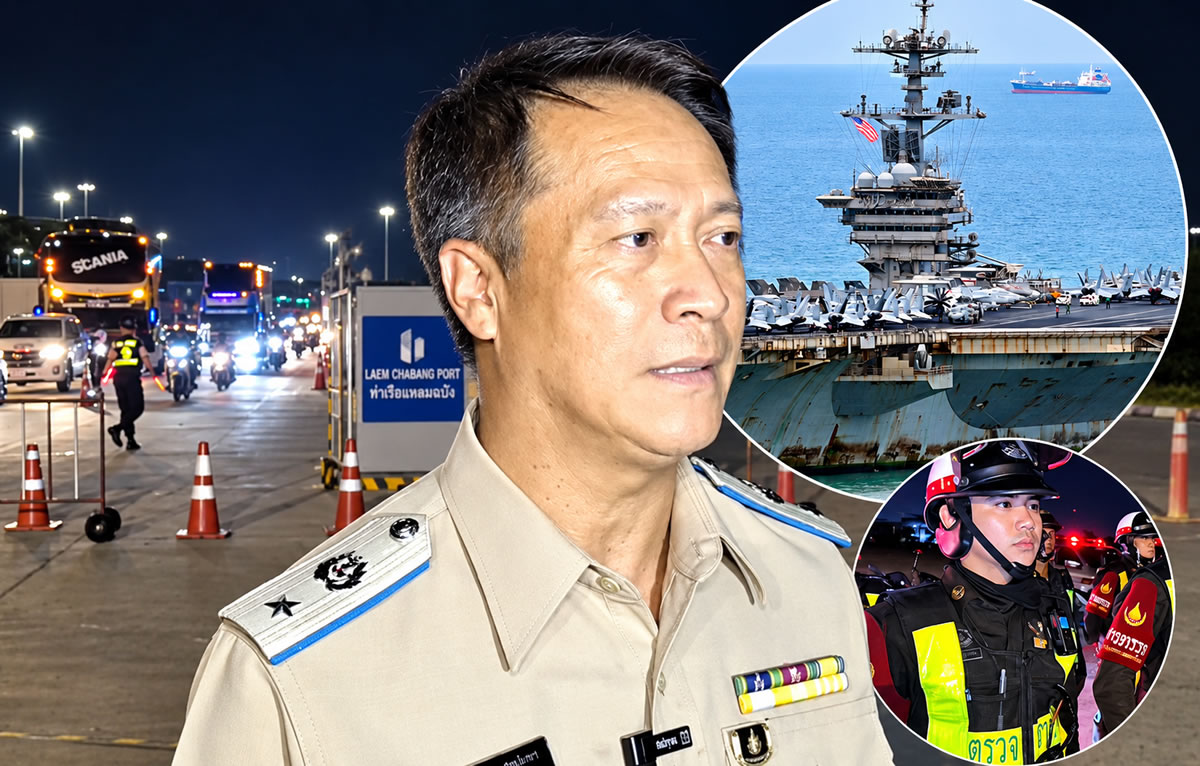
Thai security agencies have mounted a five-day security operation across Chonburi for the USS Abraham Lincoln visit. The operation stretches from Laem Chabang Port through Pattaya and offshore to Koh Larn.
Around 5,000 American sailors and Marines are involved in the September 2-6 port call. Thai officials expect roughly 3,000 to visit or stay overnight in Pattaya.
Consequently, the security footprint reaches far beyond the carrier’s berth at Laem Chabang. It covers port entrances, transport routes, hotels, beaches, nightlife districts and major tourist areas. Offshore surveillance extends the operation further to Koh Larn. US Navy security teams are also enforcing separate restrictions on American personnel.
Laem Chabang opens security checkpoints as 5,000 US Navy personnel begin five-day Chonburi visit
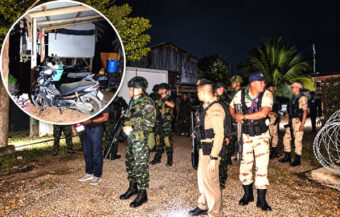
At Laem Chabang, the tightest security surrounds the aircraft carrier and its restricted berth. Access to Terminal C0 at Laem Chabang International Ro-Ro Terminal is limited to authorised personnel.
Royal Thai Navy personnel are involved alongside port security, police and local agencies. Meanwhile, additional checkpoints are screening vehicles and people entering and leaving the wider port complex.
eputy Port Director Veerachat Phuttharaksa formally opened the checkpoint operation at 7 pm on September 2. The Laem Chabang Port Security Department is working directly with Laem Chabang Police Station. Officers are inspecting vehicles and screening people entering or leaving the area. They are also monitoring suspicious individuals, objects and unusual activity.
As part of this, officers have been instructed to conduct checks carefully and follow established procedures. Any unusual occurrence must be reported immediately through command channels. Relevant agencies must then coordinate their response. The arrangements remain active throughout the USS Abraham Lincoln’s stay.
The security plan began before the carrier reached Chonburi. Provincial officials held a preparatory meeting on August 28. That meeting examined measures required for the American carrier and its thousands of personnel. Mr Veerachat said the current measures follow the security guidelines agreed there.
In parallel, participating units were instructed to maintain continuous coordination. The objective is to keep the naval visit running safely and smoothly. Port security therefore forms only the innermost layer. From Laem Chabang, the operation expands south towards Pattaya.
The numbers make that expansion necessary. Around 5,000 sailors and Marines are connected with the visit. However, they are not expected to come ashore together. Thai officials estimate roughly 60% will visit or stay overnight in Pattaya. That produces a potential influx approaching 3,000 servicemen and women.
Long Middle East deployment brings thousands of US sailors ashore as Pattaya expands police coverage
Notably, the USS Abraham Lincoln arrived after an exceptionally long operational deployment. Its personnel had spent more than 200 days at sea. The carrier had also been involved in Middle East operations. Pattaya is therefore receiving thousands of personnel following a prolonged period offshore.
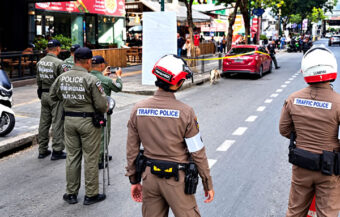
In response, Pattaya City Police have divided the resort into separate areas of responsibility. Officers are not being concentrated solely around Walking Street. Instead, coverage extends across locations where American personnel are expected to disperse. Those areas include hotels, restaurants, shopping centres, beaches and entertainment districts.
Additional patrols have been prepared around Pattaya Beach and major nightlife areas. Evening coverage has received particular attention. Large numbers of personnel are expected to enter entertainment districts after dark. Police are also maintaining rapid-response units for incidents requiring immediate intervention.
Separately, the operation involves far more than Pattaya City Police. Tourist Police are participating across the resort. Bang Lamung district officials are also involved. Pattaya municipal personnel and Chonburi provincial agencies form additional parts of the operation. Private businesses have also been incorporated into local security arrangements.
US Navy imposes separate Pattaya restrictions as Thai police maintain public order across the resort
US Navy security personnel provide another layer. American representatives joined Thai police and officials at Pattaya City Hall on August 31. That meeting coordinated arrangements before the sailors began arriving. As a result, two distinct security systems now overlap across the resort.
Thai agencies remain responsible for public order and law enforcement. By contrast, the US Navy controls the conduct of its personnel. It has imposed specific restrictions covering streets, businesses and recreational activities. Those measures apply to American personnel rather than ordinary Pattaya visitors.
Soi 6 has been declared off-limits to US military personnel. Soi 6/1 and Soi 7 are also prohibited. Cannabis shops have similarly been placed outside permitted areas. Certain pharmacies are restricted as well. Furthermore, jet skis and specified water activities are prohibited.
Walking Street remains available to the visiting personnel. However, US Navy rules require them to leave by 2 am. Pattaya City has stressed that these restrictions are American military orders. They are not Thai government closure orders. Therefore, affected businesses remain open to other customers.
Police target prostitution and protect minors as surveillance expands from Pattaya streets to Koh Larn
On another front, prostitution and protection of minors feature prominently in the preparations. Thai officials and US Navy representatives discussed both issues before shore leave began. Businesses were reminded that prostitution remains illegal. Officials also placed particular emphasis on protecting anyone younger than 18.
US Navy security personnel have briefed sailors and Marines on these restrictions. Ahead of the visit, policing of Pattaya’s street prostitution was also increased. The measures formed part of preparations for thousands of American personnel entering the resort. Nightlife security therefore became a major component of the wider operation.
At the same time, police have expanded surveillance beyond uniformed officers. Pattaya residents and businesses have been encouraged to act as community “sensors”. They have been asked to report suspicious behaviour or potential security problems. This creates a wider information network across areas frequented by the visitors.
Tourist Police services provide another reporting channel. The emergency number 1155 remains available around the clock. Visitors and residents can also use the Tourist Police application. Users can report incidents, request assistance and transmit their location directly to officers.
Beyond central Pattaya, the security footprint reaches Koh Larn. The island is an obvious daytime destination for personnel taking shore leave. More than 280 CCTV cameras already cover the island. In addition, 42 cameras have artificial-intelligence facial-recognition capabilities.
Organised transport moves US personnel into Pattaya as police spread security coverage across the city
That network gives officials extensive surveillance coverage away from the mainland resort. It also extends monitoring across another major tourism area. Thus, the operation runs from a restricted American aircraft carrier berth to an offshore holiday island.
Transport creates another major operational requirement. Thousands of sailors cannot simply emerge from Laem Chabang Port simultaneously. Instead, personnel are being moved towards Pattaya in organised groups. Buses have carried commanders and sailors towards hotels and designated recreation areas.
Along the routes, Thai officials have been positioned to assist those movements. Their role includes keeping traffic flowing and reducing disruption. Organised transport also provides greater control over the initial movement from the port. Once personnel reach Pattaya, however, they can disperse widely.
Some travel directly to hotels. Others head towards restaurants, shopping centres, beaches or nightlife areas. Accordingly, police cannot secure the visit through one concentrated deployment. Responsibility has instead been divided geographically across the city.
Commercial activity has also been brought within the official preparations. Several thousand visiting servicemen and women create a sudden increase in customers. Officials have therefore warned businesses against inflated prices. Taxi and transport fares have received particular attention.
Officials watch overcharging and currency services as police maintain security across Pattaya during visit
Service charges and other potential overcharging are also being watched. Businesses have been instructed to provide fair services and report problems. This adds a commercial dispute-prevention element to the wider policing effort. It also targets incidents that could quickly require police intervention.
Likewise, currency exchange has been incorporated into the arrangements. Mobile foreign-exchange facilities have been positioned near some accommodation areas. This allows personnel to exchange money without immediately searching elsewhere. It also reduces unnecessary movement immediately after organised transport reaches the resort.
Pattaya police chief Police Colonel Anek Srathongyoo has addressed the unusual circumstances surrounding the visit. The carrier’s personnel arrived after more than 200 days at sea. Their deployment included operations in the Middle East. The Pattaya stop now provides rest and recreation following that lengthy period.
Police Colonel Anek said residents should not be alarmed by the influx. The visit is intended to allow sailors and Marines to rest following their mission. Even so, police have maintained extensive security preparations across Pattaya. Those preparations extend well beyond the traditional entertainment districts.
No reliable overall manpower figure has been released for the Thai operation. The combined number of police, military and municipal personnel therefore remains unclear. Likewise, no overall figure has been published for US Navy security personnel. The number of participating organisations, however, demonstrates the breadth of the operation.
Thai police, navy and local agencies form layered security operation stretching across coastal Chonburi
Chonburi provincial officials sit within the wider coordination structure. Royal Thai Navy personnel are involved around Laem Chabang. Port security manages another part of the inner security zone. Laem Chabang Police Station works directly with those port officers.
Further south, Pattaya City Police cover the main resort. Tourist Police provide another security and visitor-assistance layer. Bang Lamung district officials are also participating. Pattaya City personnel and other provincial agencies form additional components.
Alongside them, private businesses have been brought into reporting arrangements. US Navy security teams focus directly on the American personnel. The result is a layered operation covering much of coastal Chonburi.
At its centre sits the USS Abraham Lincoln. The first security ring surrounds the carrier and its restricted berth. Another controls the entrances and exits at Laem Chabang Port. Checkpoints there screen vehicles, people and suspicious objects.
From there, another layer follows organised transport towards Pattaya. Police responsibility zones then spread across the resort. They encompass hotels, beaches, shopping centres, entertainment districts and tourist attractions. Finally, surveillance reaches offshore towards Koh Larn.
Security operation links carrier, port, transport routes and Pattaya as thousands take shore leave
In practical terms, the operation must handle several tasks simultaneously. It must protect the aircraft carrier and control access to the commercial port. It must also move thousands of military personnel towards Pattaya. Once there, police must maintain security across a sprawling tourism centre.
Moreover, officers must prepare for incidents across areas separated by considerable distances. Traffic movements must remain manageable. Commercial disputes must be contained. Tourist Police must remain accessible. US military restrictions must also operate alongside Thai law.
The sailors themselves remain free to move through permitted areas. That dispersal sharply widens the territory requiring police coverage. The operation is therefore not centred on one secure compound. Instead, it runs across the port, highways, resort districts and nearby island.
For five days, Laem Chabang and Pattaya are linked by organised movements of American military personnel. Security begins beside the USS Abraham Lincoln at Terminal C0. It then reaches newly established port checkpoints. From there, it follows transport routes towards Pattaya.
Inside the resort, the operation changes character. Port security gives way to urban policing, tourism management and nightlife coverage. Officers are spread across hotels, beaches, shopping areas and entertainment districts. Tourist Police provide additional support for visitors and residents.
Koh Larn surveillance and US Navy restrictions extend security network beyond Pattaya’s central districts
Offshore, Koh Larn adds another monitoring zone. Its extensive CCTV network gives officials coverage beyond Pattaya’s mainland streets. Meanwhile, businesses and residents provide another reporting layer through the community “sensors” system.
The US Navy’s restrictions add another dimension. Personnel cannot enter several well-known entertainment streets. Cannabis shops and certain pharmacies are also prohibited. Jet skis and specified water activities remain off-limits. Walking Street stays open, although personnel must leave by 2 am.
Against that background, Thai agencies are concentrating on public order and coordination. The port checkpoints are the most visible sign of those preparations. Yet they represent only one section of a far broader operation.
The planning began at provincial level on August 28. US Navy representatives later joined Pattaya officials on August 31. Additional port checkpoints opened on September 2. The security network then expanded as American personnel began moving through Chonburi.
Five-day operation handles 5,000 US personnel through layered security from Laem Chabang to Koh Larn
Around 5,000 sailors and Marines sit at the centre of those arrangements. Roughly 3,000 could visit or stay overnight in Pattaya. That movement places pressure on transport, policing, tourism services and nightlife areas simultaneously.
Accordingly, security has been built in layers rather than around a single location. Laem Chabang controls the carrier and port access. Transport arrangements manage the movement south. Pattaya police divide the resort into operating zones. Koh Larn surveillance extends the network offshore.
Cash is the name of game as the US Navy returns to its old Pattaya stomping ground in a 4 day city boost
The boys are back in town. US servicemen return to Pattaya, a town they helped create, for wartime R&R
The USS Abraham Lincoln visit continues until Sunday, September 6. Until then, checkpoints, patrols, surveillance and coordinated response arrangements remain active. The security footprint runs from the carrier’s berth through Pattaya and across the water to Koh Larn.
Join the Thai News forum, follow Thai Examiner on Facebook here
Follow Thai Examiner on Google here
Receive all our stories as they come out on Telegram here
Follow Thai Examiner here
Further reading:
Business lobby urges Anutin to improve climate for inward investment by axing old laws and red tape
Tax and welfare revolution as Thailand moves ahead with Negative Income Tax that expands reporting
Thumbs up from economic gurus for 2027 Negative Income Tax plan. It’s a game-changer for progress