Fresh from combat missions against Iran, the USS Abraham Lincoln heads for Thailand, with 5,000 sailors desperate for shore leave. Pattaya hotels, bars and restaurants could receive a ฿116 million windfall after their epic deployment at sea on leave.
Fresh from bombing Iran and enforcing Washington’s naval blockade, the USS Abraham Lincoln is steaming towards Thailand with approximately 5,000 sailors and Marines. US Secretary of Defence Pete Hegseth said the carrier and its crew had done an “incredible” job. Now, after more than 200 days without shore leave, its predominantly male crew is heading for Pattaya, where spending could approach ฿116 million. Yet the Royal Thai Navy insists the three-ship visit is merely a routine stop for recreation, resupply and logistical support.
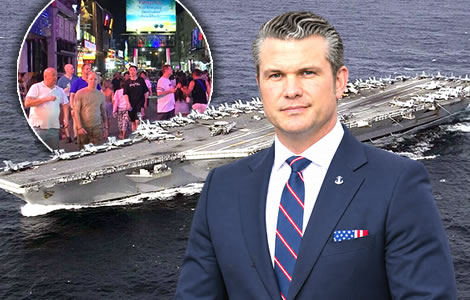
The USS Abraham Lincoln is steaming towards Thailand after completing a major combat assignment against Iran. Its arrival connects Thailand’s eastern seaboard with Washington’s continuing military campaign against Tehran. Yet the Royal Thai Navy has defined the visit narrowly as a routine logistical stop.
The nuclear-powered carrier left the Middle East on Saturday, August 22. Three days earlier, the USS George Washington entered the region to replace it. As a result, the Lincoln was released from a deployment lasting more than nine months.
United States Central Command confirmed the George Washington’s arrival on August 19. The carrier is now operating in the Arabian Sea. In turn, it will continue American operations against Iran and enforce the blockade of Iranian ports.
US carrier heads for Thailand after George Washington takes over the continuing Iranian naval blockade
The Lincoln is expected to reach eastern Thailand during early September. Two other United States Navy vessels will accompany it. Meanwhile, approximately 5,000 sailors and Marines are preparing for their first substantial shore leave since December.
Rear Admiral Parach Rattanachaiyapan announced the planned stop at Royal Thai Navy Headquarters on August 25. He said three American carrier strike group vessels would briefly visit eastern Thailand. Nonetheless, he withheld their names, destination and precise schedule because of security concerns.
The visit will provide fuel, supplies, services and logistical support. Personnel will also receive rest and recreation ashore. Crucially, Rear Admiral Parach ruled out any joint naval exercise or combined operation.
Thai officials also denied any link between the visit and events inside another country. Their statement confined the stop to logistics, crew welfare and existing defence cooperation. Even so, the Lincoln is arriving directly from combat operations against Iran.
Its aircraft attacked Iranian targets during Operation Epic Fury. Its strike group also helped enforce Washington’s blockade of Iranian ports. Therefore, the carrier’s recent operational history remains inseparable from its approaching Thai visit.
Thailand rules out military exercises as US carrier prepares to dock near Pattaya after major combat duty
Thailand is not participating in the war against Iran. No attack, exercise or combined mission will originate from the forthcoming stop. Still, Thai facilities will receive a nuclear-powered carrier returning directly from an active combat theatre.
The Royal Thai Navy said every procedure would follow Thai laws, regulations and security measures. The vessels will operate under longstanding Thai-American defence arrangements. Separately, the United States Navy has declined to confirm the stop publicly, citing operational security.
News reports have identified the principal vessel as the USS Abraham Lincoln, designated CVN-72. Messages sent by crew members to relatives first disclosed the expected visit. Notably, those messages appeared before either navy released detailed information.
American carriers usually use Sattahip or Laem Chabang during eastern Thailand visits. Both ports provide access to Pattaya and the wider Chon Buri area. In addition, each location can support large warships requiring supplies, maintenance and transport services.
The exact mooring location remains undisclosed. Security arrangements and shore-leave procedures have also not been published. For now, officials are providing only the broad purpose and general location.
Lincoln entered the Iran war after downing a drone and being redirected from the Indo-Pacific in January
The Lincoln departed San Diego on November 21, 2025. Initially, its crew expected a six-month overseas deployment and a May return. Instead, Washington redirected the carrier from the Indo-Pacific towards the Middle East during January.
Tensions with Iran were intensifying at the time. Consequently, the movement placed a powerful carrier strike group within operational range of Iranian territory. It also expanded Washington’s available air power across the Arabian Sea.
Before the wider war began, the Lincoln faced a direct Iranian threat. An Iranian Shahed-139 drone approached the carrier on February 3. In response, an F-35C Lightning II launched from the ship and destroyed it.
No American personnel were injured during the interception. The Lincoln also sustained no damage. Nevertheless, the encounter demonstrated the danger already facing its crew before the bombing campaign.
The incident also displayed the defensive reach of the carrier’s stealth fighters. At that stage, Washington was still increasing its military presence around Iran. Shortly afterwards, the Lincoln became a frontline platform in a much larger operation.
American and Israeli attacks against Iran began on February 28. From that point, the Lincoln supported Operation Epic Fury from the Arabian Sea. United States Central Command launched the campaign under President Donald Trump’s direction.
Lincoln launched armed fighters against Iran as its flight deck sustained the American air campaign
The command said American forces were targeting the Iranian regime’s security apparatus. It also prioritised sites considered immediate threats. Against this backdrop, the Lincoln operated as a mobile airbase beyond Iranian coastal waters.
Its air wing included F/A-18E and F/A-18F Super Hornets. It also carried Marine Corps F-35C Lightning II stealth fighters. Alongside them, E-2D Hawkeye aircraft provided airborne surveillance, command and control.
Helicopters supported transport, surveillance and search-and-rescue operations. Flight-deck teams managed aircraft movements under sustained operational pressure. Below deck, other crews handled fuel, weapons, repairs and maintenance.
American military photographs showed sailors moving ordnance aboard the Lincoln on February 27. The work occurred one day before the opening attacks. Subsequently, armed aircraft began flying from the carrier in support of Operation Epic Fury.
Super Hornets and F-35C fighters launched during the campaign’s opening phase. They performed strike, interception, surveillance and defensive assignments. At the same time, airborne command aircraft coordinated movements across the battlespace.
The Lincoln gave Washington a large and movable source of air power. Moreover, it could operate without relying upon a regional land base. Its nuclear propulsion also supported extended operations without conventional fuel for the ship.
US Navy confirms Lincoln strike missions as sailors kept combat aircraft flying around the clock
Aircraft fuel, ammunition, food and other supplies still required regular replenishment. Replenishment vessels therefore transferred essential material while the carrier remained at sea. This system allowed combat operations to continue without a port visit.
United States Navy statements confirmed continuing strike missions during late March. The Lincoln Carrier Strike Group remained actively engaged in Operation Epic Fury. However, the Pentagon has not published every target attacked by its aircraft.
Officials have also withheld the total number of combat sorties. Similarly, no complete weapons tally has been released. Despite those restrictions, the carrier’s direct combat role is officially documented.
The Lincoln was not simply positioned offshore as a reserve force. Its aircraft launched strike missions against Iran. In parallel, thousands of sailors sustained aircraft operations around the clock.
Flight-deck duties continued in difficult and hazardous conditions. Engineering crews kept propulsion, electricity and essential systems operating. As part of this effort, weapons teams repeatedly armed aircraft for further missions.
Lincoln shifted from bombing Iran to enforcing a naval blockade across vital Iranian maritime routes
The carrier later assumed another major role against Iran. Following the opening campaign, it helped enforce the American blockade of Iranian ports. President Trump imposed that blockade across Iran’s Gulf and Gulf of Oman coastline.
Washington sought to stop unauthorised vessels entering or leaving Iranian ports. Accordingly, American aircraft and warships monitored the region’s principal maritime routes. They intercepted, redirected and sometimes disabled vessels breaching American restrictions.
Lincoln-based aircraft flew armed patrols above the Arabian Sea and Gulf of Oman. Surface warships tracked commercial traffic and Iranian maritime movements. On another front, surveillance aircraft helped identify vessels requiring interception.
The blockade restricted Iranian maritime trade and port access. It also increased American economic pressure upon Tehran during stalled negotiations. Furthermore, enforcement required ships and aircraft to remain continuously available.
In June, an F/A-18 Super Hornet from the USS Lincoln intercepted a tanker. The vessel was attempting to reach an Iranian port. United States Central Command said it had violated the continuing blockade.
US fighter disabled blockade-breaking tanker as Lincoln crew remained under daily wartime pressure
The American fighter then disabled the tanker and stopped its progress. Thus, the incident demonstrated that the blockade involved armed enforcement. It was not merely a monitoring or surveillance operation.
The action also displayed the Lincoln’s reach beyond its immediate position. Its aircraft could locate and stop shipping across a large maritime area. By then, the carrier had moved from bombing missions into sustained blockade enforcement.
The Lincoln also defended American forces against Iranian missiles, drones and fast-attack vessels. Iranian retaliation remained a continuing operational danger. Consequently, sailors maintained heightened readiness throughout the extended deployment.
Defensive operations continued alongside routine carrier duties. Aircraft remained prepared for interception, while surface escorts protected the strike group. In effect, the crew worked under wartime conditions without normal periods ashore.
The Lincoln’s assignment therefore covered two distinct combat phases. First, its aircraft participated in attacks against Iranian targets. Afterwards, its strike group enforced the maritime blockade and protected American forces.
The carrier remained deployed as the conflict continued. Its original six-month timetable disappeared under operational extensions. By May, the crew had already missed its anticipated return to California.
Iran operations kept Lincoln at sea beyond its return date as serious supply problems mounted aboard
The Lincoln nevertheless remained on Middle East duty through most of August. Its only earlier port call reportedly occurred in Guam during mid-December. Thereafter, personnel endured more than 200 consecutive days without another port visit.
Some reports place the uninterrupted period beyond 250 days. The differing figures distinguish total deployment time from consecutive time without entering port. Either measure reflects an exceptional period at sea.
American carrier personnel generally receive port visits every 30 to 45 days. Those stops provide maintenance, replenishment, recreation and contact with relatives. In this case, the Iran war eliminated that normal cycle.
Operational requirements kept the Lincoln at sea and its crew on continuous duty. Additionally, the Iranian threat complicated normal visits within the region. The carrier could not leave its assigned position while combat and blockade operations continued.
Conditions aboard eventually triggered political pressure in Washington. Families reported shortages of food, drinking water, toiletries and other essentials. They also described contaminated water, broken plumbing and blocked toilets.
Families report severe shortages and mental strain as Pete Hegseth defends the long deployment at sea
Further complaints involved cold showers, delayed mail and missing care packages. Beyond that, relatives described long working hours and little time away from duty. They also raised concerns about exhaustion, morale and psychological distress.
American military publications reported incidents involving sailors attempting to go overboard. In one reported case, colleagues intervened before a sailor jumped. Other accounts described suicidal thoughts among some personnel.
In reaction, families pressed Washington to return the carrier to San Diego. Fifteen United States senators then demanded answers from senior Pentagon officials. Their questions covered supplies, safety, mental health and crew welfare.
US Secretary of Defence Pete Hegseth became the principal political defender of the deployment. As Pentagon chief, he faced direct scrutiny over conditions aboard the Lincoln. Hegseth rejected reports describing an intolerable situation.
He said those accounts were “completely misrepresented”. He also insisted that American ships received every available resource. At the same time, he praised personnel operating under difficult wartime conditions.
“Some deployments are longer than others,” Hegseth told reporters during a visit to Panama. He then described the sailors’ work at sea as “incredible”. Yet lawmakers continued demanding detailed explanations about the carrier.
Hegseth backs indefinite Iran blockade as George Washington relieves Lincoln in planned rotation
Hegseth also defended the wider military campaign against Iran. On August 13, he said the United States could maintain the naval blockade indefinitely. To achieve that, Washington could rotate carriers and other warships through the region.
Within days, the USS George Washington moved towards the Middle East. Its arrival demonstrated the Pentagon’s rotation strategy. More importantly, it preserved the blockade while allowing the Lincoln to withdraw.
American officials said the carrier exchange had been planned beforehand. They denied that crew complaints had forced an emergency replacement. Regardless, the timing delivered relief for thousands aboard the Lincoln.
The George Washington’s arrival maintained American carrier power near Iran. It also transferred operational responsibility without interrupting the blockade. Hence, the Lincoln’s departure represents a rotation rather than a strategic withdrawal.
President Trump also addressed the controversy. Asked whether the deployment had lasted too long, he answered: “No. Not nearly long enough.” He then confirmed that another similar carrier would replace the Lincoln.
Acting Navy Secretary Hung Cao later announced that the ship would return home soon. He praised its performance and defended its leadership. Meanwhile, Admiral Brad Cooper acknowledged that earlier problems had occurred aboard.
George Washington takes over Iran mission as 5,000 Lincoln personnel prepare for Thailand shore leave
Cooper specifically referred to food, hot water and other concerns. “Issues related to food, hot water, or other concerns happened months ago,” he said. He added that leadership had addressed and resolved them.
Relatives continued describing severe strains from the deployment. Even so, the Lincoln remained operational until its replacement arrived. The George Washington has now assumed its position in the Middle East.
Another American carrier, the USS George H.W. Bush, also remains in the region. Accordingly, Washington retains substantial naval air power around Iran. The Lincoln can now proceed towards Thailand without ending the campaign.
Thailand will provide the departing crew’s first major recreation stop. Approximately 5,000 sailors and Marines are serving aboard the Lincoln. That number includes its permanent company, embarked air wing and a smaller Marine contingent.
Most personnel aboard are men. Available carrier staffing patterns suggest approximately 4,250 to 4,400 male personnel. By comparison, women probably number between 600 and 750.
That range would place female representation between 12% and 15%. However, the United States Navy has not released an exact breakdown. The figures are estimates based on comparable carrier deployments.
Mostly male Lincoln crew prepares for Pattaya hotels, restaurants and nightlife after combat duty
Women represent approximately 20% of the United States Navy overall. Individual carrier complements usually contain a lower proportion. This difference reflects occupational assignments and segregated accommodation aboard older carriers.
Pattaya is expected to become the principal shore-leave destination. The resort lies close to Sattahip and Laem Chabang. It also offers extensive hotels, restaurants, shopping centres and entertainment venues.
Consequently, Pattaya can accommodate several thousand visitors within several days. Crew messages indicate that sailors have discussed Thailand for months. One reportedly asked relatives to locate a suitable Thai hotel.
Another family member said Thailand had remained a frequent subject during the deployment. For many sailors, the stop will provide their first chance to sleep ashore since December. Others will focus on fresh food, shopping and contact with relatives.
They can also leave the carrier’s crowded compartments and narrow corridors. After months of combat duty, even a brief visit will provide a sharp change. Yet its economic impact could extend well beyond the crew.
Pattaya businesses stand to receive a substantial injection of spending. The closest comparison came during another American carrier visit in January 2025. The USS Carl Vinson strike group visited from January 27 until January 31.
Pattaya businesses could receive ฿116 million from Lincoln crew after long record carrier deployment
Approximately 5,400 personnel participated in that port call. Their projected Pattaya spending exceeded ฿125 million. The calculation covered hotels, restaurants, transport, shopping and entertainment.
That estimate equalled approximately ฿23,150 per visitor. It represented around US$680 for each person during the visit. Applying the same rate to 5,000 Lincoln personnel produces ฿115.75 million.
Accordingly, spending by the Lincoln’s personnel alone could approach ฿116 million. Two accompanying vessels could push the total higher. The final amount will depend on shore-leave permissions and the visit’s duration.
Overnight arrangements will also influence spending. Equally, transport and security restrictions could affect movement between the port and Pattaya. Neither government has released an official economic forecast.
Officials have not disclosed how many personnel may leave simultaneously. Even so, the Carl Vinson figures provide a credible benchmark. Several thousand visitors could distribute more than ฿100 million across Pattaya within days.
Lincoln returns to Thailand after Iran strikes as Bangkok presents its visit as routine logistics
The Lincoln previously visited Laem Chabang during January 2012. That stop lasted four days. During the visit, sailors travelled around Thailand and participated in community projects.
Those activities involved schools, temples and medical facilities. This time, no comparable programme has been announced. Instead, rest, recreation and resupply dominate the current plans.
The crew’s prolonged combat deployment adds unusual weight to those arrangements. Personnel have spent months supporting strikes, interceptions and blockade patrols. They have also operated under the threat of Iranian drones and missiles.
Bangkok has carefully separated the Thai stop from the Iran war. Its public statement focuses entirely upon logistics and crew welfare. Strictly speaking, that description defines the planned activities inside Thailand.
It does not describe the carrier’s mission before reaching Thai waters. The Lincoln is travelling directly from an American combat theatre. Its aircraft attacked Iranian targets during Operation Epic Fury.
Furthermore, the carrier helped enforce the blockade of Iranian ports. Its fighters defended the strike group against an approaching Iranian drone. The George Washington replaced it only last week and continues the same mission.
Thailand receives carrier directly from Iran war under its longstanding American defence alliance
The operational connection is therefore clear. Thailand is not joining the war, but the visiting carrier has just left it. Its extended deployment, delayed return and exhausted crew all resulted from that conflict.
No combat operation will occur during the Thai visit. Nor will the Royal Thai Navy join an exercise against another country. Nevertheless, Thai facilities will receive a carrier returning directly from battle.
For Washington, Thailand offers a secure port inside a longstanding allied country. Thailand has been an American treaty ally since 1954. In 2003, it also became a major non-North Atlantic Treaty Organisation ally.
Military relations between both countries remain extensive. The stop therefore fits within an established defence framework. Its immediate background, however, remains the Iran war.
The Lincoln was redirected because of that conflict. Its deployment was extended because of continuing combat demands. Likewise, the crew lost normal port calls while sustaining those operations.
Carrier rotation releases Lincoln for Pattaya rest after months of bombing and blockade missions
Last week’s carrier rotation finally released the Lincoln. The George Washington now continues the bombing support, defensive patrols and blockade mission. Meanwhile, Thailand will provide logistics and recreation to the departing force.
For Pattaya, the visit promises thousands of mainly male American personnel. Their spending could exceed ฿100 million within several days. For the crew, it ends more than 200 consecutive days without shore leave.
PM Anutin denies a plan for an American drone base to be set up in Thailand despite military’s US visit
Visit by US Under Secretary of State emphasises American Thai military alliance amid tense trade talks
The official Thai description remains a routine stopover. Yet the approaching vessel is no ordinary visitor. It is a US nuclear-powered carrier returning directly from combat against Iran.
Its aircraft fought the Iranian regime under Operation Epic Fury. Its strike group enforced Washington’s blockade of Iranian ports. Now, its sailors and Marines are heading towards Pattaya after one of the US Navy’s longest uninterrupted periods at sea.
Join the Thai News forum, follow Thai Examiner on Facebook here
Receive all our stories as they come out on Telegram here
Follow Thai Examiner here
Further reading:
Business lobby urges Anutin to improve climate for inward investment by axing old laws and red tape
Tax and welfare revolution as Thailand moves ahead with Negative Income Tax that expands reporting
Thumbs up from economic gurus for 2027 Negative Income Tax plan. It’s a game-changer for progress
Expert warns foreign tourism has become Thailand’s curse, fueling inertia and a widespread malaise