Israeli ambassador meets Anutin amid growing scrutiny of Chabad-linked interests in Thailand. The prime minister insists on equal enforcement as 19 companies face investigation. Israeli media report concern, but no diplomatic overture has been mooted.
Prime Minister Anutin Charnvirakul has delivered a blunt warning to Israel’s ambassador as Thai authorities widen investigations into Israeli-linked businesses and Chabad religious organisations. Meeting Dr Alona Fisher-Kamm at Government House on Monday, he insisted that Thai law applies equally to all foreigners. The talks came just 12 days after Anutin revoked prominent Chabad Rabbi Yosef Chaim Kantor’s Thai citizenship. Meanwhile, investigators are examining 19 associated companies, while Israeli media report growing concern over the crackdown. However, neither government has disclosed who requested the meeting or whether Israel raised concerns over the enforcement campaign.
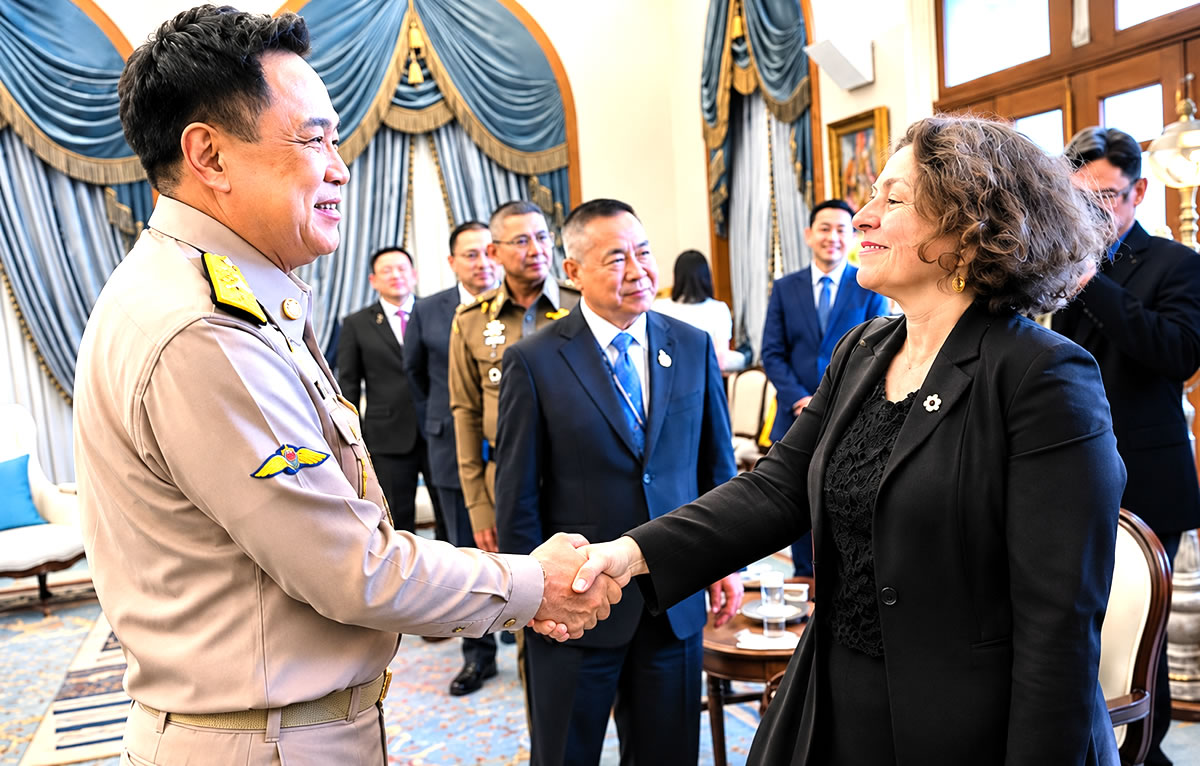
Prime Minister Anutin Charnvirakul delivered a pointed warning to Israel’s ambassador at Government House on Monday, November 9. Thailand will enforce its laws against all foreigners, regardless of nationality, religion or race.
The message came amid expanding investigations into Israeli-linked businesses and Chabad religious organisations across the kingdom. Meanwhile, Israeli media have reported growing concern over the crackdown and the revocation of a prominent rabbi’s Thai citizenship.
Israeli Ambassador Dr Alona Fisher-Kamm met Anutin at 9.30 am in Reception Room 2 of the Thai Khu Fah Building. Government spokesman Ekaphop Pianpiset described the meeting as an introductory courtesy call following her appointment.
Anutin’s meeting with Israeli ambassador follows Chabad citizenship revocation and company probes
However, neither government disclosed who requested the appointment or when arrangements were made. The encounter followed weeks of scrutiny involving Jewish institutions, Israeli-linked companies and suspected foreign ownership violations.
The diplomatic meeting came just 12 days after Anutin stripped Rabbi Yosef Chaim Kantor of Thai citizenship. The prominent Chabad leader had lived in Thailand for more than three decades.
In parallel, Thai investigators were examining 19 companies linked to the rabbi. The decision attracted extensive coverage in Israel, where religious representatives challenged the citizenship order and defended Chabad’s operations.
Anutin told Fisher-Kamm that Thailand welcomed tourists from every country. Nevertheless, foreign visitors must obey Thai laws and respect local customs. He insisted that enforcement would apply equally, without preferential treatment for any nationality.
The prime minister also pledged to protect foreign visitors while maintaining public order. According to the government, consistent enforcement allowed tourists and Thai communities to coexist peacefully.
Israeli ambassador offers cooperation as embassy avoids mentioning Chabad investigations and citizenship
In response, Fisher-Kamm offered closer cooperation between Israeli diplomatic representatives and Thai authorities. She proposed helping Israeli travellers understand Thai regulations, cultural expectations and local customs.
Such guidance would help prevent misunderstandings and strengthen relations between the countries. The Israeli Embassy subsequently issued its own account of the meeting, acknowledging discussions concerning recent developments involving Israeli tourists.
Notably, the embassy did not refer to the investigations into Chabad organisations or Kantor’s citizenship revocation. Nor did it disclose whether Fisher-Kamm raised concerns about enforcement operations involving Israeli-linked institutions.
Deputy Chief of Mission Rami Teplitskiy also attended the meeting. The wider agenda covered agriculture, labour, healthcare, cybersecurity, technology and innovation, alongside 72 years of diplomatic relations.
Anutin’s order stripping Chabad rabbi of Thai nationality triggers legal challenge and Israeli concern
The citizenship controversy began with an order signed by Anutin on October 28. Kantor had obtained Thai nationality in 2013 after establishing a longstanding presence in the kingdom.
However, Thai authorities cited his continued use of an American passport following naturalisation. Anutin signed the revocation in his capacity as Interior Minister, directly linking the decision to the prime minister.
The case quickly attracted attention in Israel. On October 29, The Times of Israel reported that Chabad was challenging the citizenship decision through legal channels. Separately, The Jerusalem Post reported concern within Thailand’s Jewish community about increasing scrutiny of Jewish and Israeli institutions.
The reports followed enforcement operations involving religious organisations, commercial arrangements and suspected breaches of Thai business regulations.
Thai investigators were also examining 19 companies associated with Kantor. Their inquiries concerned suspected irregularities involving ownership structures and commercial arrangements.
Justice minister confirms no charges against Kantor as Thai agencies inspect three Jewish institutions
However, Justice Minister Rutthaphol Naowarat confirmed on November 4 that Kantor had not been charged with any criminal offence. The citizenship proceedings remained separate from the company investigations, which had not produced announced charges against him.
The enforcement campaign had already drawn Israeli attention before Kantor lost his citizenship. On October 9, The Jerusalem Post reported coordinated inspections involving three Jewish institutions in Bangkok.
These were the Chabad Bangkok Foundation, a Chabad kindergarten and the Jewish Association of Thailand. Investigators were examining suspected foreign business ownership violations and nominee arrangements involving organisations operating in Thailand.
According to the Israeli newspaper, more than ten Thai enforcement and regulatory agencies participated in the operation. The inspections placed several established Jewish institutions under direct official scrutiny.
Crucially, investigators had not accused the religious institutions themselves of financial or property offences. No Israeli nationals were arrested during those inspections, although inquiries into associated commercial arrangements continued.
Chabad defends Bangkok and Phuket operations as investigators examine property and permits
Rabbi Nechemya Wilhelm, Chabad’s representative in Bangkok, subsequently defended the organisation. Speaking to Israeli news outlet Walla, he said Chabad had cooperated fully with Thai investigators.
Wilhelm maintained that its activities complied with Thai law and that religious services continued normally. He also confirmed that the organisation’s charitable work remained unaffected by the inspections.
On another front, Israeli newspaper Ynet reported investigations involving Chabad operations in Phuket. Thai officials examined property holdings, construction permits and commercial licences associated with the organisation.
Wilhelm defended Chabad’s three-decade presence in Thailand and expressed confidence that investigations would establish compliance. By late September, officials had reviewed financial transactions without identifying irregularities in those examined.
Other regulatory questions involving the Phuket organisation remained unresolved. The investigations formed part of wider scrutiny of commercial arrangements associated with Jewish institutions and Israeli-linked businesses.
These included company ownership structures, property interests and suspected nominee arrangements. Yet the available reports did not establish criminal wrongdoing by the religious institutions themselves.
Three decades of Chabad activity face scrutiny as Israeli media report concern but no formal protest
Chabad has operated openly in Thailand for approximately three decades. Its activities include religious services, community support and assistance to Jewish visitors.
The organisation maintains institutions serving residents and tourists, including facilities in Bangkok and Phuket. More recently, its operations have faced scrutiny from Thai enforcement agencies examining associated commercial and administrative arrangements.
The distinction between investigations and criminal charges remains substantial. By November 4, Kantor faced no announced criminal charges despite losing his Thai citizenship. Likewise, the Bangkok inspections produced no reported arrests of Israeli nationals.
Nonetheless, the enforcement operations attracted sustained coverage from The Jerusalem Post, The Times of Israel, Ynet and Walla.
Those publications documented concern among religious representatives and sections of Thailand’s Jewish community. They also reported Chabad’s defence of its operations and legal challenge to Kantor’s citizenship revocation.
However, none established that the Israeli government had lodged a formal diplomatic protest. Neither the Israeli Embassy nor Government House publicly confirmed such an intervention.
September talks raised Israeli tourist conduct before Thai police opened scrutiny of Chabad networks
The diplomatic exchanges concerning Israeli nationals began before the Chabad controversy intensified. On September 8, Foreign Minister Sihasak Phuangketkeow raised concerns directly with Fisher-Kamm.
He referred to reported lawbreaking and disruptive behaviour by some Israeli visitors. The discussion followed complaints involving foreign tourists and public controversy over their conduct in Thailand.
Fisher-Kamm responded by proposing clearer guidance for Israeli travellers. She suggested distributing information about Thai laws and customs through diplomatic missions, airlines and tourism companies.
The initiative would inform visitors about local requirements before they arrived. In addition, the ambassador offered cooperation to prevent misunderstandings and improve relations with Thai communities.
The September talks followed demonstrations outside the Israeli Embassy. Associated Press reported that embassy officials took public complaints seriously and planned additional guidance for Israeli visitors.
Consequently, Monday’s discussion with Anutin continued an issue already raised by Thailand’s Foreign Minister. The ambassador had previously acknowledged the need to improve awareness of Thai laws among Israeli tourists.
Citizenship revocation and company probes precede Israeli ambassador’s courtesy call
By November, however, the circumstances had changed. Thai authorities had expanded scrutiny of Chabad-linked institutions and associated businesses. More significantly, Anutin had personally revoked Kantor’s Thai citizenship. Investigators were examining 19 companies connected to the religious leader, while other regulatory inquiries remained active.
The October 28 citizenship order brought the controversy directly into Anutin’s ministerial responsibilities. Less than two weeks later, he received Israel’s senior diplomatic representative in Bangkok.
Yet the published accounts provided no confirmation that Kantor’s case was discussed. The Israeli Embassy acknowledged recent developments involving Israeli tourists without identifying specific incidents or investigations.
The Thai government maintained that the meeting was an introductory courtesy call. Such appointments are routine following an ambassador’s arrival. Even so, neither side disclosed which government initiated the November 9 meeting. There was also no public confirmation of a diplomatic complaint concerning Chabad or the citizenship revocation.
Thailand and Israel discuss technology, medical training and welfare of more than 70,000 Thai workers
The discussions nevertheless covered substantial areas of bilateral cooperation. Anutin praised Israel’s technological development, particularly in semiconductors, software and cybersecurity.
He also highlighted Israeli advances in emergency medicine, including specialist treatment for severely injured patients. Both governments discussed existing programmes involving the training of Thai medical personnel.
Agriculture and technological innovation featured prominently in the talks. Israel has longstanding cooperation with Thailand in these sectors, alongside healthcare and research. The two governments reaffirmed their commitment to strengthening those links. At the same time, labour relations remained a major element of the diplomatic agenda.
Anutin thanked Israel for supporting more than 70,000 Thai workers employed in the country. He stressed that their safety and welfare remained priorities for Bangkok.
Thai nationals form an important part of Israel’s foreign workforce, particularly in agriculture. The prime minister also acknowledged the longstanding relationship between both countries, which have maintained diplomatic ties for 72 years.
Anutin reiterates equal treatment for Israeli visitors as investigations extend beyond tourist conduct
Despite the broad agenda, the conduct of Israeli visitors received particular attention in the official accounts.
Anutin stressed that Thailand welcomed tourists regardless of nationality, religion or race. However, he insisted that every visitor must obey Thai laws and respect local customs. His government would protect foreign tourists while applying regulations equally.
Fisher-Kamm did not publicly challenge that position. Instead, she offered closer cooperation to improve legal and cultural awareness among Israeli nationals. Her response followed the approach outlined to Foreign Minister Sihasak in September. Both discussions focused on compliance, public conduct and preventing misunderstandings involving visitors.
The November meeting, however, occurred amid investigations extending beyond individual tourist behaviour. Thai authorities were examining religious institutions, company ownership arrangements, property holdings and commercial licences.
Kantor had also lost his Thai citizenship through an order signed by Anutin. Meanwhile, Israeli media continued reporting developments involving Chabad and associated businesses.
Chabad challenges citizenship order while authorities investigate firms without filing criminal charges
The citizenship decision remained particularly contentious within Chabad. The organisation had challenged the order through legal channels, according to The Times of Israel.
Its representatives also maintained that religious and charitable activities complied with Thai law. Nevertheless, Thai agencies continued investigating associated commercial arrangements and suspected ownership violations.
Justice Minister Rutthaphol’s November 4 statement confirmed that no criminal charges had been filed against Kantor. That position remained separate from the administrative revocation of his nationality.
The inquiries involving 19 companies also remained distinct from the citizenship proceedings. No announced criminal finding against Kantor emerged from the supplied reports.
The available Israeli coverage establishes concern among Jewish community representatives and Chabad officials. It does not establish an official Israeli government objection to Thailand’s enforcement campaign. Equally, the published accounts of Monday’s meeting do not confirm that Fisher-Kamm raised those concerns privately.
Neither government identifies who asked for Monday’s meeting as Thailand stresses equal enforcement
The absence of confirmation also applies to the meeting’s origins. Neither government identified who requested the appointment or when it was arranged. Government House described it as a courtesy call following the ambassador’s appointment. The Israeli Embassy likewise presented the talks as part of efforts to strengthen bilateral relations.
Both governments concluded the meeting by reaffirming cooperation across economic, technological and diplomatic fields. No change in Thai enforcement policy was announced. Nor was any agreement disclosed concerning the Chabad investigations, Kantor’s citizenship or the companies under scrutiny.
Anutin’s position remained firm throughout the public account. Thailand would welcome Israeli visitors and maintain its longstanding relationship with Israel. However, its laws would apply equally to all foreigners, without exceptions based on nationality or religion.
The ambassador responded with an offer to improve compliance among Israeli travellers. Meanwhile, the citizenship revocation and investigations involving Chabad-linked interests remained unresolved. Neither government confirmed a formal Israeli protest or disclosed whether the cases were raised privately.
The November 9 meeting therefore ended with a clear public position from Bangkok and a commitment to cooperation from Israel. Anutin had delivered his enforcement warning directly to the Israeli ambassador. At the same time, Thai investigators continued examining Israeli-linked companies and Chabad operations across the kingdom.
Join the Thai News forum, follow Thai Examiner on Facebook here
Follow Thai Examiner on Google here
Receive all our stories as they come out on Telegram here
Follow Thai Examiner here
Further reading:
Pressure movement against Israel in Thailand gains momentum as it combines with street protests
Veteran protest leader and media boss Sondhi begins his street protest campaign at Israel’s Embassy
PM Anutin laughs off what political pundits see as rising threats to the stability of his government
Opposition alleging a potential whitewash by Election Commission on Friday over Senate election case