Bombshell Senate collusion ruling lands Friday, as 138 serving senators and 91 political figures face possible Supreme Court cases. Opposition MPs warn powerful players may escape, accuse election officials of misinformation and promise legal action.
Thailand faces a political reckoning on Friday as the Election Commission rules on seven Senate collusion charges involving 229 people. The accused include 138 serving senators and 91 political executives or network members. One investigative panel recommended prosecuting them all, while another cleared everyone. Now, opposition MPs allege a looming whitewash, challenge the commission’s legal position and threaten court and parliamentary action if powerful figures escape.
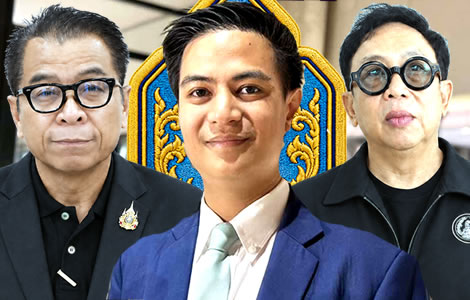
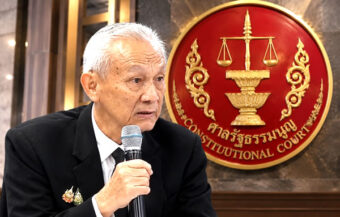
Thailand’s Election Commission will rule Friday on the Senate election collusion case. The decision could send 229 accused people before the Supreme Court. Those named include 138 serving senators and 91 political executives or network members. Already, a fierce legal dispute has broken out before commissioners cast their votes.
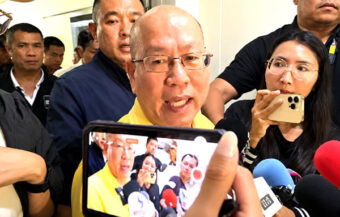
Election Commission Secretary-General Sawaeng Boonmee now faces attacks from two opposition parties. Democrat Party deputy leader Sathit Wongnongtoey accused him of spreading “misinformation”. Meanwhile, People’s Party deputy leader Parit Wacharasindhu warned of a possible whitewash. Both party-list MPs rejected Mr Sawaeng’s interpretation of the governing law.
Crucially, both MPs argued that potential liability extends beyond Senate candidates. Mr Parit fears campaign workers could face prosecution while powerful figures escape. He described this as sacrificing the “light blue” faction to protect the “dark blue” faction. Furthermore, he promised legal and parliamentary action if supported cases are dismissed.
Commissioners prepare individual rulings as seven Senate collusion charges await Friday’s decisive vote
The Election Commission completed its consideration of the investigation on August 18. Nevertheless, commissioners did not announce their decisions immediately. No additional meeting was scheduled this week because several commissioners had prior commitments. Instead, each member received more time to examine the extensive files.
During that period, commissioners could review reports, evidence, observations and legal questions. They could also assess the alleged culpability of each accused person. Moreover, every commissioner could prepare an individual resolution before the final vote. The decisive meeting is scheduled for 1pm on August 28.
The commission will consider each accused person separately. Therefore, Friday could produce different outcomes for people within the same investigation. Some could face Supreme Court proceedings, while others could be cleared. Alternatively, commissioners could close every case against all 229 people.
At the centre are seven categories of suspected violations. Together, they cover political intervention, prohibited assistance, organised voting and financial inducements. They also address unlawful introductions, banquets and benefits linked to candidacy. Consequently, the investigation reaches beyond misconduct by individual Senate candidates.
Charges target political assistance, candidate consent, introductions and financial inducements
First, commissioners will decide whether political officeholders helped candidates secure Senate seats. Those covered include political party executives and other party officials. The provision also covers MPs, local councillors, local administrators and other political officeholders. This suspected offence falls under Section 76, paragraph one.
Second, the commission will consider whether candidates knowingly accepted that political assistance. This possible offence falls under Section 76, paragraph two. Specifically, the provision covers candidates consenting to help intended to secure their selection. Thus, both political organisers and consenting candidates could face legal consequences.
Third, commissioners will examine breaches of the 2024 candidate introduction regulations. Those rules were issued under Sections 70 and 36. Investigators examined whether candidates ignored methods or conditions imposed by the Election Commission. Significantly, Section 70 can also cover assistance provided by non-candidates.
Fourth, the commission will consider arrangements involving property or financially measurable benefits. This charge covers offers, promises and preparations to provide those benefits. In particular, investigators examined inducements intended to alter voting behaviour. Section 77(1) covers attempts to persuade voters not to support someone.
Banquets and candidate benefits widen the investigation before the original panel backs 229 cases
Fifth, commissioners will examine whether banquets were organised or promised to influence voting. The charge covers events targeting candidates or other people entitled to vote. This suspected violation falls under Section 77(3). Once again, the central issue concerns benefits used to shape the selection.
Sixth, the commission will decide whether anyone solicited or accepted benefits for becoming a candidate. This suspected conduct falls under Section 79. Finally, the seventh charge concerns benefits linked to selecting or rejecting another candidate. Section 81 covers benefits accepted for the recipient or someone else.
Taken together, the seven charges cast a broad net. They could involve political executives, senators, candidates and campaign workers. They could also reach people directing, financing or arranging the suspected operation. Yet two Election Commission-appointed panels reached completely opposing conclusions.
The commission established its 26th investigative committee on March 19, 2025. Police Lieutenant Colonel Chanin Noi Lek, a deputy Election Commission secretary-general, chaired it. Officers from the Department of Special Investigation also joined the inquiry. Subsequently, the panel recommended proceedings against 229 individuals.
Original inquiry and Election Commission office support prosecutions before a second panel clears all
Its proposed cases covered 138 serving senators. Additionally, the committee recommended action against 91 political executives and network members. Its findings were therefore never confined to candidates or current senators. They extended deep into political party structures and associated networks.
The Election Commission office later supported the committee’s findings. Deputy Secretary-General Krachit Charoeninth conducted that assessment under an assignment from the secretary-general. Accordingly, both the original committee and the commission’s office supported prosecution. The case, however, later entered a separate dispute-resolution process.
Then Election Commission chairman Ittiporn Boonpracong established Special Subcommittee 36 on September 25, 2025. This panel was created specifically to reconsider the Senate collusion files. On March 12, 2026, it voted five to two for complete closure. Its majority found the allegations against all 229 people unfounded.
As a result, the commission now faces two irreconcilable recommendations. The 26th committee recommended proceedings against every accused person. By contrast, Subcommittee 36 recommended clearing everyone. Friday’s vote must resolve that fundamental split.
Parit warns selective prosecutions could protect senior figures as he challenges Sawaeng’s legal test
A third result remains available. Commissioners could prosecute selected suspects while dismissing the remaining cases. However, that option has triggered Mr Parit’s sharpest warning. He fears operational workers could become targets while senior figures receive protection.
Mr Parit delivered his response during the “Inside Thailand” programme on August 24. He challenged three legal conditions outlined by Mr Sawaeng. Those conditions could determine whether particular cases reach the Supreme Court. Above all, Mr Parit rejected any requirement limiting action to Senate candidates.
To support his position, Mr Parit cited Section 62 of the relevant organic law. Its first paragraph expressly refers to a candidate or “any other person”. The provision applies after the Election Commission announces the selection results. It operates when credible evidence of fraud or collusion later emerges.
Such evidence may show that a candidate or another person committed election fraud. Otherwise, it may show collusion intended to make the selection dishonest or unfair. In either situation, the commission must petition the Supreme Court. The court can then revoke candidacy rights or voting rights.
Parit says the law reaches non-candidates as he accuses the later subcommittee of whitewashing cases
On that basis, Mr Parit said Section 62 does not apply solely to candidates. Anyone implicated by credible evidence could face proceedings. He also cited provisions covering offences committed by non-candidates. These include money promises and prohibited actions by political party executives.
For this reason, he rejected suggestions that the law’s scope remained uncertain. The Election Commission had previously pursued Supreme Court cases against non-candidates, he said. Legally, he saw no basis for excluding political organisers or financial backers. Politically, he attacked the consequences of Subcommittee 36’s recommendation.
Mr Parit said the panel’s findings could clear senior figures and political networks. Those figures may have worked at planning, command or funding levels. In addition, he accused the Election Commission, or some commissioners, of repeatedly showing similar conduct. That record, he said, had prompted public questions about whitewashing.
Most notably, he identified Special Subcommittee 36 as the clearest example. The original inquiry recommended cases against senators, politicians and associated networks. Despite that finding, the later subcommittee concluded that nobody should face proceedings. Its five-to-two vote would close all 229 files.
“The Election Commission is using subcommittee number 36 as a cover to whitewash the accused,” Mr Parit said. He said analysts believed complete dismissal would contradict the evidence presented. At the same time, he warned about selective indictments. Under that outcome, commissioners could prosecute workers while protecting senior figures.
People’s Party prepares legal action as Parit warns workers may be sacrificed to protect senior figures
Mr Parit described less powerful suspects as the “light blue” faction. They could include operational workers and people without close links to power. Conversely, he called influential political figures the “dark blue” faction. This group could include politicians, ministers and party executives.
In that event, the commission would need to explain its differing treatment, Mr Parit said. He also questioned the purpose behind Mr Sawaeng’s disputed interpretation. Specifically, he asked whether it sought to exclude non-senators from Supreme Court proceedings. In response, the People’s Party has prepared further action.
Mr Parit promised legal proceedings if clear evidence failed to produce indictments. The party will examine possible action against the Election Commission itself. Its legal team is already searching for available routes. The objective is to place the complete evidence before the Supreme Court.
That material includes evidence already presented publicly. It also includes information held within the Election Commission’s official case files. At present, the commission alone can submit the relevant Supreme Court petitions. Even so, the party is examining options if commissioners fail to perform that duty.
People’s Party plans legal reform while Sathit sharply attacks Sawaeng’s three-part Supreme Court test
In parallel, the People’s Party plans to pursue legislative changes. It will submit an amendment to the organic law governing Senate selection. The proposed measure would provide another route to the Supreme Court. That route would apply whenever the Election Commission refuses to prosecute.
Under the proposal, citizens and injured parties could petition the court directly. Senate candidates and reserve senators would receive the same right. For now, those groups remain dependent upon the Election Commission. Mr Parit said he hoped commissioners would act fairly and impartially.
Separately, Mr Sathit launched a blistering legal challenge against Mr Sawaeng. The Democrat Party deputy leader published his response on Facebook on August 24. “Let’s debate the legal points about collusion in the Senate election with Mr Sawaeng,” he wrote. He then accused the secretary-general of creating an unsupported legal test.
Mr Sathit said Mr Sawaeng had relied upon Article 226 of the Constitution. According to Mr Sathit, the secretary-general outlined three requirements for Supreme Court action. The first required electoral corruption committed solely by a candidate. The second required conduct intended to secure that candidate’s own selection.
Sathit rejects the three-part test and cites Article 226 as imposing a direct duty on commissioners
Lastly, the third required credible evidence that the process was neither honest nor fair. Mr Sathit flatly rejected this three-part interpretation. He said Article 226 contained no such combined test. Instead, he argued that its wording imposed a direct duty upon the commission.
“The old man said that if all three judges are present, it goes to the Supreme Court according to Article 226 of the Constitution! Is that true??? I think, no, that’s nonsense!”
Mr Sathit then quoted Article 226, paragraph one:
“Article 226. When actions are taken in accordance with Article 225, or after the announcement of the election results or the selection process, if there is credible evidence that any candidate or applicant has committed electoral fraud or was complicit in the actions of others, the Election Commission shall submit a petition to the Supreme Court to order the revocation of that person’s right to run for election or the revocation of their right to vote.”
The provision applies following action under Article 225. Equally, it applies after election or selection results are announced. It covers credible evidence that a candidate committed electoral fraud. Furthermore, it covers candidates participating in fraudulent conduct by others.
Sathit says constitutional wording requires Supreme Court action before turning to Section 70 penalties
Under those circumstances, the Election Commission must petition the Supreme Court. The petition can seek revocation of the person’s candidacy rights. Alternatively, it can seek revocation of the person’s voting rights. Mr Sathit said the constitutional language required no additional test.
“That’s all I have to write. Where are the three elements? They simply state that if any candidate, in the Senate case, commits fraud or is complicit in fraudulent acts, the Election Commission must file a petition with the Supreme Court. That’s it!!! I think that’s all the information they’ve already revealed! There’s no need for you to lay down the principles yourself!”
On another front, Mr Sathit cited Section 70 of the organic law. That provision covers candidates breaching introduction methods or conditions imposed under Section 36. A convicted candidate faces imprisonment for up to one year. The offence also carries a maximum ฿20,000 fine, or both penalties.
Beyond those punishments, the court must revoke the offender’s voting rights for five years. Importantly, Section 70 also applies to people who are not candidates. A non-candidate improperly assisting a candidate’s introduction faces the same penalties. Its scope is therefore not confined to Senate candidates.
“All the polling centres, the political party members who guided the polling, and the candidates who participated in collusion—they all fall under this category.”
Section 76 exposes political officeholders and consenting candidates to prison, fines and election bans
Mr Sathit then cited Section 76. This provision directly regulates political involvement in Senate selection. It covers political party executive committee members and other party officeholders. Likewise, it covers MPs, local councillors, local administrators and other political officeholders.
Anyone in those groups who helps a candidate win can face prosecution. Similarly, the section covers efforts intended to prevent a candidate’s election. A conviction carries imprisonment from one to ten years. It also carries a fine between ฿20,000 and ฿200,000.
As part of the punishment, the court must revoke the offender’s candidacy rights. Section 76 also targets candidates who knowingly accept political assistance. Those candidates face the same imprisonment and fine. The court must also revoke their right to stand for election.
For Mr Sathit, this wording destroys the narrower interpretation attributed to Mr Sawaeng. Political officeholders can face punishment for helping candidates. Likewise, candidates can face punishment for accepting that assistance. The law therefore establishes separate liabilities for both sides.
“This is it. No need to translate Thai into Thai. It’s clearer than clear. So, don’t confuse things. It must be clear. Don’t create new principles as if intentionally trying to help someone,” Mr Sathit stated.
Opposition pressure intensifies as commissioners weigh seven charges and two conflicting panel findings
He ended his statement with the hashtags #Don’tConfuse and #IndictTheSenators. Consequently, two opposition parties have now challenged Mr Sawaeng’s legal explanation. Both cited constitutional or organic law provisions supporting broader proceedings. Their arguments landed only four days before the final vote.
More broadly, commissioners must now assess conflicting evidence, legal interpretations and panel findings. They must also consider every accused person separately across seven potential charges. This process could expose senators, party executives and network members to Supreme Court proceedings. It could equally clear some or all of them.
Political pressure building up in advance of expected August 31st decision on the controversial Senate collusion case
Stakes rising in the Senate election collusion case as the opposition opens fire with evidence on file
If commissioners endorse the 26th committee, all 229 cases could advance. If they accept Subcommittee 36’s recommendation, the entire investigation could end. A divided ruling would send only selected cases forward. That option would immediately raise questions about which accused people were chosen.
For the 138 serving senators, Friday could determine their immediate legal position. For the other 91 suspects, it could test liability beyond Senate candidacy. That group includes political party executives and members of associated networks. The seven charges specifically contemplate participation by political officeholders.
Ultimately, each commissioner must cast an individual vote. The resulting tally will decide who, if anyone, faces the Supreme Court. It will also settle which investigative recommendation prevails. The decision is scheduled for 1 pm on Friday.
Join the Thai News forum, follow Thai Examiner on Facebook here
Follow Thai Examiner on Google here
Receive all our stories as they come out on Telegram here
Follow Thai Examiner here
Further reading:
Ex PM and Democrat Party leader urges politicians implicated in Senate Collusion files to come clean
Opposition and People’s Party leader attacks ‘blue regime’ on the 12th anniversary of the 2014 coup
Thammasat University legal scholar and 1992 protest leader warns another coup cannot be ruled out