Holiday turns to horror in Phuket as South African Devendren Naicker, 65, vanishes just hours after hotel check-in. A decomposed body appears seven days later. His daughter questions a three-day reporting delay as police give no clear cause of death.
A South African tourist vanished just two-and-a-half hours after checking into a Phuket hotel, leaving his passport and luggage behind. Seven days later, a decomposing body believed to be Devendren Naicker, 65, was discovered beside a canal in a Patong palm plantation. His daughter, Lavanya Naicker, 35, has challenged reports confirming his death, while questioning why the hotel waited three days to alert police. Meanwhile, detectives are investigating his final movements, but no cause of death, forensic identification or evidence of foul play has been announced. Five days after the grim discovery, Thai police have yet to explain what happened to the Durban holidaymaker, whose long-awaited Thailand trip followed the death of his wife in 2021 and ended within hours of his arrival.
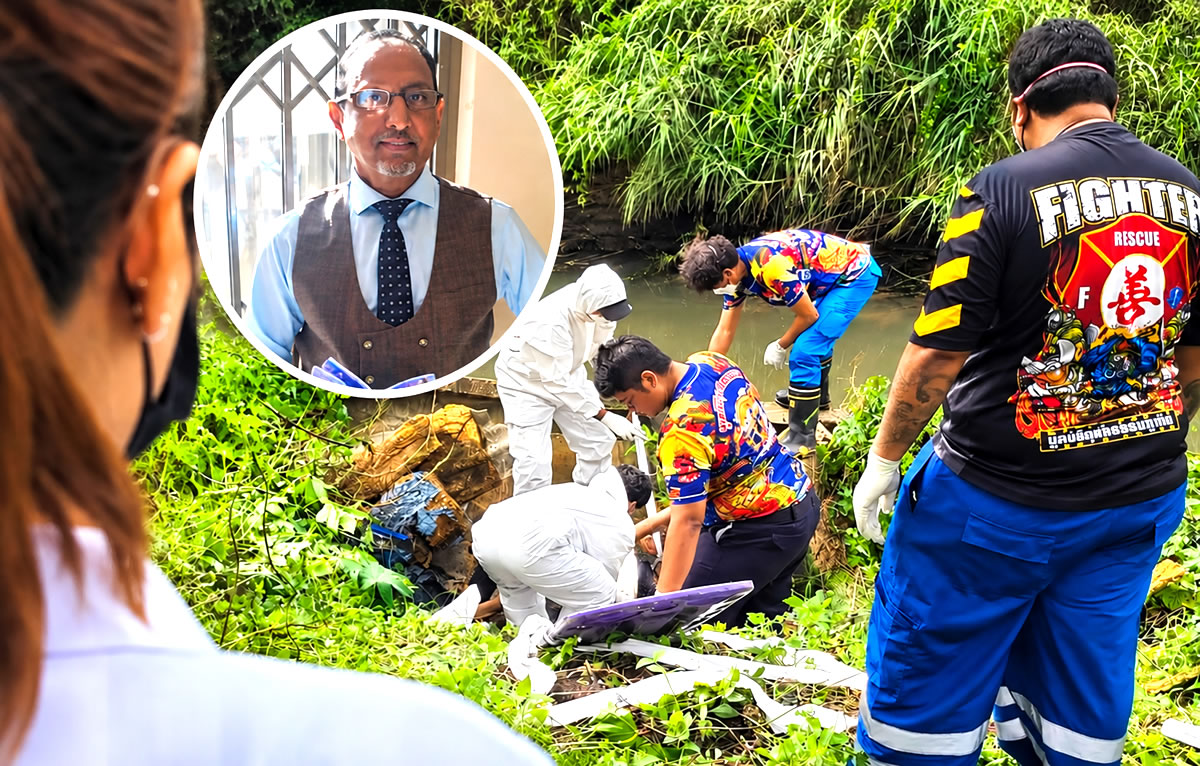
A South African tourist vanished within hours of checking into a Phuket hotel. Seven days later, a badly decomposed body was discovered beside a canal in a Patong palm plantation. Five days after that discovery, Thai police have released no official explanation of the death.
The remains are believed to belong to Devendren Naicker, 65, from Durban. Yet investigators have announced no confirmed cause of death, forensic identification or findings from their CCTV investigation.
The disappearance has left a trail of unanswered questions stretching from a Patong hotel to an isolated plantation. Naicker was last seen walking towards a market on November 6. His passport and luggage remained in his room, while his telephone became unreachable.
Body found beside Phuket canal as daughter disputes identification and police await forensic results
Subsequently, residents discovered a body wearing clothing matching his final recorded appearance. However, police have not explained how the man reached the canal or what killed him.
Adding to the confusion, conflicting reports have emerged from South Africa concerning confirmation of Naicker’s death. Newspapers initially reported that his family had identified him.
However, his daughter, Lavanya Naicker, 35, subsequently disputed those accounts. “No one in the family has yet confirmed anything,” she told the Southlands Sun on November 15. Meanwhile, Thai authorities have released no publicly verified scientific identification.
The discovery triggered a police investigation involving forensic specialists, Patong Police and Tourist Police. Detectives began reviewing surveillance recordings and ordered a post-mortem examination. Nevertheless, no subsequent findings have been publicly established as of Wednesday, November 18. No arrests have been reported, and investigators have not announced whether the death involved criminal activity.
South African tourist vanished hours after checking into Patong hotel as family lost telephone contact
Naicker arrived in Phuket on Friday, November 6, for a holiday he had planned for several years. The 65-year-old came from Yellowwood Park, a residential suburb of Durban, South Africa. At approximately 4pm, he checked into the Bel Aire Hotel on Rat-U-Thit 200 Pi Road in Patong. He had travelled alone, having previously invited his daughter to accompany him.
Just two-and-a-half hours after checking in, surveillance cameras recorded him leaving the hotel. The footage showed him walking towards a nearby market at approximately 6.30pm. That became his final confirmed sighting. Despite leaving his accommodation without checking out, he never returned. His luggage and passport remained in the room.
Back in South Africa, Lavanya became concerned when she could no longer contact her father. She had spoken to him shortly after his arrival in Phuket. However, subsequent telephone calls failed. By November 7 and 8, his telephone was switched off or otherwise unreachable. There was no reported communication explaining his disappearance or indicating a change in travel plans.
Despite Naicker disappearing on November 6, Patong Police did not receive a formal missing-person report until November 9. A hotel representative made the report three days after the last confirmed sighting. His daughter subsequently questioned that delay.
She also complained about difficulties obtaining information concerning the search. However, the available reports do not explain why the hotel waited three days before notifying police.
Police search hospitals and CCTV as daughter prepares urgent journey from Durban to find missing father
In response, investigators began checking hospitals and reviewing surveillance footage. Tourist Police joined the search on November 10 and inspected Naicker’s hotel room.
Officers also sought information about his movements after leaving the building. However, no further confirmed sightings were publicly reported. The original CCTV recording remained the last documented evidence of his movements.
By November 11, Lavanya was intensifying efforts to locate her father from Durban. She prepared missing-person posters and arranged translations for distribution in Phuket. Separately, she began organising travel to Thailand to assist personally.
Her passport had expired, initially preventing her departure. South Africa’s Department of Home Affairs subsequently informed her that a replacement document was ready and had been dispatched.
According to South African news sources on November 12, Lavanya was preparing to travel to Phuket. She also sought guidance about where to distribute the missing-person posters. “I just need to know where I need to put them once I am there,” she explained. At that stage, she was still attempting to locate her missing father. No confirmed sighting had emerged since November 6.
Decomposed body discovered in Patong palm plantation as police and forensic officers descend on scene
Then, on Friday, November 13, the search took a grim turn. Residents discovered a man’s body in an oil palm plantation in Patong. The remains lay beside a canal in the Soi Khok Moo area of Kathu district. The location was away from Naicker’s hotel. Thai reports identified nearby access roads as Phra Metta Road and Phang Mueang Sai Kor Road.
The Phuket News placed the discovery at approximately 12.45pm. Thairath reported that police received notification at approximately 2pm.
Both accounts identified Friday afternoon as the time of discovery. Subsequently, officers from Patong Police Station, Tourist Police and forensic units attended the scene. Rescue workers also joined the operation, while Phuket MP Chalermpong Saengdee visited the location.
The deceased was wearing a black short-sleeved T-shirt, black trousers and black shoes. Notably, those items matched the clothing Naicker wore when he disappeared. However, the remains were badly decomposed.
Investigators reported that the man’s face could no longer be reliably recognised. Consequently, the clothing provided an important connection, but visual identification remained impossible.
Clothing matches missing tourist as preliminary examination places death within days of disappearance
Initial examinations suggested the man had been dead for approximately five to seven days. That estimate placed his death between November 6 and November 8. Significantly, the period closely matched Naicker’s disappearance.
Nevertheless, the estimate remained preliminary and did not establish a precise time of death. Nor did the condition of the remains establish what had killed him.
Police therefore ordered a post-mortem examination and further forensic enquiries. The body was subsequently removed from the plantation. However, reports differed over which hospital initially received the remains.
Some identified Patong Hospital, while others named Vachira Phuket Hospital. No subsequent public account has clarified the transfer arrangements or confirmed completion of the forensic examination.
At the scene, investigators began examining how the deceased reached the plantation. They also sought to establish whether another person had been involved. According to a local source on November 13, detectives were reviewing surveillance recordings from the hotel and surrounding area. Their enquiries included identifying people who might have encountered Naicker after he left his accommodation.
Police examine movements around plantation but cannot explain how missing tourist reached canal site
As part of that investigation, police were also examining movements around the plantation. The canal’s location formed part of the discovery scene. However, no publicly released findings have established the route taken by the deceased.
Investigators have not confirmed whether Naicker reached the market or subsequently travelled elsewhere. Nor have they explained why the man was found beside the canal.
The investigation involved Captain Wichayut Damphueak of Patong Police. Phuket Tourist Police Chief Police Lieutenant Colonel Ekkachai Siri also confirmed the discovery. However, no subsequent CCTV findings have been made public.
Detectives have not announced additional confirmed sightings, identified a suspect or established another person’s involvement. The reported investigation remains without a disclosed conclusion.
More importantly, the post-mortem findings remain unavailable in the public record. Police have not announced a confirmed medical cause of death. No published examination establishes whether the deceased suffered fatal injuries.
No cause of death announced as police release no findings on injuries, drowning or possible crime
Authorities have also not confirmed whether illness, drowning or an accident caused the death. Equally, no evidence establishing murder or another criminal offence has been publicly disclosed.
The absence of criminal charges does not establish that police have ruled out foul play. Conversely, the discovery of a decomposed body beside a canal does not establish criminal violence. Investigators have given no details in public reporting, with no verified forensic findings explaining the death.
Another missing detail concerns the precise time of death. The initial estimate suggested five to seven days before the discovery. However, no final forensic timeline has been released.
Investigators have also not disclosed toxicology findings, internal injuries or evidence of any medical condition. Furthermore, no verified account establishes whether the deceased’s telephone, wallet or other personal possessions were recovered.
Those details could establish important facts concerning the final hours before death. However, their absence from published reports does not establish whether or not belongings were stolen. The police record available publicly simply contains no confirmed findings on those matters.
Daughter disputes family confirmation reports as formal identification of recovered body remains unclear
On another front, the discovery generated conflicting accounts of the family’s position. South Africa’s Sunday Tribune and Independent Online reported on November 14 that Naicker’s family had confirmed his death. Several other publications repeated that information. According to those accounts, relatives had received confirmation following the discovery. The family was also reported as declining further comment.
However, the following day brought a direct contradiction. On November 15, the Southlands Sun published an interview with Lavanya. She disputed reports that the family had formally identified the body. “No one in the family has yet confirmed anything,” she said. Her statement challenged the earlier accounts and left the identification issue unresolved.
Furthermore, Lavanya said she remained in Durban but intended to travel to Thailand. She wanted to establish whether the recovered remains belonged to her father. Afterwards, no subsequent report confirmed that she boarded a flight or arrived in Phuket. Nor has a Thai police announcement established whether she received formal identification results.
The distinction between reported family confirmation and forensic identification remains central to the case. Clothing found on the body matched Naicker’s final recorded appearance. However, that evidence is not equivalent to a publicly documented scientific identification.
Thai investigators have not announced DNA results, fingerprint comparisons or dental identification. Consequently, the official identification process remains unverified in the available reports.
Long-awaited Thailand holiday followed family bereavement before tourist vanished on first evening
Meanwhile, South African sources provided further details about the holiday Naicker had waited years to take. He originally planned to visit Thailand to celebrate his 60th birthday. However, his wife died in 2021, forcing him to postpone the journey. He eventually decided to travel alone several years later.
Naicker had invited his daughter to accompany him. She could not make the trip because of work commitments. Although he had travelled internationally before, this was reportedly his first overseas holiday alone. Lavanya described him as independent and interested in exploring unfamiliar places. He also preferred travelling independently rather than joining organised excursions.
Additionally, Naicker was hard of hearing and uncomfortable using technology. Those circumstances complicated efforts to reach him after his disappearance. However, no police findings have linked either factor to his death. The available evidence does not establish whether he became lost, encountered another person or suffered a medical emergency.
His final confirmed movements remain limited to the evening of November 6. He checked into the hotel at approximately 4pm and left at 6.30pm. Thereafter, the public record contains no confirmed sightings before the discovery seven days later. Investigators have not publicly established what happened during that interval.
Three-day delay in missing-person report leaves police without confirmed sightings beyond hotel CCTV
The delay in reporting his disappearance is also notable in this case. Naicker vanished on November 6, but police received notification on November 9. His daughter subsequently questioned the delay and described difficulties obtaining updates.
By November 10, Tourist Police had joined the search. Officers had inspected his accommodation, checked hospitals and begun reviewing surveillance material. Nevertheless, no subsequent confirmed CCTV sightings have been disclosed. Nor has a published witness account established where Naicker went after leaving the hotel. His route from the accommodation remains unknown, at least to the public, at this time.
The case therefore contains a substantial gap between the final hotel sighting and the discovery. Investigators have not publicly reported on whether the deceased travelled directly towards the plantation. Equally, they have not identified another location where he was seen alive. No released findings establish whether he was alone during his final movements.
The condition of the body provides a preliminary timeline, but not a final explanation. The estimated five-to-seven-day period suggested death shortly after Naicker disappeared. However, forensic findings have not established the precise interval. No published post-mortem report identifies fatal injuries, disease or another medical cause.
Canal discovery yields no confirmed drowning or criminal finding as forensic results remain undisclosed
Separately, the canal’s proximity to the remains has not produced a confirmed finding of drowning. Police have also not publicly established an accident at the location. Nor have they announced evidence of an assault or other criminal act. The discovery scene remains documented, but the circumstances of death remain unexplained.
The investigation’s public record effectively stops with the November 13 discovery and initial forensic enquiries. At that stage, police were reportedly reviewing CCTV and awaiting examination results.
Five days later, on Wednesday, November 18, no subsequent verified conclusion has been identified. There has been no publicly confirmed cause of death or final identification announcement.
That absence does not establish that detectives have abandoned the case. Police may possess findings that have not been publicly released. However, the available reports contain no confirmation of further investigative progress. They also do not establish whether the post-mortem examination has been completed or whether forensic results have reached investigators.
Police investigation lacks published conclusion as foreign tourist death raises questions over follow-up
The distinction between an unfinished investigation and unpublished findings remains unresolved. The initial search, recovery operation and forensic examination were reported. However, subsequent police activity has not been documented in the supplied material. No final investigative statement has been identified, and no criminal proceedings have been announced.
The case also reflects a wider reporting problem concerning unexplained deaths of foreign nationals in Thailand. Initial discoveries receive attention, often detailing police attendance, forensic examinations and planned investigations.
However, subsequent findings can be difficult to establish through published reports. The available material does not demonstrate a nationwide pattern of investigative failures or establish identical circumstances in other cases.
Nevertheless, Naicker’s disappearance provides a documented example of a death without a publicly verified conclusion five days after recovery. Police announced the discovery, examined the location and ordered forensic enquiries. Yet the results remain absent from available reporting. The identification dispute has added another unresolved element.
Family still awaits answers as police release no final identification or cause of death in Phuket case
For the family in South Africa, published accounts remain contradictory. Newspapers reported confirmation of Naicker’s death, while Lavanya subsequently disputed formal identification. No later report establishes whether she reached Thailand. Equally, no verified announcement confirms that she received forensic identification results or an official explanation of the death.
The final confirmed sighting remains the hotel CCTV recording from November 6. Naicker’s passport and luggage were left behind, while his telephone became unreachable. Seven days later, residents discovered a decomposed body wearing matching clothing beside a canal. The preliminary examination suggested death occurred shortly after the disappearance.
However, police have not publicly established when the man died, how he reached the plantation or what caused his death. No post-mortem conclusion has been verified. Neither have final identification findings been disclosed. No suspects or criminal charges have been announced.
65 year old South African tourist gone missing in Phuket. Last seen on Friday leaving his hotel in Patong
Another UK tourist dies in Thailand on a motorbike. No details on the accident are given to the media by officials
Phuket police investigate death of 28 year old Irish man found in a lagoon at elite housing development
By Wednesday, November 18, the last substantive Thai police information remained dated November 13. The last identified family statement disputing formal identification was published on November 15.
Five days after the discovery, the case remains without a publicly verified explanation. A South African tourist vanished within hours of arriving in Phuket, and a body believed to be his was recovered seven days later. Yet the cause of death, final movements and formal identification remain unresolved in the available official reporting.
Join the Thai News forum, follow Thai Examiner on Facebook here
Receive all our stories as they come out on Telegram here
Follow Thai Examiner here
Further reading:
UK’s Tiger Duggan dies in Bangkok. Never regained consciousness after a motorbike crash on Koh Samui
Outpouring of love for UK man fighting for life after horrific Koh Samui motorbike smash last Sunday