Leicester City’s £200m sale is off. Thai chairman Aiyawatt Srivaddhanaprabha holds firm despite a plunge from Premier League glory to League One, £180m-plus losses and pressure on King Power’s airport empire. January reinforcements are planned.
Thai billionaire Aiyawatt Srivaddhanaprabha has dramatically reversed plans to sell Leicester City, the English football club his late father transformed into Premier League champions. The decision, revealed on Thursday, November 19, follows a failed £200 million sale process amid mounting debts and three relegations. Leicester have plunged from their astonishing 5,000-1 championship triumph in 2016 to 11th place in England’s third division. Meanwhile, King Power’s Thai duty-free empire faces serious financial pressures despite securing relief on its airport concessions. Nevertheless, Aiyawatt is retaining the club, preparing January investment and fighting to preserve Vichai Srivaddhanaprabha’s extraordinary football legacy.
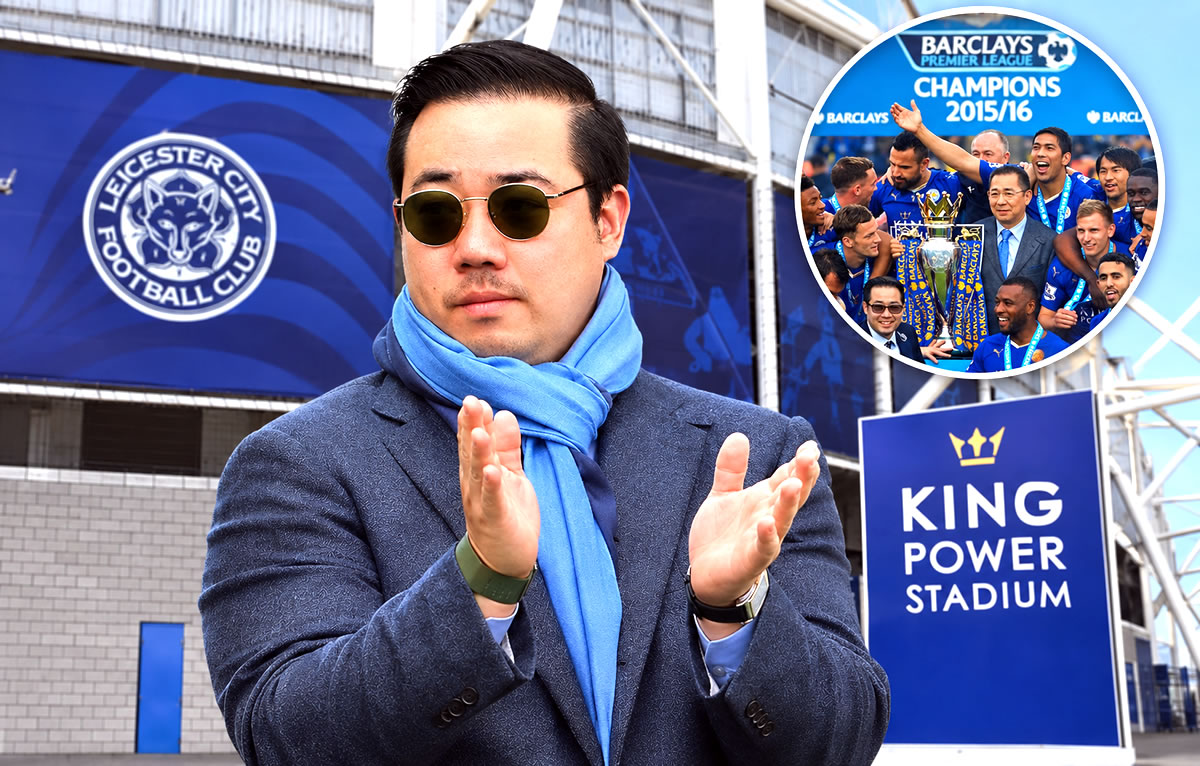
Thailand’s King Power Group has abandoned plans to sell Leicester City Football Club, despite the club’s disastrous collapse into English football’s third division. Chairman Aiyawatt Srivaddhanaprabha has withdrawn Leicester from the market after months of negotiations with prospective buyers.
The decision follows reports that a £200 million asking price deterred interested investors. Meanwhile, the Thai duty-free giant faces severe commercial pressures at home, following years of declining profitability.
Leicester, Premier League champions just ten years ago, are struggling in 11th place in League One. Nevertheless, Aiyawatt has decided to retain control and finance another attempt to rescue his late father’s football legacy.
King Power withdraws Leicester City from £200 million sale as Aiyawatt commits funds for recovery
The decision emerged on Thursday, November 19, after King Power issued instructions to Leicester’s senior management earlier in the week. Managing Director Kamonthip Netthamonsak informed executives that the club was no longer available for sale.
Crucially, the reversal came after King Power appointed investment bank Citigroup to identify prospective purchasers. Interested investors were invited to submit bids in October, with initial valuations reportedly reaching £225 million.
However, the asking price became a major obstacle. The latest valuation stood at approximately £200 million, equivalent to $260 million. That represented a substantial commitment for a club competing in England’s third division. Furthermore, prospective buyers faced mounting debts, heavy operating losses and significant future investment requirements.
Instead, Aiyawatt has chosen to retain Leicester rather than complete a sale at a lower valuation. King Power remains the club’s sole owner, maintaining the Srivaddhanaprabha family’s involvement after 16 years.
In September, the company converted another £8.5 million of funding into equity. That transaction reduced outstanding obligations while reinforcing the family’s financial commitment.
Separately, funds have reportedly been allocated for new players during the January 2027 transfer window. The decision signals continued investment despite Leicester’s repeated relegations and substantial financial losses.
From £35 million takeover to 5,000-1 Premier League triumph, Leicester’s extraordinary rise unfolds
The reversal marks another extraordinary chapter in Leicester City’s turbulent history. In 2016, the club achieved one of the greatest triumphs in world sport. Today, it is fighting to escape League One, the third tier of English professional football.
At the same time, its Thai owners are confronting serious difficulties involving the airport retail empire that financed Leicester’s rise. The contrast between the club’s historic championship success and its present position could hardly be greater.
The family’s involvement began in 2010, when businessman Vichai Srivaddhanaprabha acquired Leicester City for approximately £35 million. At that stage, Leicester were competing in the Championship, England’s second division.
However, Vichai invested heavily in the club’s development, recruitment and infrastructure. Within six years, that investment produced an astonishing result. Leicester won the 2015–16 Premier League championship under Italian manager Claudio Ranieri. Bookmakers had offered odds of 5,000-1 against the club winning England’s highest football honour.
Yet Leicester defeated some of the richest and most powerful clubs in European football. Striker Jamie Vardy spearheaded the attack, becoming a national sensation through his extraordinary goalscoring performances.
Ranieri’s Leicester stun English football as Mahrez, Kanté and Vardy power historic title victory
Meanwhile, Algerian international Riyad Mahrez supplied creativity, decisive passes and spectacular goals. French midfielder N’Golo Kanté dominated midfield, breaking up opposition attacks and driving Leicester forward.
Captain Wes Morgan organised the defence, supported by goalkeeper Kasper Schmeichel. Together, they formed the backbone of a team that transformed English football.
Remarkably, Leicester lost only three of their 38 Premier League matches. They finished ten points ahead of Arsenal, securing the championship with two fixtures remaining. The victory delivered an unprecedented achievement for a club with comparatively modest financial resources.
Moreover, Leicester’s success demonstrated the effectiveness of Ranieri’s disciplined approach, combining defensive organisation with rapid counterattacking football. Vardy’s goals, Mahrez’s creativity and Kanté’s relentless midfield performances became central to the club’s remarkable campaign.
For Vichai, the triumph brought international recognition and enormous commercial publicity. King Power’s name became familiar to millions of football supporters worldwide. In addition, the company benefited from its prominent association with Leicester’s stadium, shirts and historic championship celebrations.
Champions League success gives way to tragedy as Vichai dies in helicopter crash outside stadium
The club subsequently reached the UEFA Champions League quarter-finals in 2017. However, its greatest achievement remained the Premier League title, which transformed Vichai into one of English football’s most celebrated owners. His investment had elevated Leicester from the Championship to the summit of English football.
Then tragedy struck on October 27, 2018. Vichai died when his helicopter crashed shortly after leaving Leicester’s King Power Stadium. The aircraft came down outside the ground following a Premier League match against West Ham United.
All five people aboard were killed. Vichai was 60 years old. His death devastated Leicester City and sent shockwaves through Thailand’s business community. In response, supporters gathered to mourn an owner renowned for his financial backing, generosity and close relationship with the club. The disaster ended the life of the businessman who had overseen Leicester’s extraordinary transformation.
His son Aiyawatt subsequently inherited responsibility for Leicester and the wider King Power business empire. The change placed enormous commercial and sporting responsibilities on the younger Srivaddhanaprabha.
FA Cup triumph masks Leicester’s deepening crisis as relegations and financial penalties soon follow
Initially, Leicester remained competitive under the family’s ownership. In May 2021, the club won the FA Cup for the first time in its history. Belgian midfielder Youri Tielemans scored the decisive goal in a 1-0 victory over Chelsea at Wembley. The triumph delivered another major trophy to the King Power Stadium. However, serious financial and sporting problems were already developing.
Leicester had committed substantial resources to competing against wealthier Premier League rivals. Player salaries, recruitment expenditure and operating costs placed increasing pressure on the club’s finances.
Meanwhile, inconsistent transfer decisions weakened the playing squad. In 2023, Leicester suffered relegation from the Premier League. The collapse came just seven years after the club had lifted the championship trophy.
Nevertheless, Leicester immediately fought back, winning the Championship under manager Enzo Maresca in 2024. The success secured another return to the Premier League.
However, Maresca departed for Chelsea shortly afterwards, disrupting preparations for Leicester’s return to the top flight. The club subsequently endured another disastrous campaign and was relegated again in 2025. Worse followed during the 2025–26 Championship season.
In February 2026, an independent commission recommended an immediate six-point deduction for breaches of financial sustainability regulations. The Premier League confirmed that Leicester’s permitted losses during the relevant assessment period amounted to £83 million.
Furthermore, the commission found that the club had failed to submit its annual accounts by the required deadline.
Leicester plunge into League One as losses top £180 million and bank borrowing reaches £103.6 million
The financial punishment compounded Leicester’s sporting difficulties. In April 2026, the club suffered another relegation, dropping into League One. The collapse was staggering. Within three years, Leicester had fallen from the Premier League to English football’s third division.
Alongside this, the club had endured repeated managerial changes, expensive rebuilding programmes and substantial financial losses. A team that once challenged Europe’s leading clubs was preparing to face opponents in England’s third tier.
Its latest published annual accounts revealed a £71 million loss. Earlier financial statements recorded losses approaching £90 million. In addition, the club’s 2025 accounts disclosed £103.6 million in bank borrowing. Across the period encompassing two Premier League relegations, Leicester accumulated losses exceeding £180 million.
Consequently, the club depended heavily on financial support, borrowing and player sales to maintain operations. These figures illustrated the financial burden facing King Power as Leicester continued its decline.
King Power faces severe pressure in Thailand as tourism collapse undermines airport duty-free revenues
At the same time, King Power’s core business in Thailand was experiencing serious difficulties. The Srivaddhanaprabha family’s fortune was built principally through airport duty-free retailing. King Power established extensive operations at Thailand’s major international airports, benefiting from rising passenger numbers and foreign visitor spending.
However, the COVID-19 pandemic devastated international tourism. Thailand’s airports suffered a prolonged collapse in passenger traffic, severely damaging duty-free retail revenues. The downturn struck directly at the commercial activities underpinning the family’s wealth.
Although tourism subsequently recovered, spending patterns changed considerably. Chinese visitors, historically a crucial market for King Power, returned more slowly than expected. Meanwhile, weaker passenger expenditure undermined the economics of expensive airport retail concessions.
King Power faced the challenge of maintaining substantial commercial commitments while revenues remained under pressure. Furthermore, the company had to contend with rising operating costs and changing consumer behaviour. The problems intensified as Leicester continued to require substantial financial support from its owners.
In 2025, the situation became serious enough for King Power to seek major revisions to its airport concession agreements. The company approached Airports of Thailand Public Company Limited (AOT), citing heavy losses and liquidity difficulties.
King Power secures airport concession relief after threatening to surrender major Thai retail contracts
It also pointed to disappointing passenger spending and excessive minimum guaranteed payments. Remarkably, King Power raised the possibility of terminating duty-free operations at five major Thai airports. Such a move would have represented a substantial retreat from its principal business. However, AOT subsequently agreed to revise the contractual arrangements.
Under new terms effective October 1, 2025, minimum guaranteed payments per international passenger were substantially reduced. At Suvarnabhumi Airport, the guarantee fell by 37%.
Meanwhile, corresponding guarantees at three regional airports were reduced by 30%. The changes eased the financial burden on King Power’s airport retail operations. Furthermore, a banking assessment published in May 2026 reported that the company was meeting accumulated concession payment obligations according to schedule. The revised arrangements provided significant relief to the Thai retail group.
Separately, Thai authorities have examined the possible return of duty-free shopping for arriving international passengers. Such a change could provide further commercial opportunities for airport retailers, although implementation remains uncertain.
Leicester’s £200 million sale stalls as heavy losses and League One status deter potential investors
Against this background, Leicester’s proposed sale attracted considerable attention. King Power’s financial pressures in Thailand coincided with enormous losses at its English football subsidiary. However, no direct evidence establishes that the Thai commercial difficulties forced the proposed disposal. The club’s substantial operating losses nevertheless represented an additional commitment for the group.
King Power’s reported £200 million asking price became central to the sale negotiations. Several interested parties examined the opportunity, but the valuation remained a substantial obstacle.
Leicester’s position in League One also weakened its commercial appeal. Prospective owners faced the cost of rebuilding a team that had suffered successive relegations. Furthermore, the club’s recent financial penalties highlighted the importance of controlling future expenditure. The proposed purchase therefore involved considerably more than the initial acquisition price.
However, Leicester retains significant assets. The club has a modern stadium, extensive training facilities and a substantial supporter base. Average home attendance remains approximately 28,100 at the 32,500-capacity King Power Stadium.
That represents exceptional support for a club competing in England’s third division. Furthermore, Leicester retains international recognition from its 2016 Premier League championship and 2021 FA Cup victory. Its facilities and established football infrastructure remain substantial assets despite the sporting collapse.
Aiyawatt vows to honour his father’s legacy while Leicester confronts the financial cost of recovery
Promotion to the Championship would improve the club’s commercial position. A subsequent return to the Premier League would provide access to substantially greater broadcasting revenues and sponsorship opportunities.
However, achieving those objectives requires a major improvement in results. Leicester must also manage its finances within the regulations governing English professional football. The club’s recent penalties have demonstrated the consequences of breaching financial sustainability requirements.
Aiyawatt has repeatedly emphasised his determination to preserve his father’s legacy. In January 2026, the Leicester chairman publicly reaffirmed his commitment to the club. “I need to make sure I get everything I set out to do here done before I think about leaving,” he said. He added: “Right now, my focus is on keeping the club in a good position. I still love it here and I want to make sure the club returns to success again.”
Then, in February, Aiyawatt described Leicester’s collapse in striking terms. “My football club is falling from the stars to the ground,” he declared. Those statements underline his publicly expressed determination to restore Leicester’s fortunes. However, he has not identified one decisive reason for abandoning the sale. The decision leaves him responsible for financing another rebuilding programme while attempting to reverse the club’s sporting decline.
Leicester sit 11th in League One as Russell Martin battles defensive weaknesses and promotion pressure
Leicester’s immediate challenge remains formidable. The club entered the 2026–27 League One campaign among the favourites for promotion.
However, a disappointing start exposed serious weaknesses in consistency and defensive organisation. Under manager Russell Martin, Leicester have won five, drawn four and lost four of their opening 13 league fixtures. They have scored 22 goals while conceding 19. Consequently, the Foxes sit 11th with 19 points and a goal difference of plus three.
Leicester remain ten points behind leaders Huddersfield Town. At their current rate of 1.46 points per match, they would finish the 46-game season with approximately 67 points. Such a return could leave them outside the promotion play-offs.
The top two League One clubs secure automatic promotion to the Championship. Meanwhile, teams finishing third through sixth compete for the remaining promotion place. Leicester are currently four points outside the play-off positions.
However, recent results have provided some encouragement. After winning only one of their opening five league fixtures, Martin’s team have won five of their last seven matches across all competitions.
Attacker Emil Riis Jakobsen has contributed six league goals, strengthening Leicester’s attacking threat. Nevertheless, defensive weaknesses remain a major obstacle to a sustained promotion challenge. The club has conceded 19 goals in 13 league matches, placing additional pressure on its attacking players.
Huddersfield clash tests Leicester’s recovery as Michael Emenalo joins the club’s football operation
On Saturday, November 21, Leicester travel to face league leaders Huddersfield Town. The fixture presents an important examination of Martin’s rebuilding programme. Victory would narrow the gap between the clubs and strengthen Leicester’s position.
Defeat would increase the pressure on a team already struggling to meet pre-season expectations. Meanwhile, the approaching January transfer window offers an opportunity to strengthen the squad for the second half of the campaign.
King Power is also pursuing changes to Leicester’s football operations. Michael Emenalo, the former Chelsea technical director and Saudi Pro League sporting director, has joined as a consultant.
His involvement brings additional experience in player recruitment and football management. Furthermore, Leicester are working towards a new contract for defender Ben Nelson. The player is recovering from a serious knee injury and is not expected to return until March. These developments form part of the club’s preparations for another promotion attempt.
January transfers and demanding points targets put Leicester’s promotion hopes under fresh scrutiny
The January 2027 transfer window will provide another important test of the ownership’s financial commitment. Funds have reportedly been made available for additional players.
However, Leicester must operate within financial sustainability requirements following its previous regulatory difficulties. The club’s financial position leaves little room for another expensive recruitment programme that fails to produce results. Consequently, Martin faces the challenge of improving performances while working within the available resources.
The arithmetic of promotion remains demanding. With 33 league matches remaining, Leicester require another 56 points to finish on 75. That would mean averaging 1.70 points per fixture. Reaching 80 points would require another 61 points, equivalent to 1.85 per match.
Meanwhile, a 90-point finish would demand 71 additional points, or 2.15 per game. Those figures illustrate the improvement required to compete for promotion. Automatic promotion would demand particularly strong results over the remaining campaign.
For Aiyawatt, the decision to retain Leicester represents a substantial financial commitment. King Power must continue supporting the club’s operations while attempting to restore its competitive position.
King Power retains Leicester despite three relegations as Aiyawatt confronts a costly rebuilding task
The Thai company has already invested heavily during a period marked by three relegations since 2023. Furthermore, its airport retail business continues to operate under challenging commercial conditions. Nevertheless, the proposed sale has been abandoned, leaving the Srivaddhanaprabha family firmly in control.
The decision also ends months of uncertainty over Leicester’s ownership. King Power previously sought a purchaser at a reported valuation of £200 million. However, that process has ended without an announced change of control.
The family retains a club that reached the summit of English football before falling into the third division. Meanwhile, its immediate financial and sporting obligations remain unchanged.
King Power in tentative talks with Citigroup about Leicester City sale after freefall to UK’s third tier
Hard times for Thailand’s duty free concessions as top firm King Power offers to hand back 3 concessions
Aiyawatt now faces the task of rebuilding a club that once conquered English football against odds of 5,000-1. Ten years after Leicester’s historic championship triumph, the immediate objective is considerably more modest.
The Foxes must escape League One and return to the Championship. The January transfer window, Russell Martin’s results and the remaining league fixtures will determine the club’s immediate prospects.
Meanwhile, King Power’s continued ownership ensures that Leicester’s extraordinary connection with Thailand remains intact. Vichai Srivaddhanaprabha bought the club for approximately £35 million in 2010 and delivered a Premier League championship six years later. His son has now rejected a proposed sale valued at £200 million. The club remains in Thai hands, with its future resting on promotion, tighter financial management and a sustained sporting recovery.
Join the Thai News forum, follow Thai Examiner on Facebook here
Follow Thai Examiner on Google here
Receive all our stories as they come out on Telegram here
Follow Thai Examiner here
Further reading:
Axe to fall on duty-free on arrivals as Finance Minister pushes the message of an expanded tax base
Political maelstrom may be unleashed in June with potential crises brewing and coming to a climax
PM survives Constitutional Court’s call in a close run thing raising real questions over his future