Paid Thai fathers and Chinese parents are at the heart of a widening citizenship scandal. Police probe 1,483 children and 470 hospitals as DNA tests expose false paternity and investigators trace Thai nationality to land, firms and laundering.
Thailand’s widening fake-paternity scandal has grown into a major national security investigation, with 1,483 children under review in Bangkok and more than 470 private hospitals facing scrutiny. People’s Party MP Rangsiman Rome is pressing parliament over funding for DNA tests as police trace paid Thai fathers, Chinese parents, brokers, hospital staff and officials. Investigators are also examining whether fraudulently obtained Thai citizenship was later used to acquire land, businesses and company interests, while the DSI has raised concerns over money laundering and foreign ownership restrictions.
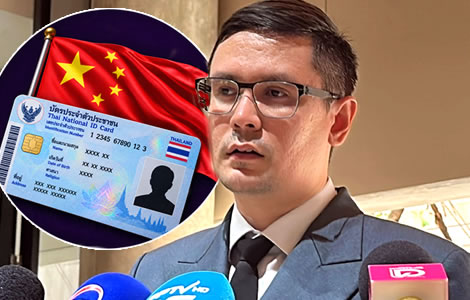
People’s Party MP Rangsiman Rome has raised concerns over funding DNA tests in Thailand’s widening fake-paternity investigation. Parliament is examining the suspected use of Thai men as fathers for children born to Chinese parents.
The scale is already substantial, with investigators reviewing records involving 1,483 children in Bangkok by July 24. In parallel, more than 470 private hospitals nationwide have been ordered to face scrutiny.
The parliamentary inquiry has pushed the scandal further into the national spotlight. Investigators are examining networks involving Chinese parents, paid Thai fathers, brokers, hospital personnel and registration officials.
Some Thai men were paid to acknowledge children with whom they had no biological relationship. Crucially, successful registration could give those children Thai nationality and extensive legal rights.
DNA testing drives fake-paternity probe as police trace land, businesses and foreign ownership links
DNA testing has therefore become a central part of the investigation. Officials are comparing hospital documents, medical records, identity information and birth registrations. Suspicious cases can then be referred for forensic examination. Notably, DNA tests have already established false paternity in individual cases.
The cost of expanding those tests has now drawn concern from Mr Rangsiman. Parliament is examining the resources required as officials work through growing numbers of suspicious registrations. At the same time, investigators must determine which cases require DNA confirmation. The expanding workload stretches across hospitals, district offices and historical civil registration records.
Separately, police are examining what happened after children obtained Thai nationality. Investigators want to know whether their status was later exploited to acquire land and business interests. Company holdings are also under examination. The Department of Special Investigation has raised concerns about money laundering and foreign ownership restrictions.
The central mechanism uncovered by investigators was relatively simple. Chinese women gave birth in Thailand before Thai nationals were recorded as their children’s biological fathers. However, police found cases where those men had no biological connection with the babies. Instead, some were paid to provide their identities and formally acknowledge paternity.
False paternity cases expose Thai citizenship route to land, businesses and suspected laundering
As part of this, DNA testing provided investigators with direct evidence. Tests confirmed that some registered Thai fathers had no genetic relationship with the children. Investigators then began examining whether the same method had been repeatedly used. The inquiry quickly moved beyond isolated false declarations.
The consequences extend well beyond inaccurate birth records. Thai nationality provides rights unavailable to most foreign nationals. In particular, Thai citizens can hold assets which foreigners face restrictions on owning directly. Investigators are examining whether children became nominal owners for their Chinese parents.
On another front, land ownership has become a significant part of the financial investigation. Businesses and company interests are also receiving scrutiny. Investigators are tracing whether assets were placed under children who obtained nationality through false paternity. The DSI has also identified potential money-laundering implications.
The scandal began somewhere very different from a hospital maternity department. Investigators were initially examining Chinese-linked scam operations and suspected money-laundering networks. During that work, suspicious transactions involving a Chinese woman attracted attention. Significantly, investigators discovered that her children possessed Thai nationality.
Financial trail leads investigators from Chinese scam networks to birth records and paid fathers
That discovery shifted the investigation towards civil registration records. Officials examined how the children had obtained their status. The trail then led towards birth registrations and paternity declarations. From there, police uncovered what they described as an organised system.
The suspected structure involved brokers, foreign parents, paid Thai fathers and officials. Subsequently, hospital personnel became another focus as police reconstructed individual cases. Investigators wanted to establish how documentation moved from childbirth into Thailand’s registration system. They also examined who handled that paperwork.
One investigation eventually identified 164 Chinese children registered with Thai fathers during five years. That finding dramatically widened the inquiry. Police began examining hospital records, birth registrations and people involved in processing documentation. Soon afterwards, arrests reached both the hospital and government sectors.
Investigators arrested a medical-records employee at a private hospital in Bangkok’s Thonburi district. Police accuse her of helping Chinese clients obtain maternity packages costing approximately ฿70,000. Moreover, investigators say she received about ฿20,000 for each case where she coordinated documentation. A district official was also arrested.
Operation Dragon Scale targets 40 suspects as police widen fake-paternity arrests across Thailand
The investigation then developed into Operation Dragon Scale. In response, police obtained 40 arrest warrants covering several groups within the suspected network. Seventeen warrants targeted Thai men accused of acting as false fathers. Another 16 covered foreign mothers.
Five biological Chinese fathers were also targeted. Additionally, warrants covered a hospital employee and a state official. Fifteen suspects were initially arrested during the operation. Reports several days later placed arrests in the core investigation at 33.
The arrest figures demonstrated the breadth of the suspected operation. Rather than focusing solely on proxy fathers, police targeted participants across different stages. Foreign parents came under investigation alongside Thai nationals. Hospital and government personnel were also drawn into the case.
Yet investigators increasingly believe the known cases could represent only part of the problem. Attention consequently shifted towards hospitals and historical registration records. The Public Health Ministry began examining six private hospitals after hundreds of birth records were flagged. Those records involved foreign mothers and supposed Thai fathers.
Hospital records trigger wider DNA checks as Bangkok and parliament expand birth registration reviews
Early records obtained from two hospitals produced 200 cases requiring examination. One hospital accounted for 196 cases, while another accounted for four. Meanwhile, records were being sought from another four hospitals. Examination of those records did not itself establish wrongdoing by the hospitals.
Officials began comparing birth notifications with medical records and identity documents. They also checked information used to place children on household registrations. Where discrepancies emerged, suspicious cases could be referred for DNA testing. Confirmed false paternity could then trigger a review of the child’s nationality.
Beyond the hospital investigation, Bangkok launched a much larger examination of civil registration records. All 50 district offices were ordered to review relevant birth registrations. Importantly, the examination stretches back to 2017. Historical registrations therefore became another major strand of the inquiry.
Parliament then sought an even broader review. A committee called for relevant birth registrations to be examined nationwide over 15 years. Such an inquiry would extend far beyond the original cases. It could also establish whether similar arrangements operated outside Bangkok.
Bangkok review reaches 1,483 children as nationality revocations and hospital scrutiny accelerate
By July 24, investigators were reviewing records involving 1,483 children in Bangkok. That was more than nine times the original group of 164. Meanwhile, registration checks and DNA testing produced further arrests. Four additional suspects were detained over two confirmed false-paternity cases.
Those suspects included a Chinese couple and two Thai men. Investigators confirmed the registered Thai fathers were not biologically related to the children. As a result, officials revoked the children’s Thai nationality. Those cases reinforced the pattern identified elsewhere in the investigation.
At national level, scrutiny of the private hospital sector expanded sharply. Officials ordered checks involving more than 470 private hospitals across Thailand. Investigators are examining births involving foreign mothers and Thai men registered as fathers. They are also searching for patterns matching confirmed false-paternity cases.
The figures show how rapidly the case has grown. Initially, investigators followed suspicious financial transactions involving one Chinese woman. Next, they identified 164 Chinese children registered with Thai fathers. Later, Bangkok widened its review to records involving 1,483 children.
Nationwide hospital checks widen as police trace paid fathers, brokers and suspect registrations
Now, more than 470 private hospitals face examination nationwide. Alongside that work, parliament has sought a review extending across 15 years. The proposed scope reaches far beyond the five-year period examined in the original 164 cases. It also increases the potential requirement for DNA testing.
Financial arrangements surrounding the registrations are receiving equally close attention. Police have established that some Thai men received money to acknowledge children who were not theirs. Brokers are suspected of coordinating parts of the process. Hospital employees and registration officials have also entered the investigation.
Investigators are therefore reconstructing how suspected cases moved from childbirth to registration. First, a foreign mother gave birth in Thailand. A Thai man was then registered as the child’s father. In confirmed cases, however, that man had no biological relationship with the baby.
Some Thai men were paid for their participation. Once registration was completed, the child could obtain rights attached to Thai nationality. That outcome has become central to the expanding financial investigation. Police are now examining what happened afterwards.
Investigators trace land and company holdings as fake Thai citizenship probe follows financial trail
In particular, investigators are tracing whether fraudulently registered children became connected with valuable Thai assets. Land is receiving close attention. Businesses and company interests are also being examined. Foreign nationals face restrictions on directly owning certain assets in Thailand.
Thai citizens do not face the same restrictions. Accordingly, investigators are examining whether children became nominal owners for their foreign parents. The DSI has also raised concerns that the mechanism could facilitate money laundering. Those concerns connect directly with the investigation’s origins.
The original trail began with suspicious transactions linked to a Chinese woman. Investigators then discovered her children held Thai nationality. That finding opened a separate line of inquiry. Financial transactions led investigators towards citizenship records.
In turn, citizenship records led to paternity declarations. Those declarations led towards Thai proxy fathers, brokers, hospital personnel and officials. Several branches of government are now involved. Police are pursuing suspects while health officials examine hospitals and maternity records.
Bangkok records, DNA tests and hospital payments deepen probe into false paternity registrations
Elsewhere, Bangkok registration offices are examining historical birth records and paternity information. Financial investigators are tracing transactions and potential asset ownership. DNA testing gives investigators another direct method for challenging suspicious declarations. Confirmed genetic mismatches have already produced arrests and nationality revocations.
Nevertheless, the volume of registrations requiring examination remains substantial. Bangkok alone was reviewing records involving 1,483 children by July 24. More than 470 private hospitals are separately facing scrutiny. A 15-year nationwide review could broaden the workload substantially further.
Operation Dragon Scale already shows the range of people suspected within the system. They include Thai proxy fathers, foreign mothers and biological Chinese fathers. A hospital employee and state official were also targeted. Payments identified by investigators show money surrounding parts of the registration process.
For example, one hospital employee allegedly received approximately ฿20,000 for each case she coordinated. Maternity packages offered to Chinese clients reportedly cost about ฿70,000. Investigators are determining how many similar cases were processed. They are also tracing the subsequent use of Thai nationality.
Citizenship fraud inquiry expands from hospitals to asset ownership and Thailand’s registration system
That second question has pushed the inquiry beyond hospitals and district offices. Investigators want to establish whether citizenship was used to acquire valuable assets. Consequently, the probe now covers registration fraud, financial transactions and foreign ownership restrictions. It also reaches into the integrity of Thailand’s civil registration system.
The suspected mechanism depended on several stages working together. A foreign mother first required a Thai man willing to acknowledge her child. Hospital documentation formed part of the process. Brokers could coordinate arrangements between participants.
Afterwards, district officials handled documents formally recording paternity. A completed registration could then establish Thai nationality for the child. Investigators are examining each point where false information may have entered the system. Arrests show the inquiry extends beyond paid Thai fathers.
Foreign parents have also been targeted, alongside hospital personnel and a government official. Likewise, the investigation has expanded from Bangkok cases into nationwide hospital checks. The scale is already reflected in the figures disclosed by investigators.
Police tally arrests and hospital checks as false paternity case becomes national security concern
One investigation found 164 Chinese children registered with Thai fathers across five years. Operation Dragon Scale then produced 40 arrest warrants. Those included 17 Thai proxy fathers and 21 foreign parents. Fifteen suspects were initially arrested.
Within days, reports placed arrests in the core investigation at 33. By July 24, Bangkok officials were examining records involving 1,483 children. More than 470 private hospitals were also ordered to face scrutiny. Parliament, meanwhile, sought an examination stretching back 15 years.
Taken together, the inquiries have moved far beyond falsified paperwork involving individual families. Police and financial investigators are examining an organised system capable of creating Thai citizens through false paternity declarations. Those citizens could hold rights unavailable to their foreign parents. Investigators are now tracing whether those rights were subsequently exploited.
The DSI has warned of potential links with money laundering and circumvention of foreign ownership restrictions. Against that background, the investigation has become a national security concern. Hospital records, birth registrations, financial transactions and DNA evidence are now being examined together.
Parliament presses DNA funding issue as police trace assets, payments and suspect Thai citizenship
Police are pursuing brokers, proxy fathers, foreign parents and officials connected with confirmed cases. At the same time, parliament is pressing ahead with its own scrutiny. Rangsiman’s concerns over DNA-test funding add another dimension as the number of records grows.
The central questions have therefore widened sharply. Investigators are establishing how many false registrations occurred and how long the networks operated. They are examining how much money changed hands. Above all, they are tracing assets connected with children whose Thai nationality came under investigation.
What began with suspicious financial transactions has become a major examination of Thailand’s citizenship registration system. Dozens of arrests have already followed. Thai nationality has been revoked in confirmed cases, while hundreds of hospitals now face checks.
Chinese Embassy issues statement supporting the judicial process over fake birth registrations scandal
Chinese gangs approaching expectant Thai fathers in private hospitals seeking identity transfers
The investigation remains far from narrow. Bangkok’s review alone involves records concerning 1,483 children. Nationwide scrutiny covers more than 470 private hospitals. Parliament also wants records examined across 15 years.
Against that expanding workload, DNA testing remains a critical evidential tool. Rangsiman has raised concerns about how those tests will be funded. Investigators, meanwhile, continue tracing the people, payments and registrations behind confirmed cases. The inquiry is also following the assets potentially linked to the resulting Thai citizenship.
Join the Thai News forum, follow Thai Examiner on Facebook here
Receive all our stories as they come out on Telegram here
Follow Thai Examiner here
Further reading:
Bitter end of the dream for Chinese woman who came to Thailand to start a new life over 30 years ago
Chinese invasion claim by Chuwit saying there are now 3 million new arrivals in tourist hotspots
Charges brought against Chinese mafia kingpin as Chuwit warns witnesses are put under pressure
DSI chief removed from his post as scandal over a raid on a former diplomatic residence grows
Chinese gangs approaching expectant Thai fathers in private hospitals seeking identity transfers
Top Immigration Bureau officers investigated by high-level panel over Chinese corruption claims
Chinese-controlled Thai language schools used by criminal network to obtain visas for associates