
Toxic Kok River contamination puts Thailand on alert as Varawut tightens mining controls nationwide. Officials trace the pollution abroad, pursue bilateral action, enlist UNIDO and prepare tougher checks on minerals imported from foreign producers.
Thailand has stepped up its response to toxic contamination of the Kok River after heavy metals were detected in northern waters. Industry Minister Varawut Silpa-archa has ordered tighter mining controls nationwide as officials trace the pollution beyond Thailand. Meanwhile, Bangkok is pursuing bilateral action and working with the United Nations Industrial Development Organisation on monitoring and restoration. The government is also preparing tougher mineral import rules requiring greater scrutiny of foreign production sources.
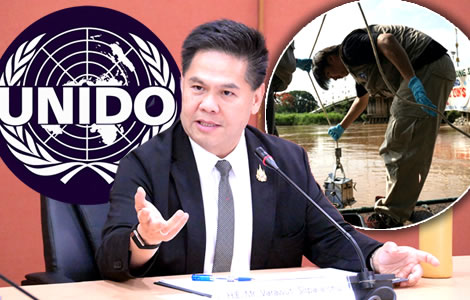
Industry Minister Varawut Silpa-archa has ordered tighter mining controls nationwide following toxic contamination of the Kok River. Heavy metals and other toxic substances have been detected in the river. Consequently, mining operations across Thailand will face increased supervision. The government is also pursuing urgent international action because officials say the contamination originates outside Thailand.
Mr Varawut issued the directive on Monday, August 17, 2026, after expressing concern over the deteriorating situation. He instructed the Department of Primary Industries and Mines to closely monitor mining operations nationwide. In particular, the order covers mines across northern Thailand. Officials must ensure Thai mining operations do not worsen the existing contamination.
The Industry Minister said mining must coexist sustainably with surrounding communities and the environment. Furthermore, economic development must not negatively affect ecosystems. He described this requirement as a key policy and goal of the Industry Ministry. It also forms part of the ministry’s efforts to address problems directly affecting communities.
Mining inspections intensify nationwide as officials trace Kok River contamination beyond Thailand
Meanwhile, Department of Primary Industries and Mines Director-General Adithat Wasinon outlined the department’s current enforcement measures. He said officials were rigorously and continuously inspecting mining operations throughout Thailand. Importantly, the inspections include mining operations across the northern region. Operators must strictly comply with environmental impact prevention and mitigation measures.
However, the department’s technical findings point to outside Thailand as the source of the present Kok River contamination. Officials conducted detailed spatial analysis and verification of the affected areas. According to Mr Adithat, the findings confirm the impacts currently affecting the river originate beyond Thailand. The contaminated water then flows into Chiang Rai and Chiang Mai provinces.
Nevertheless, Mr Varawut has ordered tighter controls over Thai mines regardless of those findings. The government wants to prevent domestic operations from aggravating an already unfavourable situation. Consequently, mining supervision forms one part of a wider response involving several government agencies. The effort also includes environmental analysis, diplomacy, international cooperation and tougher mineral import controls.
Meanwhile, government technical agencies are providing information needed to tackle the contamination. The Department of Mineral Resources is ready to supply detailed academic and technical information. This material will be available to every relevant agency involved in planning the response. Therefore, officials will use technical evidence when developing measures to address the pollution.
Thailand takes Kok River contamination to bilateral channels while UNIDO supports technical response
The department has also coordinated with other agencies dealing directly with the Kok River problem. In particular, this includes the Ministry of Natural Resources and Environment and the Ministry of Foreign Affairs. Their involvement reflects the cross-border nature of the contamination identified by Thai officials. Consequently, Thailand is also pursuing the toxic contamination problem through bilateral international channels.
The Ministry of Foreign Affairs has a central role because the identified source lies outside Thailand. Meanwhile, environmental agencies are dealing with the impact inside the country. Industrial agencies are also tightening controls to prevent Thai operations from adding further contamination. The response therefore stretches across industrial regulation, environmental management, technical analysis and international relations.
Thailand is also backing cooperation with the United Nations Industrial Development Organisation, or UNIDO. Specifically, the cooperation involves international environmental management technologies and recognised standards. These will support monitoring and scientific studies of contamination across the Kok River basin. Furthermore, they will assist efforts to restore affected natural resources.
UNIDO backs Kok River restoration as Thailand prepares tighter controls on imported mineral origins
UNIDO cooperation adds an international technical component to the government’s response. Projects supported by the department will apply environmental management technologies and standards to the river basin. These will be used to monitor contamination and study its effects. In addition, the cooperation will support work aimed at restoring natural resources to their original condition.
However, the government’s response is extending beyond the Kok River itself. Officials are also examining how certain minerals enter Thailand from foreign production sources. The Department of Mineral Resources is reviewing and amending related subordinate legislation. The proposed changes would raise standards governing imports of certain minerals.
Crucially, the new rules could require importers to identify the origin of those minerals. Such declarations would reveal where the imported material was produced. Officials could then examine environmental management standards at the original production source. Moreover, those standards would need to meet proper and internationally recognised requirements.
The measure would significantly strengthen oversight of imported mineral supplies. Currently, the review focuses on creating stricter controls over particular mineral imports. Origin information would allow officials to trace materials back to their production sites. Consequently, environmental scrutiny could extend beyond Thailand’s borders and into foreign mineral supply chains.
Thailand targets irresponsible mineral sources while tightening mine inspections and import controls
The department said the measure would also prevent support for irresponsible mineral production sources. In particular, officials are targeting sources lacking proper environmental and social responsibility. The proposed rules would therefore link mineral imports with environmental standards at their place of production. This would create another regulatory layer alongside tighter supervision of mines operating inside Thailand.
Meanwhile, domestic inspections will continue throughout the country. Mr Adithat said the Department of Primary Industries and Mines already maintains rigorous and continuous supervision. Operators must comply strictly with environmental prevention and mitigation requirements. Northern mines will remain under the same scrutiny despite the findings concerning the Kok River’s foreign contamination source.
The government’s response is therefore advancing on several fronts simultaneously. Domestic mining operations face enhanced monitoring, while technical agencies continue analysing the contamination. Meanwhile, environmental and foreign ministries are coordinating action through bilateral channels. UNIDO projects will also bring international technologies and environmental management standards into the Kok River response.
At the same time, tougher mineral import requirements are being prepared through changes to subordinate legislation. These could require declarations identifying production sources for specified minerals. Officials could then verify whether those sources follow internationally recognised environmental management standards. Consequently, Thailand would gain additional controls over minerals produced outside its jurisdiction.
Kok River contamination drives tighter mine controls, bilateral action and tougher mineral import rules
The immediate concern remains toxic substances and heavy metals contaminating the Kok River. Detailed spatial analysis has traced the current impacts to areas outside Thailand. Those impacts directly affect water quality entering Chiang Rai and Chiang Mai. However, Mr Varawut has ordered domestic mining supervision to be strengthened to prevent the situation from deteriorating further.
The Industry Ministry is now combining tougher mine inspections with broader government action. Technical evidence will support measures inside Thailand, while bilateral mechanisms will address the international dimension.
Bangkok protest anger over northern rivers poisoned by Chinese-backed firms near the Thai border erupts
River Kok in Chiang Rai poisoned with arsenic from Wa state-controlled gold mining across the border
Meanwhile, UNIDO cooperation will support contamination monitoring, scientific study and restoration work. Proposed import controls will also increase scrutiny of foreign mineral production sources.
Consequently, the Kok River crisis has triggered measures extending far beyond routine water monitoring. Mining operations nationwide are under increased scrutiny, including those across northern Thailand. At the same time, Bangkok is pursuing the contamination through environmental, diplomatic and international technical channels. The government is also preparing tighter rules governing where imported minerals originate and how they are produced.
Join the Thai News forum, follow Thai Examiner on Facebook here
Receive all our stories as they come out on Telegram here
Follow Thai Examiner here
Further reading:
River Kok in Chiang Rai poisoned with arsenic from Wa state-controlled gold mining across the border
Rangsiman Rome MP calls for stiffer response to Myanmar’s junta over the jailing of Thai sailors
Myanmar Junta meltdown threatens to end Bangkok’s condominium sales boom as Kyat currency fails
Tyrant of Nay Pyi Taw’s days are numbered as Karen soldiers burn the hated Myanmar flag in Myawaddy