The kingdom lays the groundwork for nuclear power, targeting two 300MW small modular reactors around 2037, while the US, China and South Korea compete for a future role.
Thailand is moving decisively towards nuclear power, preparing two small modular reactors (SMRs) with a combined capacity of 600 megawatts for possible operation around 2037. Deputy Prime Minister Yotsanan Wongsawat says the government is now building the laws, safety systems, specialist workforce, financing structure and waste-management framework needed before construction can begin. The International Atomic Energy Agency has already identified three urgent gaps in Thailand’s nuclear readiness. Meanwhile, Bangkok wants Thai industry positioned to supply components and advanced technology for the emerging SMR sector. Yet no reactor design, site or supplier has been selected, leaving American, Chinese and South Korean nuclear technology providers positioned for a major future contest.
Thailand is accelerating preparations for nuclear power, with small modular reactors now central to long-term electricity planning. The government is developing regulations, safety systems, specialist personnel and an industrial supply chain. At the same time, officials are preparing Thailand for two prospective SMR plants with a combined capacity of 600 megawatts. EGAT planning documents have placed possible commercial operation around 2037.
However, Thailand has not selected a reactor, foreign supplier or construction site. Nor has the government approved construction of a nuclear power plant.
Instead, Bangkok is building the legal and technical machinery needed before those decisions are made. The process could eventually open competition among American, Chinese and South Korean nuclear technology providers.
Committee approves IAEA-based SMR framework as it builds rules for nuclear power and energy security
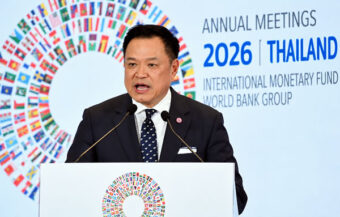
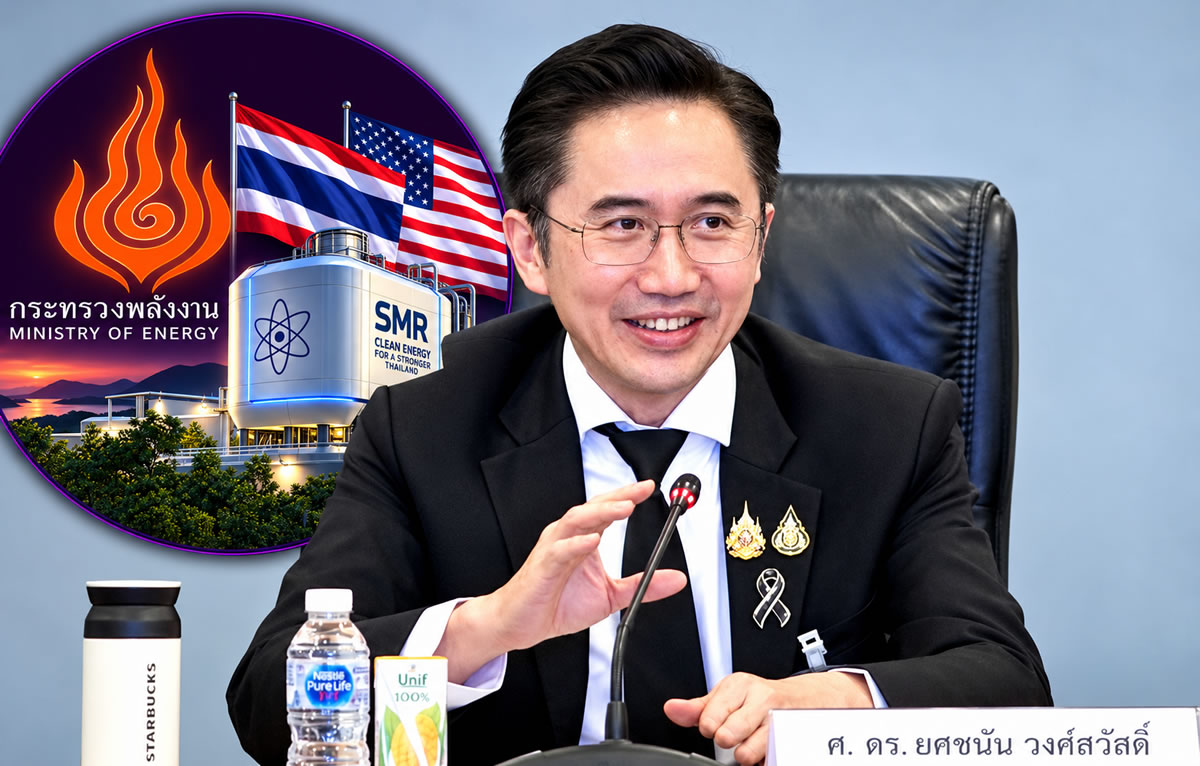
Deputy Prime Minister Yotsanan Wongsawat set out the programme after a major nuclear policy meeting on Tuesday. Mr Yotsanan also serves as Minister of Higher Education, Science, Research and Innovation. He chaired the second 2026 meeting of the Committee on Nuclear Energy for Peace at Government House. The meeting began at 3.30 pm and brought together senior officials from several state agencies.
Among those attending was Permanent Secretary Supachai Pathumnakul. Office of Atoms for Peace Secretary-General Rungruang Kitphati also attended with representatives from relevant agencies. Notably, the committee approved a policy framework for regulating small modular reactors, commonly known as SMRs. The framework will follow standards established by the International Atomic Energy Agency.
That decision moves Thailand’s nuclear programme beyond broad inclusion inside a future electricity plan. Officials are now preparing the rules needed to regulate an entirely new source of generation. In parallel, ministries must develop specialist manpower, financing structures and systems for nuclear waste. The government must also determine responsibility for nuclear damage before any reactor begins operating.
Energy security sits at the centre of the programme. Thailand has faced repeated energy volatility because of heavy dependence on imported fuels. As a result, shifts in international fuel markets can feed directly into domestic energy costs. Mr Yotsanan said that dependence had prevented the country from achieving genuine energy sovereignty.
Against this backdrop, nuclear generation is being prepared as another component of Thailand’s future electricity mix. Specifically, the government is concentrating on smaller reactors rather than immediately pursuing traditional large nuclear stations. SMRs are considerably smaller than conventional nuclear reactors. Many designs also use manufactured modules which can later be installed at generating sites.
Thailand targets two 600MW SMR plants around 2037 as IAEA flags three urgent gaps in nuclear readiness
Their smaller scale also allows nuclear generating capacity to be introduced in more limited increments. Thailand’s draft Power Development Plan 2024 envisages two SMR plants with combined capacity of 600 megawatts. Meanwhile, EGAT documents have pointed towards possible commercial operation around 2037. Yet significant institutional work must be completed before construction can begin.
An IAEA assessment has already examined Thailand’s nuclear energy infrastructure across 19 separate areas. The assessment found Thailand prepared in ten areas. Six other areas require further development. More critically, three areas require urgent action before the programme can advance.
First, Thailand needs a clearly defined national nuclear energy policy. Second, it must establish a Nuclear Energy Programme Implementing Organisation, known internationally as a NEPIO. Third, the country needs detailed investment and financial planning. In response, the National Nuclear Energy Policy Committee approved work across four major areas.
The first area involves nuclear law and financial liability. Officials must establish who carries financial responsibility following nuclear damage. Accordingly, the Office of the Permanent Secretary has been instructed to accelerate preparation of new legislation. The proposed Nuclear Liability for Damage Act must then be submitted to the Cabinet.
Nuclear liability law, insurance and state fund planned as Thailand starts specialist workforce training
The legislation would establish arrangements for insurance and financial guarantees. Separately, it would create a transparent and fair state fund based on international standards. Those arrangements would form part of the legal foundation for a future nuclear electricity programme. They would also define financial safeguards before Thailand commits to reactor construction.
The second major area concerns people. Nuclear plants cannot be operated or regulated without highly trained specialists. Consequently, Thailand is starting long-term workforce preparation before any reactor has been ordered. That work will span education, scientific research, energy policy and nuclear regulation.
The Ministry of Higher Education, Science, Research and Innovation will work with the Ministry of Education. The National Science and Technology Development Agency will also take part. In addition, the Ministry of Energy will participate in developing the required programmes. Together, the agencies must prepare educational curricula covering SMR technology and safety regulation.
They must also develop a long-term national plan for specialist nuclear personnel. Importantly, that training will extend beyond future reactor operators. Thailand will require independent regulators capable of inspecting and licensing nuclear installations. Engineers, scientists and technicians will also be needed across the emerging sector.
Thailand prepares nuclear waste policy while pushing Thai firms into the global SMR supply chain
On another front, radioactive waste requires a national system before nuclear generation can begin. Thailand must determine how radioactive material will be handled throughout its entire lifecycle. That includes spent nuclear fuel produced by future reactors. Accordingly, nuclear officials have been tasked with preparing a comprehensive national policy framework.
The framework must cover nuclear waste and spent fuel from generation through final management. Significantly, this work is being undertaken before Thailand selects a reactor technology. The government therefore wants waste arrangements embedded within the programme from its earliest stage. Mr Yotsanan stressed maximum responsibility so future generations do not inherit the burden.
Industrial development forms the fourth part of the programme. Here, the government wants Thai businesses connected to the global SMR supply chain. The Board of Investment will work with nuclear agencies and relevant research institutions. As part of this, they must develop strategies to promote Thai companies within the emerging international industry.
Mr Yotsanan said Thailand should move beyond being simply a buyer of imported nuclear technology. Instead, the country should seek to create value from technologies surrounding the SMR sector. The potential supply chain stretches far beyond companies manufacturing reactor vessels. It includes sophisticated engineering, construction materials, grid technology and advanced digital systems.
Thai firms could supply reactor parts, advanced materials and grid systems under strict nuclear standards
For example, nuclear installations require specialised high-performance pumps and valves. They also require construction materials capable of meeting demanding technical standards. These include radiation-resistant cement and specialised steel. Likewise, nuclear generating facilities depend on advanced power-grid management and control technologies.
Intelligent simulation technology is another part of the potential industrial ecosystem. In turn, Thai companies could enter areas surrounding reactor construction, operation and grid integration. However, those companies would first need to reach international technical standards. Nuclear safety requirements would apply throughout that development.
“Within the SMR ecosystem lies a diverse range of supply chains and advanced technologies, presenting a significant opportunity to enhance the capabilities of Thai industries. This includes industries producing reactor components such as high-performance pumps and valves, advanced construction materials like radiation-resistant cement and steel, and technologies for managing power grid systems and intelligent simulations. Integrating these technologies into Thai industries to achieve international standards requires serious, meticulous, and precise preparation at every step, especially regarding the highest safety standards. We cannot wait for the technology to arrive before preparing; we must start building the foundation today.”
Thailand keeps reactor site and technology open as US nuclear cooperation expands under Section 123
Despite the accelerating preparations, Tuesday’s meeting did not choose where Thailand’s first SMR would be built. It also did not select which reactor technology would be used. Rather, Mr Yotsanan described the work as preparation covering legislation, personnel and regulatory systems. Thailand wants sufficient information and capability before taking those policy decisions.
That leaves the choice of international supplier wide open. The United States has already established itself as one potential technology partner. A US-Thailand civil nuclear cooperation agreement entered into force on July 9, 2025. The pact is commonly called a Section 123 Agreement under United States atomic energy law.
Crucially, the agreement establishes a legal framework for peaceful nuclear cooperation between Washington and Bangkok. Such cooperation can include nuclear materials, equipment, components and technical information. Subsequently, Washington eased the pathway for specified nuclear technology transfers to Thailand. That change strengthened the potential position of American nuclear companies.
In April 2026, US Energy Secretary Chris Wright added Thailand to a group of generally authorised countries. The decision covered specified American nuclear technology and assistance. Consequently, many eligible transfers no longer require individual advance US Department of Energy approval. The legal route for deeper US nuclear cooperation with Thailand therefore became substantially clearer.
Thailand keeps US, Chinese and South Korean nuclear options open as EGAT builds cooperation links
Even so, Thailand has not selected an American reactor. The government has not stated that its future SMRs will come from the United States. Instead, Thailand is simultaneously developing nuclear relationships with other major technology countries. China and South Korea are already involved through separate cooperation arrangements.
EGAT signed an SMR cooperation agreement with China National Nuclear Corporation Overseas in 2024. That agreement covered exchanges concerning SMR technology and its potential application in Thailand. The following year, EGAT signed another cooperation agreement with Korea Hydro & Nuclear Power. Thus, several major nuclear technology providers already have formal links with Thailand.
Regulatory cooperation with China has also developed separately. The Office of Atoms for Peace has held discussions with China’s National Nuclear Safety Administration. Those talks covered nuclear regulation, licensing, inspections and workforce development. Taken together, the contacts leave Thailand with several possible international routes.
American, Chinese and South Korean technology could therefore enter future consideration. Yet no formal procurement competition has been announced. No preferred reactor manufacturer has been named either. For now, officials are concentrating on Thailand’s ability to assess competing technologies before making a commitment.
Nuclear safety committee expanded as Thailand builds regulatory capacity before reactor procurement
Meanwhile, nuclear safety oversight is also being strengthened. Tuesday’s meeting approved six qualified members for the National Nuclear Safety Committee. Dr Soranit Silatham and Somyot Srisathit were selected in the science field. Pasit Lortheerapong was appointed for engineering expertise.
Elsewhere, Suwit Chaiyakietyos was selected in the agriculture field. Surasak Boonruang was chosen for legal expertise. Finally, Dr Pathomporn Siraprapasiri was appointed in the field of medicine. The appointments bring several specialist disciplines into Thailand’s developing nuclear safety structure.
The government views that expertise as part of the broader nuclear ecosystem now being assembled. Officials are trying to establish readiness, safety and greater domestic capability before reactor procurement begins. At present, however, Thailand’s nuclear programme remains firmly at the preparatory stage.
Notably, no reactor is presently under construction. Neither has a construction site been selected. No manufacturer has secured an order. Likewise, no foreign country has been chosen to supply the technology.
The draft electricity plan nevertheless gives the programme a defined long-term objective. It envisages two SMR plants supplying 600MW to Thailand’s electricity system. EGAT planning documents have also pointed towards prospective commercial operation around 2037. Before then, several critical gaps identified by the IAEA must be closed.
Thailand must close policy, workforce, financing and waste gaps before moving towards reactor selection
Thailand first needs its national nuclear policy. It must also create a dedicated programme implementation organisation. Beyond that, investment and financing arrangements require detailed preparation. The nuclear liability legislation must move through government and reach the Cabinet.
At the same time, the country needs a trained nuclear workforce. Regulators must gain the expertise required to assess and inspect future reactors. Educational institutions must establish specialist courses. Scientific agencies must also support long-term skills development.
Radioactive waste presents another substantial requirement. A national framework must cover radioactive waste and spent nuclear fuel throughout their lifecycle. In addition, financial arrangements must support the programme before final investment decisions are taken. Each element must be in place alongside the reactor selection process.
Domestic industry is also being brought into the preparations earlier than reactor procurement. Thai companies could eventually manufacture specialised pumps, valves, cement and steel for the sector. They could also participate in grid-management and simulation technologies. However, those products would have to meet international nuclear standards.
Thailand moves from nuclear planning to institutional preparation while keeping supplier options open
Tuesday’s CNEP meeting therefore represents a further move from planning towards institutional preparation. The prospective 600MW programme already appears in Thailand’s long-term power strategy. Now, officials are building the rules and capabilities needed to support that ambition.
At the international level, the field remains open. Washington has established a legal framework allowing deeper civil nuclear cooperation with Bangkok. Moreover, US rules governing specified technology transfers were eased in April 2026. American companies therefore have a clearer path towards possible future participation.
China, however, already has an SMR cooperation agreement with EGAT. South Korea has also secured a formal cooperation relationship with the state electricity generator. In addition, Thai and Chinese nuclear regulators have been developing direct links. Thailand has therefore avoided committing its future programme to one foreign supplier.
Mr Yotsanan made that position explicit after Tuesday’s meeting. Thailand has not decided where an SMR plant will be constructed. Nor has it selected which technology it will use. Instead, officials are preparing the legal framework, workforce and regulatory system before those decisions arrive.
The government is also trying to build domestic industrial capabilities around the programme. That means preparing Thai businesses before major reactor contracts are eventually awarded. Similarly, universities and government agencies must create the specialists needed for a nuclear electricity sector.
Thailand focuses on preparation as reactor sites, technology and foreign suppliers remain undecided
The immediate timetable is therefore dominated by preparation rather than construction. Legislation must be drafted. Nuclear liability arrangements must be established. Regulators must be strengthened, while specialist workers must be trained.
Alongside that work, Thailand must settle nuclear waste policy and long-term financing. Industrial suppliers must also prepare for international nuclear standards. Only then can the government move towards final decisions on technology, location and procurement.
For now, the planned destination is clear. Thailand is preparing for two small modular reactor plants with a combined capacity of 600 megawatts. Possible commercial operation has been placed around 2037 in EGAT planning documents.
The remaining choices are equally clear. Thailand has not selected the reactors. It has not chosen their sites. It has not selected the country which may ultimately provide them.
Finance Minister Ekniti outlines the government’s economic plan but behind the buzzwords are risks
Thailand looking at new modular US nuclear reactors as a future sustainable power source
Nevertheless, the machinery required to make those decisions is now being assembled. Tuesday’s meeting pushed forward regulations, personnel, liability, waste management and industrial preparation. It also placed nuclear safety at the centre of the programme.
The United States has opened a wider legal route for nuclear cooperation with Thailand. China and South Korea have established their own formal links. Meanwhile, Bangkok is preparing to enter those future decisions with stronger domestic regulatory and technical capabilities.
That process is now under way well before any reactor reaches Thai soil. As Mr Yotsanan put it: “We cannot wait for the technology to arrive before preparing; we must start building the foundation today.”
Join the Thai News forum, follow Thai Examiner on Facebook here
Follow Thai Examiner on Google here
Receive all our stories as they come out on Telegram here
Follow Thai Examiner here
Further reading:
Finance Minister Ekniti outlines the government’s economic plan but behind the buzzwords are risks
Paying AI users in Thailand had a nightmare week online just as the government waded into the market
Ministry fails to halt ฿25.4 billion payment order to Hong Kong based firm linked to 1990 contract