Bangkok turns to Russia’s embassy for help explaining Thai laws to visitors. Tourist Police chief Pongsiam Meekanthong raises safety and employment issues. Nearly 1.9 million Russian arrivals generated ฿114 billion in annual tourism revenue in 2025.
Thailand’s new Tourist Police Commissioner has called on Russia to help ensure its nationals obey Thai laws as Bangkok tightens scrutiny of foreign visitors and businesses. Police Lieutenant General Pongsiam Meekanthong met Russian Ambassador Evgeny Tomikhin following Moscow’s warning over American extradition requests and the brutal murders of two Russian siblings near Pattaya. Meanwhile, Russian tourists generated almost ฿114 billion in 2025, spending 7.4% more per visit than Chinese travellers. The diplomatic initiative follows a tougher warning to Israel over tourist misconduct, illegal business concerns and possible deportations. Thailand is now enlisting embassies and airlines to educate visitors before arrival, while police tackle nominee businesses, immigration breaches and transnational crime impacting the country.
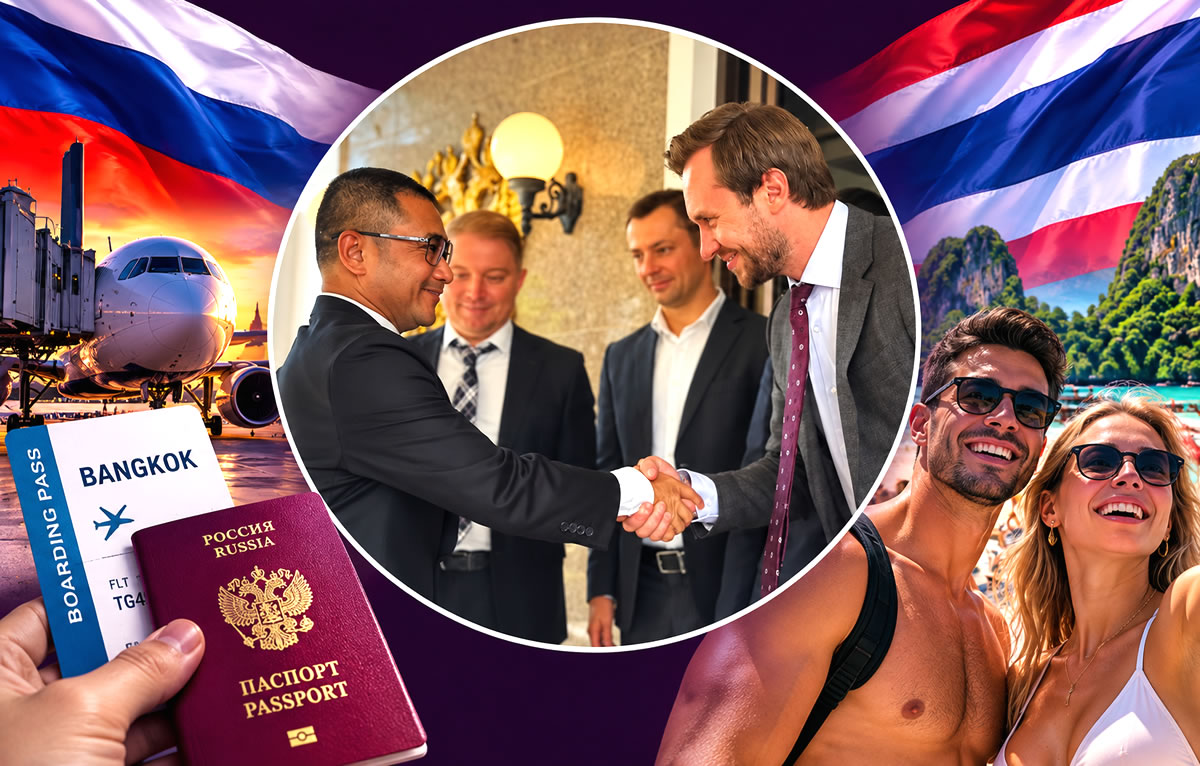
Thailand’s new Tourist Police Commissioner has opened talks with Russia over tourist safety, illegal employment concerns and compliance with Thai law. The meeting follows a Russian warning about American extradition requests and the shocking murders of two Russian siblings near Pattaya.
Meanwhile, Russian tourists spent almost ฿114 billion in Thailand last year, making them the country’s second-largest tourism revenue source. Bangkok is also pressing foreign embassies to educate visitors following complaints about unlawful business activities and tourist behaviour.
Police Lieutenant General Pongsiam Meekanthong met Russian Ambassador Evgeny Tomikhin at the Russian Embassy in Bangkok on Wednesday, October 7. The 11am meeting brought senior Russian diplomats and consular officials together with Thailand’s newly appointed Tourist Police Commissioner. Their discussions covered tourist protection, assistance for Russian residents and compliance with Thai laws. In addition, Pongsiam raised concerns involving Russian nationals working in Thailand.
Tourist Police chief seeks Russian embassy support on Thai laws, visitor safety and police assistance
The commissioner asked Moscow’s representatives to help educate Russians about Thailand’s laws, regulations and customs. His request covered both residents and prospective visitors. Notably, he also promoted the Thailand Tourist Police mobile application and the 1155 assistance hotline. These services provide direct channels for tourists requiring police assistance.
The Russian delegation included Senior Counsellor and Consul Ilya Ilyin and Second Secretary Maxim Panzhaylo. Second Secretaries Denis Tetushin and Dmitry Trushkin also attended. However, the official announcement identified no particular Russian offenders or businesses under investigation. Neither did it report a new enforcement agreement or specific commitments from the embassy.
Pongsiam’s diplomatic engagement comes shortly after his appointment as Tourist Police Commissioner. Previously, he served as deputy commissioner and participated in discussions with foreign diplomats in Pattaya. Those meetings addressed criminal activity, immigration breaches and foreign business operations. His latest discussions place Russia’s substantial tourist population at the centre of renewed police cooperation.
Russia remains one of Thailand’s most lucrative international tourism markets. In 2025, Russian arrivals reached 1,898,837, an increase of 8.8% over the previous year. That placed Russia fourth among Thailand’s foreign visitor markets. More importantly, Russian tourists generated ฿113.95 billion in revenue, an increase of 9.77%.
Russians spend 7.4% more per visit than Chinese tourists as Pattaya police tackle foreign offences
Consequently, Russia ranked second only to China for tourism receipts. Each Russian visitor spent an average of ฿60,011 per trip, compared with ฿55,852 among Chinese travellers. Russian tourists therefore spent approximately 7.4% more per visit than Chinese tourists. The figures concern expenditure per trip rather than daily spending.
The difference is even greater against other major markets. Indian tourists spent an average of ฿37,736 per visit, while Malaysian travellers spent ฿19,609. By comparison, average international visitor expenditure stood at ฿46,709. Russian visitors exceeded that benchmark by more than ฿13,000 per trip.
These figures highlight the importance of Russian spending in Thailand’s tourism economy. Resorts such as Pattaya and Phuket attract Russian holidaymakers alongside long-term foreign residents. Hotels, restaurants, transport operators and entertainment businesses all serve international visitors. At the same time, police must investigate crimes affecting tourists and enforce laws governing foreigners living or working in Thailand.
Pongsiam was already involved in those enforcement discussions before taking command. In May 2026, Pattaya Tourist Police met foreign diplomats to discuss nominee businesses and visa overstays. The agenda also covered transnational crime, drugs and driving offences. Pongsiam attended as deputy commissioner, gaining direct involvement in discussions about the resort city’s policing problems.
Thailand targets nominee businesses and illegal work as tourist education campaign expands nationwide
Nominee business arrangements can involve Thai shareholders holding interests on behalf of foreigners seeking to circumvent ownership restrictions. Separately, foreigners working without permission face penalties under Thai employment laws. Visa overstays create additional immigration offences, while drugs and dangerous driving present further enforcement challenges. These issues featured in the May diplomatic discussions.
The October meeting addressed Russian employment issues without announcing any specific investigation. Instead, Pongsiam sought assistance in communicating existing laws to Russian nationals. The request also covered local customs and regulations governing visitors. As part of this effort, the commissioner promoted established Tourist Police assistance services.
Thailand has meanwhile launched a wider campaign to educate international visitors before they enter the kingdom. On August 25, Tourism and Sports Minister Surasak Phancharoenworakul announced nationwide measures covering Thai laws and cultural expectations. The announcement followed controversy involving an Israeli tourist at a zoo on Koh Samui. The tourist subsequently lost their visa.
Crucially, Surasak’s initiative applied to travellers from every country, not only Israel. It sought to improve knowledge of Thai regulations before tourists arrived. The following day, the Public Relations Department reported cooperation involving the Tourism Authority of Thailand, airlines and embassies. Those organisations were identified as channels for distributing information to international visitors.
Israeli tourist complaints prompt stern warning from foreign minister over deportation and relations
The campaign followed growing attention to complaints about foreign tourist behaviour. Officials wanted travellers to understand legal restrictions and cultural expectations before entering Thailand. In parallel, embassies were encouraged to help communicate relevant information to their nationals. The approach combined pre-arrival education with existing police enforcement powers.
However, complaints involving Israeli tourists produced a considerably sharper diplomatic intervention in September. On September 8, Deputy Prime Minister and Foreign Minister Sihasak Phuangketkeow met Israeli Ambassador Alona Fisher-Kamm. The discussions followed concerns about Israeli visitors, particularly in southern Thailand. Complaints involved tourist behaviour, business operations and effects on local communities.
Sihasak warned that foreigners breaching Thai laws could face deportation. He also raised the possibility of damage to bilateral relations if the problems persisted. The message placed legal enforcement firmly at the centre of discussions. Unlike the Russian meeting, the Israeli talks involved direct warnings about the consequences of continued misconduct.
In response, Ambassador Fisher-Kamm proposed cooperation involving the Israeli Embassy, airlines and tour companies. The proposed measures would help explain Thai laws and expectations to Israeli travellers. The diplomatic discussions therefore included practical steps for distributing information. Nevertheless, Sihasak’s warning made clear that serious violations could carry immigration consequences.
Israeli arrivals surge 45.5% as Moscow warns Russians facing American charges against visiting Thailand
The dispute developed as Israeli tourism was growing rapidly. Thailand welcomed 410,125 Israeli visitors in 2025, compared with 281,803 during 2024. That represented an increase of 45.5%. Furthermore, Israeli arrivals exceeded 277,000 during the first eight months of 2026, rising 7% year-on-year.
Kasikorn Research Centre had forecast average Israeli tourist spending of ฿83,000 per visitor. It also projected average stays of 18.5 days. Those estimates were forecasts rather than confirmed expenditure figures. Even so, they pointed to the market’s considerable spending potential.
The Russian market, however, is substantially larger by arrivals and recorded tourism revenue. Its nearly 1.9 million visitors generated almost ฿114 billion during 2025. Moreover, Russian average spending exceeded that of Chinese tourists by 7.4% per visit. Maintaining effective police assistance for these travellers remains an important part of Thailand’s tourism services.
Earlier in 2026, Moscow had issued a warning concerning Russians potentially wanted by American prosecutors. On June 12, Russia’s Foreign Ministry advised those individuals against visiting or transiting through Thailand. The warning concerned possible arrest and extradition at the request of the United States. It did not advise all Russian holidaymakers to avoid the kingdom.
Russia accuses American agencies of using Thailand to arrest suspects as Bangkok rejects safety claims
Russia claimed American agencies were using Thailand to secure the arrest of wanted Russian nationals. Moscow had previously issued a broader travel advisory on April 1. Subsequently, the June statement focused on Russians facing potential criminal proceedings in America. The dispute brought Thailand’s international law enforcement cooperation under diplomatic scrutiny.
The warning followed the transfer of suspected Russian hacker Denis Obrezko from Thailand to the United States. Obrezko had been arrested in Thailand in November 2025. His transfer prompted Russian concerns about the treatment of nationals wanted by American prosecutors. Moscow urged people potentially exposed to such proceedings to avoid travelling through Thailand.
Thailand’s Foreign Ministry rejected suggestions that the country was unsafe. It maintained that Thai laws were applied equally and that Thailand remained a safe destination. Meanwhile, Tourism and Sports Minister Surasak Phancharoenworakul instructed the Tourism Authority of Thailand to monitor any effect on Russian tourism. No specific reduction in arrivals was established in the available information.
The dispute involved sensitive questions of criminal prosecution and extradition. American requests for the arrest of foreign suspects can have consequences for international travellers wanted in the United States. However, Moscow’s June warning identified a particular category of Russian nationals facing that risk. Ordinary Russian holidaymakers were not the stated target of the advisory.
Russian siblings found buried near Pattaya as police arrest two Thai men and investigate five killings
In July, another disturbing case placed Russian nationals at the centre of a major police investigation near Pattaya. Russian siblings Diana Nazimova, 22, and Roman Nazimov, 17, disappeared in Chonburi province on July 26. Their bodies were later found buried in Huai Yai, near the resort city. Thai police arrested two local men accused of murdering them.
The suspects were identified as Thana, 43, known as Pong, and Thongchai, 39, known as Thong. Police accused them of robbery, premeditated murder and impersonating police officers. The discovery of the siblings’ bodies prompted a major criminal investigation. Investigators subsequently reported admissions concerning three additional killings.
Police said the suspects admitted murdering a father, mother and child. The three victims had also been buried, according to investigators. The reported admissions brought the number of deaths connected to the suspects to five. The accusations considerably widened the investigation beyond the murders of Diana and Roman.
On August 1, Pattaya Provincial Court refused bail for the two suspects. They faced serious criminal accusations, including premeditated murder and robbery. Nevertheless, no conviction was reported in the available case information. The suspects remained subject to criminal proceedings rather than convicted offenders.
Tourist Police promote emergency hotline as Russian residents face employment and immigration rules
The deaths of the Russian siblings exposed a particularly brutal crime involving foreign victims in Chonburi. Two young Russians disappeared before investigators recovered their bodies from a burial site. Police then arrested Thai suspects accused of killing them and impersonating officers. Subsequently, the reported admissions concerning another family added a further grim dimension to the case.
For foreign visitors reporting crimes, the Tourist Police provide dedicated assistance through the 1155 hotline. The mobile application offers another means of contacting the service. These channels can help tourists seek assistance and report problems requiring police attention. Accordingly, Pongsiam highlighted both services during his discussions with the Russian ambassador.
The commissioner also addressed the needs of Russians living in Thailand. His request for embassy cooperation extended beyond short-term tourists to residents and prospective arrivals. Employment issues formed part of the discussions, alongside compliance with Thai regulations. However, the Tourist Police statement identified no Russian employer, worker or business facing new charges.
Foreign nationals must comply with Thai employment and immigration requirements while living in the kingdom. Work permission rules apply to Russians and other foreign nationals. Likewise, foreign business operations remain subject to ownership and company regulations. Police can investigate breaches under the relevant Thai laws.
Russian embassy talks focus on tourist safety and Thai laws after earlier Pattaya crime discussions
The May Pattaya meeting had already placed those issues on the diplomatic agenda. Nominee businesses, overstays, drugs, driving offences and transnational crime were all discussed with foreign representatives. The October meeting brought a narrower set of issues before Russia’s ambassador. Specifically, it focused on assistance, safety and informing Russians about existing legal requirements.
Separately, the nationwide tourism education campaign has brought airlines and diplomatic missions into the government’s plans. Information about Thai laws and customs is intended to reach travellers before arrival. The Tourism Authority of Thailand has been involved in coordinating that effort. Its scope covers all nationalities entering Thailand.
Thailand pushes on to attract more than 2 million Russian tourists in 2026 despite the Pattaya murders
Minister assures Russians Thailand is safe and that they are high value tourists after Moscow’s warning
The Israeli diplomatic dispute showed the enforcement consequences when complaints become serious. Sihasak’s September warning explicitly mentioned deportation and possible damage to bilateral relations. In contrast, Pongsiam’s October meeting with Russia was presented as cooperative engagement. The official account contained no equivalent warning or new sanction.
For Russian travellers, the economic importance of the market is unmistakable. Russia ranked fourth for arrivals but second for tourism receipts during 2025. Its visitors spent more per trip than Chinese, Indian or Malaysian tourists. In particular, average Russian expenditure exceeded the international benchmark by more than ฿13,000.
The October 7 meeting brought Russia’s ambassador, consul and three second secretaries together with Thailand’s new Tourist Police Commissioner. They discussed safety, assistance, employment-related issues and awareness of Thai law. Pongsiam also requested wider publicity for the Tourist Police application and 1155 hotline. The talks concluded without any publicly announced new enforcement measures or formal bilateral agreement.
Join the Thai News forum, follow Thai Examiner on Facebook here
Follow Thai Examiner on Google here
Receive all our stories as they come out on Telegram here
Follow Thai Examiner here
Further reading:
Police search for Russian siblings who disappeared after Sunday morning motorbike ride in Pattaya
Thailand closes its doors to dodgy foreigners and tourists who abuse their welcome through crime
60-day visa regime to be ended confirms Minister responding to rising industry security concerns
Tourism boss warns Thailand it is facing a Chinese blacklist if another security controversy erupts
Visa waiver scheme questioned with another China Crisis for foreign tourism driven by security fears
Tourism cryptocurrency sandbox payment plan is bound to face stiff opposition from the central bank