Vietnam’s tourism boom is closing the gap on Thailand as low prices, easier visas and soaring Western arrivals drive growth. Thailand faces falling visitor numbers, tougher immigration controls and a Chinese market still far below its old peak.
Vietnam is mounting its biggest challenge yet to Thailand’s tourism crown as a once-massive 22-million visitor gap collapses. Vietnam is surging beyond pre-Covid records while Thailand remains millions below its 2019 peak. Crucially, Vietnam is beating Thailand on the value that once powered its tourism machine: price. It is also easing visas, expanding airports and attracting soaring Western arrivals. Thailand, meanwhile, is tightening immigration, ramping up security and struggling to recover its huge Chinese market. Almost 30,000 foreigners were refused entry during this year’s first five months. Through August, Vietnam’s arrivals surged 14.4% while Thailand’s fell 3.08%. The year-to-date gap had narrowed to roughly five million. A once-distant threat is now a serious regional contest.
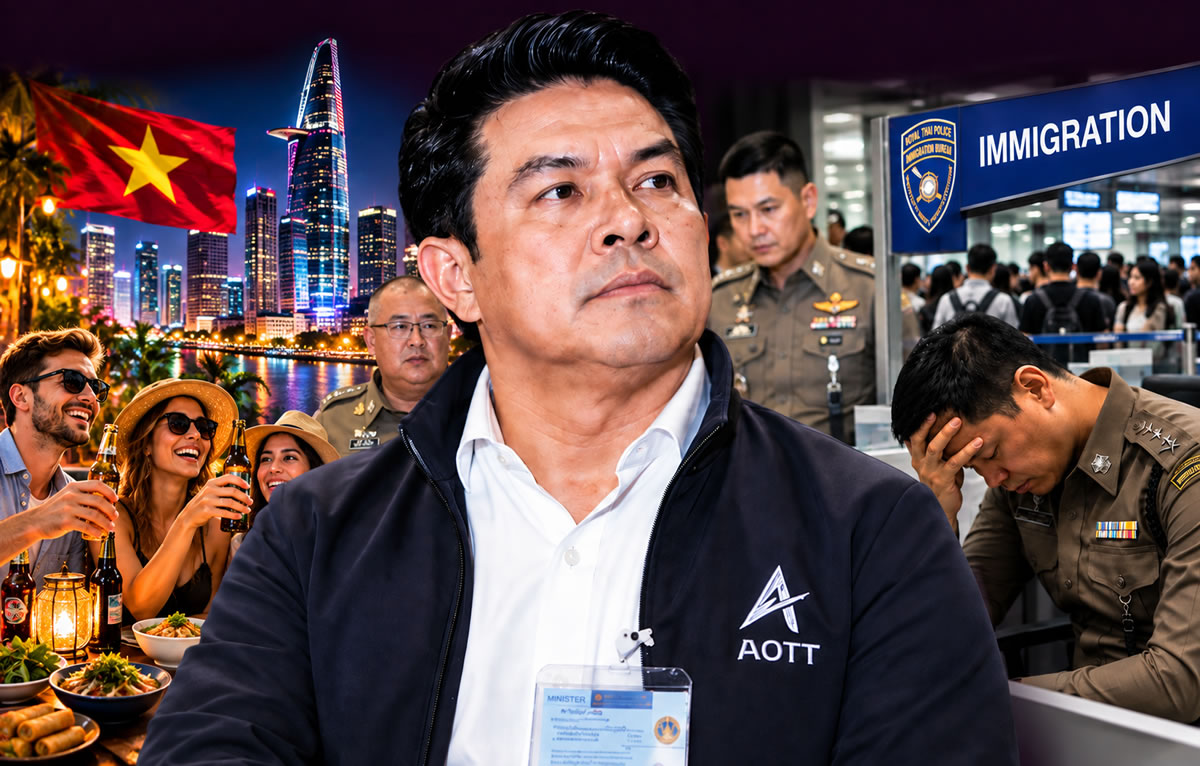
Vietnam is rapidly closing a tourism gap with Thailand that once appeared almost unbridgeable. At the centre of the shift is price. Before Covid, Thailand towered over Vietnam in international tourism. In 2019, Thailand attracted 39.8 million international visitors. Vietnam received approximately 18 million. As a result, Thailand entered the pandemic with a lead approaching 22 million tourists.
Six years later, that advantage had almost halved. Thailand received 32.97 million foreign visitors during 2025. Vietnam attracted almost 21.2 million. More significantly, the two countries continued moving in opposite directions during 2026. Thailand received 20.94 million visitors during the first eight months. That represented a 3.08% decline. Vietnam received 15.9 million during the same period, up 14.4%.
By August, Thailand’s year-to-date lead had consequently fallen to approximately five million visitors. Vietnam overtaking Thailand no longer looks as remote as before Covid.
Vietnam’s post-Covid surge leaves Thailand far behind its 2019 peak as tourism revenues also weaken
Vietnam has already passed its pre-pandemic tourism record. By contrast, Thailand remains far below its 2019 peak. Crucially, Vietnam continues expanding while Thailand’s recovery has stalled.
The divergence is striking because Covid devastated both tourism industries. Vietnam received only 3.8 million international visitors in 2020. Afterwards, strict border restrictions reduced foreign tourism to a fraction of previous levels. Thailand suffered a similar collapse. Yet Vietnam’s reopening produced an increasingly powerful recovery.
Foreign arrivals reached 12.6 million in 2023. They climbed to 17.6 million during 2024. That brought Vietnam within 2.4% of its previous record. Then came the breakthrough. International arrivals jumped 20.4% to almost 21.2 million during 2025. Thus, Vietnam finished the year 17.8% above its 2019 international visitor total.
Thailand initially staged a strong recovery as well. International arrivals reached 28.15 million in 2023. They increased to 35.55 million during 2024. In 2025, however, that momentum stopped. Foreign arrivals dropped 7.23% to 32.97 million. Thailand therefore finished last year approximately 6.8 million visitors below its 2019 record.
Tourism receipts also weakened. Foreign visitors generated approximately ฿1.54 trillion during 2025. That represented a 4.71% decline from the previous year. Overall tourism revenue, including domestic travel, reached approximately ฿2.70 trillion. That was down 1.26%. Across the border, Vietnam recorded its strongest tourism year. Tourism revenue exceeded one quadrillion dong for the first time.
Vietnam targets 25 million visitors as lower travel costs challenge Thailand’s traditional advantage
Vietnam has now targeted 25 million international arrivals during 2026. Notably, the latest figures show its expansion continuing. Vietnam received almost two million international visitors during August alone. That was 18.4% higher than August 2025. August also falls within Vietnam’s lower international tourism season.
Vietnam’s National Statistics Office identifies several reasons for the growth. These include easier visa policies, stronger promotion and an expanding range of tourism products. Most importantly, the agency also identifies competitive travel costs. That goes directly to one of Thailand’s greatest traditional strengths.
For decades, Thailand built its enormous tourism industry partly around exceptional value for money. Visitors found good hotels, restaurants, beaches and nightlife at prices substantially below Western destinations. Thailand remains comparatively inexpensive against many developed tourism markets. Yet that comparison matters less in today’s regional contest.
Travellers considering Southeast Asia can compare Bangkok directly with Saigon. Similarly, they can compare Phuket with Phu Quoc. They can also compare Thai resorts with Da Nang and Vietnam’s expanding coastal destinations. Increasingly, Vietnam competes at a lower price. Moreover, that difference extends far beyond the hotel bill.
Thai tourism leaders warn Vietnam’s lower costs are gaining ground as its hotel capacity expands
Thailand’s tourism industry has itself acknowledged the problem. Association of Thai Travel Agents Secretary-General Adit Chairattananont has identified Vietnam as an increasingly serious competitor. He has pointed to comparable natural attractions available at lower costs. Separately, he has warned about Thailand’s high living costs. He has also highlighted the baht’s impact on tourism competitiveness.
Accommodation represents only one part of a visitor’s spending. Tourists also pay for meals, drinks, taxis, entertainment, excursions, shopping and domestic transport. Over two weeks, relatively small daily differences accumulate quickly. For families, those differences multiply across several travellers. For retirees and long-stay visitors, they accumulate across months.
The same calculation matters to digital nomads. Their spending extends across accommodation, food, transport, communications, banking and immigration costs. Accordingly, Vietnam’s lower daily costs provide a significant competitive advantage. Thailand must increasingly defend a market segment it once dominated almost automatically.
In parallel, Vietnam’s accommodation capacity has expanded rapidly. The country now has approximately 780,000 rooms across around 38,000 registered accommodation establishments. Thailand has an estimated 704,000 rooms. Vietnam therefore already possesses substantial capacity for further international growth.
Vietnam expands airports and visa access while Thailand tightens scrutiny of repeat foreign visitors
Transport infrastructure is expanding alongside the hotel sector. Saigon, officially Ho Chi Minh City, has opened Terminal 3 at Tan Son Nhat International Airport. The terminal can handle 20 million passengers annually. On another front, the much larger Long Thanh International Airport is being developed outside Saigon. Phu Quoc is also expanding airport facilities as international demand increases.
The investment matters because airport capacity can restrict tourism growth. Vietnam is building infrastructure for substantially larger passenger numbers. At the same time, hotel investment continues across its principal destinations. Da Nang, Nha Trang, Hanoi, Saigon and Phu Quoc now compete aggressively for international leisure traffic.
Vietnam has also reduced barriers to entry. Visa exemptions were extended for several important European and Asian markets during 2025. Eligible visitors can remain for up to 45 days without obtaining visas. As part of this, Vietnam has expanded access to its electronic visa system. Easier entry now accompanies lower costs and growing capacity.
Thailand has recently moved in another direction. Under Prime Minister Anutin Charnvirakul’s government, immigration officers have increased scrutiny of foreigners repeatedly entering as tourists. Immigration reported 29,993 foreigners refused entry between January and May under its “No Entry” measures. That represents a significant number within only five months.
Thailand cuts visa-free stays as tougher immigration rules raise concerns among long-stay foreigners
The total did not consist solely of suspected visa runners. Other grounds included inadequate funds, unclear travel arrangements and suspected illegal employment. Even so, unusually frequent entries and exits can attract additional immigration scrutiny. Repeat visitors can therefore face greater examination than during Thailand’s initial post-Covid reopening.
Thailand has also ended the 60-day visa exemption introduced during the tourism recovery. From September 15, the replacement scheme generally permits eligible tourists to remain for 30 days. The government has cited security, tourism and economic considerations. In addition, it has identified misuse of visa privileges as a concern.
The policy shift is significant. After Covid, Thailand made entry easier as it fought to rebuild foreign tourism. Now, immigration controls are tightening while overall international arrivals are falling. Vietnam, in contrast, is easing access while its foreign arrivals climb.
Tourism and Sports Minister Surasak Phancharoenworakul therefore faces a market transformed since 2019. Thailand wants higher-spending visitors while targeting foreigners who misuse tourist entry. At the same time, tougher enforcement has generated discussion among long-stay foreigners and digital nomads.
Digital nomad Adam Jones leaves Thailand after highlighting visa, banking and rising cost concerns
Thailand became one of Asia’s best-known centres for remote workers after Covid. Many spend months in the kingdom while travelling periodically elsewhere in Southeast Asia. Others rotate between Thailand, Vietnam, Indonesia, Malaysia and the Philippines. For these travellers, immigration flexibility can influence where they spend longer periods.
Australian content creator Adam Jones provides one prominent example of changing sentiment. Jones, known online as Keis One, has approximately 117,000 followers. He has spent years documenting expatriate life in Thailand. In September, however, he published a broadcast entitled “The Digital Nomad Dream is Finished in Thailand.”
Jones announced that he was leaving the kingdom. He cited visa changes and difficulties surrounding banking among factors behind his decision. His departure does not establish a broader statistical trend. Nonetheless, his comments illustrate concerns voiced publicly by some long-stay foreigners.
Jones also recently visited Saigon. On returning, he contrasted costs there with those encountered in Bangkok. Jones expressed surprise at the difference. He argued that prices charged to foreigners in parts of Thailand had become excessive. Those observations are his rather than official price measurements.
Thailand puts tourist security centre stage as police operations and immigration enforcement intensify
Still, his comments mirror the competitiveness problem already identified by Thai tourism executives. For digital nomads, the calculation extends beyond hotel prices. Accommodation, food, transport, banking, visas and regional mobility all affect convenience and cost. Vietnam is increasingly competing for precisely this mobile population.
Thailand does offer another route. The five-year Destination Thailand Visa was introduced partly for remote workers and digital nomads. Yet many remote workers move regularly between several Southeast Asian countries. They may not want one country to become their permanent regional base. For them, easy entry remains part of a destination’s value.
On another front, security has moved closer to the centre of Thailand’s international tourism message. Mr Surasak is increasingly seen alongside police while highlighting measures designed to strengthen tourist safety. In August, for example, he personally inspected Tourist Police operations and new security equipment.
These included surveillance technology, mobile drone command facilities and dedicated Tourist Police deployments. Officially, the government presents such measures as evidence that foreign visitors are being protected. Tourist safety has consequently become a highly visible element of tourism promotion.
At street level, another side of the security drive is equally visible. Police operations targeting nightlife areas have become prominent in Bangkok, Pattaya and Phuket. Immigration enforcement has intensified alongside them. Almost 30,000 foreigners were refused entry during the first five months.
Thailand’s changing tourism image meets a surge in European visitors choosing fast-growing Vietnam
The imagery surrounding Thailand’s tourism industry has therefore changed. For decades, Thailand marketed beaches, nightlife, hospitality, food and a famously relaxed atmosphere. That combination helped attract tens of millions of foreign visitors. Now, international coverage also carries police operations, raids, immigration checks and security deployments.
This change comes against Thailand’s modern history of military interventions and political instability. Those events received extensive international coverage. Today’s security-heavy imagery therefore does not appear in an historical vacuum. For its part, the government presents increased policing as a means of strengthening visitor confidence.
The tourism market has become more competitive at the same time. Destinations compete through convenience, atmosphere, price, connectivity and perceived safety. Repeat visitors can also switch countries easily when costs or entry conditions change. That mobility makes regional competition increasingly unforgiving.
Against this backdrop, Vietnam is recording exceptional growth from Western long-haul markets. European arrivals reached approximately 2.68 million during the first eight months of 2026. That represented an extraordinary increase of 53.4%. The scale of that rise is particularly important for Thailand.
Vietnam’s Western visitor boom contrasts with Thailand’s continuing struggle to recover Chinese tourists
Visitors from the Americas increased 20.7% to approximately 887,000. Elsewhere, Oceania produced almost 489,000 visitors, an increase of 23.3%. Vietnam’s growth is therefore no longer primarily an Asian tourism story. Europeans, Americans, Australians and New Zealanders are increasingly contributing to the boom.
Thailand’s Western markets have not disappeared. Russia and several European countries remain particularly important. Their overall performance, however, has been substantially weaker than Vietnam’s Western growth. Vietnam is consequently making rapid gains among travellers traditionally important to Thailand.
Thailand has also become increasingly dependent on major Asian source markets to support overall numbers. Malaysia and India are particularly important. China remains critical despite failing to recover anywhere close to its pre-Covid level. That missing Chinese business remains one of Thailand’s largest tourism problems.
Approximately 11 million Chinese tourists visited Thailand during 2019. They accounted for more than one quarter of all international arrivals. In 2025, however, Thailand received only approximately 4.47 million Chinese visitors. That represented a 33.55% fall from 2024. Malaysia consequently replaced China as Thailand’s largest source market.
The Chinese decline has left an enormous hole in Thailand’s tourism recovery. The difference from 2019 exceeds six million visitors. Recovering even part of that market could substantially improve Thailand’s headline figures. So far, the old Chinese volumes have not returned.
Vietnam gains Asian and Western visitors together as Thailand relies more heavily on Malaysia and India
Vietnam has moved in the opposite direction. China supplied approximately 5.3 million visitors to Vietnam during 2025. South Korea provided another 4.3 million. China consequently became Vietnam’s largest international tourism market.
That expansion has continued this year. China supplied approximately 3.54 million arrivals during the first eight months of 2026. South Korea contributed another 2.76 million. Combined, those countries accounted for almost 40% of Vietnam’s international visitors.
Yet that huge Asian business has not prevented Vietnam from expanding rapidly in Western markets. Instead, the country is growing on both fronts. It attracts millions of Chinese and South Korean visitors while Western arrivals surge simultaneously.
That changes the competitive picture considerably. Vietnam is no longer merely a cheaper destination benefiting from booming regional travel. Increasingly, it competes directly for Western visitors, central to Thailand’s tourism industry for decades.
The composition of growth is also important. Vietnam is adding visitors from Europe, the Americas, Oceania, China and South Korea. Thailand is still trying to recover millions of Chinese arrivals lost since 2019. In response, Malaysia and India have become increasingly important to maintaining Thai visitor numbers.
Thai hotels face weaker rates, more rooms and softer bookings despite the country’s established strengths
Pressure is also visible inside Thailand’s hotel sector. Bangkok hotel occupancy reached 76.2% during the first half of 2026. Yet average daily room rates fell 2.1% to ฿4,013. Revenue per available room slipped 0.6%.
Furthermore, another 17,000 rooms are expected to enter Bangkok’s hotel market during the next two years. Additional supply is therefore approaching while foreign arrival growth remains weak. Hotels face greater competition for business in an already pressured market.
Industry expectations have weakened as well. A Thai Hotels Association and Bank of Thailand survey was released in September. It found 52% of respondents expected fewer than 32 million foreign arrivals this year. That would put 2026 below last year’s 32.97 million.
Forward bookings also provided another warning. Fourth-quarter reservations were below their equivalent levels last year. This matters because Thailand traditionally relies heavily on the final months. European winter travellers provide important business during the high season.
Thailand nevertheless retains enormous tourism assets. Bangkok, Phuket, Pattaya, Chiang Mai and Koh Samui enjoy global recognition. The country also has extensive airline connections and decades of international hospitality experience. Medical tourism and long-stay travel remain important markets.
Vietnam turns Thailand’s old value formula against it as the tourism gap narrows sharply after Covid
Those strengths, however, do not remove the pressure created by regional price competition. Value for money was central to Thailand’s extraordinary tourism success. Vietnam is now competing on much of the same territory.
It offers major cities, beaches, islands, food, nightlife and rapidly expanding accommodation. In parallel, its aviation infrastructure is being enlarged to handle more passengers. Its visa regime has become easier for important international markets. Crucially, many everyday costs remain lower.
The post-Covid numbers show how dramatically the balance has changed. In 2019, Thailand attracted approximately 21.8 million more international visitors than Vietnam. By 2025, that gap had fallen below 12 million. After eight months of 2026, the year-to-date difference stood at approximately five million.
The scale of the shift is impossible to miss. Thailand remains the larger international tourism market by annual visitor numbers. Vietnam, though, is expanding rapidly while Thailand has moved backwards.
Price does not determine every holiday decision. Flights, attractions, visas, security, convenience and service also influence travellers. Notably, Vietnam’s own statistics identify competitive travel costs as a factor behind its growth. Thai tourism executives are simultaneously warning about Thailand’s weakening price competitiveness.
Vietnam expands access and capacity as Thailand tightens controls and struggles to regain lost visitors
Policy differences are becoming sharper as well. Vietnam is easing entry, expanding airports and adding tourism capacity. Thailand is tightening immigration controls while placing greater emphasis on security and enforcement. Meanwhile, Vietnam is gaining rapidly across Asian and Western markets.
Thailand still has the larger established tourism machine. It is, however, fighting to restore growth while recovering millions of Chinese visitors lost since 2019. Vietnam faces no comparable post-Covid deficit. It has already exceeded its previous international arrival record.
Vietnam entered Covid with approximately 18 million international visitors. It emerged above 21 million and continues recording double-digit growth. Thailand entered the pandemic with almost 40 million. It recovered to 35.55 million during 2024 before falling below 33 million.
During 2026, the divergence continued. Thailand’s arrivals fell during the first eight months. Vietnam’s rose by double digits over the same period. As a consequence, the gap between the two major tourism markets narrowed further.
Vietnam’s expansion will bring greater pressure on airports, roads, hotels and tourism centres. Thailand’s visitor numbers could also recover if major source markets strengthen. Separately, currency movements can alter the price equation quickly. Yet none of those possibilities changes what has already happened.
Vietnam’s rapid growth brings it closer to Thailand as lower prices strengthen its tourism challenge
The distance separating the two tourism industries has contracted dramatically. Seven years ago, Vietnam overtaking Thailand would have appeared a distant prospect. Today, the visitor numbers make that prospect considerably less remote.
Thailand remains ahead in total international arrivals. Vietnam, however, is gaining tourists while Thailand is losing them. Vietnam is also attracting rapidly increasing numbers of Europeans, Americans and Australians. At the same time, millions of Chinese and South Korean visitors continue arriving.
Its airports are expanding. Its hotel capacity has grown. Its visa regime has become easier. Above all, its prices remain highly competitive.
Thailand’s once mighty tourism industry is failing but now faces further damage from overvalued baht
Expert warns foreign tourism has become Thailand’s curse, fueling inertia and a widespread malaise
Bank of Thailand boss calls for a lower valued baht for an economy that is presently failing to perform
Thailand, by comparison, is fighting to restore growth in a transformed regional tourism market. Its immigration regime has become more restrictive. Security and law enforcement are also increasingly visible elements of its tourism presentation. Meanwhile, its crucial Chinese market remains far below 2019 levels.
The transformation since Covid is stark. Thailand entered the crisis with nearly 22 million more international visitors than Vietnam. By August 2026, its year-to-date lead stood at only about five million.
Vietnam has taken one of the strongest elements of Thailand’s old tourism formula and turned it into a competitive weapon. It combines beaches, cities, food and nightlife with easier access and expanding capacity.
Most importantly, it competes aggressively on the factor that helped make Thailand a tourism giant.
Value for money.
Join the Thai News forum, follow Thai Examiner on Facebook here
Follow Thai Examiner on Google here
Receive all our stories as they come out on Telegram here
Follow Thai Examiner here
Further reading:
Thailand’s once mighty tourism industry is failing but now faces further damage from overvalued baht
Rate cut anticipated as outgoing Bank of Thailand governor attends last Monetary Policy Committee
Last minute tweaks in Bangkok as deal is finalised with U.S. However, Thailand may not match Vietnam