Thailand joins the global tax net with a 15% minimum levy on multinational giants, not expatriates. But overseas account sharing is already live as Bangkok tightens foreign-income rules, builds tax enforcement and prepares crypto reporting from 2028.
Thailand has taken another decisive step into the global tax information system, signing an OECD-backed agreement covering the world’s largest multinationals. The move does not impose a new tax on expatriates. However, it comes as Thailand already exchanges overseas financial account data and tightens taxation of foreign-source income. Meanwhile, officials are preparing wider financial and crypto reporting from 2028. The changes coincide with Thailand’s drive for OECD membership and growing Revenue Department capacity to use information obtained overseas. For foreign residents, the message is significant. GloBE targets multinational giants, but Thailand’s wider cross-border tax network is expanding.
Thailand has taken another major step towards integrating its tax system with the global financial reporting network. However, the latest agreement is not a new tax on expatriates, pensions, foreign remittances or individual residents. Instead, it principally targets some of the world’s largest multinational corporations. Yet its significance extends beyond the companies directly caught by the measure.
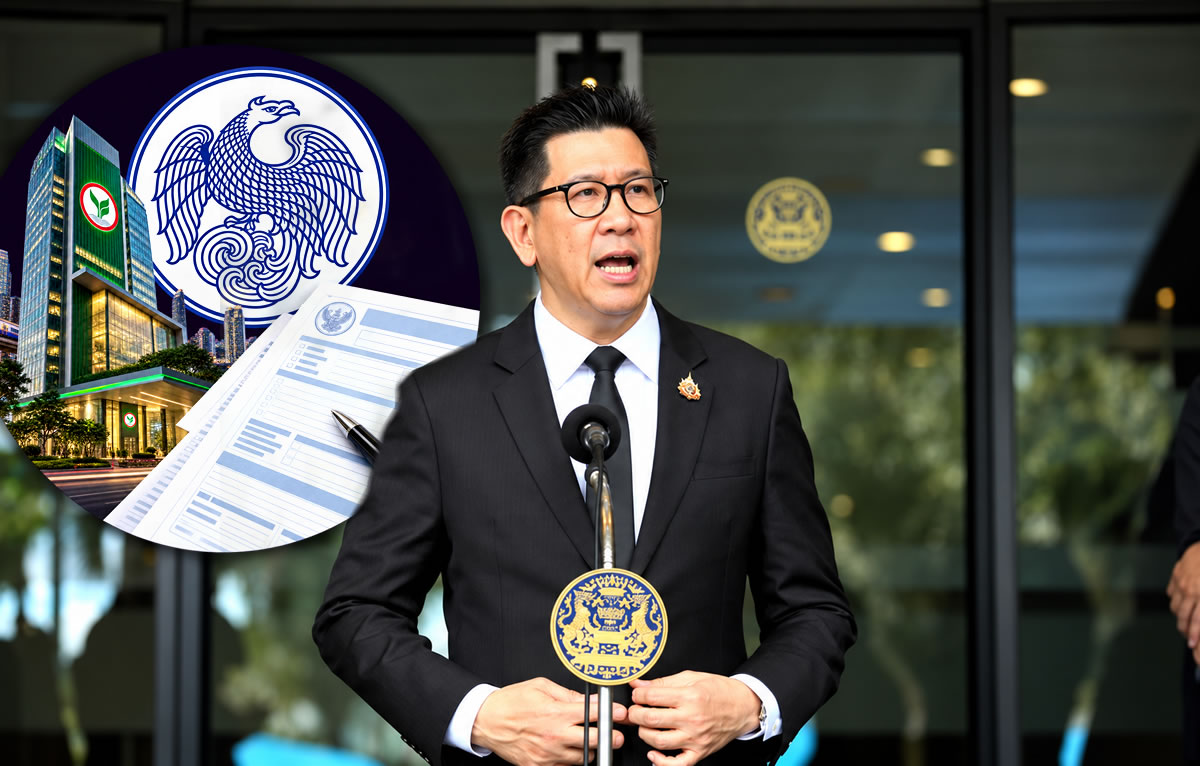
Deputy Prime Minister and Finance Minister Ekniti Nitithanprapas announced the move on September 15. Thailand signed the Multilateral Competent Authority Agreement on the Exchange of GloBE Information, known as the GloBE MCAA. The Organisation for Economic Co-operation and Development (OECD) formally listed Thailand as a signatory on September 8. As a result, another section of Thailand’s tax system is joining an international information network.
The immediate measure concerns the Global Minimum Tax and multinational corporations. Separately, Thailand already exchanges financial account information with overseas tax agencies under another international system. It has also tightened the treatment of foreign-source income received by Thai tax residents. Meanwhile, further international reporting arrangements are approaching.
Global minimum tax targets multinational giants while leaving expatriate personal taxation unchanged
For foreign residents, those distinctions are crucial. This month’s GloBE agreement does not expose every expatriate’s overseas bank account to Thailand. Nor does it create a new personal tax liability. Rather, it sits beside other systems which already concern individuals and their financial accounts.
GloBE stands for Global Anti-Base Erosion. It forms the core of Pillar Two of the OECD and G20 international corporate tax reforms. Essentially, the framework establishes a 15% minimum effective tax rate for extremely large multinational groups. It applies across jurisdictions where those groups conduct business.
Where effective taxation falls below 15%, additional tax can potentially become payable. That additional liability is generally known as a top-up tax. Importantly, Thailand did not introduce the Global Minimum Tax this month. The kingdom enacted its Emergency Decree on Top-up Tax B.E. 2567 in December 2024.
The legislation applies to accounting periods beginning from January 1, 2025. Notably, the threshold for entering the regime is exceptionally high. It principally covers multinational groups with consolidated annual revenues of at least €750 million. Generally, that threshold must be reached during two of the preceding four accounting periods.
Accordingly, the regime targets multinational corporate giants. It does not generally concern ordinary Thai companies or small and medium-sized enterprises. Likewise, it has nothing directly to do with an expatriate’s pension or personal overseas bank account. It does not impose tax merely because somebody lives in Thailand.
Thailand joins GloBE information exchange as multinational tax reporting expands across jurisdictions
Ekniti’s latest move instead concerns the exchange of corporate tax information. Thailand has joined the mechanism allowing tax administrations to exchange GloBE Information Returns, known as GIRs. These returns provide information needed to administer the minimum tax across participating jurisdictions.
In practice, the arrangement also streamlines reporting for multinational groups operating across numerous countries. Companies otherwise could face substantially similar information requirements in multiple jurisdictions. Under the framework, relevant information can instead move between participating tax administrations through agreed procedures.
Thailand expects its first GIR exchanges with partner jurisdictions by December 2027. In parallel, the international system itself continues to develop. On September 11, the OECD released another implementation package covering the Global Minimum Tax. The announcement came days after Thailand was formally listed under the exchange agreement.
That package included updated arrangements governing GloBE Information Returns. Additionally, it introduced mechanisms for reviewing national minimum-tax regimes against international rules. Thailand is therefore entering the exchange mechanism as international standardisation and peer review increase.
Thailand protects domestic tax revenue as global 15% minimum reshapes incentives for multinational firms
There was also a direct fiscal reason for Thailand to establish its domestic 15% regime. For decades, Thailand has offered corporate tax incentives to attract large international investors. The Board of Investment has played a central role in that strategy. Corporate tax holidays and reductions have consequently formed an important part of Thailand’s investment offering.
The Global Minimum Tax changes that calculation for multinational groups covered by Pillar Two. For example, a multinational could receive Thai incentives reducing its effective taxation below 15%. Another participating jurisdiction could then potentially collect part of the resulting top-up tax.
Thailand therefore faced the possibility of losing potential revenue to another country. The Revenue Department highlighted that risk when the domestic legislation was introduced. Without its own top-up regime, Thailand could surrender tax that another participating jurisdiction could collect.
In response, Thailand established its domestic mechanism. This allows the kingdom to protect taxation rights connected with qualifying activities conducted inside Thailand. The Global Minimum Tax does not abolish investment incentives. Instead, it changes the value of some corporate tax concessions for the largest multinational groups.
A conventional corporate tax reduction towards zero can become less valuable under Pillar Two. Another jurisdiction may subsequently impose tax, bringing the effective rate towards 15%. Consequently, participating countries must consider how their investment incentives interact with the global minimum.
CRS already gives Thailand access to overseas financial account information under global reporting rules
For expatriates, however, a separate international system carries much greater direct relevance. Thailand has participated in the Common Reporting Standard, or CRS, since 2023. Unlike GloBE, CRS can concern financial accounts connected with individuals.
Thailand activated the CRS Multilateral Competent Authority Agreement and began automatic financial account exchanges in 2023. Therefore, international financial information sharing affecting reportable individual accounts is already operating. It is not a system waiting to be introduced.
Under CRS, financial institutions identify reportable accounts according to international reporting and tax residence rules. They collect prescribed information where an account meets the reporting requirements. Subsequently, that information can reach the relevant domestic tax administration.
Participating tax agencies can then exchange information with partner jurisdictions. As part of this, tax residence plays a central role in determining where information should be reported. A qualifying financial account can therefore generate information beyond the country where the account is maintained.
CRS does not mean every foreign bank account becomes taxable in Thailand. Reporting and taxation remain separate legal questions. Nevertheless, Thailand already possesses formal channels for receiving overseas financial account information where international reporting requirements are satisfied.
Thailand builds tax enforcement capacity as expanded CRS and crypto reporting move closer to launch
The OECD’s 2026 review of tax transparency in Asia provides further details. Thailand successfully began its first CRS exchanges in 2023. More significantly, the country has been developing its ability to use information received through international cooperation.
According to the OECD review, information requests sent by Thailand increased from none to 52. At the same time, more than 400 Thai officials received domestic training. The changes therefore extend beyond installing an electronic reporting mechanism. Thailand is also developing administrative capacity around internationally exchanged tax information.
On another front, CRS itself is expanding. International rules have been amended to cover additional financial products. The changes also seek to improve information available to participating tax administrations. First international exchanges under the amended CRS framework are scheduled for September 2027.
Thailand is preparing changes ahead of participation under the revised framework from 2028. Beyond banking and conventional investments, another reporting system is also approaching. Thailand has committed to implementing the Crypto-Asset Reporting Framework, known as CARF, from 2028.
CARF extends international tax transparency arrangements into reportable crypto-asset transactions. Accordingly, another category of cross-border financial activity will enter a standardised international reporting structure. The framework sits separately from conventional CRS financial account reporting.
Thailand’s tax changes accelerate as foreign-source income rules tighten for residents from 2024
The sequence of Thai changes has accelerated since 2023. First, Thailand began automatic financial account exchanges under CRS. Then, from January 2024, the Revenue Department changed its treatment of relevant foreign-source income.
A year later, Thailand’s Global Minimum Tax became effective. Now, Ekniti has signed the country into the GloBE information exchange mechanism. By December 2027, Thailand expects to exchange multinational GIR information with partner jurisdictions.
From 2028, amended CRS requirements are expected to widen financial reporting further. At that point, Thailand is also preparing to implement CARF. Alongside these measures, the country’s OECD accession process continues.
For individual expatriates, Thai tax residence remains a critical starting point. Generally, somebody spending more than 180 days in Thailand during a calendar year becomes a Thai tax resident. That status can create Thai personal income tax obligations.
Those obligations can cover Thai-source income and relevant foreign-source income brought into Thailand. Crucially, a major change affecting overseas income took effect from January 1, 2024. Previously, the year in which overseas income entered Thailand created an important distinction.
Foreign-source income could generally escape Thai taxation when remitted during a later tax year. Taxpayers could therefore earn overseas income and wait until another year before bringing it into Thailand. That timing treatment changed for relevant foreign income arising from January 1, 2024 onwards.
Foreign income rules preserve key exemptions while tax treaties can reduce liabilities through credits
Under the revised interpretation, delaying a qualifying remittance no longer produces the previous result. Relevant foreign-source income can potentially become taxable when later remitted by a Thai tax resident. Even so, significant limitations remain.
The Revenue Department confirms that foreign-source income earned before January 1, 2024 retains its previous treatment. Thus, subsequently transferring that older money does not bring it under the revised interpretation. The date when income originally arose can therefore be critical.
Tax residence when the income was earned also matters. Income earned while somebody was not a Thai tax resident does not automatically become taxable after a later transfer. Accordingly, source, timing, residence and ownership remain important when determining the Thai position.
Double-taxation agreements add another layer. Thailand’s Revenue Department says the kingdom has agreements with 61 countries. These treaties can allow qualifying foreign taxes already paid to be credited against Thai liabilities.
In addition, the Revenue Department has developed a foreign tax credit calculation system for taxpayers receiving overseas income. The international framework therefore does not automatically tax identical income twice. Instead, liability depends upon Thai law, residence and the nature of the income.
Tax records become more important as Thailand adds a specific declaration for foreign-source income
Applicable double-taxation agreements can then alter the final calculation. Foreign tax already paid may reduce Thai liability where a credit is available. Consequently, documentation becomes increasingly important for residents receiving money from several countries.
Taxpayers may need evidence showing when income arose and where it originated. They may also require documents establishing foreign taxes already paid. Furthermore, residence during the relevant year can determine whether Thailand has a claim on the income.
The date money entered Thailand can remain important as well. Older income may receive different treatment from income arising after January 1, 2024. For that reason, the history behind an overseas transfer can matter as much as the transfer itself.
Another Revenue Department development emerged this month. Its 2026 personal income tax materials specifically include an “Income Declaration for Foreign-Sourced Income”. The relevant Revenue Department webpage was updated on September 10.
This document is separate from Ekniti’s GloBE agreement. Nonetheless, it sits within the same increasingly international tax environment. Thailand is simultaneously dealing with foreign-source income, automatic account information and multinational corporate taxation.
OECD accession brings Thailand under wider scrutiny as 25 committees examine laws and regulations
The OECD accession process provides another part of the background. Thailand formally entered accession discussions with the organisation in June 2024. The OECD adopted Thailand’s accession roadmap the following month.
A further milestone followed in December 2025. Prime Minister Anutin Charnvirakul submitted Thailand’s Initial Memorandum to the OECD. With that step, accession moved into detailed technical examinations.
Twenty-five OECD committees are now examining Thai legislation, regulations and government practices. They are assessing Thailand against relevant OECD standards and instruments. International taxation is therefore one component of a considerably wider regulatory examination.
OECD accession does not itself dictate a particular personal tax regime for expatriates. Thai personal taxation remains governed by domestic legislation and applicable international agreements. Still, tax transparency and international information exchange are already established within Thailand’s current framework.
Three separate international reporting tracks now stand out. The first is GloBE and its GIR information system. It concerns multinational groups exceeding the relevant €750 million revenue threshold.
CRS and CARF widen international reporting while GloBE remains separate from expatriate personal tax
The second is CRS. It concerns automatic financial account information involving reportable individuals and entities. Thailand has participated in that international exchange system since 2023.
The third is CARF. It concerns reportable crypto-asset transactions and is expected to become relevant for Thailand from 2028. Taken separately, the three systems cover different taxpayers, assets and information.
They should therefore not be treated as one tax system. Even so, each expands formal information channels between Thailand and overseas tax administrations. The Revenue Department is becoming connected with a wider range of international financial information.
For an ordinary foreign retiree, this week’s GloBE agreement creates no new personal tax liability. Similarly, a foreign employee acquires no additional personal tax merely because Thailand signed it. A digital worker does not suddenly become taxable because of GloBE either.
Their position instead continues to depend upon existing Thai personal tax rules. Residence is central, while the source of income also matters. The year when foreign income arose can change its treatment.
Remittance timing can remain relevant under the applicable rules. Foreign taxes previously paid may also reduce Thai liability. Finally, an applicable double-taxation agreement can materially change the final calculation.
Wealthier foreign residents face intersecting tax rules as Thailand expands cross-border information flows
For wealthier foreign residents, the broader information network can have greater practical relevance. Such residents may hold bank accounts, investments, brokerage accounts, businesses and property across several jurisdictions. They may also receive dividends, interest, salaries, business profits or rental income overseas.
Where those residents fall within Thai taxation, several systems can intersect. Domestic law determines whether a Thai liability arises. Double-taxation agreements can affect how much is payable. CRS can separately provide reportable financial account information to participating tax administrations.
Beginning in 2028, CARF is expected to add another reporting channel for qualifying crypto assets. GloBE, meanwhile, will perform a different function for large multinational groups. Each system therefore has its own legal purpose and reporting population.
Thailand’s own 2026 guidance already addresses foreign-source income and foreign tax credits. At the same time, its international reporting commitments continue expanding. The changes have accumulated quickly.
In 2023, Thailand entered automatic CRS financial account exchanges. From January 2024, it tightened treatment of relevant foreign-source income. Its domestic Global Minimum Tax then became effective from January 2025.
This month brings Ekniti’s GloBE information exchange agreement. By December 2027, Thailand expects its first multinational GIR exchanges with partner jurisdictions. From 2028, revised CRS requirements and crypto-asset reporting are expected to widen the network again.
Thailand’s international tax network expands as OECD scrutiny and new reporting systems gather pace
Meanwhile, 25 OECD committees continue examining Thailand during its membership accession process. Against that background, this week’s signing is not an isolated technical agreement. It adds another international channel to a tax infrastructure already undergoing rapid change.
The immediate target remains multinational corporations and an effective corporate tax rate of at least 15%. For expatriates, CRS and Thailand’s foreign-source income rules remain the more directly relevant systems.
Yet Thailand’s wider international tax integration is already well advanced. Financial account exchanges have operated since 2023. Foreign-source income reporting has become more prominent, while crypto-asset reporting is approaching.
Thailand’s stiff restrictions on small foreign investors a significant problem for its daring OECD aspirations
OECD tax regime expected to boost Thailand’s tax take as a global minimum tax rate of 15% is enforced
Thailand is also training hundreds of officials in international tax transparency. Its requests for overseas tax information have increased from none to 52. Moreover, international agreements now provide standardised channels for information to move between tax administrations.
Ekniti’s September signing adds the multinational corporate side to that expanding structure. Large groups will face internationally coordinated minimum-tax information reporting. Individual foreign residents remain governed by separate personal tax, treaty and CRS rules.
The systems are different, but Thailand’s tax infrastructure increasingly reaches across national borders. This month’s GloBE agreement takes that process another significant step forward.
Join the Thai News forum, follow Thai Examiner on Facebook here
Receive all our stories as they come out on Telegram here
Follow Thai Examiner here
Further reading:
Tax and welfare revolution as Thailand moves ahead with Negative Income Tax that expands reporting
Thumbs up from economic gurus for 2027 Negative Income Tax plan. It’s a game-changer for progress
Expert warns foreign tourism has become Thailand’s curse, fueling inertia and a widespread malaise