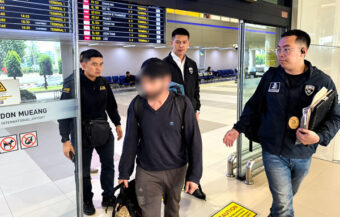
British and Israeli visa overstayers are among four bodies removed from an unlicensed Chachoengsao Jewish cemetery. Officials trace three Israeli deaths registered in Chonburi as burial and company investigations spread across Thailand and beyond.
A British visa overstayer and an Israeli overstayer were among four foreign bodies removed from an unlicensed Chachoengsao cemetery on Tuesday. The extraordinary discovery has turned a burial-site dispute into a widening national investigation. Officials are tracing immigration histories, death certificates and the movement of three Israeli bodies from Chonburi. They are also probing Gan Chabad-linked land and companies across several provinces. Meanwhile, another 49 Israeli graves in Bangkok face scrutiny as the Interior Ministry checks roughly 1,200 burial and cremation sites nationwide.
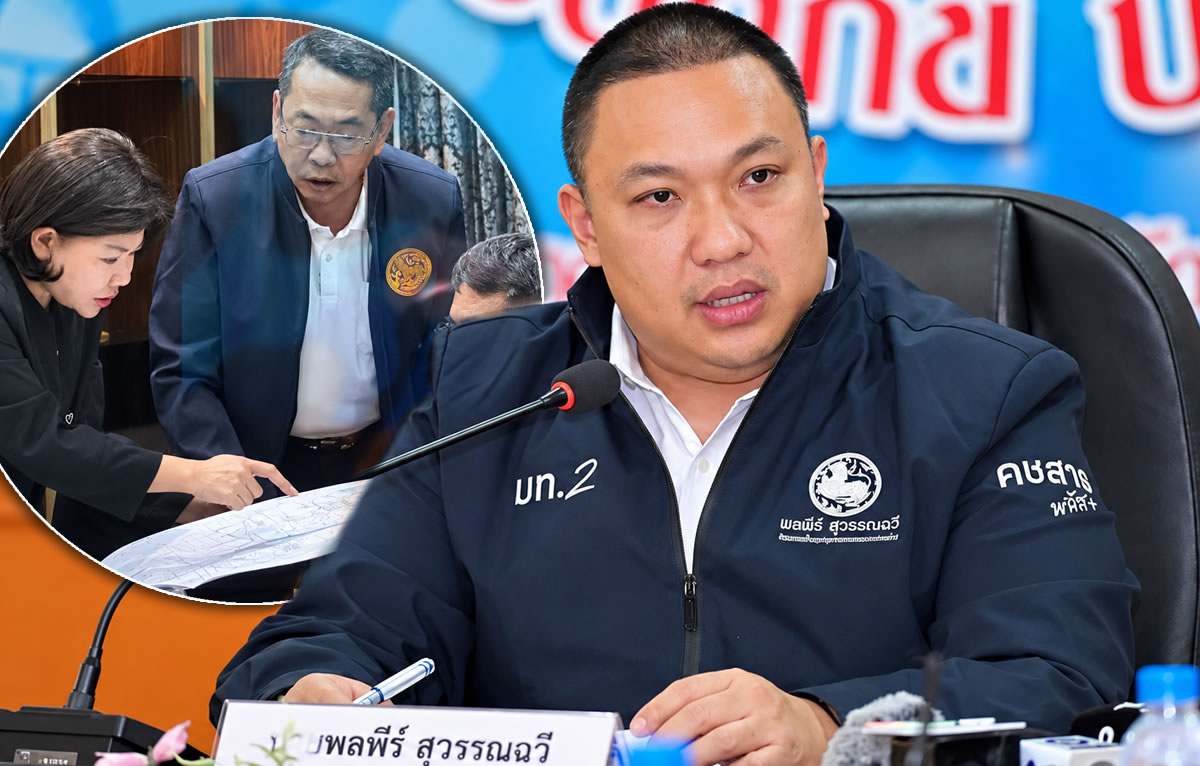
All four bodies buried at an unlicensed Jewish cemetery in Chachoengsao Province were removed on Tuesday. The operation followed an expanding Interior Ministry investigation into the site and its foreign burials.
Among the dead was a British national who had overstayed permission to remain in Thailand. An Israeli national buried there had also overstayed. Notably, three Israeli deaths were registered in Chonburi before their bodies reached Chachoengsao.
The findings have transformed what began as a cemetery licensing investigation. Officials are now examining the immigration status of people already dead and buried. They are also tracing death registrations, body movements and those who arranged the burials. The British national’s case has become particularly significant. Officials must reconstruct the person’s immigration history, death documentation and eventual journey to the cemetery.
Police remove four bodies as expired cemetery licence opens wider immigration and burial investigation
Police and administrative officials entered Jewish Cemetery Thailand in Samed Tai, Bang Khla district, for Tuesday’s operation. Other government personnel also attended. Meanwhile, journalists and local residents were kept outside as the remains were removed.
The cemetery’s operating licence expired at the end of 2023 and was never renewed. Nevertheless, burials continued. Earlier inspections established that three bodies were buried after the licence expired.
Yet the immigration findings have opened a separate and unusual official inquiry. Investigators must now reconstruct the legal status of deceased foreigners before their deaths. They must then trace what happened to their bodies afterwards. At least two of the four had immigration violations. Both had already died and been buried before those problems became part of the investigation.
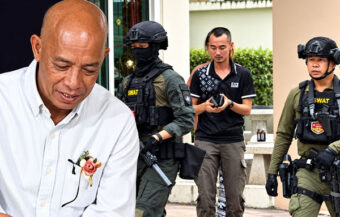
Deputy Interior Minister Polapee Suwannachee received the latest findings during a meeting on Sunday, September 13. Two days earlier, he had personally inspected the cemetery. Chachoengsao Governor Chatpra-orn Niyom joined Sunday’s meeting from Provincial Hall. Senior provincial, land, administrative and natural resources officials also participated.
British and Israeli overstayers found among dead as officials trace visas, deaths and burial records
The Department of Provincial Administration was represented by Deputy Director-General Wirun Sitthiwong. Police Lieutenant Colonel Singkham Khamyod also participated. He heads the department’s Investigation and Legal Affairs Division. In parallel, Bang Khla district officials and police were involved in the provincial examination.
Initial information presented to Mr Polapee identified three of the deceased as Israeli nationals. The fourth was British. Crucially, immigration checks showed that two had overstayed their permission to remain. The British national was one of them. An Israeli national was the other.
Immigration records provided further details about how the four foreigners originally entered Thailand. Two entered using 60-day tourist visas. Another Israeli entered using a 30-day tourist visa. The remaining Israeli held a one-year non-immigrant visa. Subsequent checks established that the British national and one Israeli had overstayed.
As a result, officials are examining immigration violations discovered after the people concerned had died. Their remains were also found at a cemetery without a current operating licence. The British case has therefore become a substantial strand of the inquiry. Officials are tracing when the person entered Thailand and when permission expired. They are also checking the circumstances and documentation surrounding the death.
Officials trace British and Israeli remains as Chonburi death records lead back to Chachoengsao graves
After that, investigators must establish who handled the remains. They are examining who reported the British national’s death and who arranged transportation. Officials must also establish how the body eventually reached Bang Khla. The Israeli overstayer is subject to a similar reconstruction. Entry records, immigration permission and death documentation are all being checked.
On another front, the three Israeli deaths have led investigators towards Chonburi Province. Officials established that the deaths were registered there. However, their bodies were subsequently transported into neighbouring Chachoengsao. Investigators are following documents covering the deaths, transportation and eventual burials. They are also tracing the people involved at each stage.
Attention has consequently turned towards Thai nationals who reported the deaths. Mr Polapee specifically ordered checks on two of the three Thai people involved. Officials must establish their relationships with the deceased. In addition, investigators must determine whether those people worked for Gan Chabad. Any other relationship with the organisation is also being examined.
The investigation therefore stretches from immigration entry records to graves in rural Chachoengsao. Between those points are visa records, deaths, certificates, transportation arrangements and burials. Significantly, officials are reconstructing those chains after the people concerned have died. At least two deceased foreigners had immigration problems. Three Israeli deaths were also registered outside the province where their bodies were buried.
Grave conditions deepen inquiry as officials trace overstayers and bodies moved from Chonburi records
The physical condition of the graves had already raised questions during the earlier inspection. Three graves were sealed with concrete and marked with marble. Recorded years of death included 2023, 2025 and 2026. By contrast, the fourth body had not been sealed beneath concrete. It remained beneath a tent. Mr Polapee believed that the body had reached the cemetery during 2026.
Accordingly, officials began comparing the burial dates with the cemetery’s licensing history. That examination established that three burials occurred after its permit expired. The subsequent immigration checks widened matters again. Officials were no longer examining only whether the cemetery could legally accept bodies. They were also examining whether those buried there had legally remained in Thailand.
The British national’s records are central to that new line of inquiry. The person entered Thailand as a visitor but subsequently overstayed. The person later died and was eventually buried at Bang Khla. Investigators are now working backwards through those events. They are examining the burial, transportation, death documentation and earlier immigration records.
A similar process applies to the Israeli overstayer. Separately, the three Chonburi death registrations require investigators to follow another documentary trail. Officials must establish who registered each death and what documentation accompanied the bodies. They must then trace their movement into Chachoengsao and eventual burial at Samed Tai.
Plan to move four bodies puts Bangkok Jewish cemetery and its 49 Israeli graves under official scrutiny
The relatives of all four deceased initially contacted officials about moving the remains. Later, Gan Chabad indicated that it intended to arrange transportation itself. The families subsequently requested another seven days. They said additional time was required to prepare another location for the bodies. However, finding another burial site immediately created a fresh problem.
One proposed destination was a Jewish burial ground in Bangkok’s Charoen Krung area. Approximately 49 Israeli nationals are already buried there. Rather than approve a routine transfer, Mr Polapee ordered an investigation into the Bangkok cemetery. Officials must first establish whether the proposed destination is itself properly licensed.
Consequently, a cemetery proposed to receive four bodies has become another subject of Interior Ministry scrutiny. One issue concerns the physical boundaries of the Charoen Krung burial ground. A wall apparently divides different sections. Officials must establish precisely which area is covered by existing permission. One section may hold a valid licence while another may not.
Furthermore, earlier instructions called for checks involving approximately 49 existing Israeli graves. Burial records are therefore part of the examination. The proposed transfer has thus produced another branch of the case. Officials must establish whether the Bangkok site can legally receive the Chachoengsao remains. They must also establish the legal position surrounding those already buried there.
Road and water rules emerge as investigators examine why Bang Khla cemetery lost its operating licence
At the same time, investigators are digging deeper into the original Bang Khla licence. The Chachoengsao cemetery received permission to operate in 2021. Its licence was not renewed in 2023. Provincial officials have identified significant changes between those dates.
When permission was granted, the nearby road had not received its later highway classification. Different restrictions therefore applied to the cemetery application. The original application used Highway 304 as the relevant highway reference. That road was approximately 1.5 kilometres from the property.
In 2022, however, the road immediately beside the cemetery was upgraded. That change brought different distance requirements into play. Cemetery regulations required the site to remain at least 50 metres from a highway. The property could no longer satisfy that requirement.
Water presented another problem. The Cemeteries and Crematoria Act imposes distance requirements involving public water sources. The original application identified a water source approximately 400 metres away. Later inspections found a small waterway much closer to the cemetery. That waterway had not been identified in the 2021 application.
Officials revisit original 2021 cemetery approval as conflicting accounts emerge over four foreign dead
For those reasons, the operating licence was not renewed in 2023. Now, however, officials are examining whether problems existed from the beginning. Information presented during Sunday’s meeting raised concerns over the original 2021 approval. Historical geographical data is being reviewed. Officials are also examining whether the initial application complied with regulations then in force.
Thus, scrutiny has moved backwards from an expired licence to the permit’s original issuance. The burial dates add another dimension. Three bodies were reportedly interred after the operating licence had expired. Officials must now compare each burial with the cemetery’s legal status at that time.
Even the identities of the four deceased have required further official checking. One provincial account identified two Israelis, one French national and one British national. Another official briefing identified three Israelis and one Briton. The second account also identified the British national and one Israeli as overstayers.
Officials said identification documents had been checked against death certificates and consular records. One of the four deceased was also reported to be female. Further verification is therefore continuing as investigators reconcile the preliminary accounts.
Gan Chabad land links draw scrutiny as cemetery investigation expands to Phuket and Chonburi
In parallel, officials are examining the company and property structure surrounding the cemetery. Gan Chabad Co Ltd handled the Chachoengsao land transaction. The cemetery property covers approximately 15 rai. Mr Polapee put its value at about ฿20 million.
Three shareholders associated with the cemetery company are Israelis who obtained Thai citizenship. Their Thai citizenship means land ownership is not automatically unlawful. Instead, investigators are examining how the property was acquired. They are tracing the source of funds and related company structures. Possible nominee arrangements are also under scrutiny.
The inquiry has consequently expanded beyond Chachoengsao. Investigators are examining links involving Bangkok, Chonburi and Phuket. Company shareholders have been linked with businesses in Patong. Officials are also examining a broader business network in Chonburi.
In response, Phuket Governor Chotinarin Kerdsom ordered an in-depth examination of Chabad Patong. Provincial officials must examine how its land was acquired and how the property is used. Building permissions form another part of the investigation. Commercial licences are also being reviewed.
Multi-agency inquiry into nominee links as nationwide checks target 1,200 cemeteries and crematoria
As part of this, officials are tracing shareholder connections with the Chachoengsao cemetery company. They were given seven days to report their findings. The investigation has therefore moved through several government systems. Immigration records are being checked alongside cemetery licences, company structures and land transactions.
Multi-agency coordination has followed. The Interior Ministry and Department of Special Investigation are involved. Police are also participating in the wider examination. The Anti-Money Laundering Office and Public Sector Anti-Corruption Commission have joined the broader scrutiny. The Commerce Ministry is examining relevant business structures.
A multi-agency meeting was scheduled for Tuesday after the Cabinet meeting. Its purpose was to consolidate information involving suspected nominee and business arrangements. For now, Mr Polapee has acknowledged an important legal point. No predicate money-laundering offence had yet been identified at the cemetery itself.
Separately, the Bang Khla investigation has triggered a nationwide operation. Mr Polapee ordered checks on approximately 1,200 cemeteries and cremation sites across Thailand. Officials must establish whether each facility holds a valid licence. They must also identify applicants and operators connected with each site.
Nationwide cemetery review grows as officials trace British and Israeli overstayers’ burial histories
Moreover, the religious affiliation of every facility will be recorded. The minister has stressed that the nationwide inspection is not restricted to Jewish cemeteries. Facilities serving all religions fall within the review.
Still, the immediate case centres on four foreign bodies removed from Samed Tai. Two belonged to people whose immigration permission had expired. One was British and the other Israeli. Three Israeli deaths were registered in Chonburi before bodies reached Chachoengsao. Thai nationals involved in reporting those deaths are also being investigated.
Taken together, those facts have changed the character of the original inquiry. Officials initially faced an expired cemetery licence and subsequent burials. They must now reconstruct the legal histories of people found inside those graves.
For the British national, that means tracing a tourist’s entry into Thailand. Officials must establish when the permitted stay ended. Next comes the period of overstay and the circumstances surrounding the death. Finally, investigators must trace how the body came to be buried at Samed Tai.
The Israeli overstayer presents a parallel immigration case involving another deceased foreigner. Officials are similarly checking that person’s entry, overstay, death and burial. Meanwhile, the three Chonburi registrations create another chain. Investigators must establish how those bodies moved from the province of registration into Chachoengsao.
Thai death reporters, immigration records and burial sites remain under scrutiny after four bodies removed
The Thai people who reported deaths are therefore an important part of the inquiry. Officials are checking whether they personally knew those who died. Alternatively, investigators are examining whether they acted for Gan Chabad or another party.
Tuesday’s removal ended the physical presence of the four bodies at the cemetery. It did not resolve the records surrounding them. Officials still need a lawful destination for the remains. Family consent and legal procedures governing relocation must also be completed.
Beyond that, the immigration investigations remain active. The British national’s overstay must be reconstructed from existing records. The Israeli overstayer’s case requires the same examination. Likewise, officials continue tracing the Israeli deaths registered in Chonburi.
The original cemetery approval is also under review. Investigators are examining whether the 2021 permit was properly issued. Then there are the later burials. Three reportedly occurred after the licence expired at the end of 2023.
Elsewhere, Bangkok’s Charoen Krung Jewish burial ground is now facing licensing checks. Its approximately 49 Israeli graves are part of that examination. Further south, Phuket officials are investigating Chabad Patong. Land, licences and shareholder relationships are being scrutinised.
Four foreign bodies drive wider probe spanning immigration records, death reports and burial arrangements
Across Thailand, roughly 1,200 cemetery and cremation sites are entering a separate Interior Ministry review. Yet the case still returns to four bodies found in Bang Khla. One was a British national who had overstayed a tourist visa. Another was an Israeli national who had also overstayed.
Three Israeli deaths were recorded in another province before bodies were brought to Chachoengsao. Officials are now following every available record between entry into Thailand and burial. That includes immigration permissions, death registrations and transportation arrangements. It also includes cemetery documents and those who handled the bodies.
Pressure movement against Israel in Thailand gains momentum as it combines with street protests
Interior Ministry is now moving to enforce the law regarding Jewish burials and grave sites in Thailand
Tuesday’s operation removed the remains from the unlicensed cemetery. The investigation, however, now stretches far beyond those four graves. It reaches immigration files, death records, land transactions and company structures. It also reaches Chonburi, Bangkok and Phuket.
At its centre remain four deceased foreigners and the records surrounding their burials. Two had already overstayed their permission to remain. Officials are now establishing how they came to be buried at Bang Khla.
Join the Thai News forum, follow Thai Examiner on Facebook here
Follow Thai Examiner on Google here
Receive all our stories as they come out on Telegram here
Follow Thai Examiner here
Further reading:
Pressure movement against Israel in Thailand gains momentum as it combines with street protests
Veteran protest leader and media boss Sondhi begins his street protest campaign at Israel’s Embassy
PM Anutin laughs off what political pundits see as rising threats to the stability of his government
Opposition alleging a potential whitewash by Election Commission on Friday over Senate election case
Ex PM and Democrat Party leader urges politicians implicated in Senate Collusion files to come clean
Opposition and People’s Party leader attacks ‘blue regime’ on the 12th anniversary of the 2014 coup
Thammasat University legal scholar and 1992 protest leader warns another coup cannot be ruled out