Polpeera widens Thailand’s Israeli-linked land probe into nearly ฿100m of deep-south purchases and Chabad centres. Phuket uncovers violations, Bangkok finds no fundamental illegality as publishing tycoon and protest leader Sondhi Limthongkul intensifies pressure.
Thailand’s probe into Israeli-linked land holdings and Chabad centres is widening fast, from Bangkok and Phuket to the sensitive deep south. Deputy Interior Minister Polpeera Suwannachawi is investigating intelligence on nearly ฿100 million in land purchases across Pattani, Yala and Narathiwat. Officials are tracing companies, shareholders, funding and possible nominee links while checking eight or nine Chabad sites nationwide. Phuket inspections have already uncovered building violations, imported goods issues and two companies holding ฿261.58 million in assets. In contrast, Bangkok has found no fundamental illegality. Meanwhile, Sondhi Limthongkul’s street campaign is piling on pressure as Israel’s embassy urges respect for Thai law. Polpeera now plans to visit the south himself as officials hunt for the land buyers, the money and its ultimate purpose.
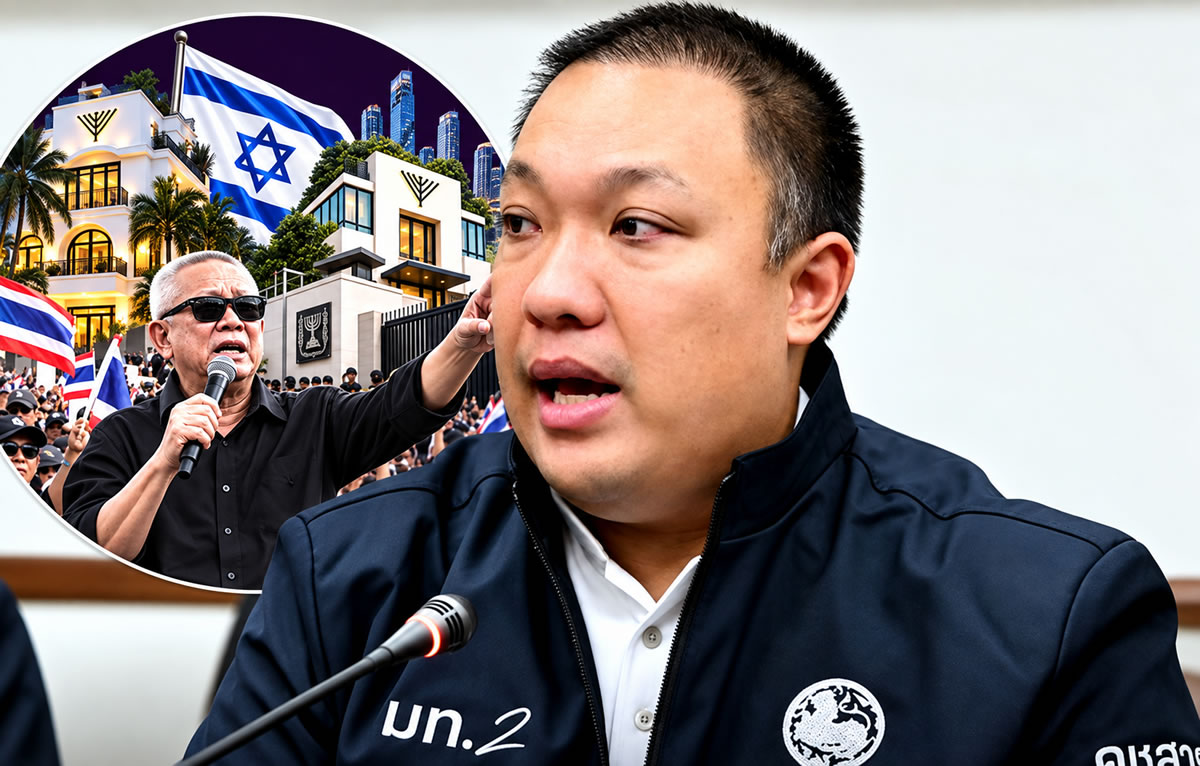
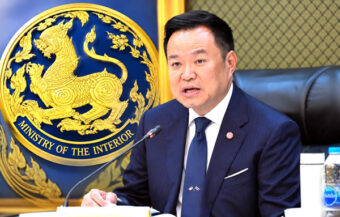
Deputy Interior Minister Polpeera Suwannachawi has widened his investigation into Israeli-linked land holdings and Chabad centres across Thailand.
The latest intelligence has opened a sensitive new front in the deep south. Several MPs have supplied information concerning land purchases across Pattani, Yala and Narathiwat. Polpeera puts the combined value at nearly ฿100 million.
However, the information remains under investigation and does not establish illegal foreign ownership. Polpeera has ordered officials to identify each property, its registered owner and the companies behind the purchases. Investigators must also trace the money used and establish the intended use of the land. In addition, they will examine businesses connected with the properties and the people ultimately controlling them.
Israeli-linked land purchases in deep south widen inquiry from cemeteries to Chabad company network
Significantly, MPs described the companies as part of an Israeli-linked network involving cemetery operations and other businesses. Yet officials have not established that these interests form a common illegal network. The nearly ฿100 million figure therefore remains a reported value requiring verification. Polpeera intends to visit the three southern provinces personally as the investigation develops.
At the same time, he has raised concerns about the eventual use of the properties. Pattani, Yala and Narathiwat have predominantly Malay-Muslim populations. Polpeera warned that incompatible business activities could generate religious or community tensions. Accordingly, officials must determine what the purchasers intend to establish on the land.
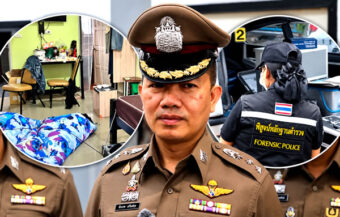
The southern intelligence represents the latest expansion of an inquiry which began with a Jewish cemetery in Chachoengsao. Initially, questions centred on permission to operate the site and the bodies buried there. Provincial officials subsequently ordered four bodies removed from the cemetery on September 15. Three were Israeli nationals, while the fourth was British.
From there, investigators began examining the cemetery’s land ownership and corporate connections. That trail led towards Gan Chabad Co Ltd. Polpeera previously said its three founders or shareholders were Israelis who had acquired Thai citizenship. Moreover, the company was connected with the Chachoengsao land and Chabad property in Phuket.
Interior Ministry expands cemetery probe into Chabad centres, land ownership and company structures
Consequently, the Interior Ministry moved beyond the original cemetery dispute. Officials started examining company shareholders, associated businesses, property holdings and possible nominee arrangements. Polpeera also ordered checks on approximately 1,200 cemeteries and cremation facilities nationwide. Those inspections cover licences, applicants and declared religious purposes.
Importantly, Polpeera said the nationwide operation was not directed against any single nationality. Nevertheless, the Chachoengsao case had already opened a broader examination of corporate structures and land ownership. At that stage, Polpeera acknowledged that investigators had not identified a predicate money-laundering offence.
Since then, the investigation has expanded substantially. Attention has moved towards Chabad centres and developments across several provinces. Polpeera says officials are examining approximately eight or nine Chabad sites nationwide. These include established centres and projects currently under construction.
As part of this, provincial governors must examine the land and companies controlling individual properties. Building approvals are being compared with structures actually constructed. Officials are also examining businesses operating from the properties. Meanwhile, funding behind major Chabad developments has become another central line of inquiry.
Polpeera targets Chabad funding as Phuket inspections uncover building and permit irregularities
Polpeera has repeatedly questioned where substantial investment in these projects originated. He cited developments potentially involving ฿20 million, ฿50 million or ฿100 million. “If they are investing 20 million baht or 100 million baht, I want to know where the money comes from,” he said.
Thus, the investigation now extends beyond physical buildings and registered land titles. Officials are examining corporate structures, shareholders and the financing supporting individual developments. Another meeting with the Department of Special Investigation is also planned. Polpeera said officials had already mapped the previously identified network in greater detail.
Phuket, meanwhile, has produced some of the clearest regulatory findings. Phuket Governor Chotinarin Kerdsom inspected Chabad House Patong on September 15 following Polpeera’s order. The inspection covered the land, buildings, activities and companies associated with the centre. Initially, provincial officials described the operation as fact-finding.
At that point, officials had not publicly announced evidence of illegal activity. Governor Chotinarin said decisions would depend upon facts and applicable law. Subsequent inspections, however, identified specific building-control problems. Officials found parts of the property which did not correspond with approved plans.
In response, Patong Municipality ordered the use of affected areas to stop. Work also began removing an unauthorised rooftop structure. Polpeera later cited irregularities involving building permissions, including construction associated with the sixth floor. Operators were given 30 days to submit the necessary applications or supporting documents.
Phuket Chabad checks widen from unauthorised structures to imported goods and linked company assets
Otherwise, Polpeera said, offending structures could ultimately require demolition. The Phuket inquiry has therefore moved beyond broad suspicions into specific building-control issues. Even so, those findings remain specific to the inspected property. They do not establish that other Chabad centres are operating unlawfully.
On another front, inspectors began examining products being sold inside the Phuket facility. Polpeera said many were imported goods lacking Thai Food and Drug Administration approval or proper labelling. He also questioned how those products had entered Thailand. Relevant agencies consequently began preparing action against goods which could not legally remain on sale.
Separately, a multi-agency inspection examined the products and their import documentation. Some goods did not carry Thai-language labels. Customs officers joined health and consumer protection officials during the checks. Officials temporarily seized products while establishing their origins and regulatory status.
Furthermore, the Phuket investigation has expanded into companies associated with the operation. Two companies under examination reportedly hold combined assets of approximately ฿261.58 million. Investigators are checking their shareholders, property activities and other businesses. Tour-related operations and associated commercial interests are also under examination.
Krabi Chabad project faces land, funding and permit checks as Polpeera threatens personal inspection
Therefore, Phuket has become one of the most advanced sections of Polpeera’s wider inquiry. Officials have identified building-control problems and questions surrounding imported products. They are also examining associated corporate structures. However, those findings still do not prove claims concerning a nationwide Israeli property network.
Elsewhere in the south, Krabi has emerged as another focus. Residents have raised concerns about a Chabad development there. Polpeera said he shared those concerns and wanted provincial officials to establish the facts. The governor and Department of Provincial Administration have been instructed to examine the project.
Specifically, officials must establish exactly what is being built and who controls the land. They must check the company holding the property and determine whether construction permissions are valid. Additionally, Polpeera wants investigators to establish where the development funding originated.
Beyond that, provincial officials must explain the project’s purpose to local residents. Polpeera said he would travel to Krabi himself if outstanding questions remained unresolved. The approach mirrors his response to the southern border intelligence. Reports have triggered an investigation, rather than an immediate official finding of wrongdoing.
Bangkok Chabad checks find no basement breach as Sukhumvit project undergoes statutory planning review
Bangkok, by contrast, has produced a markedly different picture. Bangkok Metropolitan Administration officials have examined Chabad-related properties through established building-control procedures. So far, their findings have been substantially less serious. Indeed, one widely circulated claim was not supported by the inspection.
The first examination concerned Chabad premises on Phra Athit Road. Earlier reports suggested underground construction had taken place at the property. However, Bangkok officials found no underground construction during their preliminary inspection. The second and third floors were instead being used as accommodation for Israelis.
Notably, officials reported no irregularities there at the preliminary stage. The finding directly contradicted claims concerning a basement or underground development. Consequently, Bangkok’s inspection demonstrated a clear distinction between reported suspicions and verified regulatory findings.
A much larger Chabad project in Sukhumvit Soi 22 has also come under scrutiny. Plans reportedly include three underground parking levels and a five-storey building. The project was submitted through Section 39 bis of the Building Control Act 1979. That procedure permits construction following notification while Bangkok officials examine submitted plans.
Under that process, the Bangkok Metropolitan Administration has 120 days to review the submission and raise objections. Bangkok Governor Chadchart Sittipunt has handled the controversy through that statutory process. Deputy Governor Wisanu Subsompon has also publicly explained the city’s findings.
Bangkok orders plan corrections but finds no fundamental illegality in Chabad developments inspected
So far, officials have identified elements of the plans requiring correction. Bangkok is therefore preparing a written objection covering those points. The developer must make the required revisions within the specified period. Failure to comply could eventually result in cancellation of the building-alteration submission.
Crucially, however, Bangkok has not declared the entire development illegal. Following discussions with Chadchart, Polpeera said officials had found no fundamental illegality so far. One possible problem concerns the required setback from the road. That issue may require correction while the statutory review continues.
In contrast with Phuket, Bangkok has therefore produced largely administrative and planning issues. Phuket inspectors identified unauthorised alterations and questions concerning imported products. Bangkok officials have instead identified matters requiring correction through established planning procedures.
Equally important, the Phra Athit Road inspection found no evidence supporting claims of underground construction. The nationwide checks are therefore producing sharply different findings. Some properties have generated concrete regulatory action. Others have produced planning corrections, while preliminary checks elsewhere have found no irregularities.
Chabad rejects illegality claims as Sondhi takes widening Israeli property dispute onto Bangkok streets
Chabad has also responded publicly to the expanding scrutiny. Rabbi Nechemia Wilhelm, Chabad’s representative in Thailand, rejected suggestions that the organisation’s Thai operations are unlawful. He said Chabad had operated in Thailand for approximately 30 years. He also maintained that its Chabad Houses comply with Thai law.
Furthermore, Wilhelm welcomed an objective examination of Chabad’s operations. He expressed confidence that official checks would establish compliance. His statements do not settle individual planning, corporate or licensing questions. Nonetheless, they represent Chabad’s direct response to the widening government inquiry.
While officials conduct those checks, the controversy has also developed into an increasingly visible protest movement. Political activist Sondhi Limthongkul launched his “Take Our Thailand Back” campaign on September 7. He said the movement would pressure the government over suspected illegal foreign business networks.
Three days later, Sondhi took the campaign directly to the Israeli Embassy in Bangkok. On September 10, he led supporters in a demonstration outside the diplomatic mission. Protesters demanded action concerning foreign nominee businesses, land ownership and Chabad centres.
During the demonstration, Sondhi’s movement presented four demands concerning Israeli conduct and Chabad operations. The demands also covered property holdings and cooperation with Thai officials. Sondhi rejected an offer to meet Israeli Ambassador Alona Fisher-Kamm privately.
Sondhi protest claims go beyond official findings as Israeli embassy gives carefully measured response
Instead, he said the issue concerned the Thai public and should not be handled through private discussions. Some claims made during the protest, however, went substantially beyond findings announced by government investigators. Sondhi’s letter linked Chabad land acquisitions with objectives allegedly financed by international Zionist networks.
To date, no Thai investigation has publicly established such a territorial project. Moreover, some demonstrators displayed explicitly anti-Jewish messages during the September 10 gathering. Other placards focused on Thai sovereignty, foreign land ownership and Israeli visitors.
Soon afterwards, the protest movement spread south to Phuket. Around 500 demonstrators gathered near Chabad House before a planned Rosh Hashanah celebration on September 11. The celebration was later cancelled following Israeli security advice concerning possible violence. More than 500 Israeli visitors had reportedly been expected.
Against that increasingly charged backdrop, Israel’s diplomatic response has remained carefully framed. Ambassador Fisher-Kamm has acknowledged problems involving the behaviour of some Israeli visitors. She has also acknowledged cultural differences and incidents involving disrespectful conduct.
Israeli embassy stresses Thai law and mutual respect while avoiding wider claims over Chabad property
However, Fisher-Kamm has resisted treating individual incidents as representative of Israelis generally. “We have to work together to make sure that the conflict in the Middle East is not imported here to Thailand,” she told AFP.
Likewise, she has avoided broadly characterising Thailand as antisemitic. “It’s still very hard for me to use the word antisemitic here in Thailand,” Fisher-Kamm said. She described such attitudes as far removed from what she regarded as normal Thai tolerance.
In parallel, the Israeli Embassy has stepped up guidance for Israeli travellers. It has produced Hebrew-language information explaining Thai laws and expected standards of behaviour. The material is being distributed through social media, airlines and travel businesses.
Deputy Chief of Mission Rami Teplitskiy has similarly acknowledged growing negative sentiment towards Israelis. He said the embassy would work to maintain relations based upon mutual respect. The diplomatic mission has therefore concentrated its public response on conduct, compliance and bilateral relations.
Earlier, Fisher-Kamm met Deputy Prime Minister and Foreign Minister Sihasak Phuangketkeow on September 8. Following that meeting, the embassy publicly stressed respect for Thai laws, customs and traditions. Israeli visitors were urged to respect local communities and avoid behaviour causing friction.
Israeli embassy has not answered latest southern land claims as officials trace owners, money and use
Even so, the embassy has not accepted wider claims concerning an organised Israeli property operation. It has not endorsed accusations linking Chabad centres with an unlawful nationwide land network. Its public response has instead remained focused on compliance and maintaining Thai-Israeli relations.
As of September 23, another distinction remains important. No documented embassy response has specifically addressed Polpeera’s newest southern claim. The information concerning nearly ฿100 million in land purchases only became public on September 22.
Accordingly, existing Israeli statements principally concern tourist behaviour, Chabad, demonstrations and broader bilateral relations. Polpeera’s southern investigation remains at a much earlier evidential stage. Officials currently have information supplied by MPs, rather than completed investigative findings.
Next, they must establish whether the reported purchases occurred as described. Investigators must identify registered owners and companies behind the transactions. They must also trace the purchase money and determine what the properties are intended for.
Ultimately, those inquiries could establish whether the southern purchases connect with the wider corporate investigation. For now, no such common ownership has been publicly established. No public finding connects every Chabad development with reported purchases in Pattani, Yala and Narathiwat.
Nationwide inquiry expands across land, funding and companies while southern purchases remain unproven
Likewise, investigators have not established that Gan Chabad controls those southern properties. Nor have they established that the nearly ฿100 million in reported purchases breached Thai land law. Those questions are precisely what Polpeera has ordered officials to investigate.
Nevertheless, the overall scope of the inquiry has expanded dramatically. It now covers cemeteries, land titles, shareholders and construction permissions. It also encompasses imported products, company assets, project financing and possible nominee arrangements.
Meanwhile, the DSI is expected to examine the emerging corporate map. Officials want to identify relationships between companies operating across several provinces. They are also looking for common shareholders, directors, financing or beneficial interests.
Geographically, the investigation has expanded just as quickly. Chachoengsao provided the original cemetery controversy. Phuket then produced building-control findings and questions surrounding imported goods. Krabi is now under scrutiny over another Chabad development.
Bangkok has examined both Phra Athit Road and the much larger Sukhumvit Soi 22 project. Now Pattani, Yala and Narathiwat have entered the inquiry through intelligence supplied by MPs.
Yet the evidence remains markedly different in each location. Phuket has produced specific regulatory action. Bangkok has largely produced administrative clarification and planning corrections. Krabi remains under examination, while the southern land purchases still require verification.
Sondhi keeps pressure on Israeli activities as Polpeera traces companies, land and funding in the south
At the political level, Sondhi’s movement continues applying public pressure over Israeli activities, foreign ownership and Chabad. However, some protest claims extend considerably beyond findings announced by investigators. Israel’s embassy has responded with traveller guidance and repeated calls for compliance with Thai law.
For its part, Chabad maintains that its centres operate legally. Polpeera, meanwhile, is pushing the official investigation into increasingly detailed territory. His officials are no longer examining individual buildings alone.
Instead, investigators are tracing companies, shareholders, land, financing, permits and associated businesses. They are also examining whether apparently separate transactions share common corporate or financial links.
Most importantly, the latest intelligence has pushed the inquiry into Thailand’s sensitive southern border provinces. Polpeera says he intends to travel there himself as officials establish the underlying facts.
Opinion poll shows public concern about Israeli misbehaviour in Thailand amid a febrile political mood
Pressure movement against Israel in Thailand gains momentum as it combines with street protests
His immediate questions are straightforward. He wants to know who bought the land and who ultimately controls it. He also wants to establish where the purchase money originated.
Finally, Polpeera wants to know what the properties are intended for. Those answers will determine whether the southern intelligence remains a separate issue. They could also establish connections with companies already under investigation elsewhere.
For now, however, those connections have not been established. The government inquiry is expanding, but its findings remain specific to each property and transaction under examination.
Join the Thai News forum, follow Thai Examiner on Facebook here
Follow Thai Examiner on Google here
Receive all our stories as they come out on Telegram here
Follow Thai Examiner here
Further reading:
Pressure movement against Israel in Thailand gains momentum as it combines with street protests
Veteran protest leader and media boss Sondhi begins his street protest campaign at Israel’s Embassy
PM Anutin laughs off what political pundits see as rising threats to the stability of his government
Opposition alleging a potential whitewash by Election Commission on Friday over Senate election case
Ex PM and Democrat Party leader urges politicians implicated in Senate Collusion files to come clean