Thailand’s US trade deal hits a hiatus as Suphajee says an agreement is close at hand but Sihasak flags market access. AI rules, US investment and China-linked supply chains add pressure as the Anutin-Trump call vanishes and Section 301 remains in play.
Thailand’s long-awaited US trade deal has hit a serious hiatus as conflicting accounts emerge from Bangkok’s top negotiators. Commerce Minister Suphajee Suthumpun says an agreement has been reached in principle. Yet Foreign Minister Sihasak Phuangketkeow says market access remains the key issue. Meanwhile, a planned Anutin-Trump call has vanished and no signing date exists. Behind the deadlock are major US demands covering tariffs, investment, AI, digital trade, export controls and investment security. Crucially, Washington is targeting duty evasion and transshipment as Thailand’s manufacturing economy remains deeply entwined with China. Beijing has previously warned countries against US trade arrangements damaging Chinese interests, although no evidence links China directly to this delay. With a separate Section 301 investigation looming, September ends without the deal Bangkok repeatedly suggested was almost done.
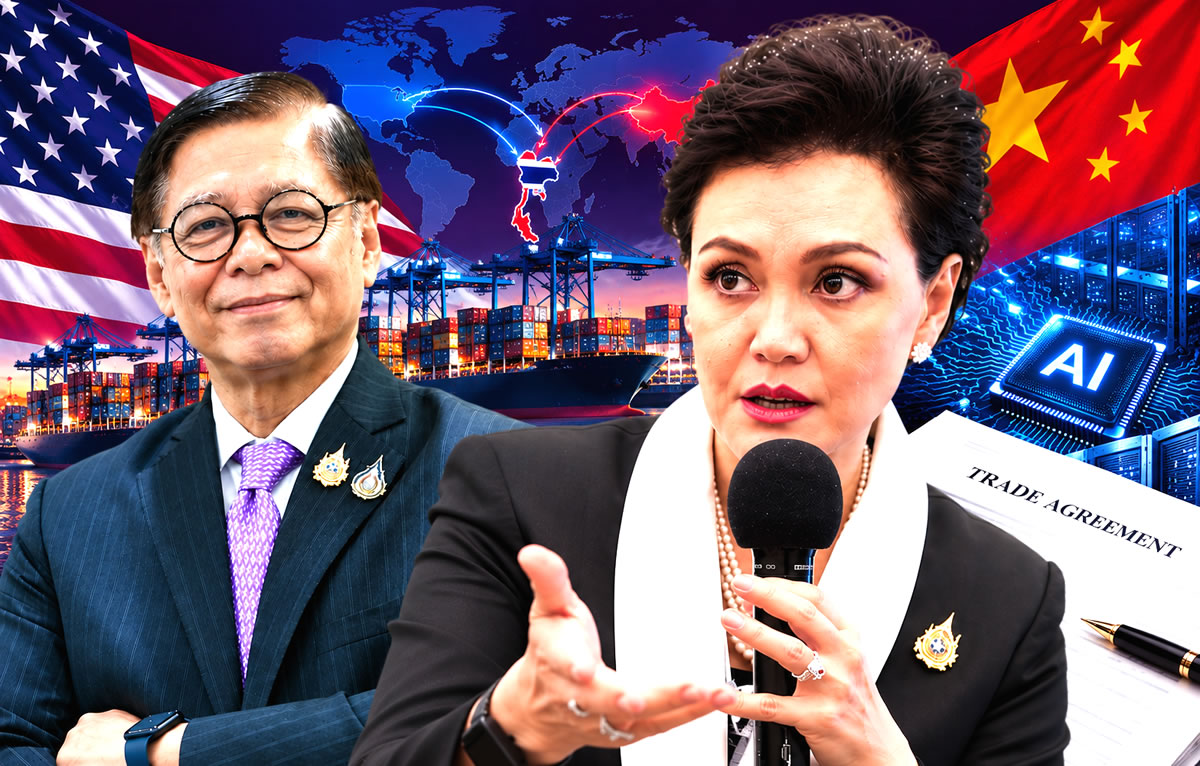
A widening hiatus has developed in Thailand’s crucial trade negotiations with the United States. Conflicting accounts from two senior ministers have also clouded the timetable. Commerce Minister Suphajee Suthumpun says an agreement has now been reached in principle. Yet Foreign Minister Sihasak Phuangketkeow described substantive differences only four days earlier.
Mr Sihasak said Thailand and the United States remained engaged in “serious discussions”. More importantly, he identified market access as the central unresolved issue. “The key issues are basically market access,” he told Bloomberg Television.
His comments came during the United Nations General Assembly in New York. Notably, Bangkok had previously suggested the substantive negotiations were essentially finished.
US-Thai trade deal remains unsigned as Washington seeks wider market access and security commitments
The contrast is significant. Thailand had expected the final wording to be completed weeks earlier. Meanwhile, a planned conversation between Prime Minister Anutin Charnvirakul and US President Donald Trump never happened. That call was expected around September 17-18. No replacement date has since been announced.
Likewise, there is no announced date for signing the Agreement on Reciprocal Trade, known as the ART. Neither government has published the final negotiated text. Instead, Bangkok has returned to describing the remaining work as technical. Mr Sihasak’s September 24 comments presented a different picture.
The negotiations also extend considerably beyond reciprocal tariffs. Washington wants greater access for American goods, services and investors. In parallel, the framework covers digital trade, telecommunications, export controls and investment security. It also seeks action against duty evasion and unfair third-country trade practices.
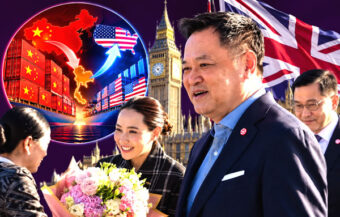
Those provisions carry particular importance for Thailand. The country is deeply integrated with Chinese manufacturing, investment and industrial supply chains. At the same time, Washington is tightening scrutiny of goods routed through third markets. Thailand has already faced US concerns over possible transshipment involving Chinese-origin products.
Transshipment exposure puts Thailand’s Chinese supply chains under closer American trade scrutiny
Indeed, Bank of Thailand analysis identified 547 exporters potentially fitting a broad transshipment-risk profile. Those exporters represented at least 26.7% of Thai exports to America under its methodology. The classification does not establish wrongdoing by those companies. Nevertheless, it demonstrates Thailand’s considerable exposure to tighter American origin controls.
China, meanwhile, remains one of Thailand’s most important economic partners. Chinese investment has become increasingly significant across Thai manufacturing. Chinese components also feed extensive regional supply chains operating through the kingdom. Consequently, Washington’s demands reach directly into a sensitive part of Thailand’s economic relationship with Beijing.
Mr Sihasak’s Bloomberg comments were particularly striking in that context. Immediately beforehand, he discussed the wider relationship between the United States and China. He described that relationship as consequential for the entire region. He then addressed Thailand’s bargaining position with Washington.
“We are not a superpower, and we negotiate,” Mr Sihasak said. “We try to strike the best deal, we try to accommodate where we can,” he added. However, he also indicated Thailand had positions on which it must stand firm.
Sihasak says market access remains the key issue after warning Thailand is not a global superpower
Bloomberg then asked what was preventing completion of the US agreement. Mr Sihasak gave a direct answer. “The key issues are basically market access,” he said. That description went considerably further than references to final technical drafting.
Market access itself covers a wide negotiating field. It includes American goods entering Thailand and conditions facing US companies operating here. Pork has emerged as one potentially difficult agricultural issue. However, Washington’s demands extend far beyond meat imports.
Under the framework, the United States wants Thailand to eliminate tariffs on approximately 99% of American goods. That includes industrial products and agricultural exports. In addition, Washington wants greater access for American farm products. Existing standards and non-tariff barriers are also part of the negotiations.
Digital trade provides another major front. Washington wants trusted cross-border data transfers and non-discriminatory treatment for American digital services. Separately, the framework addresses restrictions affecting US investment in Thailand’s telecommunications industry. Intellectual property enforcement also forms part of the package.
Economic security adds another layer. Washington wants stronger cooperation over supply-chain resilience and investment security. As part of this, the framework seeks cooperation against unfair trade practices involving third countries. It also covers export controls and duty evasion.
US trade demands extend beyond tariffs into digital trade, investment security and export controls
Those provisions make the ART substantially broader than a conventional tariff agreement. They also place product origin and investment relationships directly inside the negotiations. For Thailand, that intersects with substantial Chinese commercial interests. However, no evidence establishes direct Chinese intervention in the current talks.
Nor is there evidence that Beijing caused the present delay. Still, China has previously warned countries against arrangements with Washington that damage Chinese interests. China’s Commerce Ministry issued that warning during regional tariff negotiations in April 2025. Southeast Asian governments were then seeking relief from American reciprocal tariffs.
Against that background, Mr Sihasak’s “not a superpower” comment carries added context. However, the supplied material does not establish precisely what he meant. His subsequent comments are clearer. Market access remained unresolved on September 24.
That admission came after weeks of considerably more optimistic statements from Bangkok. On September 1, Ms Suphajee met US Trade Representative Jamieson Greer in Washington. She also met Deputy USTR Rick Switzer. Afterwards, Thailand said the substance of the ART had been agreed.
Technical teams were then expected to complete the remaining provisions. One week later, Ms Suphajee provided an even tighter timetable. On September 8, she said final wording should require approximately another week. She also expected negotiations to conclude during September.
China backdrop grows as Bangkok shifts from claims of settled substance to unresolved market access
Attention subsequently shifted to the proposed Anutin-Trump telephone conversation. The call was expected around September 17-18. It was presented as an important step towards completing negotiations. Furthermore, final tariff treatment was expected to feature in those discussions.
The conversation never happened. No public explanation established why. Moreover, no replacement date subsequently appeared. Then, on September 24, Mr Sihasak disclosed continuing negotiations over market access.
His account changed the picture. These were not merely lawyers settling punctuation and technical language. Instead, Thailand’s foreign minister identified substantive questions involving market access. He also referred to conditions affecting American investors.
Four days later, the official position changed once more. On September 28, Ms Suphajee announced an agreement in principle. She said remaining work concerned technical provisions and precise wording. Something therefore appears to have moved during those four days.
However, neither side has published details showing exactly what moved. Washington has not released a final ART confirming every substantive issue has been resolved. The agreement also remains unsigned. No signing timetable has been announced.
Anutin-Trump call disappears as Sihasak reveals substantive US market access issues remain unresolved
The sequence is consequently important. First, Bangkok said the substance was agreed. Next, final drafting was expected within roughly one week. Then an Anutin-Trump conversation was expected to help close the process.
That conversation disappeared from the timetable. Subsequently, Mr Sihasak revealed continuing serious discussions over market access. Four days later, Ms Suphajee again described the outstanding work as technical. Both accounts can be accurate if significant progress occurred between September 24 and September 28.
Still, the final text remains unavailable. It will determine what Thailand actually conceded. It will also reveal how far Washington secured its wider economic-security objectives.
One particularly sensitive area concerns transshipment. Washington has long scrutinised goods potentially routed through third countries to avoid American tariffs. Thailand’s manufacturing base makes that issue especially important. Large volumes of imported components pass through Thai factories before finished goods reach overseas markets.
The Bank of Thailand figures illustrate the potential exposure. Its analysis identified 547 exporters under a broad transshipment-risk methodology. Together, they represented at least 26.7% of Thai exports to the United States. Again, the classification itself does not establish tariff evasion.
Bangkok’s shifting timetable leaves final concessions unclear as transshipment scrutiny intensifies
Even so, Washington’s proposed agreement specifically addresses duty evasion. It also seeks cooperation concerning third-country unfair trade practices. On another front, export-control cooperation forms part of the package. Investment security is included as well.
These demands have obvious relevance to Thailand’s Chinese-linked supply chains. Chinese companies have expanded their manufacturing footprint in Thailand. Thai factories also rely extensively on Chinese components and machinery. Therefore, tougher origin controls could affect more than customs paperwork.
The investment provisions could carry equally broad consequences. Washington wants cooperation concerning investment security. Yet Thailand continues attracting major Chinese industrial investment. The final wording will therefore matter for future screening and regulatory decisions.
Bangkok has simultaneously continued strengthening its political and economic relationship with Beijing. Mr Anutin made an official visit to China in July. There, he met President Xi Jinping and Premier Li Qiang. The resulting statement described a Thailand-China “community with a shared prosperous future”.
Thailand is therefore maintaining extensive economic relationships with both major powers. That is an established commercial reality. Washington, however, is asking Bangkok for commitments touching third-country supply chains and economic security.
US demands on duty evasion and investment security reach deep into Thailand’s Chinese supply chains
This pressure is not entirely new. During 2025, Washington was already pressing Thailand over trade barriers and product origin. US concerns included Chinese goods potentially being relabelled or transshipped through Thailand. The previous Thai government responded with proposals designed to address American concerns.
Then-Prime Minister Paetongtarn Shinawatra offered increased purchases of American goods. These included energy, aviation products and agricultural products. Her government also proposed reducing import barriers. Furthermore, Bangkok offered stronger measures against false declarations of origin.
Despite those proposals, negotiations scheduled for April 23, 2025 were abruptly postponed. Ms Paetongtarn later acknowledged Washington wanted important elements reconsidered. She did not publicly identify every disputed provision.
The present negotiations therefore follow an established pattern of difficult bargaining over broader US demands. Washington is again seeking extensive market access. Additionally, it wants stronger safeguards concerning product origin and tariff circumvention.
This time, however, those objectives sit inside a broader economic-security framework. Export controls have joined the negotiating agenda. Investment security is also explicitly included. Third-country trade practices provide another component.
Thailand faces familiar US pressure on market access, product origin and Chinese-linked transshipment
There is another complication. The ART is not Thailand’s only active trade issue with Washington. Separately, the United States has opened a Section 301 investigation concerning structural excess capacity and production. Thailand is among the economies covered.
Bangkok has responded with fresh manufacturing data. Thailand says capacity utilisation reaches approximately 75-90% across important sectors. That contrasts with figures below 60%, which had apparently concerned Washington. Thai officials argue those higher rates undermine concerns about structural excess capacity.
Even completion of the ART would not automatically end that process. Section 301 operates under its own legal basis. For that reason, Ms Suphajee has stressed the urgency of completing the ART. Bangkok wants the bilateral agreement settled before the Section 301 process advances further.
Tariff differences add to that urgency. Thailand is seeking treatment comparable to Malaysia and Indonesia. Those economies face a 10% US levy under the arrangement described in the supplied material. Thailand and Vietnam face 12.5%.
For exporters, that difference can affect competitiveness across large volumes of trade. The United States remains Thailand’s largest export market. Consequently, access to American consumers remains commercially critical for Thai manufacturers.
Section 301 investigation adds pressure as Thailand seeks lower US tariffs and completion of trade deal
Yet tariff percentages represent only part of the negotiations. American demands concerning investment could reshape conditions for US companies operating in Thailand. Telecommunications provides one example. Washington wants changes affecting foreign ownership restrictions for American investors.
Technology provides another pressure point. Thailand is developing tighter rules covering artificial intelligence and digital activity. Proposed provisions include liability requirements, local processing and rules affecting overseas providers. American technology interests have already challenged provisions they consider restrictive.
At the same time, Bangkok is courting major American investment in artificial intelligence, cloud computing and data centres. That creates another important intersection with the trade talks. Washington wants trusted cross-border data flows. It also wants non-discriminatory treatment for American digital services.
American companies therefore have substantial interests in the final ART. Their concerns extend beyond customs duties. They include data movement, regulatory treatment, ownership restrictions and investment conditions.
US demands extend into AI, data flows and telecom ownership as Thailand courts American investment
In this area, the final agreement could reveal substantial Thai commitments. Digital provisions will show how far Bangkok moved towards Washington’s position. Telecommunications language could reveal changes affecting American ownership. Investment clauses may show how broadly Thailand accepted US economic-security requirements.
Agriculture remains another sensitive area. Pork access has been identified as one difficult issue. Washington also wants wider agricultural access. Yet these questions sit inside a package covering approximately 99% of American goods.
The scale explains why Mr Sihasak’s market-access comments matter. Market access is not one isolated disagreement. It potentially covers industrial goods, agriculture, investment, telecommunications and digital services.
His remarks also came after Bangkok had repeatedly suggested those substantive questions were settled. That creates a clear tension within the public timeline. Ms Suphajee’s latest statement may mean that gap has now closed.
However, the final agreement is still unavailable. Washington has not publicly released a completed ART text. Neither has a signing date emerged. The Anutin-Trump conversation also remains absent from the public timetable.
Final US trade deal could expose Thai concessions on digital trade, agriculture and market access
Meanwhile, the Section 301 process continues. Thailand therefore faces two separate US trade tracks. One concerns the negotiated ART. The other concerns Washington’s investigation into structural excess capacity.
The outcome of both processes matters for Thai exporters. However, the ART also carries wider strategic economic consequences. Its provisions reach deeply into Thailand’s treatment of foreign investors and supply chains.
Most significantly, the agreement covers issues linked to third-country trade. Duty evasion is explicitly addressed. Export controls are included. Investment security is also part of Washington’s demands.
These provisions make Chinese-linked supply chains impossible to ignore when assessing the agreement’s commercial impact. Yet the evidence stops short of establishing Chinese intervention. There is no proof Beijing instructed Bangkok to reject any American demand.
Similarly, there is no evidence China caused the missed Anutin-Trump call. No supplied material establishes Beijing caused the negotiating hiatus. What can be established is the economic pressure surrounding the talks.
Thailand faces two US trade tracks as economic-security demands put Chinese supply chains in focus
Thailand relies heavily on the American export market. Simultaneously, its manufacturing sector is deeply connected with China. Washington now wants economic-security commitments affecting precisely those supply chains.
China, for its part, publicly warned countries in 2025 against agreements damaging Chinese interests. That warning forms part of the documented regional background. It does not prove intervention in Thailand’s current negotiations.
Mr Sihasak’s remarks nevertheless exposed the difficulty of the bargaining. “We are not a superpower, and we negotiate,” he said. “We try to strike the best deal, we try to accommodate where we can.”
He then identified market access as the central unresolved issue. Those comments came on September 24. By September 28, Ms Suphajee said agreement had been reached in principle.
The four-day gap may ultimately prove decisive. Substantive concessions could have been agreed during that period. Alternatively, final negotiations may still contain unresolved technical provisions with significant commercial effects.
For now, the published record cannot determine which. The final ART will provide the clearest evidence. Until then, Bangkok’s latest claim remains an agreement in principle rather than a signed agreement.
Thailand balances vital US export market against deep Chinese links as final trade terms remain unseen
The timetable has already slipped repeatedly. September 1 brought claims that substantive negotiations were settled. After that, September 8 brought expectations of final wording within approximately one week. Then, September 17-18 was supposed to bring the Anutin-Trump conversation.
That conversation did not happen. September 24 then brought Mr Sihasak’s disclosure of continuing market-access negotiations. September 28 brought another declaration that only technical work remained.
The negotiations have therefore reached another apparent closing stage. Yet the final tariff treatment remains critical. So do the agreement’s less visible provisions.
Those provisions could govern American investment, digital trade and telecommunications. They could also affect agriculture, supply chains and customs enforcement. In addition, they could determine Thailand’s commitments on export controls and investment security.
For Bangkok, the stakes are substantial. The United States remains its largest export market. China remains deeply embedded in its industrial economy. Meanwhile, Washington is demanding closer economic-security alignment within the trade agreement.
Repeated delays leave US-Thai trade deal unsigned as economic-security commitments remain unclear
No evidence shows China caused the current delay. However, the US demands clearly touch economic relationships involving Chinese trade and investment. That distinction remains important.
What is beyond dispute is the hiatus itself. Thailand expected the agreement to be completed earlier this month. It remains unsigned as September ends.
Thailand moves carefully with AI regulation as US tech warns over key provisions hindering investment
Prime Minister Anutin’s US visit this week yielded a closer ties pact between Bangkok and Wall Street
The conflicting ministerial accounts have also exposed uncertainty over what actually held it up. Ms Suphajee says the remaining work is now technical. Mr Sihasak said days earlier that market access remained the key issue.
Meanwhile, the expected Anutin-Trump call has disappeared from the timetable. No final agreement has been published. No signing date has been announced.
Thailand says it has finally secured an agreement in principle. The final text will show what that agreement requires.
Join the Thai News forum, follow Thai Examiner on Facebook here
Follow Thai Examiner on Google here
Receive all our stories as they come out on Telegram here
Follow Thai Examiner here
Further reading:
Paying AI users in Thailand had a nightmare week online just as the government waded into the market