White House puts Thailand in Tier 2 of its China tariff-evasion crackdown. Thai exports face tougher US checks, AI tracking and a punishing extra 40% duty if goods are found illegally rerouted through the kingdom to dodge American tariffs.
Thailand has been thrust into Washington’s widening crackdown on Chinese tariff evasion after a White House report published on Thursday placed it in Tier 2 of “The Great Transshipment Scam”. The report flags Thailand’s deep China-linked supply chains and significant transhipment volumes. Thai exports now face tougher US scrutiny over their true origin and local production. Goods found illegally rerouted to evade tariffs risk an additional 40% duty. Meanwhile, Washington is deploying AI tools to track suspicious trade routes and certificates of origin. Thai exporters fear heavier friction at US ports, while Bangkok is forming a specialist task force to tighten origin checks.
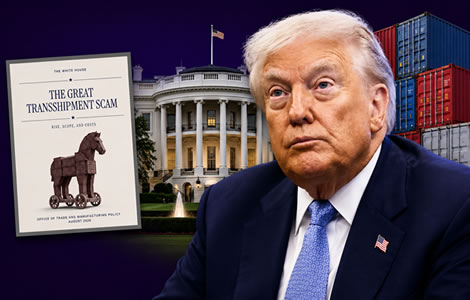
Thailand has landed in Tier 2 of a new White House report targeting suspected Chinese tariff evasion networks. The designation puts Thailand among six economies handling significant transhipment volumes. Washington also identifies deep integration with Chinese manufacturing and supply chains. Notably, the report targets goods potentially rerouted through third countries to avoid higher American tariffs.
The report, titled “The Great Transshipment Scam”, was released on Thursday, August 13, 2026. The White House Office of Trade and Manufacturing Policy produced the assessment. It identifies more than 40 economies playing different roles in China-linked supply and transhipment networks. In particular, Washington examines manufacturing, sourcing, logistics, processing and regional routing connections.
The White House divides the economies into three tiers according to their trade characteristics and supply-chain links. Thailand sits in Tier 2 alongside Brazil, Indonesia, Malaysia, Türkiye and Vietnam. This category covers economies with significant transhipment volumes and stronger integration with Chinese industrial networks. As a result, Thailand now faces greater scrutiny over goods exported to the United States.
Tier 2 status raises scrutiny of Thai exports as Washington targets Chinese goods routed through Asia
However, Tier 2 is not a finding that every Thai export breaches American country-of-origin rules. Nor does the designation establish wrongdoing by every exporter operating from Thailand. Rather, it reflects Washington’s assessment of transhipment exposure and China-linked economic integration. The distinction remains important as American enforcement intensifies.
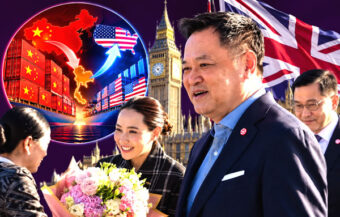
At the centre of the report are Chinese goods routed through intermediary countries before reaching America. Washington says exporters can use these routes to avoid higher US tariffs imposed on Chinese products. Under such arrangements, goods may first be shipped from China into another economy. Subsequently, they can undergo limited processing, repackaging or relabelling before being exported onwards.
The goods can then enter America carrying a different declared country of origin. Yet the White House says simply moving products through another economy does not legally change their origin. Similarly, limited processing does not automatically transform Chinese merchandise into products of the intermediary country. Applicable origin requirements must still be satisfied.
For Thailand, that puts certificates of origin and genuine domestic production firmly under examination. Exporters must demonstrate that products legitimately qualify for Thai origin before entering the American market. Crucially, Washington is examining whether substantial local value was added before goods were exported. Simple rerouting or minor processing would not automatically satisfy those requirements.
Illegal transhipment risks 40% US duty as Washington deploys AI tools to track suspicious trade routes
The financial stakes are substantial. Goods found illegally transshipped to evade American tariffs can face an additional 40% duty. Other applicable penalties can also be imposed. Accordingly, suspicious shipments could face costs extending well beyond the tariff originally being avoided.
US Customs and Border Protection is responsible for identifying suspicious goods entering the country. Thailand’s Tier 2 placement could therefore bring closer examination when shipments arrive at American ports. Certificates of origin are likely to receive particular attention. Manufacturing records and supply-chain information could also become central to individual investigations.
In parallel, Washington plans to strengthen enforcement using AI-enabled border and customs tracking systems. These tools will scrutinise certificates of origin and examine international shipping patterns. They will also target logistics routes considered particularly vulnerable to tariff evasion. Consequently, American enforcement can follow goods across increasingly complicated supply chains.
The approach means scrutiny may extend beyond paperwork accompanying individual shipments. Sourcing, production and routing information can provide additional evidence about where products actually originated. As part of this, AI tools are expected to help identify unusual trading and logistics patterns. High-risk routes can then receive greater customs attention.
White House traces transhipment network to 2018 tariffs as Thailand faces deeper supply-chain scrutiny
The White House says the system extends far beyond straightforward rerouting between China and one intermediary economy. Instead, it identifies a decentralised international network supporting the trade. Manufacturing bases, logistics platforms, processing operations and re-export hubs are all cited. Free-trade zones also form part of the network Washington is examining.
Separately, the report traces the expansion of the practice to earlier American trade action against China. Washington first imposed Section 301 tariffs on Chinese goods in 2018. US trade adviser Peter Navarro said transhipment activity subsequently developed into a much broader system. He described its evolution from smaller-scale tariff evasion into an international network.
The White House now estimates that more than 40 countries are involved in networks under examination. However, their roles and levels of exposure differ. The three-tier structure is intended to distinguish those differences. Thailand’s Tier 2 position indicates Washington considers its exposure significant rather than peripheral.
Significantly, Thailand is not being presented merely as a transit point for Chinese merchandise. The report highlights deeper connections involving manufacturing, sourcing, logistics and regional routing. Those connections distinguish Tier 2 economies from countries performing more limited roles. Therefore, actual manufacturing activity inside Thailand becomes especially important.
Thai exporters fear tougher US port checks as Bangkok prepares task force to verify certificates of origin
The designation also puts pressure on exporters relying on Thai certificates of origin. A certificate alone may face closer scrutiny when American officials question a shipment. Instead, production processes and the extent of local manufacturing could become decisive. Businesses importing finished or nearly finished Chinese goods face particular exposure if meaningful Thai production is absent.
Meanwhile, Thailand’s export industry has raised serious concerns about the consequences. The Thai National Shippers’ Council fears the designation could weaken confidence in Thai exports. It is also concerned about heavier friction when Thai shipments reach American ports. Increased inspection could bring greater scrutiny of documentation and manufacturing records.
The concern extends beyond businesses involved in questionable transhipment practices. Genuine Thai exporters could also face additional questions as Washington strengthens enforcement. More intensive origin checks could increase scrutiny across shipments from a Tier 2 economy. Against that backdrop, maintaining credible certificates of origin has become increasingly important.
In response, Thai officials are preparing a specialised task force focused on trade compliance. The unit will manage tighter verification of certificates of origin. Its work will seek to ensure documents accurately reflect where goods were produced. Officials have also announced plans for stricter compliance surrounding origin certification.
Thai customs targets false origin claims as White House puts Thailand within its transhipment crackdown
Thailand has already increased scrutiny of false country-of-origin declarations. Customs is targeting suspicious exporters and companies importing goods before re-exporting them. Particular attention falls on businesses conducting little meaningful production inside Thailand. Hence, import-and-re-export operations face closer examination where substantial local value is absent.
On another front, the White House report substantially raises the profile of the issue. Previously, suspicious transhipment could primarily expose individual exporters or particular shipments to enforcement action.
Thailand itself now appears within Washington’s formal classification of countries exposed to significant transhipment volumes. That brings the country’s wider supply-chain links into focus.
Even so, the Tier 2 designation remains an assessment rather than a blanket ruling against Thai merchandise. The report does not classify every Thai export as improperly transshipped. It also does not establish that every China-linked manufacturer in Thailand has violated American rules. Enforcement findings still depend on the circumstances surrounding individual goods and shipments.
Nevertheless, penalties become substantial when illegal transhipment is established. The additional 40% duty can apply alongside other tariffs already imposed on a product. American agencies can also impose other applicable penalties. Thus, the consequences can extend considerably beyond normal customs charges.
Washington and Bangkok tighten origin checks as Thai exporters face scrutiny over China-linked trade
Washington’s strategy now combines customs inspections, origin verification and AI-assisted supply-chain tracking. At the same time, Thai officials are strengthening their own checks on certificates and suspicious exporters. Both sides are therefore placing greater attention on how goods acquire their declared origin. The underlying question is whether genuine production occurred before shipment to America.
Thailand’s integration with Asian manufacturing networks sits at the centre of its Tier 2 placement. Vietnam, Malaysia and Indonesia share the same classification. Brazil and Türkiye complete the six-country group. Collectively, these economies are considered significantly integrated with Chinese manufacturing, sourcing and logistics.
The broader White House examination reaches more than 40 economies across the global trading system. Washington says they perform different functions within China-linked manufacturing and transhipment networks.
Bangkok firm rules out using its US military alliance as leverage in tense trade talks with Washington
Prime Minister says Thailand is navigating a ‘New World Disorder’ and sets out a new economic agenda
Accordingly, its tier system measures both trade flows and the characteristics of those connections. Thailand has now been placed firmly within the second level.
For Thai exporters, the immediate focus falls on origin documentation and evidence supporting genuine local production. For Washington, enforcement is moving towards closer tracking of goods, logistics routes and manufacturing links. Meanwhile, the Thai task force will tighten verification at home. The Tier 2 designation has placed Thailand squarely inside America’s expanding crackdown on suspected tariff evasion.
Join the Thai News forum, follow Thai Examiner on Facebook here
Receive all our stories as they come out on Telegram here
Follow Thai Examiner here
Further reading:
Business lobby urges Anutin to improve climate for inward investment by axing old laws and red tape
Tax and welfare revolution as Thailand moves ahead with Negative Income Tax that expands reporting
Thumbs up from economic gurus for 2027 Negative Income Tax plan. It’s a game-changer for progress
Expert warns foreign tourism has become Thailand’s curse, fueling inertia and a widespread malaise