Five months behind bars, a 25-year prison threat and heroin stashed in elephant bags. Australia drops its case against Thai Airways hostess Meena Kondo, 26. She returns Wednesday for police questioning as Thailand hunts a drug gang. Three in custody.
Former Thai Airways flight attendant Meena Kondo, 26, is heading home after Australian prosecutors dropped heroin trafficking charges that threatened her with 25 years in prison. She spent nearly five months in custody after heroin worth A$500,000 was discovered hidden inside elephant-patterned bags at Melbourne Airport. However, investigators could not prove she knew about the drugs. Now, Thai narcotics police are preparing to question her after her arrival at Suvarnabhumi Airport on Wednesday morning. Meanwhile, three suspects have been arrested in Thailand, a fourth remains wanted, and prosecutors are pursuing the international trafficking network suspected of using unsuspecting couriers. Kondo’s Australian ordeal has ended, but the hunt for those who organised the heroin shipment is far from over as far as Thai security agencies are concerned.
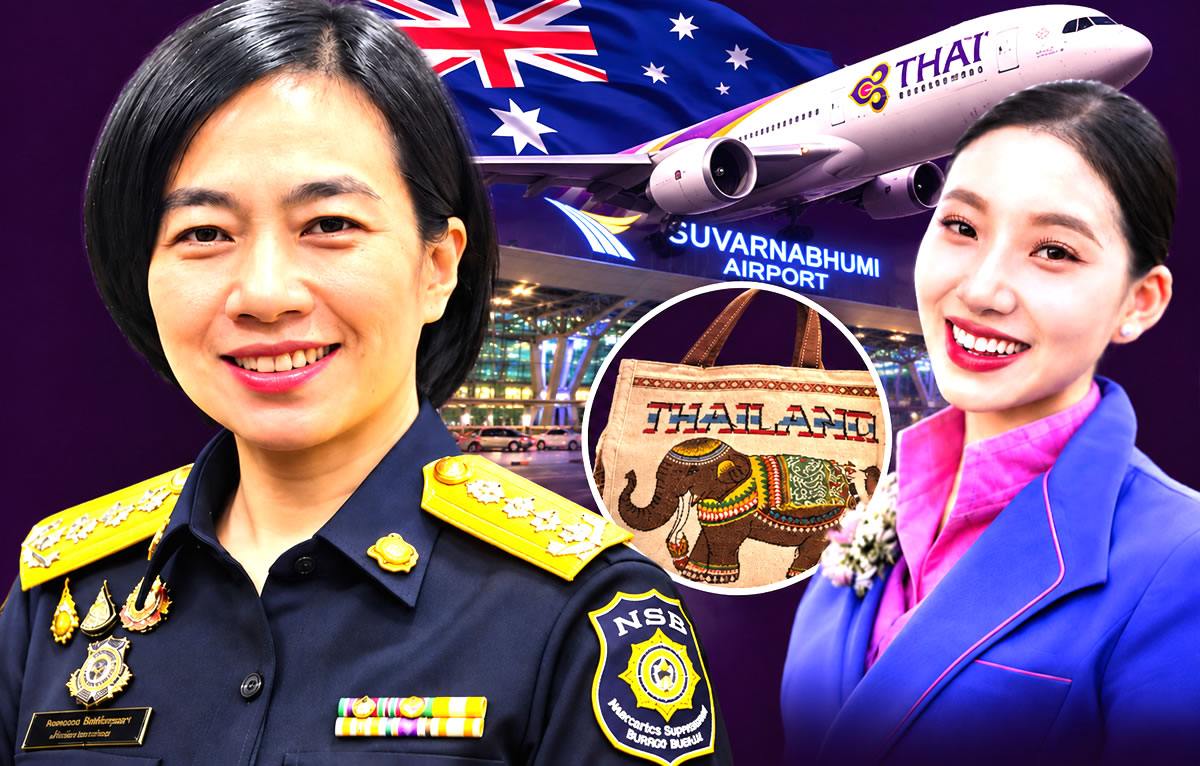
Australian prosecutors have dropped all heroin trafficking charges against former Thai Airways flight attendant Meena Kondo, 26, after nearly five months in custody. The case collapsed after investigators failed to establish her knowledge of heroin concealed inside elephant-patterned bags.
However, her return to Thailand will bring fresh questioning by narcotics police and prosecutors. Kondo is expected at Suvarnabhumi Airport at approximately 10.45 am on Wednesday, November 18.
Meanwhile, Thai investigators have arrested three suspects and obtained a warrant for a fourth. They believe Kondo may have been an unwitting courier in an international drug trafficking operation.
Australian prosecutors abandon heroin case after five months as Thai investigators pursue the shipment
The Australian decision emerged on Tuesday, November 17, ending a prosecution that exposed Kondo to 25 years in prison. She had faced charges of importing and possessing a commercial quantity of heroin.
Instead, the Commonwealth Director of Public Prosecutions abandoned the case after examining her communications and financial records. Investigators could not establish that she knowingly participated in the shipment.
The withdrawal follows her arrest at Melbourne International Airport on June 25. Australian Border Force officers discovered heroin concealed inside elephant-patterned fabric bags she had carried from Thailand.
Subsequently, Australian Federal Police arrested the young flight attendant and brought serious drug charges. She remained in custody while investigators examined the shipment and her suspected involvement.
Thailand’s Office of the Narcotics Control Board confirmed the Australian decision on Tuesday. Its spokeswoman, Ms Kwankamol Srichaiwan, an expert investigator, disclosed details of the prosecution’s collapse.
According to Ms Kwankamol, Australian prosecutors officially discontinued the charges on November 12. The decision followed months of cooperation between Australian investigators and Thai narcotics authorities.
Mobile phone and financial records fail to prove intent as Melbourne court dismisses heroin charges
Crucially, investigators had examined evidence from Kondo’s mobile telephone and financial transactions. However, those inquiries failed to establish the criminal intent required to sustain the prosecution.
The available evidence was insufficient to prove her involvement in importing heroin into Australia. Consequently, the Commonwealth Director of Public Prosecutions withdrew the charges, clearing the way for her release.
Separately, Australian reports described proceedings at Melbourne Magistrates’ Court on Tuesday. Magistrate Donna Bakos formally struck out the charges after prosecutors abandoned the case.
Kondo appeared by video link from detention at approximately 11.40 am Melbourne time. An interpreter conveyed the decision, and Australian reports said she smiled upon hearing the outcome.
Nevertheless, prosecutors offered no public explanation during the hearing for abandoning the charges. The proceedings ended without a trial or judicial determination of the underlying allegations.
The withdrawal also left unanswered questions about who concealed the heroin and organised its transportation. Those questions are now central to the continuing investigation in Thailand.
Airport X-ray exposes heroin hidden inside elephant-patterned bags carried by Thai Airways attendant
The case began when Kondo arrived at Melbourne Airport while employed as a Thai Airways International cabin attendant. She was carrying fabric tote bags reportedly entrusted to her in Thailand.
During airport screening, Australian Border Force officers detected suspicious material during an X-ray examination. A subsequent search uncovered white powder concealed inside the linings of elephant-patterned bags.
Initial testing identified the substance as heroin. Australian Federal Police subsequently arrested Kondo on charges involving the importation and possession of controlled narcotics.
The discovery immediately raised questions about the shipment and the flight attendant’s knowledge of its contents. Investigators also began examining who had arranged for the bags to be transported to Melbourne.
Notably, reports have differed over the quantity of heroin recovered. On Tuesday, Thailand’s Office of the Narcotics Control Board referred to approximately 900 grammes. However, another account reported 1.8 kilogrammes concealed inside the bags. Earlier Australian reporting described more than one kilogramme, with some accounts referring to 12 fabric bags.
Conflicting heroin weights emerge as Thai police arrest three suspects and hunt a fourth in drug probe
The differing quantities have not been reconciled in the available official statements. Australian authorities valued the seized drugs at approximately A$500,000. Meanwhile, Thai reporting placed their estimated street value at ฿11.5 million. Whatever the final quantity, the seizure triggered serious criminal proceedings against the 26-year-old flight attendant.
Kondo remained in Australian custody as investigators examined the shipment. Her employment with Thai Airways was subsequently terminated following her arrest.
By September, Melbourne Magistrates’ Court heard that prosecutors and defence lawyers were discussing a possible resolution. Those discussions preceded the eventual withdrawal, although Australian prosecutors have not publicly explained their final decision.
In parallel, Thai narcotics police began investigating the people suspected of arranging the shipment. Their inquiry examined how the bags were obtained, prepared and delivered to Kondo. Officers also sought to identify whoever concealed the heroin inside their linings. Furthermore, investigators examined the arrangements for transporting the bags from Thailand and collecting them in Australia.
The Thai investigation has already produced three arrests. Police have also obtained an arrest warrant for a fourth suspect. Investigators believe the shipment was connected to an organisation recruiting people to transport goods containing concealed narcotics overseas. Some couriers were allegedly unaware that the items they carried contained illegal drugs.
Thai investigators trace suspected couriers and Australian recipient as prosecutors demand answers
Earlier reports identified a suspected courier arrested in Phitsanulok. Investigators also examined the possible involvement of a Thai woman living in Australia. She was believed to have connections with arrangements for receiving the bags. However, the available reports have not established her precise role in the suspected operation.
Police also examined online communications concerning the shipment. These included arrangements reportedly made for transporting the bags and delivering them in Melbourne.
As part of this inquiry, investigators traced individuals suspected of participating in different stages of the operation. Thai prosecutors subsequently pursued criminal proceedings against suspects connected with the shipment.
On Tuesday, Watcharin Panurat, executive director for investigation at the Office of the Attorney General, confirmed the continuing investigation. He said Thai prosecutors had worked closely with the Narcotics Suppression Bureau. Their inquiries had already resulted in arrests and criminal proceedings against suspects linked to the trafficking organisation.
Significantly, Mr Watcharin said the Australian decision did not automatically settle Kondo’s position under Thai law. Prosecutors still needed to question her about the shipment and examine her possible involvement. However, he confirmed that Thai police had previously indicated she was probably innocent of knowingly transporting the heroin.
Prosecutors seek Kondo’s account of the bags before deciding whether she faces charges in Thailand
That preliminary assessment supports the findings reported by the Office of the Narcotics Control Board. Nevertheless, Thai prosecutors must obtain Kondo’s account before reaching their own formal conclusion. Investigators want to establish who hired her to carry the bags and what she understood about their contents.
The questioning will also examine her communications with individuals connected to the shipment. In particular, officers want details of the arrangements made before her departure from Thailand.
They will examine how the bags came into her possession and who was supposed to receive them. Investigators must determine whether she knowingly participated or was used as an unwitting courier.
If the evidence confirms Kondo had no knowledge of the heroin, Thai prosecutors could decide against pursuing charges. However, no such decision has yet been announced. Mr Watcharin said prosecutors would review her testimony alongside evidence gathered during the wider investigation. Her legal position in Thailand therefore remains unresolved despite the Australian withdrawal.
On another front, Thai authorities have confirmed arrangements for Kondo’s anticipated return. Reports received on Tuesday indicated that she would arrive at Suvarnabhumi Airport at approximately 10.45 am on Wednesday. Narcotics Suppression Bureau officers are preparing to meet her at the international arrivals terminal in Samut Prakan province.
Kondo faces questioning at narcotics headquarters after expected Wednesday arrival at Suvarnabhumi
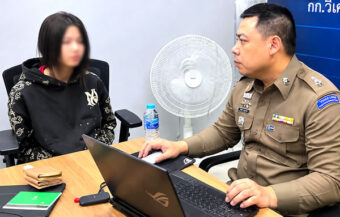
From there, Kondo is expected to be taken to the Narcotics Suppression Bureau headquarters. Officers will question her about the shipment and the people who arranged it. In addition, investigators intend to obtain information that could help identify other members of the suspected trafficking organisation.
A senior Narcotics Suppression Bureau source indicated that Kondo would initially be treated as a witness. However, her final legal position has not been determined. The bureau is preparing to coordinate with the Office of the Attorney General over the questioning. Prosecutors and police will then examine her account against the evidence already collected.
The reported arrival time has not been independently confirmed through flight details. Nevertheless, Thai authorities are preparing for her return following almost five months of detention. No new criminal charges against Kondo have been announced in Thailand.
Meanwhile, Ms Kwankamol provided further details of cooperation between Thai and Australian investigators. She said the Office of the Narcotics Control Board had gathered intelligence relevant to the Australian proceedings. That information was supplied to assist Australian authorities in examining the circumstances surrounding Kondo’s arrest.
Thai and Australian investigators share evidence as Kondo prepares to give police her account of events
The material included information concerning the suspected trafficking organisation and its activities in Thailand. Additionally, investigators examined Kondo’s communications and financial records for evidence of criminal involvement. Those inquiries failed to establish that she knowingly participated in importing the drugs.
The findings were consistent with preliminary assessments by Thai police. Investigators believed Kondo may have been unaware of the narcotics concealed inside the fabric bags. However, Thai authorities have not completed their own examination of her involvement.
The investigation has also exposed the suspected methods used to recruit couriers. According to Thai prosecutors, the organisation hired people, including airline employees, to transport goods internationally. Investigators believe some individuals accepted items without knowing that drugs were hidden inside them.
The elephant-patterned bags remain central to the inquiry. Officers are seeking to establish who prepared them and inserted the heroin into their linings. They are also examining who arranged their transportation and intended collection in Australia.
Police examine recruitment of unwitting couriers and the concealment of heroin inside ordinary tote bags
Beyond the bags themselves, police are investigating communications between individuals in Thailand and Australia. These inquiries include suspected arrangements for recruiting couriers and organising deliveries. Investigators have already identified suspects connected with different stages of the shipment.
However, the full organisation behind the trafficking operation has not been publicly identified. Three suspects have been arrested, while a fourth remains wanted. The criminal proceedings in Thailand are separate from the abandoned Australian prosecution against Kondo.
As a result, the withdrawal of her charges does not end the investigation into the trafficking network. Thai prosecutors are continuing proceedings against suspects allegedly involved in arranging the shipment. Police are also pursuing the individual named in the outstanding arrest warrant.
Separately, the Office of the Narcotics Control Board addressed the methods used by suspected trafficking organisations. Ms Kwankamol said couriers could be recruited to transport items without knowing they contained narcotics. Such items could be presented as gifts, personal belongings or ordinary commercial goods.
Paid couriers and concealed narcotics under scrutiny as former flight attendant prepares to return home
In some cases, individuals were offered payment to transport packages across international borders. The agency said concealed narcotics could expose those carrying the goods to serious criminal proceedings overseas. It also described the use of luggage and ordinary personal items to conceal illegal drugs.
In Kondo’s case, investigators are examining whether those methods were used to exploit an unsuspecting courier. However, Thai prosecutors have not yet reached a final conclusion. Her anticipated questioning will address the arrangements surrounding the shipment and her knowledge of its contents.
The Australian prosecution had originally placed Kondo at the centre of a major heroin importation case. Her arrest attracted attention in Thailand and Australia because she was employed as an international flight attendant. The discovery of drugs inside the bags led to months of detention and the termination of her employment.
The withdrawal has dramatically changed her position. Instead of facing a potential 25-year prison sentence in Australia, she is preparing to return home. Her father welcomed the decision on Tuesday, saying he had always believed in his daughter’s innocence.
Thai prosecutors await Kondo testimony while police pursue organisers of the Melbourne heroin shipment
Yet Thai authorities still require her evidence before closing their examination of her involvement. Investigators want to establish the circumstances in which she accepted the bags. They also intend to identify those responsible for concealing the heroin and arranging its delivery.
The Office of the Attorney General will play a central role in that assessment. Mr Watcharin has confirmed that prosecutors will review the evidence before deciding whether further proceedings involving Kondo are justified. Meanwhile, the Narcotics Suppression Bureau will continue pursuing suspects connected with the shipment.
The investigation also involves the three individuals already arrested in Thailand. Officers will compare Kondo’s testimony with existing evidence and statements gathered during those proceedings. Furthermore, investigators will examine information concerning the suspected recipient in Australia and arrangements made through online communications.
The fourth suspect remains wanted as the investigation continues. Thai authorities have not announced the arrest of that individual or identified the full trafficking organisation. Nor have they established publicly who concealed the heroin inside the elephant-patterned bags.
Australian charges collapse but Thai prosecutors await Kondo’s evidence as heroin network hunt continues
For Kondo, the Australian prosecution has ended without a conviction. However, the legal process in Thailand has not reached its conclusion. Prosecutors must still determine whether she was knowingly involved or carried the drugs without understanding what was hidden.
Her expected arrival at Suvarnabhumi Airport on Wednesday will bring the investigation back to Thailand. Narcotics officers are preparing to question her before coordinating further inquiries with prosecutors.
Light at end of the tunnel for Thai flight attendant Meena arrested in Melbourne for drug trafficking offences
Police in Thailand and Laos moving to take out heroin trafficking network using Thailand as a gateway
The Australian authorities have abandoned their case after failing to establish her criminal intent. In contrast, Thai investigators are continuing their pursuit of those suspected of organising the shipment.
Three suspects are under arrest, a fourth remains wanted, and the trafficking network is still under investigation. Kondo’s testimony will now form part of the Thai inquiry into the heroin shipment intercepted in Melbourne on June 25.
The Australian charges have been dropped. The hunt for those responsible for the heroin shipment continues.