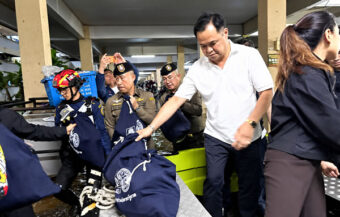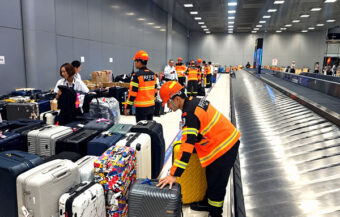
Inspector Jae arrested courier Mr Ithai, blowing open the Thai Airways heroin case. Police say his confession has exposed a Thailand-Australia trafficking network, identified a suspected recruiter known as “Rin Rin” and intensified the hunt for the syndicate’s elusive “Mr Big” organiser, who is the ultimate mover.
A single arrest has blown open what police now believe is one of Thailand’s largest and most sophisticated international heroin trafficking operations, exposing a criminal network that allegedly recruited a Thai Airways flight attendant, targeted other cabin crew, concealed drugs inside elephant-patterned baggage and operated across Thailand and Australia. Following the arrest and confession of the courier who admitted making three previous deliveries, detectives have seized key forensic evidence, traced financial and digital links, identified a suspected recruiter known as “Rin Rin” and shifted their focus to the organisers they believe remain at the centre of a sprawling transnational drug syndicate.
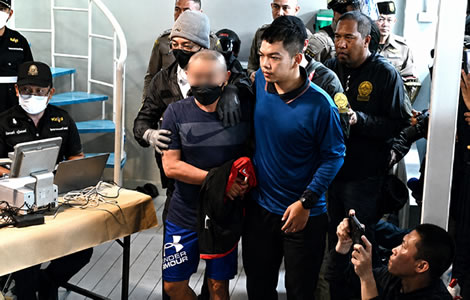
The arrest of the courier who delivered heroin to a Thai Airways flight attendant has become a decisive breakthrough in one of Thailand’s biggest international drug investigations ever.
Bangkok police now believe they have identified the man who handed over the concealed narcotics before the cabin crew member departed for Australia. The development has transformed what began as a single arrest into a rapidly expanding investigation spanning several provinces and two countries.
Police are satisfied they have found the courier who delivered drugs concealed inside carrier bags to the flight attendant at her Bangkok condominium on June 22. The suspect was arrested on Saturday by an elite Metropolitan Police Bureau team led by Inspector Jae. The operation followed several days of surveillance, intelligence gathering and witness interviews. Officers waited until they believed the evidence was overwhelming before moving in.
Police identify courier as detectives hunt for organisers of an international heroin trafficking network
Notably, investigators now classify the case as a significant transnational organised crime operation. Detectives believe the courier represents only one link in a much larger trafficking chain. Officers are now pursuing recruiters, suppliers, transport coordinators and overseas contacts. The investigation remains active across several jurisdictions.
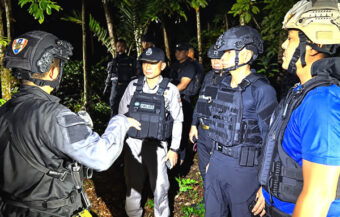
Inspector Jae has emerged as one of the investigation’s most recognisable officers. The Metropolitan Police Bureau detective is easily identified by his beanie hat, glasses and face mask during operations.
However, fellow officers say his growing reputation rests on disciplined detective work rather than appearances. Colleagues describe him as an investigator who prefers surveillance, financial analysis and patient intelligence gathering. They also say he rarely abandons an investigation once the evidence begins pointing towards a suspect.
That reputation was reinforced on Saturday. Inspector Jae’s team quietly tracked the suspect before making the arrest. Police believe the measured approach prevented evidence from disappearing and allowed investigators to identify further locations connected with the operation.
Meanwhile, the investigation has revealed two sharply different levels of involvement. The Thai Airways flight attendant, now imprisoned in Australia, received only ฿3,400 for carrying the baggage. That payment ultimately cost her both her career and her freedom.
Police distinguish courier from flight attendant as admissions reveal a far deeper role inside the network
Nevertheless, investigators say she breached airline regulations by agreeing to transport baggage supplied by another person. She also ignored repeated security training warnings to crew members never to carry luggage belonging to others. Even so, police have indicated there is no evidence she knew the precise contents hidden inside the baggage.
The newly arrested courier presents a very different picture. Police identify him as Mr Ithai, although some official records spell his name as Uthai. During questioning, he admitted knowing heroin had been concealed inside the bags.
He also confessed to completing three similar deliveries previously. Furthermore, police say he received ฿60,000 for every delivery. Detectives therefore believe his role inside the trafficking organisation was substantially greater than that of the flight attendant.
In response to questioning, Mr Ithai supplied investigators with valuable intelligence. He said the drugs originated in the Chiang Kham district of Phayao Province. He also identified the person who recruited him through the LINE messaging application.
According to investigators, the recruiter used the codename “Rin Rin” and is believed to be a Thai national. Detectives are now examining communications linked to that account while tracing financial transactions connected with the suspect.
Detectives pursue recruiter Rin Rin as financial records and online communications come under scrutiny
Separately, investigators have uncovered evidence suggesting traffickers deliberately targeted airline employees. Police and journalists have spoken with several other Thai Airways flight attendants during recent days.
Those cabin crew members described receiving similar online approaches offering payment to transport baggage overseas. However, every one of them rejected the offers immediately. Instead, they either blocked the sender or terminated the conversations. Their accounts have strengthened investigators’ belief that organised traffickers systematically approached airline staff, hoping someone would eventually agree.
The investigation accelerated after Australian authorities arrested the Thai Airways flight attendant upon arrival. Officers allegedly discovered heroin concealed inside baggage she had carried from Bangkok. Thai police immediately began searching for the individual who had delivered the luggage before departure. Detectives soon secured an important breakthrough through security camera footage.
The recordings showed a man wearing a distinctive blue hooded sweatshirt arriving at the Bang Na condominium on June 22. He delivered a suspicious package before leaving the area. From that point, investigators concentrated on identifying what became known as the “man in the blue hoodie.” Police also traced the vehicle used during the delivery.
Blue hoodie CCTV breakthrough enables detectives to identify the courier and expand the investigation
Earlier, officers detained the 59-year-old driver of a Toyota believed to have transported the courier. The driver admitted taking the passenger to the condominium. However, he denied knowing anything about the drugs or participating in trafficking. Police nevertheless continued examining his movements while searching for the courier himself.
Soon afterwards, investigators located the suspect in Phitsanulok Province. Metropolitan Police Bureau officers moved quickly to make the arrest. Following his detention, the Toyota driver positively identified the suspect as the same man wearing the blue hoodie during the June 22 delivery. That identification significantly strengthened the investigation.
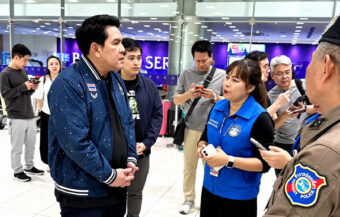
The arrest immediately triggered a second operational phase. At 3 pm on Saturday, Deputy National Police Chief Pol Gen Samran Nualma led a major evidence-gathering operation in Phra Nakhon Si Ayutthaya province.
He was joined by Metropolitan Police Commissioner Pol Lt Gen Siam Boonsom, Metropolitan Police Bureau Commissioner Pol Lt Gen Nophasin Poolsawat, Metropolitan Police Deputy Commissioner Pol Maj Gen Teeradet Thamsuthee and Narcotics Suppression Bureau Deputy Commissioner Pol Maj Gen Somboon Thiankhao.
Officers from the Metropolitan Police Bureau joined investigators from the Narcotics Suppression Bureau throughout the operation. Forensic specialists from the Police Forensic Science Division also participated. The search focused on the accommodation identified by Mr Ithai following his arrest.
Ayutthaya raid targets a suspected heroin preparation site identified by the courier after his arrest
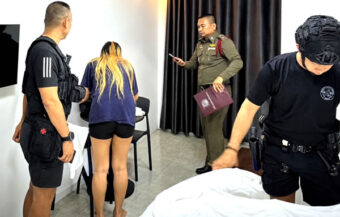
Police believe the room served as both a temporary hideout and a location where heroin-filled bags were prepared before delivery. Consequently, officers conducted a meticulous search of every part of the property. Detectives believed the room could contain crucial forensic evidence linking the courier to the trafficking network.
The search quickly produced significant results. Officers recovered eight pieces of elephant-patterned fabric together with numerous strips cut from identical material. Investigators immediately noticed white powder clinging to the fabric. Forensic officers carefully collected every fragment before sealing them inside evidence bags for examination.
On another front, investigators also recovered substantial quantities of cash. Much of the money consisted of 1,000-baht banknotes. Officers additionally seized a mobile telephone, wallet, backpack, denim shorts and a short-sleeved blue shirt. Police believe several of those items were used during the June 22 delivery. Every item has now been submitted for forensic examination.
Financial investigators have already begun tracing money transfers linked to the courier. At the same time, digital specialists are examining information recovered from the seized mobile telephone. Detectives are also searching every item for fingerprints and DNA evidence. Police believe those enquiries could identify additional members of the trafficking organisation.
Later, investigators escorted Mr Ithai back to the room to identify the seized evidence. Meanwhile, forensic officers immediately began scientific testing using FTIR, or Fourier Transform Infrared Spectroscopy. The instrument rapidly identifies chemical substances through infrared analysis. Samples collected from the elephant-patterned fabric were selected for testing.
Samples collected from the elephant-patterned fabric were selected for testing. Within minutes, the results confirmed the white powder was heroin. However, police stressed further laboratory analysis would determine the exact quantity and purity of the drugs. Even so, investigators described the preliminary result as a significant evidential breakthrough.
Following the examination, Deputy National Police Chief Pol Gen Samran questioned Mr Ithai directly. He asked, “Was the pile of elephant-patterned fabric scraps the one that contained the drugs?” Mr Ithai nodded in confirmation. According to police, he admitted the heroin had been concealed inside the fabric before delivery. He also apologised to the flight attendant during questioning.
FTIR testing confirms heroin as detectives link elephant-patterned fabric to earlier suspected drug shipments
Moreover, investigators say Mr Ithai admitted carrying out three previous deliveries. That confession immediately broadened the investigation. Detectives are now reviewing earlier drug seizures to determine whether the same concealment method was used before. Officers are also examining whether identical elephant-patterned bags featured in previous trafficking operations.
As part of the investigation, police believe the courier occupied a trusted position inside the trafficking network. Unlike the flight attendant, he admitted knowing exactly what he was transporting. Detectives also believe he understood the risks involved. His payment of ฿60,000 for each delivery reflects that higher level of responsibility, investigators say.
Attention has now shifted towards those directing the operation. Police believe recruiters, financiers and organisers remain at large. Investigators are examining every digital communication recovered from the suspect’s telephone. They are also tracing financial transfers linked to his accounts. Officers hope those enquiries will expose the network’s command structure.
In parallel, detectives continue analysing information surrounding the LINE account operating under the name “Rin Rin.” Police believe the account belongs to a Thai national. However, investigators have not disclosed whether they have identified the individual behind the codename. That enquiry now forms one of the investigation’s highest priorities.
Detectives are also examining how the heroin travelled from Chiang Kham district in Phayao Province to Bangkok. Mr Ithai told investigators the drugs originated there before being transported south. Police are now working to identify those responsible for moving the narcotics through the supply chain before they reached the courier.
Detectives target organisers as financial trails and digital evidence reveal the network’s command structure
Meanwhile, forensic specialists continue examining every item seized during the Ayutthaya search. Officers are processing the elephant-patterned fabric for latent fingerprints. DNA evidence is also being examined.
Detectives believe forensic findings could identify additional suspects who handled the heroin before it reached Bangkok.
Financial investigators are pursuing a parallel line of enquiry. Large quantities of cash recovered from the room are now being examined alongside banking records. Detectives hope the financial evidence will reveal payments made between members of the trafficking organisation. Those enquiries could also establish whether further deliveries generated similar profits.
Digital evidence is proving equally important. Specialists are extracting information from the seized mobile telephone and other electronic devices. Investigators expect those records to reveal conversations, contacts and movements linked to the trafficking operation. Police are particularly interested in communications immediately before and after the June 22 delivery.
Forensic science and financial analysis become central as investigators pursue additional suspects
Notably, the investigation has highlighted the different methods used by organised traffickers when approaching airline employees. Officers say several Thai Airways flight attendants were contacted online with similar proposals.
Those offers promised payment for transporting baggage internationally. However, every crew member interviewed rejected the approach immediately. Each either blocked the sender or ended the conversation.
Those witness accounts have strengthened investigators’ belief that traffickers repeatedly targeted airline staff. Police believe criminal groups viewed cabin crew as attractive targets because of their regular international travel. Detectives are now examining whether similar recruitment attempts were made against employees of other airlines.
For investigators, the case has evolved far beyond the original arrest in Australia. What first appeared to involve one crew member now points towards a carefully organised trafficking network operating across provincial and international borders. Every new arrest has expanded the scope of the investigation rather than narrowing it.
Rejected approaches to airline staff reveal a wider strategy used by organised traffickers seeking couriers
Inspector Jae remains central to that effort. Fellow officers describe him as an investigator who prefers evidence over publicity. Instead of rushing operations, he patiently builds cases through surveillance, witness interviews and intelligence gathering. Colleagues say that the approach has repeatedly produced results in complex criminal investigations.
Saturday’s arrest reflected that investigative philosophy. Police spent days reconstructing the suspect’s movements before taking action. Officers also identified locations linked to the courier before making the arrest.
As a result, investigators were able to secure valuable evidence immediately after the suspect was taken into custody.
The investigation has also demonstrated close cooperation between specialist police units. Officers from the Metropolitan Police Bureau, the Narcotics Suppression Bureau and the Police Forensic Science Division worked alongside senior Royal Thai Police commanders throughout Saturday’s operation. Their coordinated approach allowed searches, interviews and forensic examinations to proceed simultaneously.
Inspector Jae’s patient investigative methods continue delivering crucial breakthroughs in the case
In addition, the Office of the Narcotics Control Board has continued supporting the investigation as detectives pursue the wider trafficking organisation. Investigators are sharing intelligence between agencies while examining evidence recovered during the searches. Police believe that cooperation will become increasingly important as the investigation expands.
Senior commanders have made clear they do not regard the courier as the principal target. Instead, detectives believe he served as one operational link inside a larger organisation. Police are now attempting to identify those who financed the operation, recruited couriers, sourced the heroin and organised overseas deliveries.
Accordingly, investigators are following financial trails, digital communications and forensic evidence rather than concentrating solely on confessions. Officers believe scientific evidence will ultimately establish the roles played by everyone involved. That evidence is expected to support future prosecutions as additional suspects are identified.
Police also continue examining whether previous deliveries completed by Mr Ithai reached overseas destinations successfully. His admission that he had completed three earlier deliveries has become another major line of enquiry. Detectives are reviewing travel records, baggage movements and intelligence reports linked to those earlier operations.
Multi-agency investigation shifts focus towards financiers, recruiters and overseas organisers of network
The elephant-patterned concealment method has also attracted significant attention. Investigators believe the specially prepared fabric may represent a distinctive signature of the trafficking network. Forensic specialists are now comparing the recovered material with evidence from other narcotics investigations. Any match could significantly widen the inquiry.
Despite Saturday’s breakthrough, investigators insist the operation remains far from complete. Police believe the organisers remain free and continue directing the trafficking network. Consequently, officers are maintaining pressure across several investigative fronts while analysing the growing volume of evidence.
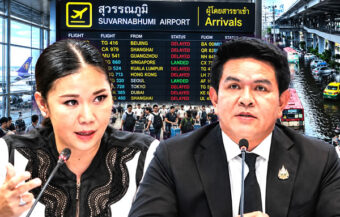
Thai hostess to face the music for her actions as Prime Minister pushes to close drug trafficking gaps
Police in Thailand and Australia hunt to track down network behind the arrest of a Thai Airways hostess
For the Bangkok police, the arrest of Mr Ithai represents the most significant development since the Thai Airways flight attendant was detained in Australia. His admissions, combined with the forensic evidence recovered in Ayutthaya, have substantially strengthened the investigation. Detectives now believe they possess valuable intelligence capable of leading them further up the trafficking chain.
The objective is now clear. Police intend to identify every participant involved in recruiting couriers, preparing concealed heroin shipments, arranging transport and directing international deliveries. Saturday’s arrest closed one chapter of the investigation. It also opened a much larger one, with detectives now pursuing the criminal organisation they believe operated behind the courier from the very beginning.
Join the Thai News forum, follow Thai Examiner on Facebook here
Receive all our stories as they come out on Telegram here
Follow Thai Examiner here
Further reading:
Bungling French drug dealer arrested at Phuket Airport after cocaine sachets found on concourse
Phuket Airport Immigration Chief rebuts UK tabloid coverage linked with the arrest of a UK tourist
24 year old New Zealand tourist arrested. Cocaine found inside his passport clearing Phuket Airport