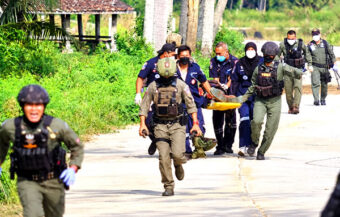
A Khon Kaen drinking session turned deadly after a 59-year-old man accused his friend of being a feared Phi Pop ghost before striking him about 20 times with a hammer. The victim died in hospital as police investigate the shocking folklore-linked killing.
A normal drinking session in rural Khon Kaen exploded into a savage killing after a 59-year-old man accused his friend of being a feared Phi Pop ghost before battering him with a hammer about 20 times, police say. The victim later died in hospital, while the suspect calmly waited at the scene for officers, leaving detectives to unravel a shocking case where alcohol, Thai folklore and extreme violence collided.
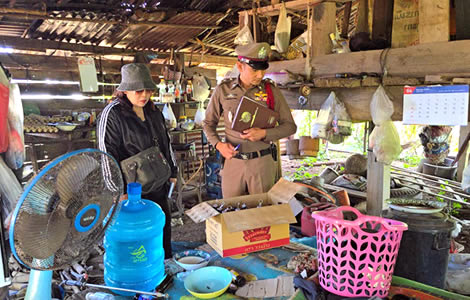
A drinking session between two friends erupted into a savage killing in Khon Kaen after one man accused the other of being a ghost before bludgeoning him with a hammer, police said on Thursday.
The victim later died in hospital. Meanwhile, the suspect remained at the scene until officers arrived.
The fatal attack unfolded at a field hut in Ban Non Kham Pae village, Kut Nam Sai subdistrict, Nam Phong district. Wichan Khunsri, 59, was arrested there on Thursday morning. According to Pol Col Chumphon Buachum, superintendent of Nam Phong Police Station, officers found the suspect waiting outside the hut when they reached the property.
Suspect accused drinking buddy of being a feared ghost before launching deadly hammer attack
Investigators said Mr Wichan had been drinking white liquor with his friend, Banjong Daphaeng, 57. The pair were spending time together in a hut owned by the suspect near the village. However, the drinking session turned violent after an argument suddenly broke out. Police have not disclosed what triggered the dispute.
During the confrontation, Mr Wichan accused Mr Banjong of being a Phi Pop. The figure is a feared cannibalistic ghost in Thai folklore. In response, the suspect walked into the hut and returned carrying a hammer. Moments later, investigators said he launched a sustained assault on his friend.
According to Pol Col Chumphon, the suspect repeatedly struck the victim’s head and body about 20 times. The relentless attack inflicted devastating injuries. As a result, rescuers were called to the scene. They rushed Mr Banjong to Nam Phong Hospital for emergency treatment. Despite the efforts of medical staff, he later died from his injuries.
Victim suffered about 20 hammer blows before dying, as police found suspect waiting quietly at the scene
After the assault, Mr Wichan made no attempt to flee. Instead, he stayed beside the field hut while waiting for police. Officers immediately secured the area before confronting him. He did not resist arrest. Police then placed him in handcuffs and escorted him into custody.
Separately, investigators sealed off the hut for a forensic examination. Officers photographed the crime scene before collecting physical evidence. They also examined the area where the two men had been drinking before the attack. As part of this process, detectives documented evidence expected to support the criminal case.
In parallel, investigators began reconstructing the final moments before the killing. Officers are comparing forensic findings with witness statements. They are also establishing the exact sequence of events inside and around the hut. So far, police have not indicated that anyone else witnessed the attack.
Detectives focus on ghost claim, forensic evidence and witness accounts after suspect is charged
Notably, the accusation involving a Phi Pop has become a central part of the investigation. Belief in Phi Pop spirits remains part of traditional folklore in some rural Thai communities. The supernatural figure is commonly described as a malevolent spirit that consumes human organs. Nevertheless, investigators are treating the allegation only as part of the events leading to the fatal assault.
Alcohol and property disputes were key factors in stepmother’s murder. Suspect confesses to police before charges
Rage driven alcoholic murdered much loved Grandma in frenzy after being refused ฿20 credit for drink
On another front, detectives confirmed the suspect remained at the property throughout the police response. Consequently, no search operation or manhunt was required. Officers detained him immediately before beginning formal interviews. The victim’s body will also undergo a forensic examination as the investigation continues.
Mr Wichan was later handed over to investigators. He now faces a charge of assault causing death. For now, Nam Phong police continue gathering evidence as the investigation moves forward.
Phi Pop folklore depicts a feared spirit believed to possess people and blamed for mysterious illness and death
A Phi Pop is one of Thailand’s most feared supernatural figures and remains deeply embedded in rural folklore, particularly across the country’s northeast. Even today, belief in the spirit survives in some communities. However, the ghost belongs to folklore rather than recognised religious teaching.
According to long-standing tradition, a Phi Pop is a malevolent spirit that possesses a human host. It is believed to survive by feeding on internal organs or a person’s life force. As a result, unexplained illness, wasting disease or sudden death was historically blamed on the spirit in some villages.
Unlike many ghosts in Thai folklore, a Phi Pop is not usually believed to appear in physical form. Instead, it is said to inhabit an ordinary person without obvious signs. Consequently, anyone accused of being possessed could become feared, shunned or isolated by neighbours. Such beliefs have been passed down through generations of oral tradition.
Village fear, social ostracism and modern policing show the enduring legacy of Phi Pop folklore
In some reported cases, accusations of Phi Pop possession have fuelled fear and conflict within rural communities. Families have sometimes been ostracised after suspicions emerged. Others accused of harbouring the spirit have reportedly been driven from their villages. In response, relatives and local residents have sought help from traditional healers or spiritual practitioners, who claim they can identify or expel the spirit through ritual ceremonies.
Although modern medicine and scientific understanding have replaced many traditional explanations for disease, Phi Pop stories remain widely recognised across Thailand. Moreover, the ghost continues to feature prominently in films, television dramas, books and folklore collections. It is frequently portrayed as one of the country’s most terrifying supernatural beings.
Notably, accusations involving Phi Pop spirits still occasionally emerge during criminal investigations or village disputes. Nevertheless, police investigate such cases using forensic evidence, witness testimony and established criminal procedures. The folklore, however, continues to influence beliefs in parts of rural Thailand, illustrating the enduring place of one of the nation’s oldest supernatural traditions.
Join the Thai News forum, follow Thai Examiner on Facebook here
Receive all our stories as they come out on Telegram here
Follow Thai Examiner here
Further reading:
New Zealand man who was stabbed by father-in-law forgives the older man and helps post bail for him
Road rage caused a marijuana dealer to fatally stab a Burmese painter in Bangkok on Sunday night
Marijuana use is linked to a tragic murder-suicide case in Nakhon Si Thammarat on Monday morning
Potent pot to be criminalised as the minister looks at ways to suppress recreational cannabis use