Thailand will finalise its landmark AI Act this fiscal year, introducing rules on AI governance, copyright, labelling and high-risk systems while balancing tougher regulation against fears it could deter foreign investment in the fast-growing AI sector.
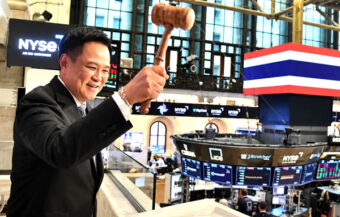
Digital Economy Minister Chaichanok Chidchob says Thailand will complete its landmark Artificial Intelligence Act this year, introducing rules on AI governance, copyright, content labelling and high-risk applications while weighing tougher financial penalties, even as officials acknowledge legislation must avoid deterring international investment in one of the world’s fastest-growing technologies.

Thailand expects to complete a draft of its landmark Artificial Intelligence (AI) Act during the current fiscal year, marking the country’s biggest step yet towards dedicated AI regulation.
The proposed law aims to balance stronger oversight with continued encouragement of AI adoption. At the same time, the government is expanding AI governance across the public and private sectors. Officials say the wider strategy is intended to strengthen public trust while positioning Thailand as a regional AI governance hub.
Digital Economy and Society Minister Mr Chaichanok Chidchob outlined the government’s direction on Monday at AI Governance Week 2026 in Bangkok.
The event, organised by the Electronic Transactions Development Agency (ETDA) and its AI Governance Centre (AIGC), runs from June 29 until July 3. “AI is highlighted as one of the most significant technological shifts of this generation, deeply altering how humanity learns, works, competes in business and delivers government services,” Mr Chaichanok said.
Thailand shifts from AI policy to implementation as draft law and governance strategy gather momentum
Against that backdrop, Thailand is shifting from policy development to implementation. Global studies estimate AI could contribute more than US$15 trillion to the world economy by 2030.
Mr Chaichanok also highlighted Thailand’s standing in the AI Governance International Evaluation Index 2025. Among 40 countries, Thailand ranked second for AI social acceptance and fifth for AI development inclusivity. It also placed 11th for AI governance effectiveness and 17th for its overall governance environment.
Notably, Mr Chaichanok said those rankings now need practical follow-through. Thailand has therefore established the AI Governance Practice Centre (AIGPC). The centre is working with international partners to strengthen AI ethics and operational governance. It is also designed to reinforce Thailand’s ambition of becoming a trusted regional AI governance hub.
ETDA executive director Mr Chaichana Mitrpant said Thailand has deliberately avoided rushing into sweeping regulations. “Rather than rushing into heavy regulation, Thailand is taking an observant approach to see how AI fits into its economic development, social welfare and cultural landscape,” he said. He added that global AI policy has become increasingly complicated by geopolitical tensions.
Thailand pursues hybrid AI regulation as public hearings continue on landmark legislation this year
According to Mr Chaichana, governments are now debating whether powerful AI should be regarded as a restricted strategic technology or an enabling economic tool. Different jurisdictions have adopted sharply different regulatory models.
Some emphasise rapid innovation with limited intervention. Others favour tighter legal controls. Thailand, however, is pursuing what officials describe as a hybrid model that combines promotion with regulation.
In parallel, ETDA is continuing public hearings on the draft AI legislation. “We’re holding public hearings on the AI draft law and hope to finalise it by this fiscal year,” Mr Chaichana said. The proposed legislation is built upon Thailand’s Electronic Transactions Act of 2001. Officials say the new law will provide a comprehensive legal framework as AI becomes increasingly embedded across business, government and society.
Copyright disputes, AI labels and penalties emerge as key issues shaping Thailand’s proposed AI Act
One of the most sensitive issues concerns copyrighted material used to train AI models. Mr Chaichana said disputes continue over developers using copyrighted media without permission from content owners.
In response, ETDA has established a committee comprising intellectual property specialists, legal experts and judges. The group is developing clear boundaries for AI training data while examining revenue-sharing mechanisms for copyright holders. Its recommendations will be incorporated into the final draft legislation.
Separately, regulators are examining mandatory labelling requirements for AI-generated content. Officials say the measure would improve transparency without overburdening legitimate creators. Enforcement, meanwhile, will concentrate on high-risk AI applications. Those systems are regarded as presenting the greatest risks to national and personal security. Officials also say enforcement should not discourage foreign technology investment.
On another front, authorities are evaluating two penalty models for future breaches of the AI Act. One would impose fixed financial penalties. The other would calculate fines as a percentage of an organisation’s revenue. A final decision has yet to be announced.
As part of this wider framework, ETDA is preparing mandatory AI governance standards for government agencies. Mr Chaichana said proposals will be submitted to the Cabinet in the coming months. “Once approved, it will transition from a voluntary guideline to a mandatory framework for all state agencies using AI,” he said.
Mandatory AI governance for state agencies extends to schools under a national oversight framework
Compliance will then be measured through agency performance ratings overseen by the Office of the Public Sector Development Commission. Agencies failing to comply could face penalties through those official assessments.
Education has also become a central pillar of Thailand’s AI strategy. AIGC has partnered with the Ministry of Higher Education, Science, Research and Innovation to introduce AI ethics into secondary schools. The programme will train 100 teachers using internationally recognised AI governance guidelines. It will also engage school leaders, compliance teams, parents and students to strengthen responsible AI use.
Abhisit Vejjajiva calls for scrutiny of flagship AI project being pursued by Digital Economy ministry
Thailand may miss the AI boat over political brawls as a pioneering project becomes mired in controversy
Alongside that programme, participating schools will pilot UNESCO’s Ethical Impact Assessment tool. The framework is designed to identify and manage ethical risks linked to AI use in education. Officials have also produced a practical handbook titled AI Ethics and Governance for Schools.
Developed through specialist workshops, it provides guidance on responsible AI use for grading, lesson planning and examination preparation. The handbook also addresses youth-related risks, including AI-driven cyberbullying.
Looking ahead, AIGC plans to expand discussions on AI’s role within Thailand’s justice system and education sector. The draft AI Act is expected to become the centrepiece of that wider governance framework as officials move from consultation to implementation.
Join the Thai News forum, follow Thai Examiner on Facebook here
Receive all our stories as they come out on Telegram here
Follow Thai Examiner here
Further reading:
Ministry fails to halt ฿25.4 billion payment order to Hong Kong based firm linked to 1990 contract
Microsoft accepts charges of corrupt payments in Thailand as it makes a deal with US investigators
Provincial agency boss arrested in Mukdahan after trying to extort ฿2 million from a businessman
Parliamentary vote on constitutional reform is questioned, court says referendum may be needed
Bangkok MP on Phuket mission to investigate controversial local condo project before the courts
Drinks giant Thai Beverage to resume expansion with Singapore IPO for Asean regional beer operation