Thailand’s Senate scandal heads for a crunch decision as the Election Commission weighs 229 collusion cases and the People’s Party prepares to release new money trails, witnesses and political links amid fears powerful figures could escape court action.
Thailand’s Election Commission is nearing a decisive moment in the explosive 2024 Senate collusion probe, with 229 cases under scrutiny and growing pressure for court referrals. The People’s Party is preparing fresh disclosures on suspected money trails, new witnesses and previously unnamed political links, while questions intensify over conflicting investigative findings, possible selective prosecutions and the role of figures associated with Bhumjaithai. Prime Minister Anutin Charnvirakul and veteran political powerbroker Newin Chidchob have both appeared in reports surrounding potential summonses, although no wrongdoing has been established. After more than a year of investigation, the commission must now decide whether to send cases forward, narrow the referrals or prolong an inquiry already hanging over a Senate in its second year.
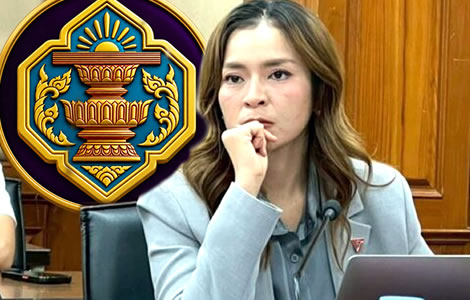
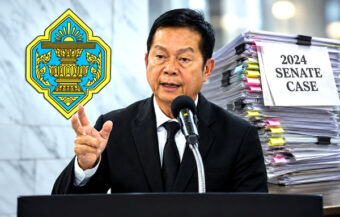
Pressure is mounting on the Election Commission over its investigation into Thailand’s disputed 2024 Senate election. The inquiry covers 229 cases involving accusations of collusion, corruption and organised electoral manipulation.
Meanwhile, the People’s Party is preparing another detailed evidence release next week. Its presentation will focus on money trails, new witnesses and previously unidentified political connections. The disclosure comes as the commission approaches a crucial decision on the sprawling investigation.
At issue is whether the 229 cases will be referred to the Constitutional Court. Opposition figures are pressing for the evidence to reach the court for judicial consideration. However, reports suggest the Election Commission could refer only a small number of cases.
Fears grow that limited court referrals could deepen the crisis over Thailand’s disputed Senate election
Concerns centre on whether lower-level participants could face action while more prominent figures avoid referral. Such an outcome could trigger a serious political crisis and deepen existing questions about public confidence.
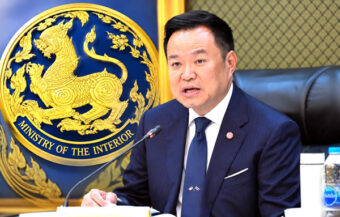
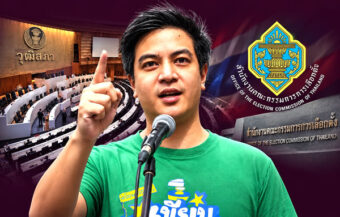
In parallel, the People’s Party intends to keep releasing evidence surrounding the Senate contest. Its latest presentation will concentrate heavily on suspected financial transactions. Samut Prakan MP Panida Mongkolsawasdi outlined some of that material on August 8.
She said the evidence would provide a much clearer picture of previously reported money trails. Importantly, witnesses from different provinces will support the latest presentation.
Ms Panida said earlier witnesses had already referred to financial transactions during the investigation. This time, however, the opposition intends to provide additional details and connections. Witnesses will describe what she called a scheme established to manipulate the Senate election. Their evidence will also connect suspected money trails with people not previously publicly identified. Notably, Ms Panida said those individuals were closely associated with a political party.
Panida says new witnesses and money trails will expose fresh links in the disputed 2024 Senate election
Separately, the presentation will include information concerning offers of reciprocal benefits. Ms Panida said such arrangements would be illegal. The material forms part of the opposition whip’s fourth detailed examination of the Senate collusion affair. Accordingly, the opposition is shifting attention towards evidence already held by Election Commission investigators.
“We need to question the agencies: do they have this information in hand?” Ms Panida said. She also questioned whether investigators could still conclude that credible evidence was lacking. According to her, witnesses have already provided testimony covering key elements of the case. Moreover, details concerning those claims are already contained within the investigation files.
The dispute has focused particularly on the conclusions reached by the Election Commission’s Subcommittee 36. That panel found no wrongdoing among those it examined. Yet Ms Panida said investigators possessed extensive information and testimony relevant to the inquiry. The People’s Party fears the full Election Commission could ultimately endorse the subcommittee’s conclusions.
“They have a lot of information, but their Sub-committee 36 still ruled that no one was guilty,” Ms Panida said. “We are concerned that the full EC will agree with Sub-committee 36, even though we have seen all the documents and evidence. There’s no way anyone can be found not guilty.”
Opposition questions Subcommittee 36 findings as Election Commission nears decision on Senate cases
As part of this, the Election Commission is moving towards completing its investigation later this month. The inquiry has already continued for more than a year. During that period, the Senate elected through the disputed process has entered its second year. Political attention is therefore increasingly concentrated on the commission’s next move.
One possibility is referral of the cases for judicial determination. Political activists and opposition figures have repeatedly called for that course. On another front, reports suggest the commission could instead pursue only selected cases.
Under that scenario, lower-level figures could face proceedings while more influential individuals remain outside the referrals. No final decision has been announced.
Alternatively, the Election Commission could extend its investigation once again. Additional evidence and witness statements could be cited as grounds for more time. Reports suggest investigators may call further witnesses and seek information from applicants across 64 provinces. Financial investigations could also continue, although reports suggest they may focus on lower-level participants.
Election Commission weighs court referrals, more witnesses or another extension of its Senate inquiry
Against this backdrop, the length of the inquiry has become another significant issue. The investigation has lasted more than one year without a final determination.
Furthermore, the current Senate continues exercising its constitutional powers while the complaints remain unresolved. Any further extension would therefore prolong an investigation already spanning the Senate’s first year in office.
Earlier stages of the inquiry also produced sharply conflicting findings. Two investigative teams established by the Election Commission reached different conclusions. One identified individuals against whom action could be pursued. By contrast, another found no wrongdoing among those examined. The disparity left the ultimate decision with the full Election Commission.
So far, the commission has not publicly explained why the two processes produced such different conclusions. That conflict has become increasingly important as the investigation approaches its final stage. The full commission must now assess the files and determine which cases, if any, advance further.
Conflicting Election Commission findings deepen scrutiny as year-long Senate investigation nears decision
The wider inquiry covers 229 cases arising from accusations surrounding the 2024 Senate selection process. Sitting senators are among those connected with the investigation. Political figures associated with the Bhumjaithai Party have also appeared in reports concerning potential summonses. The allegations remain subject to formal investigation decisions and, after that, judicial determination.
Among the prominent names mentioned is Prime Minister Anutin Charnvirakul. Veteran political figure Newin Chidchob has also appeared in reports surrounding possible summonses. Other senior Bhumjaithai figures have similarly been mentioned. Their inclusion in reports concerning the inquiry does not establish wrongdoing.
For its part, Bhumjaithai has repeatedly and firmly rejected accusations linking it with organised Senate election manipulation.
The allegations are not new, and the party has consistently denied them. Even so, the controversy intensified following public forums held in June. Those events produced further evidence and testimony concerning the disputed election.
Anutin and Newin named in reports as Bhumjaithai rejects claims linked to disputed Senate election
Civil society organisation iLaw participated alongside unsuccessful Senate candidates and reserve senators. During the forums, unsuccessful candidates described what they said were coordinated voting arrangements.
Specifically, they pointed towards ballots showing blocks of candidates voting in identical patterns. They argued those patterns indicated organised voting during the selection process.
At the same events, iLaw presented information it described as financial trails. The organisation said those trails involved Senate candidates and Bhumjaithai political figures. In response, Bhumjaithai strongly rejected the claims and brought defamation proceedings against iLaw. The financial allegations therefore remain disputed while the Election Commission continues its investigation.
Beyond those claims, the structure of the Senate election itself has faced close examination. Candidates competed through an unusual multi-stage selection process. They were divided into occupational and social groups before voting among themselves. Successful candidates then progressed through further stages towards provincial and national selection.
Questions subsequently emerged over whether all applicants genuinely qualified for their declared occupational groups. Some complaints concerned candidates registered under areas including education and healthcare. Critics claimed certain participants were instead deployed primarily to cast votes for designated candidates. Those accusations became another element of the wider election inquiry.
iLaw money trails and identical voting patterns add to scrutiny of disputed 2024 Senate selection process
Candidate numbers have attracted scrutiny as well. Participants retained the same identifying numbers from provincial contests through the national stage. Critics argue that the system made candidates easier to identify during organised voting. As a result, investigators have examined whether networks exploited those numbers to coordinate support for selected candidates.
The People’s Party’s next presentation will return attention directly to financial evidence. Ms Panida says previous public disclosures revealed only part of the suspected money trail. The new material will involve witnesses from provinces not previously highlighted.
In addition, those witnesses will describe financial links and the organisation behind the suspected scheme.
Crucially, Ms Panida says the evidence will connect transactions with previously undisclosed individuals. She described them as people closely associated with a political party. Further information will concern reciprocal benefits allegedly offered during the Senate contest. The opposition is therefore demanding to know whether investigators already hold those details.
Candidate numbers and new financial evidence sharpen focus on networks behind Senate voting
If so, the People’s Party wants an explanation for Subcommittee 36’s conclusions. Ms Panida maintains that significant witness testimony is already contained in the case files. She also says the Election Commission possesses extensive documentary material. The full commission’s decision will consequently be measured against evidence already gathered during the lengthy inquiry.
Elsewhere, the Election Commission is facing scrutiny over separate election controversies. Questions have arisen over QR codes printed on ballot papers used in the February 8 election. Concerns have also been raised about internal investigations involving senior commission personnel. In some instances, subordinates have been tasked with investigating matters involving their own senior officials.
The Senate inquiry is now approaching its most consequential stage. Some experts argue the commission does not need to determine every disputed allegation itself. Instead, they say complaints and supporting evidence can be sent to court for judicial determination. Political activists and opposition figures have similarly pressed for broader referrals.
Still, the Election Commission has not announced how it will handle the 229 cases. It could refer a substantial number for judicial consideration. It could instead select a smaller group or extend the investigation again. Each route would significantly shape the next phase of the Senate controversy.
People’s Party demands answers on evidence as Election Commission faces pressure over all 229 cases
At the same time, the commission must reconcile the conflicting findings produced by its own investigative processes. One team identified grounds for action, while another found no wrongdoing. The main commission must now decide how those competing conclusions affect the final cases.
For the People’s Party, the next move is already clear. Its fourth disclosure will place suspected money trails at the centre of the controversy. New witnesses will provide evidence from additional provinces. Previously unidentified individuals and claimed political connections will also feature prominently.
Ex Justice Minister says credible evidence is all that is needed to refer 229 cases for Senate collusion
Opposition and witnesses call for Senate collusion case to go to court as Election Commission decides on huge case
The Election Commission will then face renewed questions about how much of that evidence it already possesses. Ms Panida says important testimony and documents are already inside the case files. The commission must also decide which of the 229 cases advance beyond its investigation.
After more than a year, the inquiry is approaching a critical decision. The Senate produced by the 2024 election is already in its second year. Meanwhile, further evidence is being prepared for public release. The focus now rests firmly on the Election Commission and its handling of the 229 cases.
Join the Thai News forum, follow Thai Examiner on Facebook here
Receive all our stories as they come out on Telegram here
Follow Thai Examiner here
Further reading:
Ex PM and Democrat Party leader urges politicians implicated in Senate Collusion files to come clean
Opposition and People’s Party leader attacks ‘blue regime’ on the 12th anniversary of the 2014 coup
Thammasat University legal scholar and 1992 protest leader warns another coup cannot be ruled out