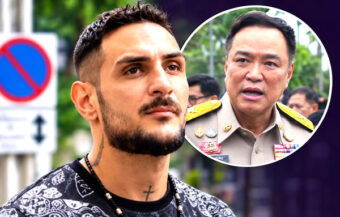
Seven years after becoming Thai, Israeli-born Ariel Blustein loses his citizenship as Anutin cites Israeli passport use and an undisclosed Uruguayan nationality. The case lands amid a broader government review of naturalisations and foreign nominees.
Thailand has dramatically revoked the citizenship of Israeli-born businessman Ariel Blustein, seven years after he became Thai. Prime Minister and Interior Minister Anutin Charnvirakul acted after officials cited his Israeli passport use and undisclosed Uruguayan citizenship. The move puts Thailand’s long-standing approach to naturalised dual nationals under fresh scrutiny. It comes as the government reviews citizenship approvals, considers changes to the 1965 Nationality Act and intensifies investigations into foreign nominee firms, land holdings and Israeli-linked businesses. Crucially, existing Section 19 powers allow citizenship withdrawal where naturalised Thais continue using their former nationality despite decades of this being quitely ignored.
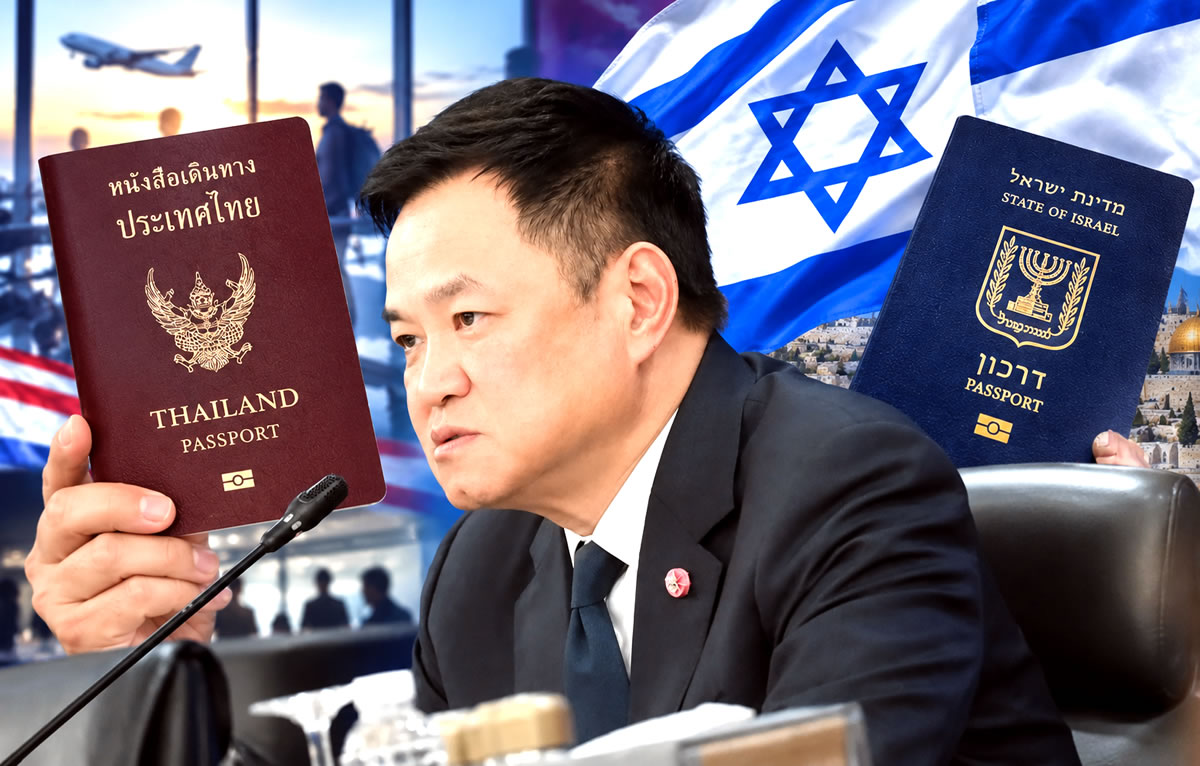
Thailand has revoked an Israeli-born businessman’s citizenship, putting naturalised Thais holding other nationalities under fresh scrutiny. Prime Minister and Interior Minister Anutin Charnvirakul signed the order against Ariel Blustein on Thursday, October 1.
The decision took immediate effect. More significantly, it comes as the government examines Thailand’s citizenship system and previous approvals.
The case centres on foreigners who become Thai citizens while retaining or using another nationality. That issue has existed within Thailand’s nationality system for decades. Yet Thursday’s action puts the rules governing naturalised citizens sharply into focus. The government is separately reviewing citizenship procedures and considering possible changes to the 1965 Nationality Act.
Section 19 puts passport use and undisclosed foreign citizenship at the heart of the Blustein case
At the heart of Thursday’s decision is Section 19 of that law. Crucially, it gives the Interior Minister substantial powers over people who obtained Thai citizenship through naturalisation. The provision covers citizenship obtained through false statements or concealment of material facts. It also permits withdrawal when evidence shows continued use of a former nationality.
That second provision has potentially wider significance for naturalised Thais holding foreign passports. The Interior Ministry says Blustein continued using his Israeli passport after becoming Thai in 2019. Separately, officials established that he possessed Uruguayan citizenship. The ministry says he failed to disclose that nationality during his application.
Moreover, officials said Blustein did not express an intention to renounce his Uruguayan citizenship. The government therefore identified two distinct issues before withdrawing his Thai nationality. One concerned continued use of his Israeli nationality. The other involved alleged concealment of another citizenship during naturalisation.
Blustein originally came from Israel before becoming a naturalised Thai citizen. He obtained citizenship under Sections 10 and 11(1) of the Nationality Act. Subsequently, he received his first Thai national identity card on June 14, 2019. However, his use of an Israeli passport continued, according to the ministry.
Israeli passport journeys and undisclosed Uruguayan citizenship underpin Anutin’s revocation order
Notably, Blustein travelled to Hong Kong on the same day he received his Thai identity card. Officials say he made that journey using his Israeli passport. Nine days later, he returned to Thailand. Again, the ministry says he travelled using the Israeli document.
Those journeys became evidence that Blustein continued using his former nationality. In particular, the timing gave officials a clear record immediately following his acquisition of Thai documentation. He was already a naturalised Thai citizen. Yet he continued travelling as an Israeli national, according to the government.
On another front, officials examined Blustein’s Uruguayan nationality. They say he had used that citizenship for several overseas journeys before applying to become Thai. However, the ministry says his Uruguayan nationality was not disclosed during his naturalisation application. Officials also cited his failure to declare an intention to renounce it.
Taken together, those findings brought Section 19 directly into play. Anutin then exercised his authority as Interior Minister to withdraw Blustein’s citizenship. The government said leaving the matter unresolved could cause serious damage to the public and state. Accordingly, the revocation became effective immediately.
Dual nationality remains lawful as naturalised citizens face separate withdrawal provisions under Thai law
Thai media reports carried no response from Blustein or his legal representatives. Likewise, officials have not publicly explained how the passport information came to light. Still, the decision exposes an important distinction within Thailand’s nationality system. It is not simply a case concerning possession of two passports.
Thailand does not impose a universal prohibition against every form of dual nationality. Indeed, the Nationality Act recognises circumstances involving Thai citizens who possess another nationality. Section 15 provides procedures under which certain people may renounce Thai citizenship. Thus, another citizenship alone is not equivalent to the circumstances cited against Blustein.
Instead, his legal position turns heavily on naturalisation. Blustein became Thai after applying for citizenship rather than acquiring it through birth or descent. As a result, Section 19 specifically governs his position. That distinction separates his case from large numbers of Thais with foreign family connections.
For instance, children with one Thai parent and one foreign parent may acquire Thai nationality through descent. Their legal position differs from foreigners who later apply for naturalisation. Similarly, another nationality may arise through circumstances outside Thailand’s naturalisation system. Thursday’s order does not automatically place those groups in Blustein’s position.
Passport use becomes key dividing line as government reviews naturalised citizens and citizenship rules
Even so, the case highlights another potentially important dividing line. Section 19 refers specifically to continued use of a former nationality. Therefore, possession and active use can become separate issues for naturalised citizens. In Blustein’s case, the government cited actual passport use as evidence.
This distinction could matter as Thailand reviews its citizenship system. The government has not announced a blanket withdrawal of citizenship from naturalised Thais holding foreign passports. Nor has it ordered all dual nationals to surrender another nationality. Nevertheless, Thursday’s action shows how existing statutory powers can reach naturalised citizens.
In parallel, Anutin’s government has already begun a wider examination of citizenship procedures. On September 17, it announced a review of Thailand’s citizenship application system. The Interior Ministry was instructed to examine existing procedures and eligibility criteria. Officials were also ordered to identify possible loopholes.
As part of this, the government ordered retrospective examination of citizenship acquisitions during the preceding year. Possible amendments to the Nationality Act are also being considered. The review followed investigations involving foreigners holding Thai citizenship and suspected nominee structures. It therefore predates Thursday’s action against Blustein.
Citizenship review intersects with widening government scrutiny of foreign nominee firms and land holdings
The two developments now intersect. One process examines how Thai citizenship is granted and whether the system needs changes. The other demonstrates powers already available after citizenship has been granted. Blustein’s case falls firmly within the second category.
Meanwhile, the government has intensified scrutiny of foreign business structures across Thailand. Since August, the Department of Business Development has expanded checks against suspected foreign nominee arrangements. Those investigations extend beyond the original formation of companies. They also cover later changes involving shareholders and directors.
Elsewhere, officials have examined foreign-linked land ownership, corporate structures and financial flows. Israeli-linked businesses have featured prominently in several recent investigations. The issue of Israeli nationals acquiring Thai citizenship had also reached the Senate before Thursday’s decision.
In May, Senator Chaiyong Maneerungsakul called for retrospective checks involving Israelis who obtained Thai citizenship. He wanted agencies to establish whether those citizenships had been acquired correctly. Those calls followed scrutiny of foreign business activity on Koh Phangan and Koh Samui.
Senate scrutiny of Israeli naturalisations preceded Blustein case amid checks on foreign business activity
Another connection emerged during the recent investigation involving a Jewish cemetery. The government disclosed that three founders or shareholders associated with the company were Israelis holding Thai citizenship. Officials said their corporate connections and land holdings would be investigated.
Against that backdrop, the Blustein action carries significance beyond his individual case. Yet the legal grounds cited against him remain specific. The government did not act merely because Blustein possessed Israeli or Uruguayan citizenship. Instead, officials cited particular conduct involving both nationalities.
First, the ministry says he continued using his Israeli nationality after becoming Thai. Second, officials say he concealed his Uruguayan citizenship during naturalisation. The government also noted his failure to express an intention to renounce that citizenship. Consequently, the case presents several grounds rather than dual nationality alone.
Even so, Thursday’s decision demonstrates the reach of Section 19. The provision requires no new legislation before the Interior Minister can exercise it. Its powers have existed within the Nationality Act for decades. Now, Anutin has used them in a highly public case.
Of particular importance is the time elapsed since Blustein became Thai. His citizenship dates from 2019. The Israeli passport journeys cited by officials also date from that year. However, those events contributed to the withdrawal of his citizenship seven years later.
Older naturalisations remain exposed to Section 19 despite government’s one-year retrospective review
By contrast, the government’s newly announced retrospective review currently covers citizenship acquisitions during the preceding year. It has not announced a review of every naturalisation granted during previous decades. Blustein’s case nevertheless shows that Section 19 action can concern an older naturalisation.
That distinction matters because the government now has two separate mechanisms in operation. It can review recent citizenship approvals under its newly announced examination. Separately, the Interior Minister can invoke existing statutory powers where Section 19 grounds are established.
For naturalised citizens, continued use of another nationality consequently assumes particular importance. In Blustein’s case, officials pointed to identifiable journeys using his Israeli passport. The government therefore had evidence of active use rather than mere passport possession.
At the same time, the Uruguayan finding created a different issue. That concerned information provided during the original citizenship application. Officials say Blustein had already used his Uruguayan nationality for international travel. Yet they say he failed to disclose it when seeking Thai citizenship.
The government has not published a broader definition covering every possible use of another nationality. Nor has it announced that retaining a foreign passport automatically triggers Section 19. For now, its action concerns Blustein’s documented circumstances.
Thai nationality law separates naturalised citizens from people gaining citizenship by birth or descent
Nevertheless, Thailand’s nationality system encompasses several legally distinct groups. Some Thais acquire citizenship at birth. Others obtain it through a Thai parent. Foreign nationals can also obtain citizenship through naturalisation after meeting statutory requirements.
Those distinctions become critical when citizenship withdrawal is considered. Section 19 specifically targets naturalised citizenship. Therefore, the Blustein order cannot simply be extended across Thailand’s entire dual-national population.
At the same time, Thailand has long developed extensive international family and business connections. Foreign-born residents have become naturalised Thais, while many Thai families have members holding other nationalities. Consequently, the legal distinction between naturalisation and citizenship by descent remains central.
Thursday’s action brings another distinction into view. A naturalised citizen may possess another nationality, yet Section 19 addresses continued use of a former nationality. The government’s reliance on that provision puts active passport use under particular scrutiny.
Furthermore, the citizenship decision comes amid broader government attention to foreign-linked activity. Nominee companies, foreign land holdings and corporate structures are already facing increased examination. Immigration and deportation procedures have also received closer government attention.
Citizenship joins wider foreign scrutiny as Anutin uses existing powers without requiring new legislation
Citizenship now joins that wider enforcement picture. However, the Blustein case remains grounded in powers contained within existing nationality legislation. The government did not need Parliament to create a new revocation mechanism. It used authority already held by the Interior Minister.
For Blustein, the consequences are immediate. Seven years after becoming Thai, he has lost that citizenship by ministerial order. His Israeli passport use and undisclosed Uruguayan nationality were central to the government’s case.
For the wider citizenship system, the timing is equally significant. Anutin’s government is already examining application procedures, recent approvals and possible amendments. At the same time, it has demonstrated the reach of existing withdrawal powers.
The government has not announced a general campaign against dual citizenship. It has also not equated every dual national with Blustein. Rather, Thursday’s action focuses attention on the narrower position of foreigners who became Thai through naturalisation.
Blustein case narrows focus to naturalised Thais as government’s wider citizenship review gathers pace
Within that group, Section 19 now assumes renewed importance. The provision covers concealment during naturalisation and continued use of a former nationality. Blustein’s case contains both elements, according to the Interior Ministry.
Accordingly, Thursday’s order is more than an isolated passport dispute. It represents a highly visible application of Thailand’s long-standing citizenship withdrawal powers. Moreover, it arrives while the government is reviewing how Thai citizenship is granted.
Department of Business Development (DBD) contacts 43 foreign embassies on nominee shareholder firms
Government moves to assure Thai nationals in Phuket that long-term foreigners are not going into politics
The combination puts naturalisation, previous nationalities and foreign passport use under closer scrutiny. For now, the action applies to one Israeli-born businessman with Israeli, Thai and Uruguayan citizenship connections.
Yet the legal provisions used against him have existed for decades. Thailand’s government is now examining the wider citizenship system in which those powers operate.
Join the Thai News forum, follow Thai Examiner on Facebook here
Follow Thai Examiner on Google here
Receive all our stories as they come out on Telegram here
Follow Thai Examiner here
Further reading:
Department of Business Development (DBD) contacts 43 foreign embassies on nominee shareholder firms
Frenchman’s Koh Samui business empire enmeshed in knotty police probe of nominee firms and pot farm
Drive against foreign owned property and business on Koh Samui and Koh Phangan now targets leases
International reservations system used by hotels targeted in latest Koh Phangan swoop by ministers
Anutin visits Koh Phangan as nominee crackdown shows 68% of firms with foreign ownership links
Blitzkrieg on foreign firms and enterprises on Koh Phangan continues with French owned resort busted
Russian-Chinese Koh Phangan alliance to sell drugs to foreigners. Accused entered Thailand illegally
Crackdown aimed at upending foreign business trade moves from Koh Phangan to Phuket. Four arrested
Crackdown to wipe out foreign business abuses and ownership on Koh Phangan & Koh Samui intensifies